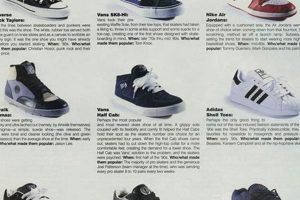
Footwear designed to accommodate broader foot dimensions is essential for skaters who require more volume and width in their shoes. Standard skate shoe designs often prove inadequate for individuals with wider feet, leading to discomfort, impaired performance, and potential foot health issues. Shoes specifically crafted with a wider platform and upper alleviate pressure points and allow for natural foot splay, enhancing comfort and control. As an illustration, a skater with wide feet may experience pinching and restricted movement in a traditionally designed skate shoe, whereas a wider model provides a more comfortable and functional fit.
The availability of appropriate skate shoe options is paramount for injury prevention, enabling longer skate sessions, and maximizing overall performance. Ill-fitting shoes can cause blisters, calluses, and exacerbate existing foot problems. A comfortable and supportive fit contributes to increased board feel, improved balance, and enhanced control during tricks and maneuvers. Historically, skaters with broader feet often had limited choices and resorted to ill-fitting shoes or modifying existing designs. The increased awareness of diverse foot shapes and sizes has prompted manufacturers to develop specialized models catering to a wider range of skaters.
The following sections will explore key features to consider when selecting appropriate footwear, review recommended brands and models known for their wider designs, and provide guidance on ensuring a proper fit for optimal comfort and performance on the board.
Guidance for Skaters with Broader Feet
Selecting appropriate skate footwear necessitates careful consideration of several factors to ensure both comfort and performance. Prioritizing fit and construction will mitigate discomfort and enhance the overall skating experience.
Tip 1: Assess Foot Width Accurately: Measure foot width at its widest point, typically across the ball of the foot. Compare this measurement to shoe size charts, specifically those provided by skate shoe manufacturers, as sizing can vary significantly. Consider visiting a specialized skate shop for professional fitting assistance.
Tip 2: Prioritize Shoe Shape and Last: Look for shoes described as having a wider “last,” the foot-shaped form around which the shoe is constructed. Shoes with a rounded or square toe box tend to offer more room compared to those with a pointed design. Evaluate the shoe’s overall shape in relation to the natural contours of the foot.
Tip 3: Opt for Flexible Uppers: Leather and suede uppers are known to stretch and mold to the foot over time, offering greater adaptability compared to synthetic materials. Fabric panels or perforations can also enhance breathability and flexibility, reducing pressure points.
Tip 4: Seek Out Shoes with Reinforced Sidewalls: Wider feet may exert increased pressure on the shoe’s sidewalls, potentially leading to premature wear and tear. Reinforced sidewalls provide added durability and support, preventing the shoe from losing its shape.
Tip 5: Consider Insole Options: Removable insoles offer the flexibility to customize the shoe’s fit and support. Experiment with different insole thicknesses and materials to find the optimal combination of cushioning and arch support. Orthotic insoles may be necessary for individuals with specific foot conditions.
Tip 6: Examine Lacing Systems: A lacing system that extends further down the shoe towards the toe box allows for a more customized fit. Adjusting the lacing tension can alleviate pressure points and accommodate variations in foot volume. Avoid over-tightening the laces, as this can restrict circulation and cause discomfort.
Adhering to these guidelines will improve the likelihood of selecting skate footwear that accommodates wider feet, enhancing both comfort and performance. Finding the right fit is crucial for injury prevention and maximizing enjoyment on the board.
The subsequent section will delve into specific shoe models and brands that are widely recognized for their suitability for individuals requiring wider skate shoes.
1. Wider Toe Box
A wider toe box represents a critical design feature for skate footwear intended for individuals with broader feet. The toe box is the area of the shoe that encases the toes, and its dimensions directly impact comfort and foot health. Insufficient space in this region can lead to discomfort, restricted movement, and potential long-term foot issues.
- Reduced Compression and Discomfort
A primary function of a wider toe box is to minimize compression of the toes. Standard toe box designs often constrict the forefoot, forcing the toes into a narrower configuration than their natural splay. This compression can result in pain, numbness, and the development of blisters or calluses. Wider toe boxes allow the toes to spread naturally during skating, promoting comfort and reducing the risk of such issues. For example, skaters performing flip tricks or landing heavily on their feet benefit significantly from the increased toe space.
- Prevention of Foot Deformities
Chronic compression within a too-narrow toe box can contribute to the development of foot deformities, such as bunions or hammertoes. Bunions, characterized by a bony bump at the base of the big toe, can be exacerbated by restrictive footwear. Hammertoes, where the middle joint of a toe bends upwards, can also result from prolonged compression. A wider toe box allows for adequate space, reducing the risk of these painful conditions developing or worsening. Skaters who log numerous hours on their boards can particularly benefit from this preventative measure.
- Enhanced Blood Circulation
A constricted toe box can impede blood circulation to the toes, leading to coldness, numbness, and even cramping. A wider toe box facilitates improved blood flow by allowing the foot to function more naturally. Improved circulation contributes to overall foot health and can enhance sensitivity and board feel, both crucial for executing complex skating maneuvers. During colder weather conditions, proper circulation becomes even more important to maintain foot comfort and performance.
- Improved Balance and Stability
The ability to splay the toes contributes to balance and stability. When the toes are compressed, the foot’s natural ability to grip and stabilize is compromised. A wider toe box allows for greater toe splay, enhancing proprioception (the body’s awareness of its position in space) and improving balance during skating. This is particularly important during landings and when navigating uneven surfaces, allowing the skater to maintain control and prevent falls.
In conclusion, the presence of a wider toe box is an indispensable attribute of quality skate footwear designed for individuals with wider feet. By minimizing compression, preventing deformities, enhancing circulation, and improving balance, this design element contributes significantly to foot health, comfort, and ultimately, skating performance. The selection of skate shoes with a wider toe box represents a proactive approach to ensuring a positive and injury-free skating experience.
2. Upper Material Flexibility
The flexibility of the upper material in skate footwear is a crucial characteristic, particularly for individuals requiring wider fitting shoes. A compliant upper accommodates the foot’s natural shape and movement, enhancing comfort and minimizing restrictions that can lead to discomfort or injury. The material’s capacity to adapt to the foot’s contours directly influences the overall fit and performance of the shoe.
- Accommodation of Foot Volume
Skate shoes with flexible uppers, such as those constructed from suede or canvas, are better suited to accommodate variations in foot volume. Wider feet often exhibit greater volume in the midfoot and forefoot regions. Stiffer materials, such as densely structured synthetics, can create pressure points and restrict natural foot expansion during activity. A more pliable upper material allows the shoe to conform to the foot’s dimensions, providing a more comfortable and secure fit. This is particularly advantageous for individuals who experience swelling during extended periods of skating.
- Enhanced Range of Motion
Skaters require a degree of ankle and foot articulation to execute tricks effectively. Rigid uppers can restrict this range of motion, hindering performance and potentially leading to strain. Flexible materials allow for a greater degree of plantarflexion and dorsiflexion, enabling a more natural and responsive feel on the board. The ability to move freely within the shoe is crucial for maintaining balance and control, particularly when performing complex maneuvers.
- Reduced Break-In Period
Skate shoes constructed from more flexible materials typically require a shorter break-in period compared to those with stiffer uppers. This is particularly relevant for individuals with wider feet, as the initial discomfort associated with a new shoe can be amplified by the lack of accommodation for the foot’s shape. A quicker break-in period translates to improved comfort and performance sooner, minimizing the risk of blisters or other irritations during the initial stages of wear.
- Breathability Considerations
While flexibility is paramount, breathability must also be considered. Uppers constructed from porous materials, such as canvas or perforated leather, allow for greater airflow, reducing moisture buildup and preventing overheating. This is particularly important for skaters who engage in intense activity or skate in warmer climates. Maintaining a comfortable temperature within the shoe contributes to overall foot health and reduces the likelihood of developing fungal infections or other skin conditions.
In conclusion, upper material flexibility is a key determinant of comfort and performance in skate shoes, especially for those with wider feet. The ability of the material to adapt to the foot’s shape, allow for a natural range of motion, minimize break-in time, and maintain breathability are all critical factors to consider when selecting appropriate footwear. Choosing shoes with flexible uppers promotes a more comfortable and responsive skating experience, ultimately enhancing performance and reducing the risk of foot-related issues.
3. Outsole Durability

Outsole durability represents a critical performance factor in skate footwear, particularly for individuals seeking optimal shoe solutions for wider feet. The outsole, the shoe’s bottom layer, directly interfaces with the skateboard and the ground, subjecting it to significant abrasion and impact forces. The construction and material composition of the outsole are therefore paramount in determining the shoe’s lifespan and its ability to provide adequate grip and board feel.
- Enhanced Resistance to Abrasion
Skaters subject their footwear to constant friction against the skateboard deck and various ground surfaces. Outsole durability, characterized by high abrasion resistance, directly translates to a longer shoe lifespan. Materials such as vulcanized rubber or specifically formulated compounds designed for skateboarding provide superior resistance to wear and tear compared to standard shoe outsoles. Shoes that quickly degrade in high-wear areas (e.g., the toe and heel) are unsuitable for skateboarding and can pose safety risks. Wider feet may exacerbate wear patterns due to increased surface contact and stress on the outsole.
- Sustained Grip and Board Feel
The outsole’s tread pattern and rubber compound contribute significantly to grip and board feel, essential for control and execution of tricks. Durable outsoles maintain their grip properties for a longer period, providing consistent traction and a predictable connection with the skateboard. As the outsole wears down, grip diminishes, increasing the risk of slippage and loss of control. Wider feet require a secure and reliable connection with the board, making outsole durability a critical factor for maintaining performance and safety.
- Structural Integrity and Support
The outsole contributes to the overall structural integrity of the skate shoe, providing support and stability. A durable outsole reinforces the shoe’s shape and prevents it from collapsing under pressure. Wider feet often exert greater forces on the outsole, particularly during landings and high-impact maneuvers. A robust outsole design, coupled with reinforced sidewalls, is necessary to withstand these forces and maintain proper foot support, reducing the risk of ankle or foot injuries.
- Impact Absorption and Cushioning
While midsole cushioning is primarily responsible for impact absorption, the outsole also plays a role in attenuating impact forces. Thicker and more durable outsoles can provide additional cushioning, reducing stress on the joints and ligaments. This is particularly important for skaters with wider feet who may experience increased impact forces due to their weight distribution. Outsoles incorporating shock-absorbing materials, such as specific rubber compounds or gel inserts, can further enhance impact protection and comfort.
In summary, outsole durability is an indispensable characteristic of high-quality skate footwear, particularly for individuals with wider feet. The ability to withstand abrasion, maintain grip, provide structural support, and contribute to impact absorption are all essential factors that influence performance, safety, and shoe longevity. Selecting skate shoes with durable outsoles ensures a more reliable and enjoyable skateboarding experience, while mitigating the risk of injury and premature shoe wear.
4. Arch Support Adequacy

Arch support adequacy is a critical, often overlooked, component when considering the selection of skate shoes for individuals with wider feet. The arch of the foot, a complex structure formed by bones, ligaments, and tendons, provides essential support and shock absorption during weight-bearing activities. Inadequate arch support can lead to a cascade of biomechanical issues, exacerbated by the demands of skateboarding. For individuals with wider feet, the distribution of weight across the foot may differ from those with standard-width feet, potentially placing additional stress on the arch. Consequently, skate shoes lacking sufficient arch support can contribute to pain, fatigue, and the development of plantar fasciitis, Achilles tendinitis, or other lower extremity conditions. An appropriate level of arch support ensures proper alignment of the foot, ankle, and lower leg, optimizing force distribution and minimizing the risk of overuse injuries. Real-world examples include skaters who experience arch pain during or after skating sessions, often a direct result of insufficient support within their footwear, hindering their ability to perform and enjoy the activity.
The interplay between arch support and shoe width is particularly relevant. Wider feet may require a wider shoe platform to accommodate the increased foot volume. However, simply selecting a wider shoe without addressing arch support can create other problems. The arch may not be properly supported, leading to pronation (inward rolling of the foot) or supination (outward rolling of the foot). Pronation, in particular, is common in individuals with wider feet and can further compromise arch stability. Therefore, skate shoe manufacturers must consider the arch support needs of wider-footed skaters and incorporate features such as contoured footbeds or the option to use custom orthotics. Furthermore, the stiffness of the shoe’s midsole plays a role in arch support; a more rigid midsole can provide greater stability and prevent excessive arch collapse, while a softer midsole may offer more cushioning but less support. The practical significance lies in preventing injuries and allowing skaters with wider feet to skate comfortably and effectively for extended periods.
In conclusion, arch support adequacy is an indispensable consideration in the design and selection of skate shoes for wider feet. The appropriate level of support ensures proper biomechanics, minimizes the risk of injury, and maximizes performance. While finding skate shoes that accommodate wider foot dimensions can be challenging, it is imperative to prioritize models with adequate arch support or the ability to customize support through orthotics. Failure to address arch support needs can negate the benefits of a wider shoe and lead to a range of foot and lower extremity problems, ultimately hindering the skater’s ability to participate in the sport. The challenge lies in finding the right balance between width, arch support, and other key features to optimize comfort and performance.
5. Sidewall Reinforcement

Sidewall reinforcement in skate shoes is a critical feature, particularly pertinent to selecting appropriate footwear for wider feet. Sidewalls, the shoe’s lateral and medial sides, are subjected to substantial stress during skateboarding activities. Wider feet exert increased pressure on these sidewalls, potentially leading to accelerated wear and tear or structural failure. Reinforcement, typically achieved through additional layers of material, stitching patterns, or the incorporation of durable fabrics, mitigates these effects. The absence of adequate sidewall reinforcement can result in premature shoe degradation, a compromised fit, and reduced support, ultimately affecting performance and increasing the risk of injury. For example, a skater with wider feet may experience significant bulging or stretching of the sidewalls in a non-reinforced shoe, leading to instability and reduced board control. This vulnerability highlights the importance of selecting skate shoes with robust sidewall reinforcement to ensure both longevity and functional integrity.
The practical significance of sidewall reinforcement extends beyond simple durability. Reinforced sidewalls contribute to the overall stability of the shoe, providing a more secure and supportive platform for the foot. This stability is particularly crucial during landings, ollies, and other high-impact maneuvers. Adequate reinforcement prevents the shoe from deforming excessively under stress, maintaining proper foot alignment and reducing the likelihood of ankle sprains or other foot-related injuries. Furthermore, the type of reinforcement employed can affect the shoe’s flexibility and board feel. Stiffer reinforcements may provide greater support but can also reduce the skater’s sensitivity to the board, while more flexible reinforcements may offer better board feel but less overall support. The selection of an appropriate reinforcement strategy, therefore, requires balancing durability, stability, and responsiveness to optimize performance for individuals with wider feet.
In conclusion, sidewall reinforcement represents a fundamental component of high-quality skate shoes designed for wider feet. By mitigating stress, enhancing stability, and contributing to overall durability, this feature directly addresses the unique demands placed on footwear by wider foot dimensions. While factors such as outsole construction and arch support are also essential, the presence of robust sidewall reinforcement is a key indicator of a shoe’s ability to withstand the rigors of skateboarding and provide long-lasting support for individuals with wider feet. Consequently, skaters should prioritize models that incorporate effective sidewall reinforcement to ensure both performance and longevity.
6. Overall Shoe Volume
Overall shoe volume represents a fundamental consideration in the selection of appropriate skate footwear, especially for individuals with broader feet. Shoe volume encompasses the three-dimensional space within the shoe, accounting for length, width, and vertical height. Insufficient volume can lead to constriction, discomfort, and restricted movement, while excessive volume may result in a loose fit, compromising stability and board feel. For individuals with wider feet, achieving a proper balance in overall shoe volume is critical for optimizing comfort, performance, and injury prevention. The term “best skate shoes for wide feet” implicitly includes the concept of appropriate volume as an essential attribute. A shoe marketed as being suitable for wider feet must inherently possess sufficient internal volume to accommodate the foot’s dimensions without causing pressure points or restricting natural foot splay. For instance, a skater with wide feet may experience pain and reduced circulation in a shoe with inadequate volume, whereas a properly sized and volumized shoe allows for comfortable and effective skating.
The importance of overall shoe volume is further underscored by its influence on biomechanics and foot health. Restricted foot volume can contribute to the development of foot deformities, such as bunions or hammertoes, as the toes are forced into unnatural positions. Conversely, excessive volume can lead to slippage and instability, increasing the risk of ankle sprains. Skate shoes with a well-designed internal volume distribution provide adequate space for the foot to move naturally, promoting healthy foot function and reducing the likelihood of overuse injuries. Real-world examples include skaters with wide feet who find relief from chronic foot pain and improved skating performance simply by switching to shoes with appropriate volume distribution. The design considerations for skate shoe manufacturers must therefore include meticulous attention to overall volume, accounting for variations in foot shape and size to ensure optimal fit and function. Furthermore, adjustability through lacing systems and removable insoles can allow skaters to fine-tune the volume to their specific needs.
In conclusion, overall shoe volume is inextricably linked to the concept of “best skate shoes for wide feet”. Insufficient or excessive volume can compromise comfort, performance, and foot health, highlighting the need for careful consideration of this factor in the selection process. While finding skate shoes that accommodate wider foot dimensions can be challenging, prioritizing models with adequate and well-distributed internal volume is essential. Ultimately, a skate shoe that properly addresses overall volume concerns contributes to a more comfortable, stable, and enjoyable skateboarding experience, while mitigating the risk of foot-related problems. The challenge lies in consistently defining and measuring volume specifications, ensuring that skate shoe manufacturers provide accurate information to consumers to facilitate informed purchasing decisions.
Frequently Asked Questions
This section addresses common inquiries regarding skate footwear for individuals with wider foot dimensions, providing informative responses grounded in practical considerations.
Question 1: What constitutes a “wide” foot in the context of skate shoe sizing?
A “wide” foot is generally defined as exceeding the standard width measurements for a given shoe size, as determined by industry sizing charts. Manufacturers typically provide width designations such as “D” (standard), “2E” (wide), or “4E” (extra wide). Measuring foot width and consulting brand-specific size guides is crucial for accurate assessment.
Question 2: Are skate shoes specifically designed for wider feet inherently different from standard skate shoes?
Yes, skate shoes intended for wider feet often feature a wider last (the foot-shaped form around which the shoe is constructed), a roomier toe box, and potentially a more flexible upper material to accommodate the increased width and volume. These modifications aim to alleviate pressure points and enhance comfort.
Question 3: Can individuals with wide feet simply size up in standard skate shoes to achieve a better fit?
Sizing up in length may partially address the width issue, but it can also result in excessive length, leading to heel slippage and compromised board feel. Selecting a skate shoe specifically designed for wider feet is generally the more effective solution.
Question 4: What materials are most suitable for skate shoe uppers for wider feet?
Flexible materials such as suede and canvas are often preferred for skate shoe uppers due to their ability to conform to the foot’s shape and accommodate wider foot dimensions. Leather, while durable, may require a longer break-in period. Synthetic materials vary in flexibility and should be assessed accordingly.
Question 5: Do aftermarket insoles improve the fit of skate shoes for wider feet?
Aftermarket insoles can enhance arch support and cushioning, but they are unlikely to significantly alter the width of the shoe. Individuals with specific arch support needs may benefit from custom orthotics, but this should be considered in conjunction with selecting a shoe that adequately addresses the width requirement.
Question 6: How can the longevity of skate shoes be maximized for individuals with wider feet?
Selecting shoes with reinforced sidewalls, durable outsoles, and high-quality construction materials is crucial. Proper shoe care, including regular cleaning and avoiding excessive exposure to moisture, can also extend the lifespan of skate shoes for wider feet.
The key takeaways emphasize the importance of accurate foot measurement, selecting shoes designed specifically for wider feet, and prioritizing flexible materials and durable construction.
The following section will offer a list of specific skate shoe models known for their suitability for wider feet.
Selecting Appropriate Skate Footwear
The preceding analysis has thoroughly explored the considerations crucial in identifying suitable skate shoes for wide feet. Emphasis has been placed on essential features, including toe box dimensions, upper material flexibility, outsole durability, arch support, sidewall reinforcement, and overall shoe volume. The information provided serves as a guide for informed decision-making when selecting footwear that accommodates broader foot dimensions.
Prioritizing these factors will contribute to enhanced comfort, improved performance, and a reduced risk of injury. Selecting skate shoes that adequately address the needs of wider feet is paramount for a positive and safe skateboarding experience. Continued research and development in skate shoe design are essential to meet the diverse needs of all skaters.
![Buy Kyrie Irving Skate Shoes Now! | [Year] Guide | Learn to Surf & Skate: A Beginner's Step-by-Step Guide](https://universitysurfandskate.com/wp-content/uploads/2026/04/th-71-300x200.jpg "Buy Kyrie Irving Skate Shoes Now! | [Year] Guide Learn to Surf & Skate: A Beginner's Step-by-Step Guide")