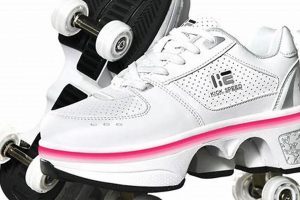
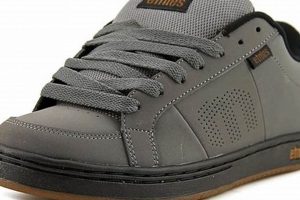
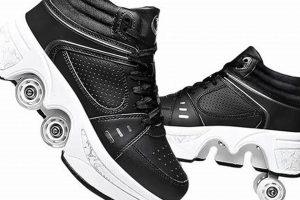
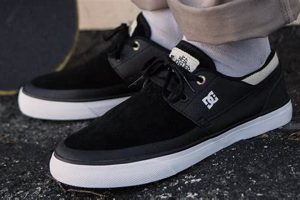
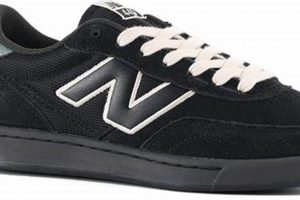
Footwear designed for skateboarding often features durable construction and specific design elements to enhance performance and protection. These elements can include reinforced stitching, cushioned insoles, and vulcanized rubber outsoles for improved grip and board feel. As an example, certain brands manufacture low-profile footwear specifically engineered to withstand the rigors of performing advanced skateboarding tricks.
The construction of robust footwear is important for the safety and performance of skateboarders. Durable materials extend the lifespan of the shoe, reducing the frequency of replacements, while specialized outsoles enable better control and stability on the board. Historically, skateboarders sought out existing footwear that provided some level of durability, but the emergence of brands dedicated to skateboarding allowed for the development of purpose-built footwear, leading to significant advancements in design and technology.
The subsequent sections will delve into specific features and materials commonly found in skateboarding-specific footwear, exploring the ways in which these design choices contribute to enhanced performance, protection, and overall rider experience. This analysis will also consider the influence of various brands and technological innovations on the evolution of this specialized footwear category.
Skate Footwear
Optimal skateboarding performance and safety necessitate careful consideration of footwear choices. The following tips highlight crucial aspects to evaluate when selecting appropriate skate footwear.
Tip 1: Durability Assessment: Prioritize footwear constructed with reinforced stitching and abrasion-resistant materials. Frequent ollies and other tricks place significant stress on the shoe’s upper and sides; durable construction mitigates premature wear and tear.
Tip 2: Outsole Composition Evaluation: Vulcanized rubber outsoles provide superior grip and board feel compared to alternative materials. A consistent, reliable connection between shoe and board is critical for control and precision.
Tip 3: Ankle Support Considerations: Depending on skating style and personal preference, mid- or high-top footwear can offer enhanced ankle support. This can be particularly beneficial for beginners or individuals prone to ankle injuries.
Tip 4: Insole Cushioning Importance: Adequate insole cushioning absorbs impact and reduces foot fatigue during prolonged skating sessions. Look for insoles constructed from materials such as polyurethane or EVA foam.
Tip 5: Fit and Comfort Verification: Ill-fitting footwear can impede performance and increase the risk of blisters and other foot ailments. Ensure a snug, comfortable fit that allows for natural foot movement within the shoe.
Tip 6: Lacing System Security: A secure lacing system prevents the shoe from loosening during use. Consider features such as recessed eyelets or lace protectors to minimize lace abrasion and breakage.
Tip 7: Toe Cap Reinforcement: The toe cap area experiences significant wear during skateboarding. Reinforced toe caps, often constructed from multiple layers of material or durable synthetics, prolong the shoe’s lifespan.
Adhering to these considerations when selecting skate footwear can significantly enhance performance, improve rider comfort, and extend the lifespan of the chosen shoes. These factors contribute to a safer and more enjoyable skateboarding experience.
The subsequent sections will further explore specific features and materials commonly employed in skateboarding footwear, providing a more in-depth understanding of the technology and design principles involved.
1. Durability
Durability is a paramount characteristic in footwear designed for skateboarding. The activity inherently involves abrasive contact with the skateboard deck, concrete surfaces, and other environmental elements. Consequently, materials and construction techniques that enhance resilience are essential. The selection of robust materials, such as reinforced suede, leather, or durable synthetic fabrics, directly influences the lifespan of the footwear. Furthermore, strategically placed reinforcement, particularly in high-wear areas like the toe cap and ollie zone, mitigates the effects of repetitive friction. For instance, double or triple stitching along seams and the incorporation of abrasion-resistant overlays are common methods employed to enhance structural integrity.
The relationship between durability and skateboarding-specific footwear is causal: the inherent demands of the sport necessitate durable construction to withstand the intense wear and tear. A lack of durability in these shoes results in rapid degradation, requiring frequent replacements, thereby increasing costs and potentially hindering performance. Practical examples include observing the wear patterns on well-used skateboarding footwear. The toe cap frequently shows significant abrasion from performing flip tricks, while the side of the shoe often exhibits wear from ollie maneuvers. Shoes lacking appropriate reinforcement in these areas will exhibit premature failure. Therefore, the practical significance of understanding the importance of durability is directly tied to the longevity and functionality of the footwear.
In conclusion, the durability of skateboarding footwear is not merely a desirable attribute but a fundamental requirement. Careful consideration of materials, construction techniques, and reinforcement strategies is crucial for ensuring the longevity and effectiveness of these specialized shoes. This understanding translates directly into reduced replacement frequency, improved performance, and enhanced overall value for the skateboarder. Future development should focus on innovative materials and designs that further enhance durability without compromising board feel or comfort.
2. Board Feel

Board feel, in the context of skateboarding footwear, represents the tactile sensitivity and responsiveness a skater experiences through their shoes when interacting with the skateboard. A direct correlation exists between footwear design and the resulting board feel. Thinner soles, constructed from materials like vulcanized rubber, typically provide a greater sense of connection to the board’s surface. This heightened sensitivity allows for more nuanced control and precise execution of maneuvers. Conversely, thicker-soled footwear, while potentially offering increased cushioning, can diminish board feel, leading to a less responsive and potentially less controlled skating experience. An example would be the noticeable difference in board control when switching from a shoe with a thick cupsole construction to one with a thin, flexible vulcanized sole. The former may offer more impact protection but sacrifices the intimate connection to the board crucial for intricate tricks.
The importance of board feel is amplified in technical skateboarding disciplines, such as flatground tricks and ledge skating, where subtle adjustments and precise foot placement are paramount. Skaters relying on board feel often report a greater sense of confidence and an improved ability to anticipate the board’s response. Furthermore, the outsole pattern and rubber compound play a role. A grippy outsole, coupled with a flexible sole, enhances board feel by maximizing surface contact and allowing the foot to conform to the board’s contours. The practical application of this understanding manifests in the product development of skateboarding footwear, where manufacturers actively experiment with sole thickness, rubber compounds, and outsole patterns to optimize board feel while maintaining durability and protection.
In summary, board feel is a critical component of skateboarding footwear that directly impacts a skater’s control, responsiveness, and overall performance. The design and materials of the sole significantly influence the degree of board feel experienced. While protection and durability remain essential considerations, prioritizing board feel through strategic design choices is paramount for skaters seeking optimal performance. Future advancements in materials and construction techniques may further refine the balance between board feel, protection, and durability in skateboarding footwear, continuing to shape the evolution of specialized skate shoes.
3. Ankle Support
Ankle support in skateboarding footwear is a critical design element impacting both performance and injury prevention. The repetitive and high-impact nature of skateboarding subjects the ankle joint to considerable stress, making adequate support a significant factor in a skater’s overall experience.
- High-Top vs. Low-Top Designs
The height of the shoe collar directly influences the degree of ankle support provided. High-top footwear extends above the ankle joint, offering increased stability and restricting excessive lateral movement. This can be beneficial for skaters prone to ankle rolls or those engaging in activities with higher impact forces. Conversely, low-top designs, while offering greater range of motion, provide less inherent support. The choice between these designs often reflects a trade-off between support and maneuverability, dictated by individual preferences and skating style. A practical example involves a skater transitioning from low-top footwear to high-tops after experiencing an ankle injury, indicating a direct correlation between shoe design and perceived support.
- Collar Padding and Construction
The design and materials utilized in the shoe collar play a vital role in ankle support. Ample padding around the ankle joint can provide cushioning and minimize friction. Stiffer collar construction, often achieved through the use of supportive materials or internal reinforcements, enhances stability and reduces the likelihood of ankle sprains. The effectiveness of collar padding is apparent in the comfort and security experienced during landings and other high-impact maneuvers. Inadequate collar padding can lead to discomfort and increased risk of injury, while a well-designed collar contributes to a more secure and confident skating experience.
- Lacing System Integration
The lacing system significantly contributes to ankle support by securing the foot within the shoe and preventing excessive movement. A well-designed lacing system allows for adjustable tightness, enabling skaters to customize the level of support based on their individual needs. High-top footwear often features additional eyelets near the ankle to facilitate a more secure and supportive fit. Conversely, a poorly designed lacing system can compromise ankle support, even in a high-top shoe. The efficacy of the lacing system is evident in its ability to maintain foot stability during dynamic movements, minimizing the risk of ankle displacement.
- Insole and Footbed Stability
While often overlooked, the insole and footbed contribute indirectly to ankle support by promoting proper foot alignment. A supportive insole can prevent overpronation or supination, reducing stress on the ankle joint. Footbeds that contour to the foot’s natural shape enhance stability and minimize unwanted movement within the shoe. The combined effect of a supportive insole and footbed results in improved overall foot stability, which in turn reduces the strain on the ankle. Skaters often experience a noticeable difference in ankle stability when transitioning from a flat, unsupportive insole to a contoured, supportive alternative, highlighting the importance of this often-underestimated component.
These facets highlight the multifaceted nature of ankle support in the context of skate footwear. Choosing the most suitable option requires a careful evaluation of individual needs, skating style, and the specific design features of the footwear. A properly supportive shoe enhances both performance and safety, mitigating the risk of ankle injuries and promoting a more confident and enjoyable skateboarding experience. The integration of innovative materials and biomechanical design principles continues to refine the landscape of ankle support in skate shoes.
4. Impact Cushioning

Impact cushioning is a critical feature in skateboarding footwear, directly addressing the high-impact forces generated during landings and other maneuvers. This feature significantly influences a skater’s comfort, performance, and long-term joint health.
- Material Composition
The materials used in the midsole and insole directly determine the extent of impact absorption. Polyurethane (PU) and Ethylene-vinyl acetate (EVA) are commonly employed due to their shock-absorbing properties. PU offers superior durability and rebound, while EVA provides a lighter and more flexible cushioning experience. The choice of material impacts the overall feel of the shoe and its capacity to mitigate impact forces. For instance, skaters performing large gaps or stair sets often benefit from footwear with PU midsoles for enhanced protection. Practical examples include observing the compressed state of worn-out insoles, indicating the cumulative effect of impact forces on the cushioning material.
- Cushioning Placement
Strategic placement of cushioning within the shoe is crucial for optimizing impact absorption. High-impact zones, such as the heel and forefoot, often feature denser or multi-layered cushioning to provide targeted protection. Heel airbags or gel inserts are sometimes incorporated to further attenuate impact forces. This targeted approach ensures that cushioning is concentrated where it is most needed. Examples include the development of skateboarding shoes with reinforced heel cushioning designed specifically to absorb the impact from ollies and kickflips, illustrating how design directly addresses common skateboarding-related stress points.
- Midsole Thickness and Density
The thickness and density of the midsole influence the level of impact protection. Thicker midsoles generally provide greater cushioning but can also reduce board feel and increase the shoe’s overall weight. Denser materials offer more robust impact absorption but may sacrifice flexibility. Balancing these factors is critical for creating footwear that effectively protects against impact while maintaining the necessary board feel for optimal performance. The evolution of skateboarding footwear has seen a trend toward lighter, more responsive cushioning materials that minimize bulk without compromising impact protection. A skater might choose a shoe with a thinner, denser midsole for street skating, prioritizing board feel, while opting for a thicker, more cushioned shoe for vert or park skating, where impact forces are greater.
- Insole Design and Function
The insole contributes significantly to impact cushioning by providing an additional layer of shock absorption and support. OrthoLite and similar open-cell foam insoles offer superior breathability and long-term cushioning compared to standard insoles. Contoured insoles provide arch support and enhance stability, further reducing stress on the foot and ankle. The insole’s design and material composition directly impact the overall comfort and impact absorption of the shoe. Skaters often replace stock insoles with aftermarket options that provide enhanced cushioning and support, demonstrating the recognition of the insole’s importance in mitigating impact forces.
The integration of advanced materials, strategic cushioning placement, and thoughtfully designed midsoles and insoles directly enhances the impact cushioning capabilities of skateboarding footwear. This attention to detail contributes to improved comfort, reduced fatigue, and a decreased risk of injuries associated with high-impact activities. As skateboarding evolves, continued innovation in cushioning technology remains paramount for optimizing both performance and long-term joint health.
5. Grip

Grip is a fundamental attribute of skateboarding footwear, directly influencing a skater’s control and stability on the board. The outsole material, typically vulcanized rubber, is engineered to provide a high coefficient of friction against the skateboard’s grip tape. This friction is essential for executing maneuvers, maintaining balance, and preventing slippage. Insufficient grip compromises board control, increasing the risk of falls and hindering the performance of tricks. For example, worn or damaged outsoles exhibit reduced grip, making it difficult to maintain a stable stance during landings. The durometer, or hardness, of the rubber compound also plays a role, with softer compounds generally offering superior grip on smooth surfaces.
The design of the outsole pattern further enhances grip by increasing the contact surface area and providing channels for water or debris to escape, maintaining friction in varied conditions. Intricate patterns, such as herringbone or geometric designs, are often incorporated to maximize grip in multiple directions. Consider a skater attempting a technical trick on a damp surface. A shoe with a well-designed outsole pattern will channel away moisture, maintaining a secure connection between the shoe and the board. Conversely, a smooth or worn outsole pattern will likely result in slippage and a failed attempt. The importance of outsole design is evident in the continuous innovation undertaken by footwear manufacturers, who experiment with different patterns and rubber compounds to optimize grip performance.
Therefore, the interplay between outsole material, durometer, and pattern determines the overall grip effectiveness of skateboarding footwear. This characteristic directly impacts a skater’s ability to control the board and execute maneuvers safely and efficiently. Ongoing research and development efforts continue to focus on enhancing grip performance through novel materials and design innovations, recognizing its critical role in the broader context of skateboarding. The understanding of grip’s significance contributes to safer and more confident skateboarding experiences.
6. Fit

Proper fit is a crucial, yet often overlooked, aspect of skateboarding footwear. Optimal shoe fit directly influences comfort, performance, and injury prevention, rendering it a critical factor in a skater’s overall experience. Ill-fitting shoes can lead to blisters, reduced board feel, and increased risk of ankle or foot injuries.
- Length and Width Dimensions
Accurate measurement of foot length and width is fundamental for determining the appropriate shoe size. Skateboarding footwear should provide adequate toe room, preventing pressure and friction that can cause blisters or calluses. Width is equally important; shoes that are too narrow can constrict the foot, leading to discomfort and impaired circulation, while shoes that are too wide can result in excessive movement within the shoe, reducing stability and board feel. A common example is a skater experiencing toe cramping or blisters after prolonged use of shoes that are too small. Proper sizing, informed by accurate foot measurements, mitigates these issues.
- Internal Shoe Shape and Volume
Footwear brands often utilize different lasts (the foot-shaped form around which the shoe is constructed), resulting in variations in internal shape and volume. These variations can significantly impact fit, particularly for individuals with unique foot shapes or orthotic requirements. Some shoes may offer a narrower toe box, while others provide more volume in the midfoot or heel. Understanding these shape variations and selecting footwear that complements the individual’s foot morphology is essential for achieving a comfortable and secure fit. For instance, a skater with a wide forefoot may find a particular brand’s footwear constricting, while another brand with a wider last provides a more accommodating fit.
- Lacing System and Adjustability
The lacing system plays a critical role in securing the foot within the shoe and allowing for customized fit adjustments. A well-designed lacing system distributes pressure evenly across the foot, preventing hot spots and ensuring a snug, yet comfortable, fit. Variations in lacing systems, such as ghillie lacing or lace loops, offer different levels of adjustability. Skaters often adjust lacing tightness to accommodate sock thickness or to fine-tune the level of support provided. The effectiveness of the lacing system is evident in its ability to prevent heel slippage and maintain foot stability during dynamic movements.
- Sock Thickness and Material
Sock selection directly impacts the overall fit and comfort of skateboarding footwear. Thicker socks can take up additional volume within the shoe, potentially requiring a larger shoe size. Conversely, thinner socks may necessitate tightening the lacing system to achieve a secure fit. The material composition of the sock also influences moisture management and friction, which can contribute to blister formation. Selecting socks made from moisture-wicking materials, such as synthetic blends or merino wool, can enhance comfort and reduce the risk of foot ailments. Skaters often experiment with different sock thicknesses and materials to optimize fit and comfort based on environmental conditions and personal preferences. An ill fitting shoe can lead to heel slippage during ollies.
In conclusion, achieving an optimal fit in skateboarding footwear is paramount for maximizing performance, comfort, and safety. Understanding foot dimensions, shoe shape variations, lacing system adjustability, and the influence of sock selection enables skaters to make informed choices that promote a secure, comfortable, and responsive connection with the board. Neglecting the importance of fit can result in discomfort, reduced performance, and an increased risk of injuries that can hinder the overall skateboarding experience. Therefore, the relationship between a well-fitted shoe and a skaters abilities are highly dependent.
7. Toe Protection
Toe protection is a crucial design consideration in skateboarding footwear, directly addressing the severe and repetitive abrasion experienced during many skateboarding maneuvers. The toe area of a skate shoe is often subjected to intense friction from the grip tape when performing flip tricks and other technical maneuvers. Therefore, the implementation of robust toe protection features is essential for enhancing the durability and longevity of the shoe, as well as for providing a measure of protection to the skater’s toes.
- Reinforced Toe Cap Materials
The toe cap, the foremost section of the shoe, often incorporates reinforced materials to resist abrasion. Durable materials such as suede, leather, or synthetic overlays are frequently used. Some designs employ multiple layers of these materials, creating a robust barrier against the wear induced by grip tape contact. Practical examples include observing the distinct wear patterns on the toe cap of a well-used skate shoe, where the reinforced material gradually erodes over time. Failure to adequately reinforce this area leads to premature shoe failure and potential discomfort or injury.
- Stitching and Bonding Techniques
The method of attaching the toe cap to the rest of the shoe significantly affects its ability to withstand abrasion. Reinforced stitching, often utilizing multiple rows or specialized thread, strengthens the bond between the toe cap and the upper. Additionally, bonding agents and adhesives can be employed to further secure the toe cap and prevent separation. A common example involves comparing shoes with single-stitched toe caps to those with triple-stitched designs, with the latter exhibiting significantly greater resistance to wear and tear. Bond failure results in gapping and separation of the toe cap, rendering the shoe unusable.
- Toe Bumper Design and Integration
Some skateboarding footwear incorporates a toe bumper, an extension of the outsole that wraps around the toe area, providing an additional layer of protection. This design element shields the toe cap from direct impact and abrasion, extending the lifespan of the shoe. The toe bumper is particularly effective in protecting against delamination and peeling of the toe cap. An example is the visual comparison of shoes with and without a toe bumper, revealing how the bumper significantly reduces wear on the toe cap’s leading edge. The absence of a bumper increases the vulnerability of the toe area to damage.
- Internal Toe Protection Elements
Beyond the external features, some skateboarding shoes include internal toe protection elements, such as a reinforced toe box or an additional layer of padding, to further safeguard the skater’s toes. These internal elements can provide cushioning and prevent discomfort from repeated impact or abrasion. The presence of an internal toe protector is often appreciated by skaters who perform highly technical tricks involving significant toe contact with the board. The effectiveness of this feature is often felt rather than seen, contributing to a more comfortable and confident skating experience by mitigating potential toe injuries.
These elements of toe protection collectively contribute to the overall durability and functionality of skateboarding footwear. The implementation of robust toe protection features is a direct response to the demands of the sport, ensuring that skate shoes can withstand the rigors of frequent use and provide skaters with the necessary protection and support. Continuous innovation in materials and design seeks to further enhance toe protection, contributing to the evolution of specialized skate footwear and reducing waste.
Frequently Asked Questions
The following section addresses common inquiries regarding the selection, maintenance, and performance characteristics of footwear designed specifically for skateboarding.
Question 1: What distinguishes skateboarding footwear from conventional athletic shoes?
Skateboarding footwear typically incorporates features tailored to the specific demands of the activity, including reinforced construction, enhanced grip, and specialized cushioning. These elements contribute to increased durability, board feel, and impact protection, features often absent or less pronounced in general athletic shoes.
Question 2: How frequently should skateboarding footwear be replaced?
The lifespan of skateboarding footwear varies significantly depending on skating frequency, style, and the quality of the materials. However, signs of wear such as sole separation, fabric tears, and loss of cushioning indicate the need for replacement. Regular inspection and assessment of shoe condition are recommended.
Question 3: What role does outsole material play in the performance of skateboarding footwear?
Outsole material, typically vulcanized rubber, provides the primary source of grip and board feel. The composition and pattern of the outsole directly influence the skater’s control and connection with the board. Softer rubber compounds generally offer superior grip, while more intricate patterns enhance traction in varied conditions.
Question 4: How does proper fit contribute to skateboarding performance and safety?
Proper fit is critical for preventing blisters, enhancing board feel, and minimizing the risk of ankle or foot injuries. Skateboarding footwear should provide adequate toe room, a secure heel fit, and appropriate width to accommodate the foot’s natural shape. Ill-fitting shoes can compromise control and increase the likelihood of discomfort or injury.
Question 5: Is specialized skateboarding footwear necessary for beginners?
While not strictly required, specialized skateboarding footwear offers significant benefits for beginners, including enhanced durability, grip, and impact protection. These features can facilitate skill development and reduce the risk of injuries associated with learning the fundamentals of skateboarding.
Question 6: How should skateboarding footwear be maintained to prolong its lifespan?
Regular cleaning to remove dirt and debris can help prevent premature wear and tear. Avoiding excessive exposure to moisture and extreme temperatures is also recommended. Furthermore, repairing minor damage, such as loose stitching or small tears, can extend the lifespan of the footwear.
These FAQs provide a foundational understanding of skateboarding footwear, addressing key aspects related to selection, performance, and maintenance. Informed decision-making promotes a safer and more enjoyable skateboarding experience.
The following sections will explore the future trends and technological innovations shaping the evolution of skateboarding footwear, examining the potential impact on performance, sustainability, and rider experience.
Concluding Remarks
This exploration has outlined key features of footwear engineered for skateboarding. Durability, board feel, ankle support, impact cushioning, grip, fit, and toe protection collectively define the functional parameters of this specialized footwear. Each characteristic plays a distinct role in enhancing performance, mitigating injury risk, and extending the lifespan of the shoe under the abrasive conditions inherent to skateboarding.
The continuous evolution of skateboarding footwear reflects a commitment to innovation in materials and design. As technology advances, so too will the potential to optimize performance and durability. Skateboarders, designers, and manufacturers must continue to prioritize the integration of these enhancements to ensure the advancement of the sport and the safety of its participants. The future of skateboarding rests, in part, on a dedication to this ongoing refinement.