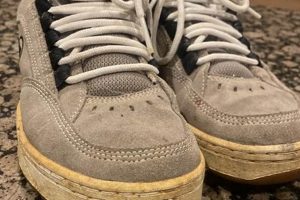
Footwear designed for skateboarding, often characterized by durability, flat soles for enhanced board feel, and reinforced construction to withstand the rigors of tricks and abrasive surfaces, represents a specific category within the broader shoe market. These shoes typically incorporate features such as padded collars and tongues for impact absorption and protection. A prevalent example is the low-profile design with a vulcanized rubber sole, popular for its grip and flexibility.
The significance of these specialized shoes lies in their ability to provide skaters with the necessary support, grip, and protection required for optimal performance and safety. Historically, these shoes evolved from general athletic footwear to meet the specific demands of skateboarding, leading to innovations in materials and design. This evolution has contributed to the growth and professionalization of skateboarding as a sport and culture.
The following sections will delve into specific aspects of skate shoe design, materials, and impact on the skateboarding community, further exploring the critical role these shoes play in the sport.
Skate Shoe Selection & Maintenance
Optimal performance and longevity of skateboarding footwear necessitates careful selection and consistent maintenance. The following tips provide guidance on ensuring proper fit, care, and utilization of skate shoes.
Tip 1: Prioritize Fit Assessment: Accurate sizing is paramount. Skate shoes should fit snugly but not restrictively, allowing for ample board feel and preventing slippage. Try on shoes with skate socks to simulate actual usage conditions.
Tip 2: Inspect Construction Quality: Examine stitching, sole adhesion, and material integrity. Reinforced ollie pads and double-stitched seams are indicators of enhanced durability, crucial for withstanding abrasion.
Tip 3: Consider Sole Composition: Vulcanized soles offer superior board feel and flexibility, while cup soles provide enhanced impact protection. Select a sole type aligned with skateboarding style and terrain.
Tip 4: Rotate Shoe Usage: Alternating between multiple pairs extends the lifespan of each. This allows materials to decompress and reduces wear concentration, particularly in high-stress areas.
Tip 5: Implement Regular Cleaning: Remove dirt and debris with a brush or damp cloth after each session. Avoid harsh detergents, which can degrade materials. Proper cleaning preserves grip and aesthetic appeal.
Tip 6: Reinforce Vulnerable Areas: Apply shoe goo or similar adhesives to reinforce areas prone to wear, such as the toe cap and ollie area. Early reinforcement minimizes damage and prolongs usability.
Tip 7: Utilize Shoe Trees: Inserting shoe trees after use helps maintain shape and absorbs moisture, preventing deformation and odor buildup.
Adhering to these guidelines ensures skate shoes perform optimally, providing the necessary support and protection while maximizing their usable lifespan.
The subsequent sections will explore the evolution of skate shoe technology and the future trends shaping the industry.
1. Durability & Construction

The resilience and structural integrity of skateboarding footwear are paramount considerations, directly influencing performance, safety, and the economic lifespan of these specialized shoes. The following facets explore key aspects of durability and construction as they pertain to skate shoes.
- Material Selection
The choice of materials significantly impacts a shoe’s ability to withstand the abrasive forces encountered during skateboarding. Common materials include suede, canvas, and leather, each possessing varying degrees of abrasion resistance. Suede, known for its durability and flexibility, is often reinforced in high-wear areas. The implementation of synthetic materials can further enhance water resistance and tear strength.
- Stitching & Seam Reinforcement
The method and quality of stitching determine the structural integrity of the shoe. Double or triple stitching along critical seams, particularly in the ollie area and around the sole, minimizes the risk of separation under stress. Reinforced seams contribute to the shoe’s overall ability to endure repeated impacts and friction.
- Sole Adhesion & Vulcanization
The bond between the upper and sole is critical for durability. Vulcanization, a process involving heat and pressure, creates a strong and flexible bond between the rubber sole and the upper material. Properly vulcanized soles are less prone to delamination, extending the usable life of the shoe.
- Impact Absorption & Cushioning
Internal cushioning systems, often utilizing materials like polyurethane or EVA foam, provide impact absorption and protect the skater’s feet from repetitive stress. While primarily focused on comfort, effective cushioning also reduces the strain on the shoe’s overall structure, preventing premature wear and tear.
The confluence of these construction elements dictates the overall performance and longevity of skate shoes. Prioritizing robust materials, reinforced stitching, secure sole adhesion, and effective impact absorption ensures that the shoes can withstand the rigors of skateboarding, providing skaters with the support and protection needed to perform at their best while extending the lifespan of their footwear.
2. Board Feel & Grip

Effective interaction between a skateboard and the skaters feet hinges critically on the board feel and grip characteristics of the footwear. Within the context of specialized skateboarding shoes, these features determine the skater’s ability to execute maneuvers with precision and maintain control. The design and materials of the sole are the primary determinants of board feel, dictating the sensitivity through which the skater perceives the board’s movements. Softer, thinner soles typically enhance board feel, facilitating nuanced adjustments. Grip, conversely, is a function of the soles rubber compound and tread pattern, influencing the degree to which the shoe adheres to the skateboards surface. For example, a vulcanized rubber sole with a herringbone tread pattern provides a balance of grip and flexibility, enabling controlled movements and board manipulation.
Understanding the interplay between board feel and grip is pivotal for skaters selecting appropriate footwear. Shoes designed with a focus on board feel often sacrifice some degree of impact protection, while those prioritizing grip may exhibit reduced flexibility. Practical applications of this understanding include skaters opting for thinner-soled shoes for technical street skating, where precise foot placement is paramount, or selecting shoes with aggressive tread patterns for vert skating, where maintaining contact with the board during aerial maneuvers is essential. This selection process reflects a conscious trade-off based on the skaters preferred style and the demands of the terrain.
In summary, the combination of board feel and grip profoundly influences skateboarding performance. The design of skateboarding shoes directly impacts a skater’s ability to perceive and control the board. Selection of skate footwear should be guided by a thorough evaluation of these factors and their alignment with the skater’s specific needs and preferences. Failure to account for this critical relationship can lead to reduced control, increased risk of injury, and diminished overall performance.
3. Impact Protection
Sustained and repetitive impact is inherent to skateboarding, necessitating specialized footwear to mitigate injury risk. Impact protection in skateboard shoes represents a critical design element, directly influencing skater safety and performance longevity. The following details elucidate key facets of impact protection within the context of skateboarding footwear.
- Midsole Cushioning
The midsole, positioned between the insole and outsole, serves as the primary impact absorption layer. Materials such as EVA (ethylene-vinyl acetate) foam or polyurethane are commonly employed due to their shock-absorbing properties. Higher density materials offer greater impact resistance, while lower density options prioritize flexibility. For example, a skater performing stair drops requires a shoe with a high-density midsole to attenuate the force of landing, reducing stress on joints and preventing potential bone bruises. Conversely, a skater focusing on flat ground tricks might prefer a more flexible, lower-density midsole for enhanced board feel.
- Insole Technology
The insole contributes to overall impact protection by providing an additional layer of cushioning directly under the foot. Gel-based or foam-based insoles can further dissipate impact forces and enhance comfort. Advanced insole designs incorporate contoured shapes to provide arch support and improve foot stability. The practical implication is reduced foot fatigue and minimized risk of plantar fasciitis, especially during prolonged skateboarding sessions. An example includes insoles with PORON, a high-performance urethane foam known for its impact absorption and resistance to compression set.
- Heel Reinforcement
The heel region is particularly vulnerable to impact during landings. Skate shoes often incorporate reinforced heel counters or additional padding to provide enhanced protection. External heel cups, constructed from durable materials like thermoplastic polyurethane (TPU), offer structural support and further mitigate impact forces. Consider a scenario where a skater lands heavily on their heels; the reinforced heel construction serves to distribute the force, protecting the ankle joint and preventing potential sprains or fractures. Certain models include airbags or gel inserts within the heel for augmented cushioning.
- Collar and Tongue Padding
While primarily contributing to comfort, padding in the collar and tongue regions also provides a degree of impact protection, particularly during falls or accidental board strikes. Thicker padding can help to absorb impact forces and prevent abrasions. An example would be the padded high-top design, offering additional ankle support and protection compared to a low-profile shoe. The density and distribution of the padding are crucial factors in determining its effectiveness.
These facets, working in concert, define the impact protection capabilities of skateboarding footwear. The design and materials utilized directly correlate with the shoe’s ability to mitigate injury risk and enhance skater comfort, ultimately influencing performance and longevity in the sport.
4. Style & Aesthetics
The visual design of skate shoes transcends mere functionality, acting as a significant form of self-expression within skateboarding culture. These aesthetic choices directly influence consumer preference and brand identity in the skateboarding footwear market.
- Color Palettes and Graphics
Skate shoes frequently incorporate bold color combinations, patterns, and graphic designs that reflect current fashion trends or pay homage to skateboarding history. Limited-edition releases often feature artwork by renowned skaters or artists, transforming the shoe into a collectible item. The adoption of specific color schemes can signify affiliation with a particular skate crew or regional scene. For example, a brand may release a shoe with colors inspired by a famous skate spot, directly appealing to skaters familiar with that location.
- Silhouette and Design Elements
The overall shape and profile of a skate shoe contribute significantly to its aesthetic appeal. Low-top, mid-top, and high-top designs cater to varying preferences and offer different levels of ankle support. Design elements, such as exposed stitching, reinforced ollie pads, and unique lacing systems, further differentiate skate shoes and contribute to their visual identity. Consider the evolution from bulky, heavily padded shoes of the 1990s to the slimmer, more streamlined silhouettes prevalent today, reflecting a shift in skateboarding style and consumer taste.
- Material Choices and Textures
The materials used in construction, including suede, leather, canvas, and synthetic alternatives, impact both the durability and visual texture of skate shoes. The juxtaposition of different materials, such as a suede upper with a contrasting leather heel panel, creates visual interest and adds depth to the design. Embossed logos, perforations, and decorative stitching enhance the tactile and visual experience. A brand may introduce a shoe with a textured rubber toe cap for added durability and a distinct aesthetic.
- Branding and Logo Placement
The strategic placement of brand logos plays a crucial role in shaping consumer perception and brand recognition. Prominent logo placement on the side panel, tongue, or heel counter reinforces brand identity. Subtle logo integration, such as embossed or debossed designs, offers a more understated approach. The use of iconic logos and brand imagery solidifies a skate shoe’s association with a particular company and its history within the skateboarding community. Limited-edition collaborations often feature co-branding, merging the identities of multiple brands for heightened appeal.
These stylistic facets coalesce to define the aesthetic landscape of skateboarding footwear. The integration of color, design, materials, and branding elevates skate shoes beyond mere functional items, transforming them into artifacts of self-expression and cultural identity within the skateboarding community. The aesthetic values dictate a significant portion of the market and appeal for skateboarding footwear.
5. Brand & Sponsorship
The relationship between brand affiliation, sponsorships, and skate shoes significantly impacts both the market dynamics and the professional skateboarding landscape. Brands actively seek to align themselves with prominent skaters, leveraging endorsements to enhance product visibility and credibility within the skateboarding community. The visibility associated with a sponsored skater wearing a particular model of footwear directly influences consumer demand. Real-world examples include professional skaters designing signature models of skate shoes, which then become highly sought-after items, reinforcing the brand’s market position. This dynamic creates a symbiotic relationship wherein skaters benefit from financial support and exposure, while brands capitalize on the skater’s influence to drive sales and build brand loyalty.
The importance of sponsorships extends beyond mere advertising. For professional skaters, sponsorship agreements often provide essential financial resources that enable them to pursue their careers. These resources can cover travel expenses, competition entry fees, and living expenses, allowing skaters to dedicate more time to training and competing. In return, the skater represents the brand in competitions, promotional events, and media appearances, effectively serving as a brand ambassador. The design and features of skate shoes themselves are often influenced by sponsored skaters, providing valuable feedback on performance and durability requirements. This collaborative process leads to the development of improved products that better meet the needs of the skateboarding community.
Understanding the interplay between brands, sponsorships, and skate shoes is crucial for navigating the skateboarding market. Challenges within this dynamic include the potential for conflicts of interest, the ethical considerations surrounding endorsements, and the pressure on skaters to maintain a positive public image. Nonetheless, the connection between brands and skaters remains a powerful force in shaping the evolution of skate shoe design and the professional skateboarding landscape, with the continued pursuit of high-performance footwear and effective marketing strategies.
Frequently Asked Questions about Skateboarding Footwear
This section addresses common inquiries concerning the selection, utilization, and maintenance of skateboarding footwear, providing factual information to inform purchasing decisions and promote product longevity.
Question 1: What distinguishes skateboarding footwear from general athletic shoes?
Skateboarding footwear features reinforced construction, often including double-stitched seams and durable materials, to withstand abrasion. Specific sole designs are implemented to enhance board feel and grip. These features are generally absent in standard athletic shoes.
Question 2: How should skateboarding footwear be sized for optimal performance?
Skateboarding footwear should fit snugly, allowing minimal internal movement while accommodating skate socks. Excessive looseness can impede board control and increase the risk of injury.
Question 3: What is the expected lifespan of skateboarding footwear under normal usage conditions?
The lifespan of skateboarding footwear varies depending on usage frequency and intensity. Regular skaters can expect to replace their shoes every one to three months, while less frequent skaters may extend the lifespan to six months or more. Sole wear and material degradation are indicators of the need for replacement.
Question 4: What are the recommended cleaning methods for skateboarding footwear?
Skateboarding footwear should be cleaned with a soft brush and mild soap to remove dirt and debris. Harsh detergents and abrasive cleaners should be avoided, as they can damage the materials and compromise the shoe’s integrity.
Question 5: How can the durability of skateboarding footwear be enhanced?
The durability of skateboarding footwear can be enhanced by applying shoe goo or similar adhesives to reinforce high-wear areas, rotating between multiple pairs, and avoiding exposure to extreme temperatures or moisture.
Question 6: What safety features should be prioritized when selecting skateboarding footwear?
Safety features to prioritize include adequate ankle support, reinforced toe caps, and impact-absorbing midsoles. These features contribute to reducing the risk of sprains, fractures, and other skateboarding-related injuries.
In summary, selecting skateboarding footwear that meets specific needs requires careful consideration of fit, durability, and safety features. Regular maintenance and appropriate usage practices can extend the lifespan and enhance the performance of these specialized shoes.
The following segment will delve into the future trends impacting skateboard shoe materials and designs.
In Conclusion
This exploration of hot topix skater shoes has highlighted several key aspects, from the importance of durable construction and material selection to the influence of board feel, grip, and impact protection on performance. Style and aesthetics have been shown to be significant factors in consumer choice, while brand affiliations and sponsorships contribute to the broader cultural landscape of skateboarding footwear. These elements collectively determine the suitability and value of skate shoes for skateboarders of all skill levels.
As the skateboarding industry continues to evolve, a critical understanding of these features remains essential for both consumers and manufacturers. Prioritizing informed selection, proper maintenance, and a commitment to safety will contribute to an improved skateboarding experience and the continued advancement of skate shoe technology. By engaging with the information presented, stakeholders contribute to fostering responsible and sustainable practices within this dynamic sector.
![Best Supra Skate Shoe: Style & Performance [2024] | Learn to Surf & Skate: A Beginner's Step-by-Step Guide](https://universitysurfandskate.com/wp-content/uploads/2026/03/th-713-300x200.jpg "Best Supra Skate Shoe: Style & Performance [2024] Learn to Surf & Skate: A Beginner's Step-by-Step Guide")