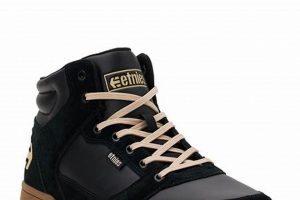
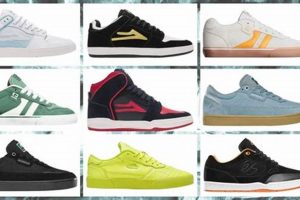
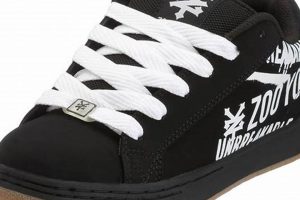
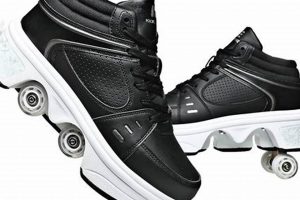
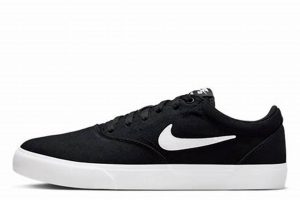
Footwear designed for skateboarding exhibits specific characteristics tailored to the demands of the sport. These specialized shoes typically incorporate features such as durable construction, reinforced stitching, and vulcanized rubber soles for enhanced grip and board feel. Intended for male individuals, the products cater to a specific demographic within the skateboarding community.
Proper footwear is critical for both performance and safety in skateboarding. The construction and materials employed offer protection against impact and abrasion, while the sole design facilitates precise control over the skateboard. The evolution of these shoes mirrors the development of skateboarding itself, with manufacturers continuously innovating to improve comfort, durability, and functionality for the rider.
The following sections will delve into the crucial aspects of selecting appropriate footwear, examining features such as construction materials, sole types, and fit considerations. This article will also explore how these elements contribute to both performance and injury prevention.
Selecting Appropriate Footwear for Skateboarding
Choosing the right footwear significantly impacts skateboarding performance and safety. The following guidelines offer a structured approach to selecting suitable skate shoes.
Tip 1: Prioritize Durability: Select footwear constructed with robust materials like suede or reinforced canvas. Double-stitched seams further enhance longevity, withstanding the abrasive nature of skateboarding.
Tip 2: Evaluate Sole Construction: Vulcanized rubber soles offer superior board feel and grip. Cupsole constructions provide increased impact protection, suitable for riders performing more demanding tricks.
Tip 3: Consider Padding and Support: Adequate padding around the ankle and tongue areas provides crucial impact absorption and support. Internal cushioning systems enhance comfort during extended use.
Tip 4: Assess Fit Accuracy: Ensure a snug, comfortable fit that allows for natural foot movement without excessive slippage. Ill-fitting footwear can compromise control and increase the risk of injury.
Tip 5: Examine Lacing Systems: Recessed or reinforced lacing systems minimize wear and tear from griptape. Consider models with additional lace protection features to extend lifespan.
Tip 6: Analyze Tread Pattern: A well-defined tread pattern enhances grip and board control. Look for patterns designed to provide optimal contact with the skateboard surface.
Tip 7: Factor in Skate Style: Aggressive street skaters may benefit from more durable, supportive models, while park riders might prefer lighter, more flexible options.
By carefully considering these factors, skateboarders can select footwear that maximizes performance, comfort, and safety. The correct footwear is a critical component of the overall skateboarding experience.
The subsequent section will explore specific product recommendations based on various skateboarding styles and skill levels.
1. Durability

The operational life of skateboarding footwear is a critical factor in both cost-effectiveness and performance. “Durability,” in the context of skate shoes for men, refers to the footwear’s capacity to withstand the considerable abrasion, impact, and stress inherent in skateboarding activities. The selection of materials and construction techniques directly influences this attribute.
- Material Selection
The choice of upper materials significantly impacts resistance to wear. Suede, a split leather, exhibits superior abrasion resistance compared to canvas or synthetic fabrics. Reinforced stitching, particularly in high-stress areas such as the toe and ollie patch, further enhances longevity. Similarly, the use of high-density rubber compounds in the sole contributes to abrasion resistance against concrete and asphalt surfaces.
- Construction Techniques
Vulcanized construction, a process involving bonding the sole to the upper with heat and pressure, provides a strong and flexible bond. Cupsole construction, in contrast, features a stitched sole unit that encapsulates the foot, offering increased impact protection and structural rigidity. Each construction method presents trade-offs between board feel, flexibility, and overall lifespan.
- Reinforcement Strategies
Manufacturers often incorporate reinforcement strategies to address specific wear points. Rubber toe caps extend the lifespan of the toe area, while reinforced eyelets prevent lace breakage. Internal reinforcements, such as additional layers of material or strategically placed padding, enhance structural integrity and resistance to tearing.
- Sole Pattern and Thickness
The tread pattern of the outsole influences grip and wear characteristics. Deeper, more aggressive patterns typically offer enhanced grip but may wear down more rapidly. Sole thickness also plays a role in durability; thicker soles provide greater cushioning and abrasion resistance but can reduce board feel.
The aforementioned elements collectively determine the durability of footwear intended for skateboarding. A careful assessment of these factors allows for informed purchasing decisions that balance performance requirements with the need for long-lasting products, ensuring sustained performance and minimizing the frequency of replacements.
2. Grip

Grip, in the context of footwear for skateboarding, refers to the frictional force generated between the shoe’s outsole and the skateboard’s grip tape. This force is critical for maintaining control and executing maneuvers effectively. Inadequate grip directly impacts a skater’s ability to perform tricks, maintain balance, and prevent falls, thereby influencing both performance and safety. Footwear designed for male skateboarders must therefore prioritize outsole materials and tread patterns that maximize frictional contact with the board surface. Real-world examples of inadequate grip include slipping during an ollie, losing control during a grind, or experiencing difficulty maintaining balance on a ramp, all of which increase the risk of injury. The practical significance of understanding grip lies in the ability to select footwear that enhances board control and confidence, allowing for safer and more effective skateboarding.
The primary factor influencing grip is the outsole material. Vulcanized rubber, commonly employed in skate shoe construction, provides a high coefficient of friction compared to other materials. Variations in rubber compound formulations and tread patterns further modulate grip characteristics. Herringbone or waffle patterns are prevalent due to their ability to conform to the irregular surface of grip tape, increasing the contact area. Moreover, the flexibility of the sole is a crucial aspect, allowing the shoe to mold to the concave shape of the board. Additionally, the presence of flex grooves can enhance this adaptability and increase grip consistency across varying board angles. The proper design of footwear takes into account these factors to optimize the interface between shoe and skateboard, which is essential to successful skateboarding.
In summary, grip is a fundamental attribute of skateboarding footwear, directly affecting a skater’s control, safety, and performance. The choice of outsole material, tread pattern, sole flexibility, and design are pivotal in maximizing the frictional force between shoe and board. Challenges remain in creating outsoles that maintain optimal grip under varying environmental conditions, such as wet or dusty surfaces. Further research and development of innovative materials and tread designs are essential to continually improve this critical aspect of skateboarding footwear and provide skaters with the grip they require to improve and succeed.
3. Support

In the context of skate shoes for men, “support” denotes the capacity of the footwear to stabilize the foot and ankle during high-impact activities. This stability is paramount in mitigating the risk of injuries such as sprains, strains, and fractures, commonly encountered in skateboarding. Skateboarding involves repetitive, forceful movements, including jumps, landings, and rapid changes in direction, placing substantial stress on the lower extremities. Adequate support is not merely a comfort feature; it is an essential biomechanical component that contributes directly to injury prevention and performance enhancement. For example, a skater attempting a kickflip without sufficient ankle support is significantly more susceptible to rolling an ankle upon landing.
Support within skate shoes is achieved through several structural elements. High-top designs offer increased ankle coverage, providing greater stability compared to low-top alternatives. Internal padding, particularly around the ankle collar and heel counter, minimizes movement and cushions impacts. Stiff midsoles, often incorporating materials like polyurethane or ethylene-vinyl acetate (EVA), limit excessive pronation and supination of the foot. Moreover, reinforced heel counters maintain the foot’s alignment within the shoe, preventing lateral displacement during abrupt maneuvers. Real-world applications of these features include increased confidence when executing complex tricks and reduced fatigue during extended skate sessions.
The degree of support required varies depending on individual biomechanics, skating style, and frequency of skateboarding. Skaters with a history of ankle injuries or those engaging in more aggressive forms of skateboarding may benefit from footwear with enhanced support features. Choosing the optimal level of support involves a trade-off between stability and flexibility. Excessive rigidity can restrict movement and diminish board feel, while inadequate support can compromise safety. Addressing the challenges of providing both adequate protection and optimal performance requires continuous innovation in materials and design. Ultimately, the understanding of “support” in the context of skate shoes for men allows for informed decision-making that prioritizes both safety and performance.
4. Board Feel

Board feel, in the context of skate shoes for men, denotes the tactile sensitivity experienced through the sole of the shoe, facilitating a direct connection between the skateboarder’s foot and the board. This sensory input allows for nuanced control and precise execution of maneuvers. Reduced board feel impairs the skater’s ability to perceive the board’s orientation, leading to decreased accuracy and control. The thickness and composition of the shoe’s sole are primary determinants of board feel. Thinner soles, typically constructed from vulcanized rubber, transmit more tactile information compared to thicker, cushioned soles. For instance, a skater performing a kickflip relies on board feel to gauge the precise moment to flick the ankle, initiating the board’s rotation.
The practical significance of understanding board feel lies in the ability to select footwear that optimizes the skater’s connection to the board. Advanced skateboarders often prioritize shoes with minimal cushioning in the forefoot to maximize tactile feedback. This allows for subtle adjustments in foot position and pressure distribution, enabling precise control during grinds, slides, and other technical tricks. Conversely, skaters focusing on vert or ramp skating may prefer shoes with increased cushioning, sacrificing some board feel in exchange for enhanced impact protection. The selection process, therefore, involves a trade-off between sensory input and impact absorption, tailored to the individual skater’s style and preferences.
The optimization of board feel in skate shoes for men presents a continuous challenge for manufacturers. Innovations in sole materials and construction techniques aim to strike a balance between tactile sensitivity and impact protection. The incorporation of flexible midsole components, coupled with strategically placed cushioning, represents one approach to achieving this balance. Ultimately, the understanding and consideration of board feel are crucial for selecting footwear that enhances performance, promotes control, and facilitates a deeper connection between the skateboarder and their board.
5. Style
Style, in the context of skate shoes for men, extends beyond mere aesthetics, representing a complex interplay of individual expression, cultural affiliation, and functional design. It significantly influences purchasing decisions and brand allegiance within the skateboarding community.
- Aesthetic Preferences
Visual design elements, including color palettes, graphic embellishments, and silhouette variations, contribute significantly to a shoe’s perceived style. Minimalist designs, characterized by muted tones and clean lines, appeal to skaters seeking a low-profile aesthetic. Conversely, bolder color combinations, retro-inspired patterns, and prominent branding resonate with individuals expressing a more assertive style. For instance, classic silhouettes with iconic logos remain popular due to their association with skateboarding history, while newer designs showcase innovative material combinations and futuristic aesthetics.
- Subcultural Signifiers
Footwear choices often signal affiliation with specific subgenres within skateboarding. Skaters favoring technical street skating may gravitate towards low-profile models designed for enhanced board feel, while those focused on vert or bowl skating may opt for shoes with increased cushioning and ankle support. Furthermore, allegiance to particular brands or sponsored riders influences stylistic choices, with skaters often emulating the footwear preferences of their role models. The adoption of specific shoe styles can thus serve as a form of nonverbal communication within the skateboarding community.
- Functional Considerations
While aesthetics play a significant role, functional attributes also contribute to a shoe’s overall style. The integration of performance-enhancing features, such as reinforced ollie patches, durable suede uppers, and supportive ankle collars, can influence a shoe’s visual appeal. A well-designed shoe seamlessly blends form and function, reflecting the skater’s commitment to both style and performance. The placement of these features, and the way they are integrated into the shoe’s design, can contribute to the overall aesthetic in a way that is both visually pleasing and functionally advantageous.
- Customization and Personalization
The ability to customize or personalize footwear adds another layer to the style equation. Many brands offer options for selecting different colors, materials, and even adding personalized graphics. This allows skaters to create unique footwear that reflects their individual style and preferences. Furthermore, the practice of modifying shoes through techniques such as cutting, patching, or drawing further demonstrates the importance of personal expression within the skateboarding community.
The multifaceted nature of style in relation to skate shoes for men underscores the importance of offering a diverse range of designs that cater to varying tastes and preferences. Footwear manufacturers must consider not only aesthetic trends but also the functional requirements and subcultural nuances that influence purchasing decisions. By understanding the complex interplay of these factors, brands can effectively connect with the skateboarding community and cultivate brand loyalty. This connection between the footwear and personal identity continues to shape the landscape of skateboarding culture.
Frequently Asked Questions
The following questions address common inquiries regarding the selection, use, and maintenance of skateboarding footwear designed for male individuals.
Question 1: What constitutes the primary difference between skate shoes and conventional athletic shoes?
Skate shoes are specifically engineered to withstand the abrasive conditions inherent in skateboarding. They typically feature durable materials such as suede or reinforced canvas, vulcanized rubber soles for enhanced grip, and reinforced stitching in high-wear areas. Athletic shoes, conversely, are often designed for activities requiring flexibility and cushioning, but may lack the durability necessary for skateboarding.
Question 2: How does sole construction impact skateboarding performance?
Vulcanized soles offer superior board feel and flexibility, enabling precise control over the skateboard. Cupsole constructions provide increased impact protection, making them suitable for skaters performing demanding tricks and jumps. The choice of sole construction depends on individual skating style and preferences.
Question 3: What material attributes contribute to the longevity of skateboarding footwear?
Suede uppers exhibit superior abrasion resistance compared to canvas or synthetic materials. Double-stitched seams and reinforced ollie patches further enhance durability. High-density rubber compounds in the outsole resist wear from contact with abrasive surfaces such as concrete and asphalt.
Question 4: How important is ankle support in skateboarding footwear?
Adequate ankle support minimizes the risk of sprains and other injuries associated with high-impact landings and rapid changes in direction. High-top designs and padded ankle collars provide increased stability and protection. The level of support required depends on individual biomechanics and skating style.
Question 5: What factors influence the grip performance of skateboarding footwear?
The outsole material, tread pattern, and flexibility contribute to grip performance. Vulcanized rubber offers a high coefficient of friction. Herringbone or waffle patterns conform to the irregular surface of grip tape, increasing contact area. Flexible soles enhance adaptability to the board’s concave shape.
Question 6: How does style play a role in the selection of skateboarding footwear?
While functional attributes are paramount, stylistic preferences significantly influence purchasing decisions. Aesthetic considerations include color palettes, graphic embellishments, and overall silhouette. Footwear choices often reflect individual expression and affiliation with specific subgenres within skateboarding.
The preceding questions offer insight into the multifaceted considerations involved in selecting appropriate skateboarding footwear. A thorough understanding of these factors contributes to informed purchasing decisions and enhanced skateboarding experiences.
The next section will present a summary of essential considerations for choosing effective “skate shoes for men”.
Conclusion
The preceding analysis has explored the multifaceted considerations involved in selecting appropriate skate shoes for men. Durability, grip, support, board feel, and style each contribute significantly to the overall performance and safety of the skater. A comprehensive understanding of these elements enables informed purchasing decisions, optimizing the skateboarding experience.
The selection of suitable footwear represents a critical investment in both performance and injury prevention. Continued advancements in materials science and footwear design promise to further enhance the capabilities of skate shoes, ensuring that skaters of all skill levels can pursue their passion with confidence and safety. Further research and awareness of these aspects are encouraged for all participants in the sport.