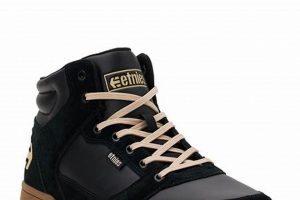
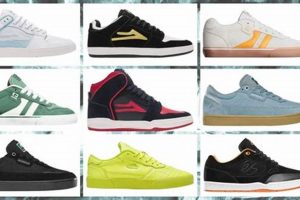
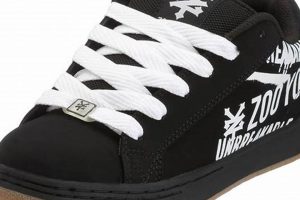
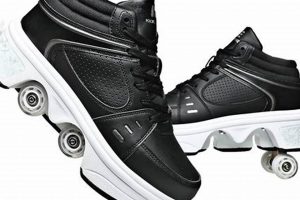
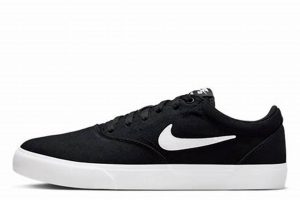
Footwear specifically designed for skateboarding provides the necessary grip, durability, and support required for optimal performance and safety. These specialized shoes typically feature a flat, vulcanized rubber sole for enhanced board feel and control, along with reinforced stitching and durable materials like suede or canvas to withstand the abrasive nature of the sport. This type of shoe allows skaters to perform various tricks and maneuvers with greater precision and reduces the risk of injury.
The selection of appropriate footwear significantly impacts a skater’s ability to progress and execute tricks confidently. Durable construction minimizes wear and tear from constant contact with the skateboard’s grip tape, extending the lifespan of the footwear. The enhanced board feel facilitates greater control and responsiveness, translating to improved performance and a more enjoyable skating experience. Historically, improvements in design and materials have played a key role in the evolution of skateboarding, enabling more complex tricks and maneuvers.
This discussion will now delve into the specific characteristics that define effective skateboarding footwear, exploring material science, construction techniques, and the evolving demands of the modern skateboarding landscape. Further examination will highlight key features to consider when choosing the right footwear for individual skating styles and preferences.
Selecting Appropriate Skateboarding Footwear
The selection of suitable footwear is crucial for performance, safety, and longevity in skateboarding. Considerations extend beyond mere aesthetics, emphasizing functional attributes that cater to the demands of the sport.
Tip 1: Prioritize Durable Materials: Footwear constructed from suede or reinforced canvas offers greater resistance to abrasion from grip tape. Regular inspection and maintenance of these materials can further extend the footwear’s lifespan.
Tip 2: Evaluate Sole Construction: Vulcanized rubber soles provide superior grip and board feel, facilitating enhanced control. Ensure the sole is securely bonded to the upper to prevent separation during intense use.
Tip 3: Assess Padding and Support: Adequate padding around the ankle and heel provides crucial impact protection. Consider footwear with enhanced arch support to minimize fatigue during extended skating sessions.
Tip 4: Inspect Stitching Quality: Reinforced stitching, particularly in high-stress areas such as the toe and ollie zone, contributes to overall durability. Examine stitching for fraying or weakness before each session.
Tip 5: Consider Footwear Weight: Lighter footwear reduces fatigue and enhances maneuverability. Balance weight considerations with the need for adequate protection and support.
Tip 6: Ensure Proper Fit: Footwear should fit snugly but allow for comfortable movement and board feel. Avoid excessively tight or loose footwear, as this can impede performance and increase the risk of injury.
Tip 7: Break-in Period: Allow a break-in period for new footwear to conform to the skater’s foot. This minimizes discomfort and optimizes board feel over time.
Adhering to these guidelines will contribute to a safer, more enjoyable, and more productive skateboarding experience. Investing in quality skateboarding footwear is a long-term investment in both performance and physical well-being.
The next section will delve into specific brands and models known for their performance and durability, offering a comparative analysis to assist in making an informed purchasing decision.
1. Grip Enhancement

Grip enhancement is a foundational characteristic of effective skateboarding footwear. The connection between a skater and their board is mediated by the sole of the shoe, and the coefficient of friction between the sole and the grip tape directly influences control, stability, and the ability to execute tricks. Shoes lacking adequate grip result in slippage, increasing the risk of falls and hindering the performance of even basic maneuvers. For example, a skater attempting an ollie requires immediate and reliable adhesion to the board to achieve lift and maintain balance. Inadequate grip compromises this critical phase.
The construction of the sole, typically employing vulcanized rubber, is paramount in providing optimal grip. The rubber compound is formulated to maximize friction, and the tread pattern is designed to interlock with the rough surface of the grip tape. Innovations in sole technology include variations in rubber durometer (hardness) and tread patterns tailored to specific skateboarding styles or conditions. Additionally, some manufacturers incorporate proprietary compounds or surface treatments to further enhance grip. The effectiveness of these features can be observed in professional skateboarding competitions, where skaters consistently land complex tricks that demand precise foot placement and unwavering board control, reliant on high-performance footwear.
In summary, grip enhancement is not merely an ancillary feature but rather an essential component of skateboarding footwear. Its significance is underscored by its direct impact on skater safety, performance, and progression. While factors such as durability and comfort also contribute to overall shoe quality, grip remains a non-negotiable attribute for any skater seeking to maximize their potential and minimize the risk of injury. The ongoing evolution of sole technology reflects the continued emphasis on optimizing this critical aspect of skateboarding equipment.
2. Impact Absorption

Effective impact absorption in skateboarding footwear is paramount for mitigating the repetitive stress and potential for injury associated with the sport. The act of skateboarding involves frequent jumps, landings, and high-impact maneuvers, all of which place considerable strain on the skater’s joints and musculoskeletal system. Footwear designed with adequate impact absorption capabilities serves as a crucial buffer, dissipating energy and reducing the forces transmitted to the body.
- Midsole Cushioning Technology
The midsole, typically composed of materials like EVA (ethylene-vinyl acetate) or polyurethane, is the primary component responsible for impact absorption. Variations in midsole density and construction significantly influence its effectiveness. For example, dual-density midsoles offer targeted cushioning, providing softer impact absorption in the heel and more responsive support in the forefoot. Proprietary cushioning technologies developed by various brands are designed to optimize energy return and minimize the risk of overuse injuries such as heel bruises and stress fractures.
- Insole Design and Materials
The insole contributes to overall impact absorption and comfort. Insoles constructed from materials such as gel or memory foam conform to the foot’s shape, distributing pressure more evenly and providing additional cushioning. Orthopedic insoles can be customized to address specific biomechanical needs, offering enhanced arch support and reducing pronation, thereby further minimizing impact-related stress on the lower extremities.
- Outsole Construction and Materials
While primarily responsible for grip and durability, the outsole also plays a role in impact absorption. The thickness and flexibility of the outsole influence its ability to attenuate impact forces. For instance, a thicker outsole may provide greater cushioning but could compromise board feel. Some outsoles incorporate air pockets or specialized patterns designed to enhance shock absorption and improve energy distribution.
- Footwear Design and Construction
The overall design and construction of the shoe contribute to its impact absorption capabilities. Features such as padded collars and tongues provide additional cushioning around the ankle and instep, reducing the risk of abrasion and impact-related injuries. Reinforced heel counters offer stability and support, minimizing excessive pronation and supination during landings.
In conclusion, impact absorption is an integral aspect of skateboarding footwear, directly influencing the skater’s comfort, performance, and long-term joint health. A comprehensive understanding of the materials, construction techniques, and design features that contribute to effective impact absorption is essential for selecting footwear that meets the demands of the sport and minimizes the risk of injury.
3. Ankle Support
Ankle support is a critical factor in skateboarding footwear due to the inherent risks of the activity. Skateboarding involves frequent jumps, landings, and sideways movements, which can place significant stress on the ankle joint. Inadequate ankle support increases the likelihood of sprains, strains, and other injuries that can sideline skaters. The design of the shoe directly impacts the level of support provided. High-top designs, for example, offer more coverage and stability compared to low-top versions. The presence of reinforced heel counters and padded collars also contributes to ankle stabilization, minimizing excessive pronation or supination during landings. The absence of these features can lead to instability and a greater susceptibility to ankle injuries, affecting a skater’s confidence and performance. Professional skaters often attribute their ability to execute difficult tricks, involving considerable impact and rapid changes in direction, to the superior ankle support afforded by their footwear.
The materials used in the shoe’s construction also play a role in ankle support. Stiffer materials, such as leather or reinforced synthetics, provide greater rigidity and stability compared to softer materials like canvas. However, a balance must be struck between support and flexibility, as excessive stiffness can restrict movement and reduce board feel. Design features such as internal or external stabilizers, commonly found in athletic shoes, can further enhance ankle support without compromising flexibility. Furthermore, the lacing system contributes to a secure fit and prevents excessive movement within the shoe, which is crucial for maintaining ankle stability. Improperly laced or loose-fitting shoes offer minimal support, significantly increasing the risk of injury.
In conclusion, ankle support is not merely a desirable attribute but a fundamental requirement for skateboarding footwear. Its presence mitigates the risk of injury, enhances stability, and promotes confidence, ultimately impacting performance and longevity in the sport. Understanding the design elements, materials, and construction techniques that contribute to effective ankle support enables skaters to make informed choices that prioritize their safety and maximize their potential. The evolution of skateboarding footwear design reflects an ongoing commitment to improving ankle support, acknowledging its critical role in this demanding activity.
4. Material Durability
Material durability is a cornerstone characteristic of skateboarding footwear, directly impacting longevity, performance, and cost-effectiveness. The abrasive nature of skateboarding subjects shoes to extreme wear and tear, necessitating robust materials capable of withstanding constant friction and impact.
- Suede Composition and Reinforcement
Suede is frequently utilized in skateboarding footwear due to its inherent abrasion resistance and flexibility. The thickness and quality of the suede directly correlate with its durability. Reinforced stitching, particularly in high-stress areas such as the ollie zone and toe cap, further enhances the lifespan of suede shoes. Examples include double or triple stitching and the use of durable nylon thread to prevent premature seam failure. Skaters performing ollies and kickflips repeatedly subject these areas to intense friction, making reinforcement essential.
- Canvas Alternatives and Treatments
Canvas, a lighter alternative to suede, offers breathability and flexibility. However, its inherent vulnerability to abrasion necessitates reinforcement strategies. Treated canvas, such as waxed or coated variants, provides increased water resistance and abrasion protection. Reinforcements like rubber underlays or additional layers of canvas in high-wear areas extend the lifespan of canvas skateboarding shoes. These treatments mitigate the rapid degradation commonly observed in untreated canvas subjected to grip tape friction.
- Sole Construction and Vulcanization
The sole is a critical component regarding durability. Vulcanized rubber soles, known for their superior bonding and flexibility, are standard in skateboarding footwear. The vulcanization process creates a chemical bond between the rubber and the upper, preventing separation under stress. Sole thickness and tread pattern influence both grip and durability. Thicker soles offer greater resistance to wear, while aggressive tread patterns provide enhanced grip but may degrade more rapidly. High-performance skateboarding often necessitates a balance between grip and sole longevity.
- Reinforced Stitching and Panel Design
Beyond material selection, the construction techniques employed significantly impact durability. Reinforced stitching, particularly in high-stress areas, prevents seam failure. Multi-panel designs, incorporating strategic material placement, can distribute stress more evenly, reducing wear and tear on individual components. For example, a shoe incorporating a durable suede ollie patch with a more flexible canvas vamp can optimize both durability and board feel. The integration of these design elements underscores the importance of a holistic approach to material durability.
The selection of durable materials and robust construction techniques is a critical determinant of the overall value and performance of skateboarding footwear. Investments in quality materials translate to extended shoe lifespan, enhanced performance, and reduced long-term costs. Skaters should consider material properties and construction details when selecting footwear, prioritizing durability to withstand the demands of the sport.
5. Board Feel

Board feel, a crucial element in skateboarding, refers to the skater’s ability to sense the board’s position and movement underfoot. This tactile feedback enables precise control and execution of tricks. The design and construction of skateboarding footwear significantly influence board feel, dictating the skater’s responsiveness and connection to the board.
- Sole Thickness and Flexibility
The thickness of the sole directly affects the transmission of tactile information. Thinner soles provide enhanced board feel, allowing the skater to perceive subtle changes in the board’s orientation. Increased flexibility, often achieved through vulcanized construction, further enhances the skater’s ability to conform to the board’s shape and maintain control. For instance, a skater performing a flip trick relies on precise foot placement and immediate feedback from the board, facilitated by a thin, flexible sole.
- Midsole Composition and Profile
The midsole’s material and design influence the shoe’s cushioning and board feel. Softer, more compliant midsoles provide enhanced comfort but may reduce board feel. Conversely, firmer midsoles transmit more tactile information but may sacrifice cushioning. Low-profile designs, minimizing the distance between the foot and the board, further enhance board feel by reducing energy dissipation and improving responsiveness. The selection of midsole material represents a trade-off between comfort and tactile sensitivity.
- Upper Construction and Materials
The upper construction, including the materials and panel design, contributes to the overall fit and board feel. Snug-fitting uppers, constructed from pliable materials like suede or canvas, provide a secure and responsive feel. Minimal padding around the foot allows for greater tactile sensitivity, enhancing the skater’s ability to perceive subtle board movements. A well-designed upper conforms to the foot’s shape, minimizing slippage and maximizing control.
- Outsole Pattern and Grip
The outsole’s pattern and grip compound influence the shoe’s adhesion to the board and the transmission of tactile information. A flat, consistent outsole pattern provides a uniform contact area, maximizing grip and board feel. Softer rubber compounds enhance grip but may reduce durability. The outsole’s design should balance grip, durability, and tactile sensitivity to optimize the skater’s connection to the board.
These facets collectively determine the skater’s ability to interact effectively with their board. Footwear optimized for board feel enables greater control, precision, and confidence, ultimately influencing the skater’s progression and performance. The interplay between sole thickness, midsole composition, upper construction, and outsole pattern underscores the complexity of designing skateboarding shoes that prioritize tactile sensitivity. Understanding these design considerations is essential for selecting footwear that enhances board feel and maximizes the skater’s connection to their board.
Frequently Asked Questions
This section addresses common inquiries regarding skateboarding footwear, providing objective information to guide informed decision-making.
Question 1: What distinguishes skateboarding footwear from standard athletic shoes?
Skateboarding footwear is specifically engineered to withstand the abrasion and impact inherent in skateboarding. Key distinctions include reinforced construction, durable materials (suede, canvas), vulcanized rubber soles for enhanced grip, and strategic padding for protection against injury. Standard athletic shoes often lack these critical features.
Question 2: How frequently should skateboarding footwear be replaced?
Replacement frequency is contingent upon the intensity and frequency of use, as well as the skater’s style. Visual indicators of wear, such as sole separation, fabric tears, or compromised stitching, signal the need for replacement. Professional skaters may require more frequent replacement than recreational skaters.
Question 3: Does the brand of skateboarding footwear significantly impact performance?
While branding influences perception, performance is primarily dictated by construction quality, material properties, and design features. Reputable brands typically invest in research and development, resulting in footwear that meets the demands of skateboarding. However, less-established brands may offer comparable performance at a different price point.
Question 4: What are the advantages of vulcanized soles compared to cup soles in skateboarding footwear?
Vulcanized soles offer superior board feel and flexibility due to their manufacturing process, which involves bonding the sole to the upper under heat and pressure. Cup soles, constructed as a single unit, provide greater impact protection and support but may compromise board feel. The optimal choice depends on individual preferences and skating style.
Question 5: Is ankle support a crucial consideration when selecting skateboarding footwear?
Ankle support is essential for mitigating the risk of sprains and other ankle injuries, particularly for skaters engaging in high-impact or technical maneuvers. High-top designs and reinforced ankle padding offer enhanced support, while low-top designs prioritize flexibility and board feel. The appropriate level of ankle support depends on individual needs and skating style.
Question 6: How does the material of the upper (suede vs. canvas) affect the performance of skateboarding footwear?
Suede offers superior abrasion resistance and durability, making it suitable for skaters who prioritize longevity. Canvas provides greater breathability and flexibility, making it suitable for skaters who prioritize board feel. Some footwear incorporates a combination of both materials to balance durability and performance characteristics.
Understanding these factors contributes to informed selection of skateboarding footwear, maximizing performance and minimizing the risk of injury.
The subsequent section will explore specific brands and models known for their performance and durability, offering a comparative analysis to assist in making an informed purchasing decision.
Conclusion
The preceding analysis has examined the critical attributes that define effective skateboarding footwear. Durability, grip, impact absorption, ankle support, and board feel have been identified as essential elements influencing performance and safety. The selection of appropriate shoes to skate necessitates careful consideration of these factors, balancing individual needs with the demands of the sport.
Ultimately, the investment in quality skateboarding footwear represents a commitment to both performance enhancement and injury prevention. Continued innovation in materials and design will likely further refine the capabilities of “shoes to skate,” solidifying their role as a fundamental component of skateboarding equipment. Prioritizing informed selection based on the principles outlined herein will contribute to a safer and more rewarding skateboarding experience.