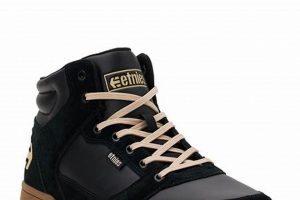
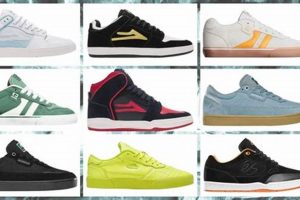
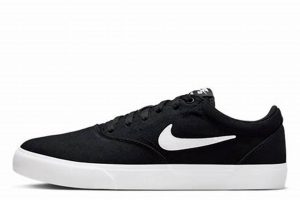
Footwear designed specifically for skateboarding, often bearing the Swoosh logo, integrates features that cater to the demands of the sport. These typically include durable construction, enhanced grip, and impact protection. A notable example is a low-profile silhouette with reinforced stitching in high-wear areas, commonly featuring a cushioned midsole for comfort and board feel.
The significance of this type of specialized footwear lies in its ability to enhance performance and provide safety. Historically, such models have evolved from modified basketball shoes, adapting to the unique stresses and movements involved in skateboarding. The benefits include improved board control, reduced risk of injury, and increased durability compared to conventional athletic shoes. These factors have contributed to their widespread adoption within the skateboarding community.
The following discussion will delve into specific aspects of this footwear, including technological advancements in construction materials, collaborations with prominent skateboarders, and the broader cultural impact within the skateboarding subculture.
The following are guidelines to consider when choosing and maintaining skate-specific footwear to optimize performance and longevity.
Tip 1: Prioritize Durability: Seek out models with reinforced stitching, particularly in areas prone to abrasion such as the toe and ollie patch. The material composition should resist wear and tear from griptape contact. Examine the quality of the construction before purchase.
Tip 2: Evaluate Sole Construction: The outsole’s grip pattern significantly impacts board feel and control. A vulcanized rubber sole typically offers superior grip and flexibility compared to a cupsole construction, although cupsole designs often provide enhanced impact protection. Consider the intended style of skateboarding when evaluating sole construction.
Tip 3: Assess Impact Protection: For skaters who frequently perform high-impact maneuvers, adequate cushioning is crucial. Look for models with midsole technologies designed to absorb shock and minimize stress on joints. Consider the thickness and density of the cushioning in relation to individual needs and skating style.
Tip 4: Consider Ankle Support: The height of the shoe’s collar impacts ankle mobility and support. Low-top models offer greater freedom of movement, while mid-top and high-top styles provide increased ankle stability. Choose a height that aligns with individual preferences and the types of tricks being performed.
Tip 5: Properly Maintain Footwear: Regularly clean footwear to remove dirt and debris that can degrade materials. Use appropriate cleaning products and avoid harsh chemicals or abrasive scrubbing. Allow footwear to air dry completely after use to prevent moisture buildup and odor.
Tip 6: Rotate Footwear Regularly: If skateboarding frequently, consider rotating between multiple pairs of shoes. This allows each pair to dry thoroughly between sessions, extending their lifespan and reducing the risk of developing odors.
Tip 7: Address Damage Promptly: Repair minor damage, such as loose stitching or small tears, as soon as possible to prevent further deterioration. Consider using shoe glue or taking the footwear to a professional repair service. Early intervention can significantly prolong the lifespan of the product.
Adhering to these guidelines contributes to a more satisfying and safer skateboarding experience, maximizing the value and performance of specialized footwear.
The subsequent section will address common misconceptions surrounding skateboarding footwear and provide a comparative analysis of popular models.
1. Durability

Durability constitutes a critical attribute of any skateboarding shoe, impacting its longevity and overall value. Given the abrasive nature of skateboarding, footwear is subjected to substantial wear and tear from griptape contact, hard landings, and repetitive motions. The connection between durability and skateboarding shoe performance is direct and consequential: a shoe that lacks robustness will fail prematurely, necessitating frequent replacements and increasing expenses for the skateboarder.
Specifically, the design and materials incorporated into footwear marketed toward skateboarders directly address the need for enhanced durability. Reinforced stitching in high-stress areas, such as the toe and ollie patch, serves to prevent premature separation of panels. Uppers constructed from durable materials like suede, leather, or reinforced canvas offer increased resistance to abrasion. The use of multiple layers of material in critical zones further enhances the shoe’s capacity to withstand the rigors of skateboarding. For instance, some models utilize a hidden layer of rubber under the suede or canvas in the ollie area, significantly extending the shoe’s lifespan. Failures in durability directly translate to decreased performance, compromised safety, and the necessity for frequent replacements, which is why the skate community demand for durability as essential to skate shoes.
In summary, durability is not merely a desirable feature but a fundamental requirement for skateboarding footwear. The material selection, construction techniques, and design elements all contribute to a shoe’s ability to withstand the demands of the sport. Understanding the connection between durability and overall performance empowers skateboarders to make informed purchasing decisions, selecting footwear that offers the best balance of performance, longevity, and value. Neglecting the durability aspect results in compromised performance, increased costs, and a less satisfying skateboarding experience.
2. Grip

The efficacy of skateboarding footwear is inextricably linked to the characteristic of grip. The interface between the shoe’s sole and the skateboard’s griptape dictates the level of control a skater possesses. Therefore, understanding the nuances of grip in the context of skateboarding footwear is essential.
- Rubber Compound Composition
The durometer and chemical makeup of the rubber compound significantly influence grip. Softer compounds, while offering superior adherence, may exhibit accelerated wear. Formulations engineered for skateboarding prioritize a balance between stickiness and abrasion resistance. Examples include proprietary rubber blends designed to maximize contact surface area and friction coefficient. The implication is that a shoe’s performance is directly correlated to the quality of the rubber compound employed.
- Tread Pattern Design
The tread pattern contributes to grip by channeling away debris and water, maintaining consistent contact with the griptape. Intricate patterns, such as herringbone or geometric designs, enhance surface area and provide multiple points of contact. Conversely, smooth soles offer minimal grip, rendering them unsuitable for skateboarding. The tread pattern effectively becomes a critical component in translating the skater’s movements into board control.
- Vulcanization Process
Vulcanization, a curing process involving heat and pressure, bonds the rubber sole to the upper. This process directly affects the flexibility and durability of the sole, indirectly influencing grip. A properly vulcanized sole maintains its integrity under stress, preventing delamination and ensuring consistent contact with the griptape. Inadequate vulcanization can lead to premature sole separation, compromising grip and overall performance.
- Sole Flexibility
A flexible sole allows the skater to feel the board and make subtle adjustments. However, excessive flexibility can reduce support and stability. The ideal balance facilitates natural movement while maintaining adequate rigidity for power transfer. The construction of the midsole and the outsole materials contribute to the overall flexibility, impacting the responsiveness and control afforded by the shoe.
These facets demonstrate the multifaceted nature of grip within skateboarding footwear. The effective integration of these elements ensures optimal board feel, control, and safety. Manufacturers of skateboarding footwear must prioritize these features to meet the demands of the sport.
3. Impact Absorption

Impact absorption constitutes a critical performance parameter in footwear designed for skateboarding. The repetitive stress of landing tricks exerts considerable force on the skater’s feet, ankles, and knees. Adequate impact absorption mitigates the risk of injury and enhances overall comfort, thus directly impacting the skater’s ability to perform and progress. Specific design elements and material choices are integrated into footwear to maximize impact absorption capabilities.
- Midsole Material Density and Composition
The midsole, situated between the outsole and the upper, plays a pivotal role in absorbing impact forces. Ethylene-vinyl acetate (EVA) foam is commonly employed due to its lightweight nature and shock-absorbing properties. The density of the EVA foam directly correlates to its impact absorption capacity; higher-density foams provide greater cushioning. Alternative materials, such as polyurethane (PU), offer enhanced durability and resilience but are typically heavier. Variations in midsole geometry, such as incorporating air pockets or gel inserts, further refine impact absorption characteristics. For instance, some models feature encapsulated air units in the heel to specifically target high-impact zones. The selection of midsole material and its density significantly affect the overall impact protection afforded by the shoe.
- Insole Cushioning
The insole, the removable insert within the shoe, provides an additional layer of cushioning and contributes to overall comfort. Ortholite insoles, known for their open-cell foam structure, offer excellent breathability and long-lasting cushioning. Gel insoles provide targeted impact absorption in specific areas, such as the heel and forefoot. The thickness and composition of the insole influence the level of impact protection and the overall fit of the shoe. Custom insoles are also available, allowing skaters to tailor the cushioning to their individual needs and preferences. The insoles contribution to impact absorption, while secondary to the midsole, remains a significant factor in reducing stress on the skater’s feet.
- Outsole Construction and Thickness
While primarily responsible for grip and durability, the outsole also contributes to impact absorption. Thicker outsoles, constructed from durable rubber compounds, provide a buffer between the foot and the ground, attenuating impact forces. The outsole pattern also influences impact distribution; patterns with deeper grooves can compress and absorb energy upon landing. The specific rubber compound used impacts both grip and cushioning. Some formulations offer a balance between durability and impact absorption, while others prioritize one characteristic over the other. The outsole’s construction thus plays a multifaceted role in the shoe’s overall performance, impacting both grip and impact protection.
- Heel Collar Padding and Support
The padding around the heel collar contributes to overall foot stability and impact absorption. A well-padded heel collar helps to lock the foot in place, preventing slippage and reducing the risk of ankle injuries. The material used for padding, such as foam or gel, influences its cushioning properties. Higher heel collars provide increased ankle support, which can be beneficial for skaters who require additional stability. The design of the heel collar directly impacts both comfort and protection, contributing to the overall effectiveness of the shoe in mitigating impact forces.
The effectiveness of impact absorption in skateboarding footwear represents a complex interplay of materials and design. The specific combination of midsole composition, insole cushioning, outsole construction, and heel collar support dictates the overall level of protection afforded to the skater. Careful consideration of these factors enables informed selection of footwear that optimizes both performance and safety. Models with superior impact absorption mitigate stress on joints, reduce the risk of injury, and enhance the overall skateboarding experience.
4. Board Feel

Board feel, in the context of skateboarding footwear, denotes the degree of tactile sensitivity a skater experiences through the sole of the shoe, enabling precise control and nuanced interaction with the skateboard. Specialized footwear directly influences board feel through variations in sole thickness, flexibility, and material composition. A diminished sense of board feel can impede a skater’s ability to execute complex maneuvers, while an enhanced sensitivity facilitates greater precision and responsiveness.
The design of skateboarding-specific footwear prioritizes a balance between impact protection and board feel. Thinner soles, constructed from flexible rubber compounds, augment the skater’s ability to perceive the board’s contours and movements. This is particularly critical for executing flip tricks and maintaining balance on rails or ledges. Conversely, excessively thick soles, while offering increased impact protection, can dampen sensitivity and reduce control. The vulcanized construction method, commonly employed in skateboarding shoes, contributes to a flexible sole that conforms to the board’s shape, enhancing board feel. For example, a skater performing a kickflip relies on subtle adjustments made through the feet to control the board’s rotation; a shoe with poor board feel would hinder the skater’s ability to make these necessary adjustments. The implementation of cupsole construction offers a balance between board feel and cushioning, which might be preferrable in skating vert ramps than in street skating.
Ultimately, the interplay between sole thickness, flexibility, and material composition dictates the level of board feel provided by a particular shoe. Skaters often experiment with different footwear models to find the optimal balance that complements their individual skating style and preferences. The selection of appropriate footwear, therefore, directly impacts a skater’s ability to perform at their peak, emphasizing the practical significance of understanding the connection between board feel and specialized skateboarding shoes. Lack of board feel will hinder the skater’s performance.
5. Ankle Support
Ankle support in skateboarding footwear directly impacts stability, injury prevention, and overall performance. Specialized models incorporate specific design features intended to enhance ankle stability while accommodating the dynamic movements inherent in skateboarding.
- Collar Height
The height of the shoe’s collar significantly affects ankle support. Low-top models offer maximum range of motion but minimal ankle support. Mid-top styles provide a balance between flexibility and stability, while high-top designs offer the greatest degree of ankle support. The choice of collar height depends on individual preferences, skating style, and any history of ankle injuries. For example, a skater recovering from an ankle sprain might opt for a high-top model to provide additional support during the healing process. Conversely, a skater prioritizing freedom of movement for technical flip tricks may prefer a low-top design.
- Collar Padding
The type and amount of padding around the ankle collar influence both comfort and support. Dense padding provides a snug fit that helps to stabilize the ankle joint. Softer padding enhances comfort but may offer less support. Some models incorporate specialized foam materials designed to mold to the shape of the ankle, providing a customized fit and enhanced support. Insufficient padding can lead to discomfort and an increased risk of ankle injuries, especially during high-impact landings. Therefore, the design and material composition of the collar padding contribute to the overall effectiveness of ankle support.
- Internal Heel Counter
The heel counter, a rigid component located inside the shoe’s heel, plays a critical role in stabilizing the heel and ankle. A robust heel counter prevents excessive pronation and supination, reducing the risk of ankle sprains. Some models feature external heel counters that provide additional support and reinforcement. The material used for the heel counter, typically plastic or reinforced leather, influences its stiffness and durability. A weak or poorly designed heel counter can compromise ankle stability and increase the likelihood of injury. Therefore, the structural integrity of the heel counter is paramount for providing effective ankle support.
- Lacing System Integration
The design and placement of the lacing system can contribute to ankle support. Lacing systems that extend higher up the ankle provide greater stability and control. Some models incorporate features such as lace loops or straps that wrap around the ankle, providing additional support and preventing the laces from loosening during skating. Properly tightening the laces is essential for maximizing ankle support. Loose laces compromise stability and increase the risk of injury. Thus, the integration of the lacing system with the overall shoe design contributes to the effectiveness of ankle support.
These facets underscore the complex interplay between design elements and ankle support within skateboarding footwear. The selection of collar height, padding, heel counter construction, and lacing system integration collectively determines the level of stability and protection afforded to the skater. Careful consideration of these factors enables informed selection of footwear that optimizes both performance and safety. Compromised ankle support results in increased risk of injury and diminished skating performance.
6. Style
Style, in the context of skateboarding footwear, represents more than mere aesthetics; it reflects individual identity and subcultural affiliation, shaping the perceived image of the skater and the brand. The external design of specialized skateboarding footwear, including color schemes, material choices, and branding elements, is a significant factor in purchase decisions and community acceptance.
- Colorways and Material Combinations
The selection of colors and materials profoundly influences the visual appeal of skateboarding shoes. Limited edition releases often feature unique colorways and material combinations designed to appeal to collectors and fashion-conscious skaters. The use of premium materials, such as suede or leather, can elevate the perceived value of the shoe and enhance its aesthetic appeal. Examples include collaborations with artists or designers, resulting in visually striking and highly sought-after models. The chosen color palette and material combinations effectively communicate the brand’s identity and target demographic.
- Branding and Logo Placement
The strategic placement of branding elements, such as logos and trademarks, is a key component of style in skateboarding footwear. The prominence and size of the logo can influence the perceived value and desirability of the shoe. Subtle branding, characterized by understated logo placement, may appeal to skaters who prioritize a minimalist aesthetic. In contrast, bolder branding, with prominent logos and graphics, can convey a sense of confidence and individuality. The consistent use of branding elements across different models reinforces brand recognition and fosters customer loyalty.
- Silhouette and Design Heritage
The overall silhouette of the shoe, including its shape and proportions, contributes significantly to its stylistic appeal. Certain silhouettes, such as low-profile designs with vulcanized soles, have become iconic within the skateboarding community. Retro-inspired models, drawing on design elements from past eras, can evoke a sense of nostalgia and authenticity. The design heritage of a particular model can influence its perceived value and desirability. For instance, a shoe originally designed for basketball but later adopted by skateboarders may retain a certain cachet within the skateboarding community. The silhouette effectively embodies the shoe’s historical context and stylistic lineage.
- Collaborations and Limited Editions
Collaborations with skateboarders, artists, and brands often result in unique and highly sought-after designs. Limited edition releases, characterized by limited production runs and exclusive colorways, create a sense of scarcity and exclusivity. These collaborations often reflect the personality and style of the collaborating individual or brand, adding another layer of meaning to the shoe’s design. The resulting designs are often highly innovative and visually striking, pushing the boundaries of skateboarding footwear aesthetics. These collaborations serve to enhance brand prestige and generate significant consumer interest.
The interplay of these style elements within skateboarding footwear reflects the evolving aesthetic preferences within the skateboarding subculture. The selection of colorways, branding elements, silhouettes, and collaborations serves to communicate individual identity and cultural affiliation. Style, therefore, represents an integral facet of specialized skateboarding footwear, influencing purchase decisions and shaping the overall perception of both the skater and the brand.
Frequently Asked Questions
The following represents a compendium of frequently asked questions pertaining to skateboarding footwear, specifically addressing concerns and misconceptions surrounding design, construction, and performance characteristics. The information provided is intended to enhance understanding and inform purchasing decisions.
Question 1: What distinguishes skateboarding-specific footwear from conventional athletic shoes?
Skateboarding-specific footwear incorporates reinforced construction, enhanced grip patterns, and specialized cushioning designed to withstand the unique stresses of skateboarding. Conventional athletic shoes typically lack these features, resulting in premature wear and reduced performance. The targeted design of skateboarding shoes prioritizes durability and board control.
Question 2: How does sole construction impact skateboarding performance?
Sole construction significantly influences grip, board feel, and impact absorption. Vulcanized soles offer superior grip and flexibility, while cupsole designs provide enhanced impact protection. The optimal sole construction depends on individual skateboarding style and terrain preferences.
Question 3: What materials are commonly used in the construction of skateboarding shoes, and why?
Suede, leather, and reinforced canvas are commonly employed due to their durability and resistance to abrasion. These materials withstand the abrasive forces encountered during skateboarding, prolonging the lifespan of the footwear. Mesh is sometimes used for breathability.
Question 4: How important is ankle support in skateboarding shoes?
Ankle support is a critical factor for injury prevention and stability, particularly during high-impact landings. Models with higher collars and reinforced padding provide increased ankle support. Individual needs and skating style dictate the appropriate level of ankle support.
Question 5: How does proper maintenance contribute to the longevity of skateboarding footwear?
Regular cleaning, prompt repair of minor damage, and rotation of multiple pairs of shoes contribute significantly to the longevity of skateboarding footwear. Neglecting maintenance can lead to premature wear and reduced performance. Appropriate cleaning products and techniques should be employed.
Question 6: Are all skateboarding shoes created equal, or are there significant variations in quality and performance?
Substantial variations exist in the quality and performance of skateboarding footwear. Factors such as material selection, construction techniques, and design features influence the overall durability, grip, and impact absorption. Purchasing decisions should be based on careful consideration of these factors.
In summary, selecting appropriate skateboarding footwear requires careful consideration of various factors, including durability, sole construction, material composition, ankle support, and maintenance practices. Understanding these aspects enhances the likelihood of selecting footwear that optimizes both performance and longevity.
The subsequent section will provide a comparative analysis of popular skateboarding footwear models, highlighting their respective strengths and weaknesses.
Nike SB Skate Shoe
This exploration of “Nike SB Skate Shoe” has illuminated the complex interplay of durability, grip, impact absorption, board feel, ankle support, and style. The selection of skateboarding footwear is not merely a matter of aesthetics; it represents a considered assessment of performance characteristics directly impacting a skater’s capabilities and safety. Each design element, from sole construction to material composition, contributes to the overall functionality and longevity of the product.
The continued evolution of skateboarding footwear technology suggests a future marked by enhanced performance, greater customization, and a deeper understanding of the biomechanical demands of the sport. Skaters should remain informed about advancements in materials and construction techniques to make optimal choices that align with their individual needs. This pursuit of informed selection serves not only to enhance performance but also to safeguard against potential injuries, underscoring the critical role of specialized footwear in the skateboarding landscape.