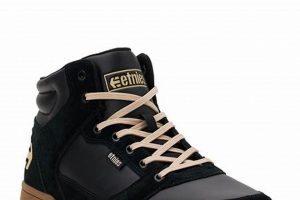
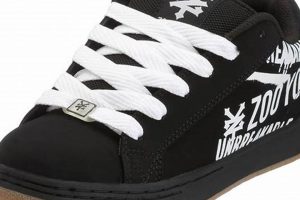
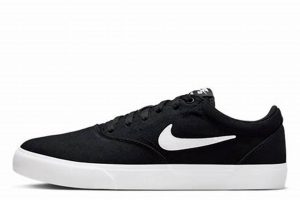
Footwear designed for skateboarding must withstand significant abrasion and impact forces. These specialized designs emphasize resilient construction and reinforced materials to prolong usability under the stresses of frequent skateboarding activity. Common features include robust stitching, layered fabrics, and specialized rubber compounds in the outsoles.
The adoption of footwear engineered for enhanced resilience offers several advantages. Increased lifespan reduces the frequency of replacement, yielding cost savings. Improved protection mitigates potential injuries. Moreover, the confidence afforded by reliable equipment can enhance performance and facilitate progression in skateboarding skill.
The following discussion will explore the specific materials, construction techniques, and design attributes that contribute to extended product life in skateboarding footwear. Specific models recognized for their longevity and performance will also be highlighted, providing consumers with informed purchasing guidance.
Maximizing the Lifespan of Skateboarding Footwear
Extending the usability of specialized skateboarding footwear requires careful consideration of usage patterns, maintenance practices, and proactive measures. The following recommendations offer guidance on optimizing the investment in durable models.
Tip 1: Reinforce High-Wear Areas: Application of specialized adhesives, such as shoe goo or similar products, to areas prone to abrasion, specifically the toe and ollie patch, can significantly extend the lifespan of the upper material.
Tip 2: Utilize Protective Overlays: Consider employing aftermarket toe caps or ollie guards. These external layers offer a sacrificial barrier, absorbing wear and tear before it reaches the underlying shoe material.
Tip 3: Rotate Footwear Regularly: Avoid consistently wearing the same pair of shoes for every session. Rotating between multiple pairs allows each pair to rest and the materials to recover, mitigating wear concentration.
Tip 4: Employ Proper Lacing Techniques: Lace shoes firmly but not excessively tight. Over-tightening can strain seams and accelerate material fatigue. Consider using alternative lacing patterns to alleviate pressure points.
Tip 5: Clean Shoes Consistently: Regularly remove dirt and debris, particularly from the soles, as accumulated grime can degrade grip and accelerate wear. Use a soft brush and mild soap for effective cleaning.
Tip 6: Repair Minor Damage Promptly: Address minor tears or loose stitching immediately. Delaying repairs can allow small issues to escalate, leading to irreversible damage and premature failure.
Tip 7: Choose Appropriate Environments: Recognize that certain skateboarding environments, such as rough concrete or abrasive surfaces, will accelerate wear. Select locations strategically to minimize unnecessary damage.
These strategies, when implemented consistently, can substantially enhance the longevity and overall value of skateboarding footwear, resulting in reduced replacement costs and sustained performance.
The subsequent sections will delve into specific models and brands known for their commitment to producing resilient skateboarding footwear, offering further guidance for informed purchasing decisions.
1. Reinforced Stitching

Reinforced stitching is a critical factor in determining the longevity of skateboarding footwear. Standard stitching methods are often inadequate to withstand the extreme stresses imposed by skateboarding, leading to premature seam failure and diminished product lifespan. The implementation of reinforced techniques, such as double or triple stitching, substantially increases the structural integrity of footwear. This enhancement provides greater resistance to tearing and separation at stress points, extending the overall usability of the shoe.
The significance of reinforced stitching is readily apparent in high-wear areas, such as the ollie patch and toe cap. These locations are subjected to constant abrasion against grip tape and concrete surfaces. Without reinforced stitching, these areas are prone to rapid degradation, compromising the footwear’s functionality and appearance. For example, models from brands such as Vans (specifically their Pro line) and Adidas Skateboarding consistently feature reinforced stitching in these critical zones, contributing to their reputation for durability within the skateboarding community.
In summary, reinforced stitching represents a crucial engineering consideration in the design of durable skateboarding footwear. Its implementation directly correlates with enhanced resistance to wear and tear, resulting in an extended product lifespan. While reinforced stitching alone cannot guarantee absolute indestructibility, it serves as a fundamental building block in creating footwear that can withstand the rigorous demands of skateboarding, minimizing the need for frequent replacements and contributing to a more sustainable approach to skateboarding gear consumption.
2. Rubber Compound Density

Rubber compound density is a primary determinant of durability in skateboarding footwear. The composition and density of the rubber outsole directly affect its resistance to abrasion, impact, and deformation, thereby influencing the overall lifespan of the shoe.
- Abrasion Resistance
Higher density rubber compounds exhibit greater resistance to abrasion caused by contact with grip tape and rough surfaces. For example, vulcanized soles constructed with high-density rubber maintain structural integrity longer than less dense alternatives. This is especially important for the outsole, which is in contact with the ground.
- Impact Absorption
The density of the rubber compound also plays a critical role in impact absorption. Denser rubber materials can dissipate energy more effectively, mitigating the effects of repeated impacts during skateboarding maneuvers. This protection is crucial in skateboard shoes to protect skater’s feet.
- Flexibility and Board Feel
While high density contributes to durability, it can also reduce flexibility and board feel. Footwear manufacturers must strike a balance between density and pliability to ensure both longevity and optimal performance. This balance makes skate shoes the perfect fit for skateboarding.
- Adhesion and Grip
Rubber compound density affects the outsole’s ability to maintain grip on the skateboard. High-density compounds, when properly formulated with tread patterns, provide increased surface contact and friction, enhancing control and stability. If the skateboard shoe has good grip, then it makes the shoes most durable.
The careful selection and engineering of rubber compounds, with specific attention to density, is a critical factor in producing skateboarding footwear that can withstand the rigorous demands of the sport. Models incorporating high-density rubber outsoles typically demonstrate enhanced durability and extended usable life, making them a preferred choice for skaters seeking longevity and performance.
3. Material Abrasion Resistance

Material abrasion resistance is a fundamental attribute in the determination of skateboarding footwear longevity. The capacity of a material to withstand surface wear caused by frictional forces directly correlates with the shoe’s ability to endure the stresses inherent in skateboarding activities.
- Surface Hardness
Surface hardness is a primary indicator of abrasion resistance. Materials exhibiting higher hardness values, as measured by standardized testing methods, demonstrate superior resistance to scratching, gouging, and general surface degradation. For instance, certain formulations of vulcanized rubber and treated leather possess enhanced surface hardness, contributing to extended product lifespan in skateboarding footwear.
- Tensile Strength
Tensile strength, the material’s ability to withstand pulling forces, indirectly influences abrasion resistance. Materials with high tensile strength are less prone to tearing and deformation under stress, preserving their structural integrity and resisting abrasive forces. Ballistic nylon, often incorporated into skateboarding shoe uppers, exemplifies a material chosen for its high tensile strength and abrasion-resistant properties.
- Material Composition and Treatment
The specific composition and treatment processes employed during material manufacturing significantly impact abrasion resistance. For example, suede treated with protective coatings exhibits enhanced resistance to abrasion compared to untreated suede. Similarly, synthetic materials engineered with specialized polymers demonstrate superior wear characteristics. Skate shoes benefit from this research with better material to ensure skater’s protection.
- Bonding and Lamination Techniques
The methods used to bond and laminate different materials within the shoe’s construction influence overall abrasion resistance. Weak or improperly applied bonding agents can lead to delamination, exposing vulnerable layers to abrasive forces. Therefore, robust bonding and lamination techniques are essential for maintaining structural integrity and maximizing resistance to wear.
The selection of materials exhibiting high abrasion resistance, coupled with appropriate manufacturing techniques, represents a crucial consideration in the design and production of durable skateboarding footwear. By prioritizing materials capable of withstanding sustained abrasive forces, manufacturers can significantly enhance product longevity and deliver superior value to consumers.
4. Impact Absorption Qualities
Impact absorption qualities are integral to the design and functionality of skateboarding footwear, directly influencing both the durability of the shoe and the safety of the skater. These qualities mitigate the physical stresses placed on both the shoe and the user during high-impact activities.
- Midsole Composition and Density
The midsole, typically composed of materials such as EVA (ethylene-vinyl acetate) or polyurethane, functions as the primary impact absorption layer. Higher density midsoles offer greater resistance to compression and deformation, providing sustained cushioning over time. For example, a polyurethane midsole in a skateboarding shoe will generally maintain its shape and shock-absorbing properties longer than a comparable EVA midsole.
- Outsole Construction and Material
The outsole, in conjunction with the midsole, contributes to overall impact absorption. Cupsole designs, where the outsole wraps around the upper, offer enhanced support and impact protection compared to vulcanized constructions. Furthermore, specialized rubber compounds formulated for high rebound can further dissipate impact forces. Models incorporating gel or air cushioning within the outsole further enhance these properties.
- Insole Technology and Design
The insole, the innermost layer of the shoe, also plays a role in shock absorption. Insoles constructed from memory foam or orthotic materials conform to the foot, distributing pressure and reducing impact stress. Aftermarket insoles featuring specialized cushioning technologies can be integrated to further augment impact absorption capabilities.
- Material Fatigue and Longevity
The long-term effectiveness of impact absorption qualities is directly related to material fatigue. Repeated impacts can cause the midsole and outsole materials to compress and lose their ability to effectively dissipate energy. Consequently, even the most durable skateboarding shoes will eventually exhibit diminished impact absorption capabilities over time. Regular inspection and timely replacement of worn-out footwear are crucial for maintaining adequate protection.
In summary, impact absorption qualities are a critical consideration in the selection of durable skateboarding footwear. The interplay between midsole composition, outsole construction, and insole technology determines the shoe’s ability to mitigate impact forces, contributing to both the skater’s comfort and the shoe’s overall lifespan. While all materials degrade over time, models designed with high-quality, impact-absorbing materials offer superior protection and extended usability.
5. Layered Upper Construction
Layered upper construction represents a significant engineering approach in the design of resilient skateboarding footwear. By incorporating multiple material layers, manufacturers aim to enhance durability and resistance to wear and tear, thereby contributing to the overall lifespan of the shoe.
- Reinforcement of High-Stress Areas
Layered construction strategically reinforces areas prone to abrasion, such as the toe box and ollie patch. By adding additional layers of material in these zones, the shoe’s resistance to wear from grip tape and rough surfaces is significantly increased. For example, a suede upper reinforced with an underlying layer of canvas provides greater protection than a single layer of suede alone. The number of layers makes a difference.
- Distribution of Impact Forces
Multiple layers facilitate the distribution of impact forces across a broader surface area. This dispersion reduces the concentration of stress at specific points, mitigating the risk of localized damage and material failure. A layered upper effectively cushions the foot better than a single layered upper.
- Enhanced Structural Integrity
The integration of diverse materials with varying properties contributes to improved structural integrity. For instance, a combination of leather, synthetic fabrics, and reinforcing polymers can create a robust and resilient upper capable of withstanding the rigors of skateboarding. Different materials used together make a skate shoe very durable.
- Protection Against Environmental Factors
Layered construction offers enhanced protection against environmental factors, such as moisture and debris. An outer layer of water-resistant material, coupled with an inner lining that wicks away moisture, can help keep the skater’s feet dry and comfortable, while also preventing material degradation. This protection increases the durability of a skate shoe because weather does not damage it.
Layered upper construction is, therefore, a key attribute in achieving enhanced durability in skateboarding footwear. By strategically incorporating multiple material layers, manufacturers can create shoes that are more resistant to wear, impact, and environmental factors, ultimately extending the usable lifespan of the product.
6. Sole Adhesion Strength
The longevity of skateboarding footwear is intrinsically linked to the integrity of the bond between the sole and the upper. Compromised sole adhesion precipitates premature failure, irrespective of the quality of other materials and construction techniques employed. Therefore, robust sole adhesion is a critical determinant of overall durability.
- Adhesive Material Properties
The chemical composition and mechanical properties of the adhesive agent dictate the strength and durability of the bond. High-performance adhesives, often epoxy-based or polyurethane-based, exhibit superior resistance to shear stress, tensile stress, and environmental degradation. Proper selection of adhesive material is crucial for maintaining sole integrity under the dynamic loads experienced during skateboarding.
- Surface Preparation Techniques
Effective surface preparation is paramount for achieving optimal adhesion. Abrasion, chemical etching, or plasma treatment of the bonding surfaces enhances mechanical interlocking and promotes chemical bonding between the adhesive and the substrate materials. Inadequate surface preparation compromises the adhesive bond, leading to premature delamination.
- Bonding Process Control
The bonding process, encompassing temperature, pressure, and curing time, requires stringent control to ensure optimal adhesive performance. Deviations from established parameters can result in incomplete curing, bubble formation, and reduced bond strength. Automated bonding systems and rigorous quality control measures are essential for maintaining consistent sole adhesion strength.
- Environmental Resistance
Skateboarding footwear is exposed to a range of environmental factors, including moisture, temperature fluctuations, and ultraviolet radiation. The adhesive bond must exhibit robust resistance to these factors to prevent degradation and maintain structural integrity over time. Waterproofing treatments and UV-resistant adhesives are often employed to enhance environmental durability.
The interplay of adhesive material properties, surface preparation techniques, bonding process control, and environmental resistance collectively determines the sole adhesion strength of skateboarding footwear. Prioritizing these factors in the manufacturing process is essential for producing durable footwear capable of withstanding the rigorous demands of skateboarding, minimizing premature failure due to sole separation.
7. Structural Integrity

Structural integrity is a foundational element in the design and construction of resilient skateboarding footwear. It encompasses the capacity of the shoe to maintain its intended form and function under the stresses and strains associated with skateboarding activities. The degree of structural integrity directly correlates with the longevity and performance of the footwear.
- Unified Sole-Upper Construction
The method of attaching the sole to the upper is critical. Vulcanized construction, where the sole is chemically bonded to the upper via heat and pressure, typically yields a more unified and robust structure than cemented constructions. A securely bonded sole reduces the likelihood of separation, a common failure point in skateboarding footwear.
- Internal Support Systems
Internal components, such as heel counters, arch supports, and reinforced toe boxes, contribute significantly to structural integrity. These elements provide support and stability, preventing deformation and maintaining the shoe’s shape under load. A robust heel counter, for example, stabilizes the heel and ankle, reducing the risk of injury and extending the lifespan of the shoe.
- Material Selection and Compatibility
The selection of compatible materials and their proper integration is essential. Materials with differing expansion and contraction coefficients can create stress concentrations and lead to premature failure. The use of high-quality materials, coupled with appropriate bonding agents and construction techniques, ensures that the shoe functions as a cohesive unit.
- Seam Reinforcement and Placement
The reinforcement and strategic placement of seams is crucial. Seams are inherent weak points, and their failure can compromise the entire structure. Double or triple stitching, along with the use of reinforcing tapes or bindings, strengthens seams and prevents unraveling. Seam placement should minimize exposure to high-wear areas and stress concentrations.
These facets collectively contribute to the overall structural integrity of skateboarding footwear. Footwear incorporating these design principles exhibits enhanced resistance to deformation, abrasion, and impact forces, ultimately resulting in a longer usable lifespan and improved performance. A high degree of structural integrity is a hallmark of durable skateboarding shoes, representing a sound investment for serious skateboarders.
Frequently Asked Questions
The following addresses common inquiries regarding the factors influencing the lifespan and resilience of skateboarding footwear.
Question 1: What specific materials contribute most significantly to the extended life of skateboarding shoes?
Materials such as reinforced suede, ballistic nylon, and high-density rubber compounds are frequently employed in the construction of skateboarding footwear due to their enhanced abrasion resistance. These materials, coupled with robust stitching techniques, contribute to increased durability and prolonged product life.
Question 2: How does vulcanized construction enhance the durability of skateboarding shoes compared to other construction methods?
Vulcanized construction involves chemically bonding the sole to the upper through a process of heat and pressure. This creates a unified, highly resilient structure with superior flexibility and board feel. The chemical bond is generally more durable than adhesive-based bonding methods, making vulcanized skateboarding shoes less prone to sole separation.
Question 3: Are there specific brands or models known for consistently producing highly durable skateboarding shoes?
Several brands have established a reputation for producing durable skateboarding footwear. Models from Vans (Pro line), Adidas Skateboarding, and Nike SB are often cited for their robust construction, quality materials, and incorporation of durability-enhancing features. Individual preferences and skateboarding style may influence optimal model selection.
Question 4: What maintenance practices can extend the lifespan of skateboarding shoes?
Regular cleaning to remove debris, application of protective coatings to high-wear areas, and prompt repair of minor damage can significantly extend the lifespan of skateboarding shoes. Rotating between multiple pairs of shoes and utilizing proper lacing techniques also contribute to increased longevity.
Question 5: To what extent does the skater’s style and frequency of skateboarding impact shoe durability?
Skateboarding style and frequency are major determinants of shoe wear. Aggressive skateboarding styles characterized by frequent ollies and flip tricks subject footwear to increased abrasion. More frequent skateboarding sessions will naturally accelerate the wear process compared to less frequent use.
Question 6: Is it possible to objectively quantify the durability of skateboarding shoes?
Objectively quantifying shoe durability presents challenges due to variations in skateboarding style and environmental factors. Standardized abrasion tests can provide comparative data on material resistance, but real-world performance is influenced by a complex interplay of variables. Consumer reviews and anecdotal evidence often serve as valuable supplementary information.
The integration of durable materials, robust construction techniques, and proactive maintenance practices represents the most effective approach for maximizing the lifespan of skateboarding footwear. Consider style, frequency, and preferred features to optimize your choice.
The subsequent discussion will examine emerging trends in skateboarding footwear technology and materials science.
Conclusion
This discussion has explored the multifaceted aspects contributing to extended life in specialized skateboarding footwear. Key considerations include material selection, construction methodologies, and implementation of proactive maintenance strategies. The convergence of these factors determines a skateboarding shoe’s capacity to withstand the abrasive forces and impact stresses inherent in the sport.
Selecting models engineered for resilience represents a strategic investment for serious skateboarders. Prioritizing quality construction and materials will reduce the frequency of replacement, mitigate injury risk, and ultimately enhance performance. Continued advancements in materials science and manufacturing processes hold the potential for further improvements in skateboarding footwear endurance, offering an optimistic outlook for future product offerings.