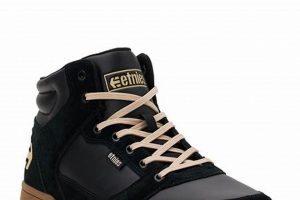
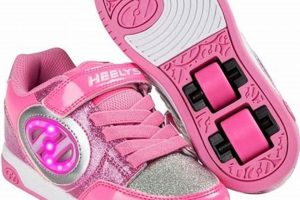
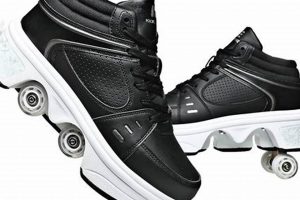
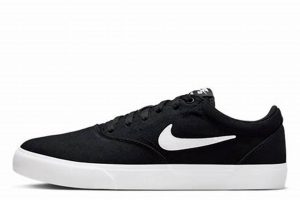
Footwear designed for roller skating integrates a supportive boot or shoe with wheels attached to a frame or plate. This specialized equipment enables movement on smooth surfaces and provides varying degrees of ankle support, depending on the style. Examples include high-top designs for recreational skating and lower-cut models for speed or artistic disciplines.
The utility of such equipment lies in its capacity to transform ordinary surfaces into mobile playgrounds or arenas. Its historical context reveals a progression from simple wheeled contraptions to sophisticated designs incorporating advanced materials and engineering. The advantages derived from its use encompass physical exercise, recreational enjoyment, and competitive opportunities.
The subsequent sections will delve into the diverse types of this equipment, the materials employed in their construction, safety considerations related to their use, and maintenance procedures designed to prolong their lifespan. These aspects are crucial for informed selection and responsible engagement in the activity they facilitate.
Essential Considerations for Roller Skating Footwear
The following guidelines address critical aspects of selecting and maintaining footwear integral to roller skating. Adherence to these recommendations will enhance performance, safety, and longevity of the equipment.
Tip 1: Assess Intended Use. The appropriate style is contingent upon the intended skating discipline. Recreational use necessitates a comfortable, supportive boot, whereas speed skating demands a lower-cut design facilitating greater ankle flexion.
Tip 2: Prioritize Ankle Support. Adequate ankle support is paramount in preventing injuries, particularly for novice skaters. High-top designs generally offer superior support, but can restrict maneuverability.
Tip 3: Evaluate Wheel Durometer. Wheel hardness, measured by durometer, significantly impacts performance. Softer wheels (lower durometer) provide greater grip and are suitable for outdoor surfaces; harder wheels (higher durometer) offer superior speed and are optimal for smooth indoor surfaces.
Tip 4: Inspect Bearing Quality. Bearing precision, typically denoted by an ABEC rating, influences rolling efficiency. Higher ABEC ratings generally indicate smoother, faster performance, but are also more susceptible to debris and require more frequent maintenance.
Tip 5: Ensure Proper Fit. Ill-fitting footwear can lead to discomfort, blisters, and impaired control. Prioritize a snug, secure fit that allows for natural foot movement without excessive slippage.
Tip 6: Regularly Maintain Components. Routine cleaning and lubrication of bearings, along with inspection for worn wheels or loose hardware, are crucial for optimal performance and safety.
Tip 7: Consider Braking System: Evaluate the braking system for responsiveness and durability. Ensure it is in good working condition and compatible with your skating style and environment. Consider upgrading the brake pad for better stopping power or explore alternative braking techniques for advanced control.
These considerations, when implemented conscientiously, contribute to a safer, more enjoyable, and ultimately more rewarding roller skating experience. Prioritizing these factors optimizes both performance and equipment lifespan.
The subsequent section will provide a detailed analysis of different models and brands available on the market, enabling informed purchasing decisions aligned with individual needs and preferences.
1. Ankle Support in Roller Skating Footwear

Ankle support is a critical design element in roller skating footwear, significantly influencing stability, control, and injury prevention. The design and materials used in the ankle region directly affect the skater’s ability to maintain balance and execute maneuvers effectively.
- High-Top vs. Low-Top Designs
High-top designs extend above the ankle joint, providing substantial lateral support. This configuration is common in recreational and rhythm skating footwear, limiting ankle mobility to enhance stability, particularly beneficial for beginners or skaters prioritizing injury prevention. Conversely, low-top designs offer greater ankle range of motion, favored in speed and artistic skating for enhanced agility and responsiveness. These styles necessitate a higher degree of ankle strength and control.
- Material Stiffness and Flexibility
The materials used in the ankle region, such as leather, synthetic composites, or reinforced textiles, dictate the degree of support. Stiffer materials provide greater rigidity, limiting ankle movement and increasing stability. More flexible materials offer greater freedom of movement but reduce support. The optimal balance depends on the skater’s skill level, skating style, and desired performance characteristics. Material properties should be balanced with skater preference.
- Lacing Systems and Ankle Straps
The lacing system and presence of ankle straps contribute significantly to the adjustability and security of ankle support. Lacing allows for customized tightening around the ankle, providing a secure fit that minimizes slippage. Ankle straps, often employing Velcro or buckles, further enhance support and stability, particularly during high-impact activities. The effectiveness of these systems is dependent on their design, placement, and the quality of materials used.
- Injury Prevention and Rehabilitation
Adequate ankle support plays a crucial role in preventing common skating injuries, such as sprains and strains. Properly designed footwear provides the necessary stability to withstand lateral forces and minimize the risk of ankle rollover. In rehabilitation scenarios, specialized footwear with enhanced ankle support can aid in the recovery process, gradually increasing ankle strength and range of motion.
The interplay between these facets highlights the multifaceted nature of ankle support in roller skating footwear. The optimal design is not universal but depends on the skater’s individual needs, skill level, and intended use. Careful consideration of these factors is essential for selecting footwear that maximizes performance and minimizes the risk of injury.
2. Wheel Durometer and Roller Skate Shoe Performance
Wheel durometer, a measure of a wheel’s hardness, plays a critical role in determining the performance characteristics of a roller skate shoe. This attribute directly influences grip, speed, and durability, impacting the suitability of the footwear for various skating styles and surfaces. The selection of an appropriate durometer rating is therefore a crucial consideration for both recreational and competitive skaters.
- Grip and Traction
Softer wheels, characterized by lower durometer values (e.g., 78A-85A), offer enhanced grip and traction. These wheels conform more readily to uneven surfaces, providing a secure hold that is particularly beneficial for outdoor skating on asphalt or concrete. The increased friction, however, can reduce speed and increase rolling resistance. These soft wheels are frequently paired with recreational skate shoes.
- Speed and Roll
Harder wheels, denoted by higher durometer values (e.g., 88A-101A), prioritize speed and rolling efficiency. Their reduced surface deformation minimizes friction, allowing for faster acceleration and sustained momentum. These wheels excel on smooth indoor surfaces such as polished concrete or wood floors, making them suitable for speed skating, roller derby, and artistic skating. They are commonly found in higher-performance roller skate shoes.
- Durability and Wear
Wheel durometer also affects the lifespan and wear characteristics of the wheel. Harder wheels generally exhibit greater resistance to abrasion and deformation, making them more durable in demanding environments. Softer wheels, while offering superior grip, tend to wear down more quickly, particularly on abrasive surfaces. The selection of wheel hardness should therefore be aligned with the intended skating environment to optimize longevity.
- Skating Style and Surface Compatibility
The ideal wheel durometer is dictated by the skater’s style and the surfaces on which they intend to skate. Recreational skaters may prefer softer wheels for comfort and control on varied surfaces, while speed skaters require harder wheels for optimal speed and efficiency on smooth tracks. The selection of a durometer appropriate for the intended application is crucial for maximizing performance and safety.
In conclusion, wheel durometer represents a key performance parameter in roller skate shoes. Its influence on grip, speed, durability, and surface compatibility necessitates careful consideration when selecting appropriate footwear. Understanding the relationship between durometer and skating performance empowers skaters to optimize their equipment for various applications.
3. Bearing Precision
Bearing precision, often indicated by the Annular Bearing Engineers’ Committee (ABEC) rating (though other standards exist), directly influences the rolling efficiency and speed capabilities of a roller skate shoe. Bearings facilitate the wheel’s rotation around the axle. Higher precision bearings, manufactured with tighter tolerances, minimize friction and allow for smoother, faster rolls. This translates to less energy expenditure for the skater to maintain a given speed or to achieve higher velocities. For example, a speed skater relying on highly precise ABEC-9 or higher bearings can maintain a more competitive pace due to the reduced drag. Conversely, lower precision bearings introduce more friction, demanding greater effort from the skater and limiting top-end speed.
The practical significance of bearing precision extends beyond speed. Smoother rolling characteristics contribute to enhanced control and maneuverability. For artistic skaters executing complex routines, consistent and predictable wheel behavior is essential for precision and accuracy. Similarly, recreational skaters benefit from improved roll efficiency, reducing fatigue and enhancing overall enjoyment. Furthermore, the selection of appropriate bearing precision can impact the longevity of the roller skate shoe. Lower precision bearings, while less expensive, may wear out more rapidly due to increased friction and internal stress. High-quality bearings offer improved durability, potentially extending the lifespan of the wheels and overall skate assembly. Maintenance such as regular cleaning and lubrication is crucial regardless of the precision rating, prolonging their efficiency and lifespan.
Understanding the correlation between bearing precision and performance characteristics allows for informed purchasing decisions tailored to individual skating needs and skill levels. While higher ABEC ratings often command a premium price, the investment can be justified by enhanced performance, reduced fatigue, and increased durability. However, external factors, such as skating surface quality and skater weight, also contribute to the overall skating experience and should be considered when evaluating the benefits of high-precision bearings. Ultimately, the selection of appropriate bearings represents a critical component in optimizing the performance and longevity of a roller skate shoe.
4. Boot Material

The selection of boot material in roller skate shoe design significantly influences performance, comfort, and durability. Different materials offer varying degrees of support, flexibility, and thermal regulation, directly affecting the skater’s experience. For instance, leather boots provide excellent ankle support and conform to the foot over time, offering a customized fit favored by artistic skaters. In contrast, synthetic materials, such as nylon or vinyl, are often lighter and more water-resistant, making them suitable for recreational skating in diverse weather conditions. The material’s breathability impacts moisture management, preventing discomfort and potential skin irritation during extended use. Consider a speed skater who depends on a boot made from lightweight carbon fiber for efficiency and minimal energy loss, while a roller derby player might favor a boot with reinforced padding and durable synthetic leather to withstand impacts and abrasions.
Beyond comfort and support, boot material plays a crucial role in energy transfer. Stiffer materials, like carbon fiber or reinforced polymers, minimize energy loss during push-off, allowing for greater speed and efficiency. Flexible materials, conversely, can absorb impact and provide a more forgiving feel, which is advantageous for recreational skating or activities requiring greater maneuverability. The manufacturing process and material quality impact the overall longevity and resistance to wear and tear. High-quality leather boots, properly maintained, can last for many years, while lower-grade synthetic materials may degrade more rapidly with repeated use. The connection between boot material and performance is evident in specialized designs; consider the heat-moldable boots used by competitive skaters to achieve a truly customized fit, maximizing power transfer and comfort.
The choice of boot material represents a critical design consideration in roller skate shoe construction, balancing performance demands, comfort preferences, and durability expectations. Understanding the characteristics of different materials allows skaters to make informed decisions, selecting footwear that aligns with their specific needs and skating style. Challenges include finding materials that offer optimal breathability, support, and durability, particularly in high-performance applications. The future of roller skate shoe design may involve the development of novel materials with enhanced properties, further optimizing the skating experience.
5. Frame Material

The frame material in a roller skate shoe constitutes a critical structural element, directly influencing stability, power transfer, and overall skate performance. The frame, typically situated between the boot and the wheels, bears the skater’s weight and facilitates efficient force transmission during propulsion and maneuvering. Variations in frame material, ranging from polymers to aluminum alloys, dictate the weight, stiffness, and vibration damping characteristics of the skate, thereby impacting skating efficiency and comfort. For instance, recreational skates may utilize polymer frames to reduce cost and weight, while high-performance speed skates often incorporate lightweight aluminum or carbon fiber frames to maximize rigidity and responsiveness. This difference exemplifies how the frame material directly correlates with intended use and desired performance characteristics.
The choice of frame material has significant practical implications for different skating disciplines. Aluminum frames, favored by many roller derby and freestyle skaters, offer a balance of strength and affordability, providing reliable support for aggressive skating styles. Carbon fiber frames, prized for their exceptional stiffness-to-weight ratio, are often employed in speed skating to minimize energy loss and maximize speed potential. Understanding these material properties allows skaters to select frames that best suit their individual needs and skating styles. Furthermore, the manufacturing process, whether cast, extruded, or machined, can significantly affect the frame’s precision, strength, and overall quality. These factors collectively underscore the importance of frame material in dictating a roller skate shoe’s performance envelope.
In summary, the frame material within a roller skate shoe is a determinant in performance, durability, and comfort. The selection of a specific material requires careful consideration of the skater’s discipline, skill level, and budget. The ongoing development of advanced materials and manufacturing techniques presents opportunities to further optimize frame design and enhance the skating experience. Challenges remain in balancing cost, weight, and strength to create frames that meet the diverse demands of the roller skating community. This critical component of a roller skate shoe dictates its robustness, responsiveness, and overall suitability for different activities, ranging from casual recreation to competitive racing.
6. Closure System
The closure system of a roller skate shoe directly impacts fit, support, and performance, acting as a critical interface between the skater’s foot and the skate itself. This system, encompassing laces, buckles, straps, or a combination thereof, dictates how securely the foot is held within the boot, influencing energy transfer, ankle stability, and overall control. An inadequately designed or poorly functioning closure system can lead to discomfort, slippage, and diminished performance, while a well-engineered system optimizes fit and responsiveness. For example, a speed skater relying on a tightly laced system ensures minimal energy loss during each stride, translating to increased efficiency and speed. Conversely, a recreational skater may prioritize a system offering ease of use and adjustability for enhanced comfort during extended use.
Diverse closure system designs cater to specific skating disciplines and user preferences. Traditional lacing systems allow for precise customization of fit across the entire foot, favored by artistic skaters requiring fine-tuned control and support. Buckle systems, often found on aggressive inline skates, offer quick and secure closure, while providing impact resistance. Velcro straps provide simple adjustability, making them suitable for beginner skates. Hybrid systems, combining laces with buckles or straps, aim to balance adjustability with ease of use and security. The effectiveness of a closure system depends on factors such as the material quality, construction techniques, and the placement of fastening points. For example, strategically positioned straps across the instep can enhance heel lock, preventing unwanted foot movement within the boot. Real-world examples underscore this significance: consider the common adaptation of adding power straps to recreational skates to increase ankle support and stability.
In conclusion, the closure system is integral to the functionality and performance of a roller skate shoe. Its ability to provide a secure, comfortable, and customizable fit directly influences the skater’s control, efficiency, and overall experience. Challenges remain in developing systems that balance ease of use, security, and long-term durability, especially given the diverse demands of different skating styles. Ultimately, the closure system warrants careful consideration as a fundamental component in roller skate shoe design and selection.
7. Braking System and Roller Skate Shoe Integration

The braking system represents a critical safety component integrated into roller skate shoes, enabling speed control and preventing collisions. The primary effect of a functional braking system is the reduction of kinetic energy, allowing the skater to decelerate or stop. The importance of this system lies in its capacity to mitigate the risk of accidents, particularly in uncontrolled environments or during unexpected obstacles. One common braking mechanism is the toe stop, positioned at the front of the skate, activated by lifting the toe and applying pressure. Alternatively, heel brakes, located at the rear, require shifting weight backward to engage. The absence or malfunction of the braking system compromises the user’s ability to manage speed effectively, directly increasing the likelihood of injury.
The design and placement of the braking system have significant implications for maneuverability and skating style. Toe stops, for example, facilitate abrupt stops and pivot turns, commonly utilized in roller derby and artistic skating. Heel brakes, while offering a more stable braking platform, may restrict certain movements. The practical application of understanding these nuances lies in selecting a roller skate shoe equipped with a braking system aligned with the intended skating activity. Furthermore, routine inspection and maintenance of the braking system are essential for ensuring its reliability. Worn-down toe stops or malfunctioning heel brakes should be promptly replaced to maintain optimal safety standards. Real-world incidents involving brake failure underscore the necessity of diligent upkeep.
In summary, the braking system is not merely an accessory but an integral safety feature of the roller skate shoe. Its proper function directly affects the skater’s ability to control speed and avoid accidents. Challenges include designing braking systems that are both effective and unobtrusive, minimizing interference with skating technique. Understanding the connection between the braking system and overall skate performance allows users to make informed decisions, prioritizing safety without compromising agility or comfort. Continued research and development in braking technology are crucial for enhancing safety standards and promoting responsible skating practices.
Frequently Asked Questions
The following questions address common inquiries and misconceptions regarding roller skate shoes, providing detailed and informative answers.
Question 1: What is the lifespan of a typical roller skate shoe?
The longevity of roller skate shoes is contingent upon usage frequency, skating surface, and maintenance practices. High-quality models, subjected to moderate use and regular maintenance, may last several years. However, intensive use or inadequate care can significantly reduce their lifespan. Inspect the wheels, bearings, and boot regularly for signs of wear.
Question 2: How does wheel durometer affect skating performance?
Wheel durometer, a measure of wheel hardness, directly influences grip, speed, and durability. Softer wheels (lower durometer) offer enhanced grip, suitable for outdoor surfaces, while harder wheels (higher durometer) prioritize speed on smooth indoor surfaces. Select a durometer rating appropriate for the intended skating environment.
Question 3: What is the significance of ABEC ratings in roller skate shoe bearings?
ABEC ratings indicate the precision of roller skate shoe bearings. Higher ABEC ratings generally denote tighter tolerances and smoother rolling characteristics. However, higher ratings also imply greater susceptibility to debris and require more frequent maintenance. The selection should align with skating style and environmental conditions.
Question 4: How should roller skate shoes be properly maintained?
Routine maintenance includes cleaning and lubricating bearings, inspecting for worn wheels or loose hardware, and cleaning the boot material. Regular maintenance prevents premature wear and ensures optimal performance. Consult the manufacturer’s instructions for specific maintenance procedures.
Question 5: What are the key considerations when selecting roller skate shoes for a beginner?
Beginners should prioritize ankle support, comfort, and stability. High-top designs and softer wheels are recommended for enhanced control and reduced risk of injury. Ensure a proper fit and consider models with adjustable features to accommodate skill progression.
Question 6: Can roller skate shoe wheels be replaced?
Yes, roller skate shoe wheels are replaceable. When selecting replacement wheels, ensure compatibility with the skate’s bearing size and axle diameter. Replace wheels when they exhibit significant wear, uneven wear patterns, or reduced performance.
These answers provide a foundation for understanding the complexities associated with roller skate shoes. Continued education and informed decision-making contribute to a safer and more enjoyable skating experience.
The subsequent section will examine potential issues and troubleshooting techniques related to roller skate shoes.
Conclusion
This examination of the roller skate shoe has highlighted its intricate interplay of design elements, materials, and functional requirements. From ankle support to braking systems, each component contributes significantly to performance, safety, and overall user experience. The diverse applications, ranging from recreational skating to competitive disciplines, necessitate a nuanced understanding of these factors to facilitate informed selection and responsible use.
Continued advancements in materials science and engineering promise further refinements in roller skate shoe design, potentially enhancing performance and safety. Prioritizing diligent maintenance and adherence to safety guidelines remain essential for maximizing the lifespan of the equipment and ensuring a safe and enjoyable skating experience. The enduring appeal of roller skating underscores the continued relevance of the roller skate shoe as a pivotal element in this activity.