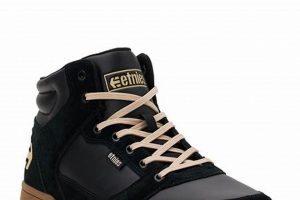
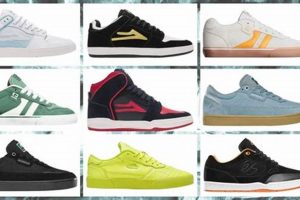
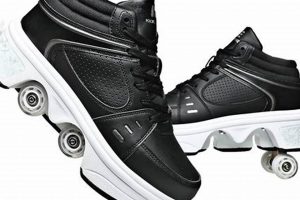
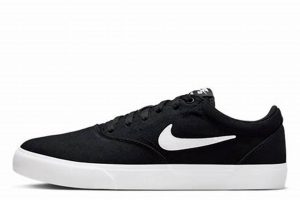
Footwear designed to enhance skateboarding performance often features a profile that extends slightly above the ankle but remains below the full high-top style. This construction provides a balance between flexibility and support, commonly incorporating durable materials and reinforced stitching to withstand the rigors of skating. As an example, a skater might choose this type of shoe for its increased ankle protection compared to a low-cut alternative.
The popularity of this design stems from its ability to offer crucial ankle stability without significantly restricting movement, a vital characteristic for performing various skateboarding tricks. Historically, this style emerged as skaters sought footwear that offered more protection than traditional sneakers but maintained a degree of board feel and responsiveness. The additional coverage can contribute to injury prevention, while the inherent design elements contribute to board control.
The following sections will delve into the specific construction materials, technological advancements, and diverse aesthetic variations found within this popular footwear category, along with a comparative analysis against other footwear styles in the skateboarding market.
Guidance for Selecting Suitable Skate Footwear
The selection of appropriate footwear can significantly impact skateboarding performance and safety. These tips offer guidance for making informed decisions when choosing skateboarding footwear.
Tip 1: Prioritize Ankle Support. Evaluate the level of ankle support offered. This footwear design aims to provide additional stability compared to low-cut alternatives. Adequate support can reduce the risk of ankle injuries during demanding maneuvers.
Tip 2: Assess Material Durability. Examine the materials used in construction. Reinforced stitching, durable fabrics like suede or canvas, and abrasion-resistant outsoles are critical for withstanding the wear and tear associated with skateboarding.
Tip 3: Consider Outsole Grip. Analyze the outsole pattern and material. A vulcanized rubber outsole with a deep tread pattern offers superior grip and board feel, essential for maintaining control and executing tricks effectively.
Tip 4: Evaluate Padding and Cushioning. Inspect the level of padding and cushioning. Adequate cushioning in the insole and around the ankle collar enhances comfort and absorbs impact, reducing stress on joints during landings.
Tip 5: Ensure Proper Fit. Verify that the chosen style fits snugly but comfortably. Ill-fitting footwear can compromise board feel and increase the risk of blisters or other foot-related issues. Test the fit while wearing skateboarding socks.
Tip 6: Evaluate Lacing System. Examine the lacing system. Recessed eyelets and reinforced laces can prevent breakage and ensure a secure fit throughout skateboarding sessions. Consider footwear with lace protection features.
The appropriate footwear choice directly contributes to enhanced skateboarding performance, improved comfort, and reduced risk of injury. Taking these factors into account will lead to a more positive and safer skateboarding experience.
The subsequent section will explore the long-term maintenance and care of skateboarding footwear to maximize lifespan and performance.
1. Ankle Support

Ankle support is a primary consideration in skateboarding footwear due to the high-impact and often unpredictable nature of the sport. Footwear that provides adequate ankle support can significantly reduce the risk of sprains and other injuries. The design profile of the ‘mid top’ style inherently addresses this need, providing a specific balance between flexibility and protection.
- Enhanced Stability During Landings
The extended height around the ankle offers increased stability during landings. This stability is crucial for absorbing impact forces and preventing the ankle from rolling inwards or outwards. A skater attempting a complex trick often relies on this added support to maintain balance and control upon landing. Without it, the likelihood of an ankle injury increases substantially.
- Proprioceptive Feedback
The increased surface area in contact with the ankle provides heightened proprioceptive feedback. This means the skater has a better sense of their ankle’s position in space, allowing for quicker reactions and adjustments to maintain balance. This is particularly important during dynamic movements and quick transitions on the board.
- Distribution of Impact Forces
The design facilitates a more even distribution of impact forces across the ankle joint. By cradling the ankle, the footwear helps to dissipate the energy from landings and other high-impact maneuvers, reducing stress on specific ligaments and tendons. This even distribution contributes to long-term joint health and injury prevention.
- Protection Against Abrasion
The extended coverage provided by the mid top design also protects the ankle area from abrasion. Skaters often use their ankles for certain tricks or when bailing, so the extra material provides a protective barrier, minimizing scrapes and cuts. Protection against abrasion is not directly related to support, it contributes to overall safety and comfort during skateboarding sessions.
The multifaceted advantages of ankle support inherent in this specific footwear design directly correlate with enhanced skateboarding performance and reduced injury risk. The added stability, improved proprioceptive feedback, and effective distribution of impact forces all contribute to a safer and more confident skateboarding experience. These attributes help explain the enduring popularity of the style within the skateboarding community.
2. Durability
Durability constitutes a critical performance factor in skateboarding footwear, directly influencing longevity and the ability to withstand the specific stresses inherent in skateboarding. Footwear design and material selection play pivotal roles in determining the lifespan of the product.
- Reinforced Construction Techniques
Skateboarding footwear commonly incorporates reinforced stitching and layered construction in high-wear areas, such as the ollie zone and toe cap. These techniques enhance structural integrity and prevent premature failure due to abrasion. For instance, double or triple stitching can significantly extend the life of the upper material, particularly when subjected to repeated friction against grip tape.
- Abrasion-Resistant Materials
The choice of materials directly impacts the overall resilience. Suede and canvas are frequently employed in skateboarding footwear due to their balance of flexibility and abrasion resistance. Additionally, rubber compounds used in the outsole must possess high levels of abrasion resistance to withstand the constant contact with pavement and the skateboard. Certain synthetic materials offer enhanced durability characteristics compared to natural fibers, often at the expense of breathability.
- Impact Absorption Technologies
Durable skateboarding footwear integrates impact absorption technologies within the midsole to mitigate stress on joints and reduce the likelihood of sole separation. Polyurethane or ethylene-vinyl acetate (EVA) midsoles provide cushioning and shock absorption, extending the overall lifespan of the footwear by preventing structural damage from repeated high-impact landings. Some models incorporate encapsulated air or gel units for enhanced impact protection.
- Outsole Bond Strength
The bond between the outsole and the upper is a critical determinant of footwear durability. Vulcanized construction, where the outsole is chemically bonded to the upper through heat and pressure, offers superior adhesion compared to cemented construction. A strong outsole bond prevents delamination, ensuring the footwear remains intact even under extreme stress and repeated use.
The factors of reinforced construction, abrasion-resistant materials, integrated impact absorption, and robust outsole bond strength collectively define the durability of skateboarding footwear. The careful consideration of these elements directly contributes to an extended product lifespan, reducing the frequency of replacement and maximizing the user’s investment. These characteristics are central to the functional performance and value proposition within the skateboarding footwear market.
3. Board Feel

Board feel, the tactile feedback received from the skateboard through the footwear, significantly influences a skater’s control and performance. Its connection to footwear relates to the thickness and flexibility of the sole, as well as the overall construction of the shoe. The design must facilitate effective communication between the skater’s foot and the board’s surface. Diminished board feel results in reduced responsiveness, which can impede execution of intricate maneuvers. Footwear that provides enhanced board feel enables precise adjustments and greater confidence in board control. For example, a skater performing a kickflip relies on the subtle cues transmitted through the sole to gauge the board’s rotation and ensure a clean landing.
The design directly affects board feel due to sole construction. Thinner soles made of flexible rubber compounds maximize tactile input, enabling skaters to sense the board’s contours and movements accurately. Minimal padding in the forefoot further enhances this connection. However, a trade-off exists between board feel and impact protection; thinner soles offer less cushioning upon landing. The placement and design of tread patterns on the outsole also impact board feel by influencing grip and contact points. Therefore, the selected construction materials must strike a balance between sensitivity and durability to withstand the demands of skateboarding.
In summary, board feel represents a vital component of skateboarding footwear performance. It facilitates nuanced control, enabling skaters to execute tricks with precision and confidence. The design must carefully balance sensitivity and durability through the selection of appropriate materials and construction techniques. While individual preferences vary, an understanding of the relationship between footwear design and board feel remains essential for selecting appropriate skateboarding equipment. The subsequent discussion will address another key aspect of skateboard footwear: Impact Absorption.
4. Impact Absorption

Impact absorption is a crucial attribute in skateboarding footwear, mitigating the forces generated during landings and high-impact maneuvers. The design plays a significant role in dissipating these forces, reducing the risk of injury and enhancing overall performance. Proper impact absorption allows skaters to execute tricks with greater confidence and reduces long-term stress on joints.
- Midsole Material Density and Composition
The midsole, typically constructed from materials such as ethylene-vinyl acetate (EVA) or polyurethane (PU), serves as the primary impact absorption layer. The density and composition of these materials directly influence their ability to dissipate energy. Higher-density materials provide greater cushioning but may reduce board feel, while lower-density materials offer enhanced board feel but less impact protection. Manufacturers often employ dual-density midsoles, combining different materials to optimize both factors. An example would be a shoe with a PU heel for high-impact absorption and an EVA forefoot for board feel.
- Insole Cushioning Technology
The insole contributes to overall impact absorption by providing an additional layer of cushioning directly beneath the foot. Advanced insoles incorporate gel or foam technologies designed to compress and rebound upon impact, dissipating energy and reducing stress on joints. OrthoLite insoles, for example, are known for their long-lasting cushioning properties and ability to wick away moisture, enhancing comfort during extended skateboarding sessions.
- Outsole Design and Material
While the midsole and insole are primary contributors to impact absorption, the outsole also plays a role. The thickness and tread pattern of the outsole influence how impact forces are distributed across the foot. A thicker outsole provides greater cushioning, while a flexible tread pattern allows for more natural foot movement. Certain rubber compounds used in outsoles possess enhanced shock-absorbing properties, further reducing impact stress. An example is a cupsole design, where the outsole wraps around the midsole, providing increased stability and impact protection.
- Internal Support Structures
Internal support structures within skateboarding footwear contribute to impact absorption by maintaining foot stability and preventing excessive pronation or supination. These structures, often made from thermoplastic polyurethane (TPU) or other rigid materials, provide arch support and control foot movement during high-impact landings. By limiting excessive foot motion, these structures reduce stress on joints and minimize the risk of injury. An example would be an internal heel counter that cradles the heel and provides additional stability.
The various facets of impact absorption within the design, from midsole material density to internal support structures, collectively contribute to a skater’s overall comfort, performance, and safety. By carefully considering these factors, skaters can select footwear that provides adequate protection against the stresses of skateboarding, allowing them to push their limits with greater confidence. The effective integration of these technologies distinguishes high-performance models from basic designs, solidifying their role in injury prevention and performance enhancement.
5. Style

The stylistic elements of skateboarding footwear extend beyond mere aesthetics; they embody a fusion of functionality, cultural identity, and individual expression. These elements, particularly prominent in the construction and design of a specific footwear style, influence both performance and perception within the skateboarding community. The following facets will explore the distinct stylistic aspects and their impact.
- Color Palettes and Material Combinations
The selection of colors and materials communicates specific stylistic preferences and affiliations. Classic color combinations, such as black and white or earth tones, often evoke a sense of heritage and practicality. Contrasting colors and bold patterns signal individuality and a departure from conventional norms. Material combinations, like suede and canvas, provide visual texture and contribute to the overall aesthetic. The strategic use of color and material choices conveys intended style statements and personal preferences.
- Branding and Logo Placement
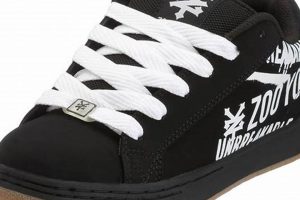
Brand logos and insignia serve as visual markers of brand identity and affiliation within the skateboarding subculture. The size, placement, and design of logos contribute to the overall aesthetic and signal the wearer’s alignment with specific brands or values. Subtly embossed logos convey understated sophistication, while prominent, oversized logos suggest boldness and brand loyalty. The strategic integration of branding elements shapes the perception and recognition of skateboarding footwear.
- Silhouette and Proportion
The silhouette and proportion define the overall shape and structure. Design variations include streamlined, minimalist profiles and chunkier, more substantial constructions. The height, toe shape, and side panel design contribute to the overall aesthetic. Variations in silhouette create distinctive visual signatures, reflecting individual preferences and stylistic trends within the skateboarding community.
- Customization and Personalization
Customization options, such as interchangeable laces, personalized graphics, and DIY modifications, allow skaters to express individuality and create personalized footwear. These modifications reflect a commitment to self-expression and a rejection of conformity. Customization transforms skateboarding footwear into a canvas for individual creativity and self-representation, solidifying the connection between style and personal identity.
In conclusion, the stylistic dimensions are multifaceted, encompassing color palettes, branding, silhouette, and customization options. These elements communicate stylistic preferences, brand affiliations, and individual expressions. By consciously considering these stylistic factors, skaters curate their identities and demonstrate personal agency within the skateboarding subculture. Such considerations ensure the enduring relevance of stylistic considerations within skateboard footwear design and consumer choices.
Frequently Asked Questions
The following questions address common concerns regarding this specific style of skateboarding footwear, providing clarity on design features, performance characteristics, and suitability for various skateboarding activities.
Question 1: What specific advantage does the mid-top design offer compared to low-top alternatives in skateboarding footwear?
The primary advantage lies in enhanced ankle support. The extended height above the ankle joint provides increased stability and protection against sprains and impacts, particularly during landings and abrupt maneuvers. This increased support distinguishes it from low-top designs that prioritize flexibility and board feel.
Question 2: How does the durability of skateboarding footwear compare to that of general athletic shoes?
Skateboarding footwear typically exhibits superior durability due to reinforced construction and abrasion-resistant materials. High-wear areas, such as the ollie zone and toe cap, incorporate double or triple stitching and layered construction to withstand the abrasive forces encountered during skateboarding. General athletic shoes lack these specific reinforcements, resulting in reduced lifespan under similar conditions.
Question 3: Does board feel impact skateboarding performance and to what extent is it affected by design?
Board feel is a critical factor in skateboarding performance, influencing control and responsiveness. Thinner soles and flexible rubber compounds maximize tactile input, enabling skaters to sense the board’s movements and contours accurately. However, excessive thinness can compromise impact protection. The design must strike a balance between board feel and cushioning for optimal performance.
Question 4: What materials are most commonly used in midsoles, and how do these materials influence impact absorption capabilities?
Ethylene-vinyl acetate (EVA) and polyurethane (PU) are prevalent midsole materials. PU offers superior impact absorption and durability but can be heavier and less flexible than EVA. EVA provides a lighter and more flexible option but may exhibit reduced impact absorption. Dual-density midsoles, combining both materials, represent a compromise between cushioning and board feel.
Question 5: To what extent does style influence the selection of skateboarding footwear beyond functional considerations?
Style plays a significant role in skateboarding footwear selection, reflecting individual preferences, brand affiliations, and cultural identity. Color palettes, logo placement, and silhouette contribute to the overall aesthetic and allow skaters to express individuality. While functional attributes remain paramount, style significantly impacts consumer choices and brand perception.
Question 6: What factors determine the overall lifespan of the design, and how can skaters extend the footwear’s use?
The lifespan depends on material quality, construction techniques, and skateboarding frequency and intensity. Reinforced stitching, abrasion-resistant uppers, and durable outsoles contribute to longevity. Skaters can extend footwear life through regular cleaning, applying protective coatings to high-wear areas, and rotating footwear to allow for adequate drying between sessions.
These answers underscore the functional benefits and performance considerations associated with this style of skateboarding footwear, highlighting the importance of informed decision-making based on individual needs and skateboarding style.
The following section will explore a comparative analysis against other footwear styles in the skateboarding market.
Mid Top Skate Shoes
This exploration has illuminated the multifaceted characteristics of skateboarding footwear with a specific profile. From its advantageous ankle support and durability to the crucial balance of board feel and impact absorption, this footwear embodies a design tailored to the demands of skateboarding. The stylistic elements further contribute to its significance within the skateboarding culture.
The insights presented encourage a deeper understanding of skateboarding footwear selection. Continued advancements in materials and construction techniques promise even greater performance and protection. This knowledge fosters more informed decision-making, enhancing both the skateboarding experience and minimizing potential risks.