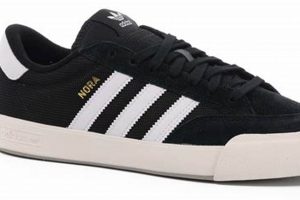
Footwear designed specifically for skateboarding, often characterized by durable construction, flat soles for grip, and reinforced areas to withstand the wear and tear associated with the sport. These specialized shoes provide enhanced board feel and protection for skaters executing various tricks and maneuvers. An example would be a low-profile shoe with a vulcanized rubber sole and suede upper, commonly favored for its flexibility and resilience.
The emergence of purpose-built footwear for skateboarding significantly improved performance and safety. Early skaters often modified existing athletic shoes, but specialized designs offered superior grip, impact absorption, and protection from abrasions. The evolution of this footwear reflects the growing professionalization of skateboarding and the increasing demand for equipment that meets the unique needs of the activity. Historically, these advancements contributed to more complex and daring maneuvers, driving innovation in both footwear design and skating technique.
The following sections will delve into specific features, construction methods, and the evolving trends within the realm of skateboard-specific footwear, exploring the key aspects that make certain designs optimal for different skating styles and preferences. This will encompass materials science, ergonomic considerations, and the impact of these factors on overall skater performance.
Guidance on Selection and Maintenance
The subsequent recommendations provide insights into selecting and maintaining footwear intended for skateboarding, emphasizing durability and performance.
Tip 1: Assess Durability. Evaluate the shoe’s construction, specifically the materials used in the upper and sole. Reinforced stitching and durable materials like suede or canvas contribute to longevity under stress.
Tip 2: Prioritize Sole Construction. Vulcanized rubber soles offer superior grip and board feel compared to cupsole designs. Examine the tread pattern to ensure adequate traction for various skateboarding surfaces.
Tip 3: Consider Impact Protection. Opt for models with enhanced cushioning or reinforced heel cups to mitigate impact during landings. Insoles with shock-absorbing properties can further reduce stress on joints.
Tip 4: Evaluate Fit and Comfort. Ensure a snug, secure fit that allows for adequate board feel without restricting movement. Padding around the ankle and tongue enhances comfort during prolonged use.
Tip 5: Implement Regular Cleaning. Remove dirt and debris from the shoes regularly to prevent wear and tear. Use appropriate cleaning solutions for the specific materials to maintain their integrity.
Tip 6: Rotate Usage. Alternate between multiple pairs to extend the lifespan of each. This allows materials to recover and reduces the rate of wear on any single pair.
Tip 7: Address Damage Promptly. Repair any rips or tears immediately to prevent further degradation. Reinforcing vulnerable areas with adhesive or patching can prolong the shoe’s usability.
Adhering to these guidelines will contribute to both the performance and longevity of skateboarding footwear, maximizing its utility and minimizing replacement costs.
The following section will address commonly encountered problems and potential solutions related to specialized footwear used in skateboarding.
1. Durable Upper Materials

The selection of upper materials is paramount in the construction of footwear designed for skateboarding, as these components directly impact the shoe’s ability to withstand the abrasive and high-impact forces inherent in the sport. The use of robust materials, such as suede leather, reinforced canvas, and synthetic alternatives with high tensile strength, represents a deliberate engineering choice aimed at extending the lifespan of the product under extreme conditions. For instance, the ollie area, a common point of wear due to repetitive friction against the skateboard, often features double-layered construction or the application of durable overlays to mitigate rapid degradation. Failure to incorporate durable upper materials results in compromised structural integrity, leading to premature failure and necessitating frequent replacements, thereby increasing costs and diminishing performance.
The specific properties of the upper material directly influence the shoe’s performance characteristics beyond mere durability. Breathability, for example, is a crucial consideration in maintaining comfort and preventing excessive moisture buildup within the shoe, which can compromise grip and increase the risk of blisters. Suede, while durable, may offer less breathability than canvas, requiring design compromises such as ventilation perforations. Furthermore, the material’s flexibility affects the skater’s “board feel,” the sensitivity to the board’s movements crucial for executing tricks and maintaining control. A stiffer upper material may provide greater support and protection but at the expense of tactile feedback, necessitating a careful balance between these competing demands.
In summary, the implementation of durable upper materials in skateboarding footwear is a multifaceted engineering challenge involving careful consideration of material properties, construction techniques, and the specific demands of the skateboarding discipline. The longevity and performance characteristics of the shoe are inextricably linked to the choice and application of these materials, underscoring the importance of informed decision-making in design and manufacturing. Prioritizing durability in the upper construction extends the functional lifespan of the footwear, minimizes environmental impact through reduced consumption, and ultimately enhances the skater’s performance and comfort.
2. Vulcanized Sole Construction

Vulcanized sole construction, a prevalent feature in specific skateboard footwear, involves bonding the sole to the upper via heat and pressure. This process creates a robust and flexible bond, yielding increased board feel and control, traits valued by skateboarders. Within the context of such footwear, the vulcanized sole directly influences performance metrics, including grip, durability, and responsiveness. This construction method allows for a lower profile design, placing the foot closer to the board, which in turn amplifies the skater’s tactile connection to the board’s surface. An example of this benefit is a skater performing a kickflip with increased precision due to enhanced board feel provided by the vulcanized sole. The rubber’s specific durometer is also a consideration, impacting both grip and wear resistance.
Furthermore, the flexibility inherent in vulcanized construction allows for a more natural foot movement, aiding in the execution of complex tricks. However, this construction method often offers less impact protection compared to cupsole designs, requiring skaters to prioritize board feel over cushioning in some instances. The practical application of vulcanized soles extends to various skateboarding styles, from street skating, where board feel is paramount, to park skating, where a balance between feel and impact protection is often sought. Skaters frequently choose footwear with vulcanized soles based on their specific riding style and terrain preferences.
In summary, vulcanized sole construction represents a crucial design element in skateboard-specific footwear, influencing both performance and user preference. While the benefits of enhanced board feel and flexibility are undeniable, the trade-off in impact protection necessitates careful consideration. The skater’s individual riding style, coupled with the intended terrain, determines the ultimate suitability of this construction method, highlighting the nuanced relationship between footwear design and skateboarding performance.
3. Reinforced Impact Zones

Reinforced impact zones represent a critical design element within skateboarding footwear. These strategically placed reinforcements mitigate the stresses associated with high-impact landings and repetitive abrasion, directly influencing shoe durability and skater safety.
- Ollie Patch Reinforcement
The ollie patch, typically located on the lateral side of the forefoot, is subject to constant friction during ollies and other flip tricks. Reinforced stitching, double layering of durable materials such as suede or abrasion-resistant synthetics, or the addition of a dedicated patch significantly extends the lifespan of this high-wear area. Failure to reinforce this zone leads to premature material failure and compromised shoe integrity.
- Heel Counter Support
The heel counter provides structural support and stability to the rear of the foot, critical for impact absorption and preventing ankle roll. Reinforcement in this area often involves a rigid internal or external heel cup constructed from materials like thermoplastic polyurethane (TPU) or denser foams. Enhanced heel support minimizes the risk of ankle injuries and improves overall foot stability during landings.
- Toe Cap Protection
The toe cap is vulnerable to impact from ground contact and board maneuvers. Reinforcement can involve a multi-layered construction, a rubber overlay, or the use of a more durable material such as reinforced suede or leather. This protects the toes and extends the lifespan of the front of the shoe.
- Insole Cushioning Technology
While technically an internal component, the insole directly contributes to impact absorption. High-density foams, gel inserts, or air cushioning technologies are incorporated into insoles to mitigate the force of landings and reduce stress on joints. Enhanced insole cushioning improves rider comfort and reduces the potential for long-term impact-related injuries.
These reinforcement strategies, when effectively implemented, directly contribute to the performance and longevity of footwear designed for skateboarding, enhancing both rider safety and product value by counteracting typical wear patterns. It is important to acknowledge that different reinforcement methods may offer varying degrees of protection, leading to nuanced options based on rider needs.
4. Optimal Board Feel

“Optimal board feel,” in the context of footwear designed for skateboarding, refers to the sensory feedback transmitted from the skateboard to the skater’s feet. This sensitivity enables precise control and execution of maneuvers. Footwear with a thin, flexible sole and minimal cushioning typically enhances this sense, allowing the skater to feel the board’s contours and movements with greater accuracy. The materials and construction techniques employed directly influence the degree of board feel achieved. For example, a shoe with a vulcanized sole and a thin insole offers superior board feel compared to a shoe with a thick cupsole and heavily padded insole. The reduction of material between the foot and the board increases sensitivity, facilitating nuanced adjustments and improving overall control.
The importance of this enhanced tactile feedback becomes evident in technical skateboarding, where minute adjustments are often the difference between landing a trick successfully and failing. Street skaters, for instance, frequently prioritize board feel for navigating obstacles and executing precise flip tricks. Similarly, skaters performing ledge tricks rely on the tactile feedback to maintain balance and control. However, increased board feel often comes at the expense of impact protection. Therefore, skaters must often find a compromise between these two factors based on their individual skating style and the terrain they are navigating. Some designs incorporate strategically placed cushioning without sacrificing overall board feel, attempting to balance these competing demands.
Understanding the connection between footwear design and board feel is crucial for skaters seeking to optimize their performance. While personal preference plays a role, awareness of the design features that contribute to enhanced tactile feedback allows skaters to make informed choices. Prioritizing board feel can lead to improved control, greater trick consistency, and a more connected experience with the skateboard. Ultimately, the pursuit of optimal board feel is a continuous process of experimentation and adaptation, driven by the skater’s individual needs and the evolving demands of the sport.
5. Ankle and Heel Support

Adequate ankle and heel support in footwear directly impacts stability and injury prevention, particularly within the context of skateboarding. Footwear lacking sufficient support mechanisms increases the risk of sprains, strains, and other lower extremity injuries. The design and construction of skateboarding footwear, therefore, must address these biomechanical considerations to ensure rider safety and performance.
- Heel Counter Rigidity
The heel counter, a structural component surrounding the heel, plays a vital role in maintaining foot alignment and preventing excessive pronation or supination. A rigid heel counter limits lateral movement and stabilizes the foot during landings and transitions. Footwear utilizing a more pliable heel counter offers less stability, potentially increasing the risk of ankle instability. Within the context of skateboarding footwear, the selection of appropriate heel counter rigidity requires a balance between support and flexibility to accommodate the dynamic movements inherent in the sport.
- Ankle Collar Height and Padding
The height of the ankle collar, along with the amount of padding surrounding the ankle, contributes to both support and comfort. A higher ankle collar provides increased lateral stability, while adequate padding cushions the ankle against impacts and friction. Skateboarding footwear designs often incorporate strategically placed padding to protect the malleoli (ankle bones) without restricting range of motion. Insufficient padding or an overly restrictive collar can lead to discomfort and potentially hinder performance.
- Internal Support Structures
Internal support structures, such as medial posts or torsional stability bars, can enhance overall foot stability and prevent excessive pronation. These features, often integrated into the midsole or insole, provide additional support to the arch and limit unwanted foot movement. While less visible than external components, internal support structures significantly contribute to the overall stability and biomechanical efficiency of skateboarding footwear. The absence of such structures can compromise foot alignment and increase the risk of overuse injuries.
- Lacing System Integration
The lacing system, when properly integrated with the ankle collar and heel counter, provides a secure and adjustable fit, further enhancing support and stability. A well-designed lacing system allows the skater to customize the level of support and tightness according to their individual needs and preferences. Lacing systems that extend higher up the ankle can offer increased stability, while strategically placed eyelets or lace loops can prevent slippage and ensure a consistent fit. Inadequate lacing systems can result in loose or uneven support, compromising stability and increasing the risk of injury.
The integration of these elements into skateboarding footwear designs directly impacts rider safety and performance. Prioritizing ankle and heel support, through the implementation of rigid heel counters, strategically padded ankle collars, internal support structures, and well-designed lacing systems, ensures optimal foot stability and reduces the risk of injuries associated with the demanding nature of skateboarding.
Frequently Asked Questions
This section addresses common inquiries regarding footwear specifically engineered for skateboarding, offering insights into their design, functionality, and maintenance.
Question 1: What differentiates skateboarding footwear from general athletic shoes?
Skateboarding footwear incorporates specific design elements, such as durable upper materials (suede, reinforced canvas), vulcanized or cupsole construction for enhanced grip and board feel, and reinforced impact zones (ollie patch, heel counter). These features are tailored to withstand the unique stresses and demands of skateboarding, providing superior performance and protection compared to general athletic shoes.
Question 2: How does sole construction influence skateboarding performance?
Vulcanized soles offer enhanced board feel and flexibility, allowing for greater sensitivity and control. Cupsole construction provides increased impact protection and support, suitable for high-impact landings. The selection of sole construction depends on individual skating style and preference, balancing the need for board feel versus impact absorption.
Question 3: What materials are most commonly used in the upper construction of skateboarding shoes?
Suede leather is valued for its durability and abrasion resistance. Reinforced canvas provides breathability and flexibility. Synthetic materials offer a combination of durability, water resistance, and reduced weight. Material selection depends on the desired balance of durability, comfort, and performance characteristics.
Question 4: How can the lifespan of skateboarding footwear be extended?
Regular cleaning and maintenance, including removing dirt and debris, patching rips and tears promptly, and utilizing shoe protectors in high-wear areas, can significantly extend the lifespan. Rotating between multiple pairs of shoes allows each pair to recover and reduces the rate of wear.
Question 5: What role does the insole play in skateboarding footwear?
The insole provides cushioning, impact absorption, and arch support. High-density foam or gel inserts mitigate the force of landings and reduce stress on joints. Proper insole selection enhances comfort and reduces the potential for foot fatigue and injuries.
Question 6: Are there specific design features that address ankle stability in skateboarding shoes?
Reinforced heel counters, padded ankle collars, and integrated lacing systems provide enhanced ankle support and stability, reducing the risk of sprains and other ankle injuries. High-top designs offer increased lateral stability compared to low-top models. The selection of footwear with appropriate ankle support is crucial for mitigating the risks associated with high-impact landings and abrupt movements.
In summary, footwear designed for skateboarding incorporates specialized features tailored to the unique demands of the sport. Understanding these features and implementing proper maintenance practices can enhance performance, extend the lifespan of the footwear, and minimize the risk of injuries.
The following section will explore user reviews and testimonials regarding skateboarding footwear, providing insights into real-world performance and user satisfaction.
Duffs Skate Shoes
This exploration has underscored the specialized design and construction of footwear tailored for skateboarding. Key attributes, including durable upper materials, vulcanized sole construction, reinforced impact zones, optimal board feel, and ankle and heel support, have been examined in detail. These elements collectively contribute to the performance, longevity, and safety of footwear intended for this demanding activity. The discourse has also addressed frequently asked questions and offered guidelines on selection and maintenance, emphasizing the importance of informed decision-making.
The data presented herein provides a foundation for understanding the critical role of specialized footwear in skateboarding. Continued innovation and adherence to established best practices in design and manufacturing remain essential for advancing both the performance and safety of participants in this dynamic activity. Further investigation into materials science and biomechanical engineering is warranted to optimize future iterations of footwear engineered for skateboarding.
![Best Adio Skate Shoes: Styles & Reviews [Year] | Learn to Surf & Skate: A Beginner's Step-by-Step Guide](https://universitysurfandskate.com/wp-content/uploads/2026/04/th-28-300x200.jpg "Best Adio Skate Shoes: Styles & Reviews [Year] Learn to Surf & Skate: A Beginner's Step-by-Step Guide")
![Top ASICS Skate Shoes: Find Your Perfect Ride [Year] | Learn to Surf & Skate: A Beginner's Step-by-Step Guide](https://universitysurfandskate.com/wp-content/uploads/2026/04/th-9-300x200.jpg "Top ASICS Skate Shoes: Find Your Perfect Ride [Year] Learn to Surf & Skate: A Beginner's Step-by-Step Guide")