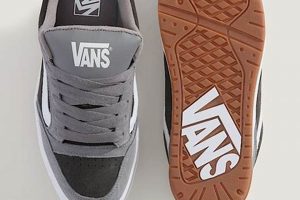
Footwear designed specifically for skateboarding, often featuring durable construction, enhanced grip, and impact cushioning, is a crucial component for practitioners of the sport. These specialized shoes provide the necessary support and protection to withstand the rigors of skateboarding. An example would be a shoe with a reinforced toe cap and a vulcanized rubber sole designed for enhanced board feel and durability.
The implementation of these shoes offers considerable advantages to skateboarders. Enhanced board control, improved impact absorption, and increased durability contribute significantly to performance and safety. Historically, such footwear evolved from modifications made to standard athletic shoes by skateboarders themselves, leading to specialized designs and features catering to the unique demands of the sport. This evolution significantly impacted the accessibility and progression within skateboarding.
The following sections will delve deeper into the specific design elements, technological advancements, and various models available, exploring their influence on skateboarding culture and performance.
Optimizing Performance and Longevity
The following guidelines outline critical considerations for maximizing the functionality and lifespan of skateboarding-specific footwear. Adherence to these recommendations promotes both enhanced performance and extended product durability.
Tip 1: Select Appropriate Size and Fit: Ensuring a snug yet comfortable fit is paramount. Excess space can impede board feel and control, while overly tight footwear can cause discomfort and potential injury. Thoroughly evaluate sizing charts and consider trying on shoes with skateboarding socks to guarantee a proper fit.
Tip 2: Prioritize Durable Construction: Look for models featuring reinforced stitching, double-layered materials in high-wear areas (such as the ollie patch), and robust soles. These features contribute directly to the shoe’s resistance to abrasion and overall longevity under demanding conditions.
Tip 3: Employ Proper Lacing Techniques: Utilizing all available eyelets and employing appropriate lacing tension distributes pressure evenly across the foot. Consider employing bar lacing or other techniques to minimize lace breakage and maintain a secure fit throughout extended use.
Tip 4: Regularly Clean and Maintain Footwear: Removing dirt and debris from the shoe’s surface prevents premature wear and tear on materials. Employing a soft brush and mild soap can effectively clean the upper, while a dedicated shoe cleaner can be used for stubborn stains.
Tip 5: Rotate Footwear Regularly: Alternating between multiple pairs allows each pair to adequately dry and recover between sessions, extending the overall lifespan of all footwear. This practice prevents excessive moisture buildup and reduces the rate of material degradation.
Tip 6: Avoid Harsh Abrasive Surfaces: While skateboarding inherently involves abrasion, minimizing contact with extremely rough surfaces when not actively skateboarding will reduce unnecessary wear. Consider carrying footwear designed specifically for walking or casual use.
Tip 7: Consider Sole Construction: Vulcanized soles generally offer enhanced board feel and flexibility, while cupsole constructions provide superior impact protection and support. Select the sole type that best aligns with individual skateboarding style and preferences.
Consistent application of these guidelines will contribute significantly to enhanced skateboarding performance, increased comfort, and prolonged footwear lifespan. Understanding these principles enables the informed selection and responsible maintenance of skateboarding-specific footwear.
The subsequent section will address common issues and troubleshooting techniques related to these specialized shoes.
1. Durability

Durability, in the context of skateboarding footwear, represents a critical performance parameter. Skateboarding subjects shoes to extreme abrasion and stress. The inherent design and material selection of a skateboarding shoe directly impact its ability to withstand this wear, influencing its lifespan and overall value.
- Reinforced Stitching and Construction
Durable skateboarding shoes frequently incorporate reinforced stitching at key stress points, such as the ollie area and the toe cap. The use of multiple rows of stitching, or specialized stitching patterns, strengthens the seams and prevents premature separation of components. An example would be double or triple stitching along the side panels of a shoe, providing increased resistance to abrasion from the skateboard’s griptape. This reduces wear and minimizes the likelihood of seam failure, extending shoe lifespan.
- Abrasion-Resistant Materials
The selection of materials directly influences a shoe’s resistance to abrasion. Leather, suede, and canvas are common choices, often treated with protective coatings or reinforced with additional layers in high-wear zones. Certain synthetic materials also offer enhanced abrasion resistance compared to natural fibers. For instance, some shoes incorporate ballistic nylon or strategically placed rubber overlays to protect against the constant friction of skateboarding. These materials can drastically reduce the rate of wear compared to less robust alternatives.
- Sole Construction and Bonding
The method of sole construction is a key determinant of overall durability. Vulcanized soles, where the rubber sole is chemically bonded to the upper, offer superior flexibility and board feel. Cupsole constructions, where the upper is stitched and/or glued into a pre-molded sole, typically provide greater impact protection and structural integrity. The choice between vulcanized and cupsole depends on the skateboarder’s preference and skating style. Regardless of the construction method, strong adhesive and secure stitching between the sole and upper are essential for preventing delamination and maintaining the shoe’s structural integrity.
- Impact Absorption and Cushioning
While primarily focused on comfort and injury prevention, effective impact absorption can indirectly contribute to durability. Features such as polyurethane midsoles, gel inserts, or air cushioning systems reduce the stress transferred to the shoe’s upper and sole during landings. By mitigating these forces, the risk of premature wear and tear on structural components is reduced. A well-cushioned shoe will thus maintain its structural integrity for a longer period, contributing to its overall lifespan.
These facets highlight the interconnectedness of design features and material selection in determining the overall durability. These components all need to be considered to evaluate their potential usefulness for a “dc skate shoe”.
2. Board Feel

Board feel, in the context of skateboarding footwear, refers to the tactile feedback transmitted from the skateboard to the skateboarder’s feet. This sensitivity allows for nuanced control and precise execution of maneuvers. Footwear design significantly impacts board feel, influencing a skateboarder’s connection to the board.
- Sole Thickness and Flexibility
Sole thickness is inversely proportional to board feel. Thinner soles, typically found in vulcanized constructions, enhance sensitivity by minimizing the material separating the foot from the board. Greater flexibility in the sole allows the shoe to conform to the board’s contours, providing a more direct sense of the board’s angle and movement. Softer rubber compounds further increase flexibility. The consequence of this attribute for “dc skate shoe” is enhanced responsiveness for the skater.
- Outsole Pattern and Grip
The outsole pattern affects the surface area in contact with the skateboard. A flatter pattern with smaller treads maximizes contact and improves grip. The specific rubber compound used also plays a significant role; softer, stickier rubber provides superior traction compared to harder compounds. Deeper grooves in the outsole can, however, reduce overall contact area and decrease board feel, thus a balanced approach is needed. A “dc skate shoe” must take grip into consideration during design, but also recognize that excessive grip can sacrifice a bit of board feel.
- Midsole Presence and Material
The presence and composition of a midsole layer influence both impact protection and board feel. A midsole, often made of EVA or polyurethane, cushions landings and absorbs shocks. However, a thicker or denser midsole can reduce sensitivity. Some designs minimize the midsole or utilize a low-profile construction to prioritize board feel. The material choice directly impacts the balance between cushioning and sensitivity; a softer material provides more cushioning but less feedback. A “dc skate shoe” that is marketed for impact can lose some board feel, and vice versa.
- Upper Construction and Fit
The upper’s design and fit affect the shoe’s overall responsiveness. A snug, secure fit ensures that foot movements are translated directly to the board. Stiff or bulky uppers can restrict ankle mobility and reduce sensitivity. Lightweight materials and a streamlined design enhance board feel by minimizing interference. Furthermore, the internal structure of the upper, such as the presence of padding or internal support, can influence the level of feedback transmitted to the foot. A sleek “dc skate shoe” design can help increase the board feel sensation that it transmits to the skater.
Optimizing board feel in “dc skate shoe” design requires a nuanced balance between sensitivity, grip, and protection. Trade-offs must be considered, and the specific requirements of different skateboarding styles must be taken into account. Board feel translates to enhanced responsiveness and control.
3. Impact protection

Impact protection is a crucial consideration in the design and functionality of skateboarding footwear. Skateboarding involves frequent jumps, landings, and high-impact maneuvers that subject the feet and ankles to significant stress. Adequate impact protection mitigates the risk of injury and enhances overall performance.
- Midsole Cushioning Technology
The midsole, situated between the insole and outsole, is a primary component for impact absorption. Materials such as ethylene-vinyl acetate (EVA) and polyurethane (PU) are commonly employed due to their cushioning properties. Advanced technologies, such as gel inserts or encapsulated air units, can be strategically placed within the midsole to provide targeted impact protection in high-stress areas like the heel. For example, a “dc skate shoe” might incorporate a heel airbag to reduce the force transmitted to the foot during landings from elevated surfaces. The effectiveness of midsole cushioning is evaluated by skaters during the design phase. These technologies aim to increase skaters’ protection.
- Outsole Construction and Material
The outsole contributes to impact protection by providing a layer of shock absorption and stability. Cupsole constructions, where the upper is stitched and/or glued into a pre-molded sole, generally offer greater impact protection compared to vulcanized soles, which prioritize board feel. The rubber compound used in the outsole also influences impact absorption; denser, more resilient rubber can dissipate energy more effectively. “dc skate shoe” will use stronger and more resilient rubbers in its designs.
- Insole Design and Materials
The insole, the innermost layer of the shoe, provides direct contact with the foot and contributes to overall comfort and impact absorption. Insoles constructed from materials like memory foam or ortholite offer enhanced cushioning and support. Some insoles feature contoured designs that provide arch support and further reduce the impact on the foot. For a “dc skate shoe” that is designed for impact, it would consider insoles from memory foam or ortholite.
- Ankle Support and Collar Padding
While not directly related to impact absorption under the foot, adequate ankle support and collar padding are crucial for preventing ankle injuries during landings and bails. High-top designs and padded collars provide stability and protect the ankle joint from excessive twisting or impact. “dc skate shoe” designs can incorporate reinforced ankle support and padding to minimize the risk of ankle sprains and related injuries, contributing to overall impact protection.
Effective impact protection in “dc skate shoe” designs requires a holistic approach that considers the interaction between midsole technology, outsole construction, insole materials, and ankle support features. The selection and integration of these elements should be guided by the specific needs of skateboarders, taking into account factors such as skating style, terrain, and frequency of high-impact maneuvers. Proper consideration of impact protection enhances safety and enables skateboarders to push their limits with greater confidence.
4. Style

Style, in the context of skateboarding footwear, transcends mere aesthetics; it represents a form of self-expression and affiliation within skateboarding culture. The visual design of skateboarding shoes, including color palettes, material choices, and logo placement, communicates the wearer’s personal preferences and identifies them with specific subcultures or brands within the skateboarding community. The prominence of brands like DC Shoes within skateboarding stems, in part, from their ability to cultivate a distinct aesthetic that resonates with skateboarders. For example, a skateboarder might select a particular “dc skate shoe” model due to its association with a specific pro skater or its adherence to a specific design trend popular within their local skate scene. Style plays a crucial role in purchase decisions. The effect of visual elements on purchasing decisions highlights the psychological aspects of skate subculture.
The influence of style extends beyond individual expression. Skateboarding shoe companies often collaborate with artists, musicians, and other cultural figures to create limited-edition designs that embody specific themes or movements. These collaborations not only generate revenue but also contribute to the evolving visual landscape of skateboarding. Furthermore, the stylistic choices made by prominent skateboarders often trickle down to the broader skateboarding community, influencing trends and shaping the overall aesthetic of the sport. For instance, the adoption of chunky, high-top designs in the 1990s, popularized by influential skaters, subsequently impacted the design direction of numerous skateboarding shoe brands, including DC Shoes. A good example of this is how pro skater collaborations impacted design.
Understanding the interplay between style and skateboarding footwear is vital for brands seeking to connect with skateboarders. Companies that effectively capture the prevailing stylistic trends and incorporate them into their product designs are more likely to resonate with their target audience. However, authenticity remains paramount; skateboarders are adept at discerning genuine expressions of style from superficial attempts to capitalize on trends. As such, successful “dc skate shoe” designs must balance aesthetic appeal with functional performance and an understanding of skateboarding culture. This balance is crucial to establish authentic brand affinity. The impact of “Style” on the “dc skate shoe” can lead to brand success in that specific skater market.
5. Ankle Support

Ankle support represents a critical design element in skateboarding footwear, significantly impacting a skater’s safety and performance. The repetitive stress and high-impact nature of skateboarding place considerable strain on the ankle joint, making adequate support essential for injury prevention and optimized control. Footwear, like “dc skate shoe”, incorporating robust ankle support features can mitigate the risk of sprains and other related injuries, enabling skaters to push their limits with greater confidence.
- High-Top vs. Low-Top Designs
The height of the shoe’s collar directly influences the level of ankle support provided. High-top designs extend above the ankle joint, offering increased stability and protection against lateral movement. This can be particularly beneficial for skaters who engage in aggressive styles or frequently land tricks with imperfect foot placement. Low-top designs, while prioritizing flexibility and board feel, offer less direct ankle support and may be more suitable for skaters with established ankle strength and a preference for maneuverability. A “dc skate shoe” will often come in both high top and low top. The selection then becomes the consumer’s choice based on ankle support needs.
- Collar Padding and Internal Structure
The internal structure and padding of the shoe collar contribute significantly to ankle support. Dense foam padding around the ankle provides cushioning and reduces the risk of abrasion. Internal supports, such as reinforced heel counters or strategically placed straps, further enhance stability and prevent excessive ankle movement. For instance, a “dc skate shoe” may incorporate a molded heel counter that cups the heel and provides lateral support, minimizing the likelihood of ankle rollover during landings. Internal pads add protection and structure to the inner shoe.
- Lacing Systems and Ankle Lockdown
The lacing system plays a crucial role in securing the foot and ankle within the shoe. A well-designed lacing system allows skaters to customize the level of ankle support based on their individual needs and preferences. Features such as ghillie loops or D-rings enable precise adjustment of lace tension, ensuring a snug and secure fit around the ankle. Some “dc skate shoe” models incorporate additional straps or Velcro closures to further enhance ankle lockdown and prevent slippage during high-impact activities. Tight lacing enhances ankle stabilization.
- Sole Stiffness and Stability
While primarily associated with board feel and impact protection, the stiffness and stability of the sole can indirectly influence ankle support. A stiffer sole provides a more stable platform for the foot, reducing the amount of ankle movement required to maintain balance. Conversely, a more flexible sole may offer greater board feel but less overall support. A balance of the stiffness gives the proper sole support to the ankle.
The relationship between ankle support and “dc skate shoe” design is multifaceted, encompassing collar height, padding, lacing systems, and sole characteristics. Skaters should carefully consider their individual needs and skating style when selecting footwear, prioritizing ankle support features that align with their specific requirements. The choice of these features helps reduce ankle injury risk.
Frequently Asked Questions
This section addresses common inquiries and concerns regarding skateboarding-specific footwear, providing detailed information to aid in informed purchase and maintenance decisions.
Question 1: What constitutes a durable skateboarding shoe?
Durable skateboarding shoes typically incorporate reinforced stitching, abrasion-resistant materials (such as suede or reinforced canvas), and robust sole construction (either vulcanized or cupsole). Key wear areas, like the ollie patch and toe cap, should exhibit additional reinforcement.
Question 2: How does sole construction impact skateboarding performance?
Vulcanized soles offer enhanced board feel and flexibility, facilitating precise board control. Cupsole constructions provide greater impact protection and support, reducing the risk of injury during high-impact maneuvers. The optimal choice depends on individual skating style and preferences.
Question 3: What role does ankle support play in skateboarding footwear?
Adequate ankle support, often achieved through high-top designs or padded collars, minimizes the risk of ankle sprains and related injuries. High-top designs provide greater stability, while low-top designs prioritize flexibility and board feel.
Question 4: How should skateboarding shoes be properly maintained?
Regular cleaning with a soft brush and mild soap removes dirt and debris, preventing premature wear. Employing proper lacing techniques and rotating between multiple pairs extends footwear lifespan. Avoidance of harsh abrasive surfaces prolongs the shoe’s structural integrity.
Question 5: What are the key factors in achieving optimal board feel?
Thinner soles, typically found in vulcanized constructions, enhance board feel by minimizing the material separating the foot from the board. Flexible outsoles and streamlined upper designs further contribute to sensitivity and control.
Question 6: Are skateboarding shoes suitable for everyday use?
While skateboarding shoes are designed for durability and performance, some models can be worn for casual activities. However, the specialized construction and materials may not be optimal for all-day comfort or other athletic pursuits.
Understanding these fundamental aspects of skateboarding footwear empowers individuals to make informed decisions and properly care for their shoes, maximizing performance and longevity.
The subsequent section will explore specific “dc skate shoe” models and their unique features in greater detail.
Conclusion
This exploration has illuminated various facets of specialized skateboarding footwear. The durable construction, contribution to board feel, provision of impact protection, elements of style, and importance of ankle support have been thoroughly examined. The “dc skate shoe” exemplifies how these characteristics intersect to meet the demands of skateboarding.
Continued innovation in materials and design will undoubtedly further enhance the performance and safety of such footwear. Understanding these attributes will allow consumers to navigate the market. Future developments in specialized footwear will have a lasting impact on this market.
![Best Adidas Busenitz Skate Shoes [Review+Guide] | Learn to Surf & Skate: A Beginner's Step-by-Step Guide](https://universitysurfandskate.com/wp-content/uploads/2026/03/th-680-300x200.jpg "Best Adidas Busenitz Skate Shoes [Review+Guide] Learn to Surf & Skate: A Beginner's Step-by-Step Guide")