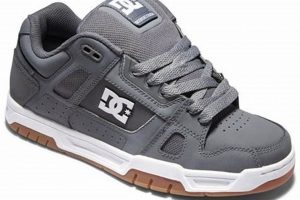
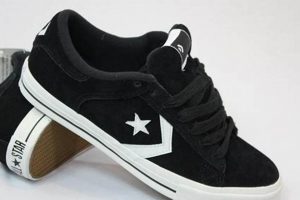
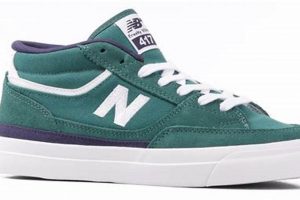
Footwear designed for skateboarding that accommodates a broader foot profile offers enhanced comfort and performance. These specialized shoes provide extra room in the toe box and midfoot area, preventing constriction and potential discomfort during activity. For example, individuals with naturally wider feet often find standard skate shoes too narrow, leading to blisters and reduced board feel.
The availability of skateboarding footwear with increased width is significant for several reasons. It addresses a common fit issue, promoting longer, more comfortable skating sessions. Historically, skaters with wider feet were often forced to wear ill-fitting standard shoes, compromising performance and increasing the risk of foot-related problems. These purpose-built options contribute to improved foot health and allow skaters to focus on their technique.
The subsequent sections will delve deeper into the specific features of wider skateboarding footwear, exploring the materials used, the range of available styles, and key considerations for selecting the optimal pair. This also includes examining how wider designs influence overall skateboarding performance and impact on longevity.
Selecting Appropriate Wider Skateboarding Footwear
The following guidelines will assist in choosing skateboarding footwear designed for broader foot dimensions, maximizing comfort and performance.
Tip 1: Measure Foot Width Accurately: Employ a Brannock device or similar measuring tool to determine the precise width of each foot. Measurements should be taken while standing, as the foot expands under weight.
Tip 2: Consult Size Charts: Compare foot measurements to the manufacturer’s size chart, paying close attention to width indicators (e.g., “wide,” “extra wide”). Note that sizing may vary between brands.
Tip 3: Prioritize Upper Material Flexibility: Opt for footwear with flexible upper materials, such as suede or canvas. These materials mold to the foot over time, providing a more customized fit.
Tip 4: Examine Toe Box Construction: Ensure the toe box is sufficiently wide and deep to accommodate the toes without compression. A rounded toe box shape is generally more accommodating than a pointed one.
Tip 5: Assess Midfoot Support: Evaluate the level of support provided in the midfoot area. Adequate support prevents excessive pronation or supination, contributing to stability and reducing fatigue.
Tip 6: Consider Insole Options: Experiment with different insole types to further customize the fit and cushioning. Orthotic insoles may be necessary for individuals with specific foot conditions.
Tip 7: Evaluate Outsole Traction: Verify that the outsole provides adequate grip and board feel. Vulcanized rubber outsoles are a common and reliable choice for skateboarding footwear.
Adhering to these recommendations enables the selection of skateboarding footwear that prioritizes both comfort and performance, facilitating longer, more enjoyable, and safer skateboarding sessions.
The subsequent section will provide a comprehensive analysis of top-rated wider skateboarding footwear available in the current market, offering further guidance for informed purchasing decisions.
1. Comfort

The inherent connection between comfort and skateboarding footwear with wider dimensions stems from the mitigation of foot constriction. Standard-width shoes often compress the metatarsals and toes of individuals with broader feet, leading to discomfort, blistering, and reduced circulation. Wider designs alleviate this compression, enabling a more natural foot splay and reducing pressure points. For example, a skater experiencing foot pain in standard shoes may find immediate relief and improved comfort simply by switching to a wider shoe, thereby prolonging skating sessions and enhancing focus on technique.
Comfort in this context is not merely a matter of preference; it directly impacts performance and foot health. Prolonged discomfort can lead to compensatory movements, increasing the risk of ankle sprains and other injuries. Furthermore, persistent pressure on the feet can contribute to conditions such as Morton’s neuroma and plantar fasciitis. The presence of adequate width in skateboarding footwear also allows for the use of thicker socks for increased cushioning and impact absorption, further improving the overall comfort level. Instances of skaters customizing regular skate shoes with cutting or stretching to create additional room only highlight the significance of comfort and the need for purpose-built wide-width options.
In summary, the correlation between comfort and wider skateboarding footwear is rooted in the anatomical requirements of broader feet. Addressing fit issues translates directly into enhanced comfort, reduced risk of injury, and improved overall skateboarding experience. Ignoring this connection can lead to negative consequences for both performance and long-term foot health. Consequently, selecting appropriately sized and shaped wider options is essential for skaters seeking optimal comfort and performance.
2. Durability

The longevity of skateboarding footwear is inherently linked to its construction and ability to withstand the stresses of the sport. Wider skateboarding footwear, while addressing fit concerns, must also maintain a high level of resilience to be considered a viable option for skateboarders.
- Reinforced Stitching and Materials
Wider models require strategic reinforcement in high-stress areas such as the ollie patch, toe cap, and heel. Durable materials like suede or reinforced canvas are essential to resist abrasion. For instance, double or triple stitching along seams prevents premature separation, extending the lifespan of the shoe.
- Outsole Construction and Composition
The outsole, responsible for grip and board feel, must also withstand constant friction. Vulcanized rubber, known for its durability and flexibility, is a common choice. Some manufacturers incorporate additional layers or patterns into the outsole design to increase its resistance to wear and tear. A skater performing frequent ollies will rapidly degrade an inferior outsole.
- Internal Support and Structure
Wider skateboarding footwear benefits from robust internal support structures. These structures maintain the shoe’s shape and prevent deformation under stress. Reinforced heel counters and supportive midsoles contribute to overall durability by preventing premature breakdown of the shoe’s form and integrity.
- Impact Resistance and Cushioning
While not directly related to abrasion resistance, impact protection is crucial for overall shoe longevity. Adequate cushioning in the heel and forefoot absorbs impact forces, reducing stress on the shoe’s internal structure and extending its lifespan. Polyurethane or EVA midsoles are commonly used for this purpose.
In conclusion, the durability of wider skateboarding footwear hinges on a combination of robust materials, reinforced construction techniques, and thoughtful design considerations. The selection of wider shoes should not compromise on these aspects, as longevity is paramount for skateboarders seeking reliable and long-lasting equipment. Choosing options that prioritize these factors ensures both a comfortable fit and the capacity to endure the rigors of skateboarding.
3. Performance
The influence of skateboarding footwear dimensions on performance centers on the concept of unrestricted foot movement and enhanced board feel. When feet are unconstrained within the shoe, optimal power transfer occurs during maneuvers. Specifically, wider skateboarding footwear addresses the biomechanical needs of skaters with broad feet, preventing foot compression that can impede responsiveness. The enhanced board feel, facilitated by the shoe’s design, allows for more nuanced control and precise execution of tricks. A real-world example is a skater who consistently struggles with ollies due to compressed toes in standard footwear experiencing improved pop and board control when switching to a wider model. Understanding this connection between fit and performance is practically significant for skaters aiming to maximize their potential and reduce the likelihood of foot-related discomfort that can hinder progress.
Furthermore, the stable platform afforded by properly fitted skateboarding footwear contributes to balance and reduces the risk of ankle instability. A wider base of support within the shoe enhances the skater’s ability to maintain equilibrium during landings and transitions. Consider a skater attempting a complex grind: if their foot is shifting within the shoe due to insufficient width, the likelihood of losing balance increases. This is particularly relevant for technical skaters who demand a high degree of precision and control. Wider skateboarding footwear also facilitates the use of custom orthotics, which can further improve foot alignment and enhance overall stability, thereby positively impacting performance. The increased stability helps minimize the risk of injury and improves the skaters consistency.
In summary, the performance benefits of wider skateboarding footwear stem from the optimized fit, improved board feel, and enhanced stability they provide. Overcoming the limitations imposed by standard-width shoes, these specialized options allow skaters with wider feet to achieve their full potential. The challenges revolve around ensuring that the wider fit does not compromise other critical aspects of skateboarding shoe design, such as durability and impact protection. Ultimately, selecting appropriate skateboarding footwear that accommodates foot width is integral to maximizing performance and minimizing injury risk, underscoring its significance in the broader context of skateboarding equipment.
4. Board Feel

Board feel, defined as the tactile feedback experienced between the skater’s foot and the skateboard, is directly influenced by skateboarding footwear construction. When considering footwear designed for broader feet, this connection becomes particularly salient. Standard-width shoes often constrict the foot, diminishing the skater’s ability to sense subtle changes in the board’s orientation. Conversely, wider designs, when properly fitted, allow the foot to spread naturally, enhancing surface contact with the insole and, consequently, increasing sensitivity to board movements. A skater might compensate, in the beginning, for the shoe volume or the difference that makes it hard for the board. This means the control of your board requires getting used to. For example, a skateboarder executing a kickflip relies on minute adjustments of foot pressure to control rotation and landing; restricted foot movement can impede these adjustments, leading to inconsistent performance and potentially increasing the risk of missed landings.
The importance of board feel in wider skateboarding footwear stems from its direct impact on control, precision, and overall confidence. A properly fitted wider shoe allows for greater responsiveness, enabling skaters to react more quickly to changes in terrain or board behavior. The material composition of the sole and the insole plays a crucial role in mediating board feel. Thinner soles, while potentially sacrificing some impact protection, typically provide superior tactile feedback. In contrast, thicker soles offer greater cushioning but may dampen board feel. The insole material also influences the sensation; certain materials enhance grip, further improving the connection between the foot and the board. Consider a skateboarder navigating a complex series of obstacles: heightened board feel allows for anticipatory adjustments, enabling smoother transitions and reducing the likelihood of errors.
In summary, the relationship between board feel and wider skateboarding footwear is predicated on the principle that unrestricted foot movement enhances tactile sensitivity and improves control. The challenges lie in achieving an optimal balance between board feel, impact protection, and durability. Therefore, selecting skateboarding footwear involves considering the specific needs of the skater and the type of skateboarding they engage in, with an emphasis on ensuring that the wider fit does not compromise the essential sensory connection between the skater’s foot and the board. A comprehensive understanding of this connection empowers skaters to make informed decisions that enhance their performance and overall skateboarding experience.
5. Foot Support

The integration of adequate foot support into skateboarding footwear with wider dimensions is critical for injury prevention and performance enhancement. The broader foot profile necessitates designs that accommodate both width and the inherent biomechanical demands of skateboarding.
- Arch Support and Pronation Control
Sufficient arch support is essential for maintaining proper foot alignment during skateboarding maneuvers. This support counteracts excessive pronation, a common issue among skateboarders that can lead to ankle, knee, and hip pain. Wider skateboarding footwear must incorporate internal arch supports or allow for the use of aftermarket orthotics to address this need. For example, a skater with flat feet may require a higher arch support to prevent over-pronation during landings.
- Ankle Stability and Heel Counter Reinforcement
Ankle stability is paramount for preventing sprains and other ankle-related injuries. Wider skateboarding footwear should feature reinforced heel counters that securely hold the heel in place, minimizing excessive movement during high-impact activities. A skater executing a kickflip, for instance, places significant stress on the ankle joint; a robust heel counter can help prevent the ankle from rolling inward or outward.
- Midfoot Support and Torsional Rigidity
The midfoot region requires adequate support to maintain the structural integrity of the foot during skateboarding. Torsional rigidity, the shoe’s resistance to twisting forces, is crucial for preventing midfoot strain and fatigue. Wider skateboarding footwear should incorporate features such as supportive midsoles and reinforced shank areas to enhance torsional stability. A skater pushing off the ground repeatedly generates torsional forces; sufficient midfoot support can mitigate the risk of stress fractures.
- Cushioning and Impact Absorption
While direct support focuses on alignment, cushioning contributes to overall foot health by reducing impact forces. Wider skateboarding footwear benefits from strategically placed cushioning in the heel and forefoot to absorb shock during landings. Materials such as polyurethane or EVA are commonly used for their shock-absorbing properties. A skater landing a jump subjects their feet to significant impact forces; adequate cushioning can minimize the risk of heel bruising and other impact-related injuries.
These facets of foot support, when integrated into wider skateboarding footwear design, contribute to both immediate comfort and long-term foot health. A holistic approach that addresses arch support, ankle stability, midfoot support, and cushioning allows skaters with broader feet to engage in the sport with reduced risk of injury and enhanced performance. Selecting appropriate skateboarding footwear is the best start for the health safety of any skater.
6. Protection

The protective capabilities of skateboarding footwear designed for broader feet are paramount for mitigating injury risks inherent in the sport. The relationship is not merely correlational; properly fitted, wider skateboarding shoes provide enhanced protection due to improved foot stability and optimized impact absorption. A constrained foot within a standard-width shoe is more susceptible to injury during landings or impacts, as the lack of space prevents natural foot splay and shock distribution. Wider options, conversely, allow the foot to function biomechanically as intended, distributing force more evenly and reducing localized stress. A skater landing an imperfect trick, for example, experiences reduced stress on metatarsals and ankles when wearing wider footwear, compared to the concentrated pressure that occurs in narrower shoes. This difference underscores the protective advantage of accommodating foot width.
The protective design elements of wider skateboarding shoes extend beyond mere fit. Reinforced toe caps, often constructed from durable materials like rubber or leather, shield the toes from abrasion and impact during ollies and other tricks involving board contact. Padded collars and tongues provide additional cushioning and support around the ankle, minimizing the risk of sprains. Sole construction also plays a critical role, with thicker soles offering greater impact absorption. The practical application of these protective features is evident in the reduced incidence of foot and ankle injuries among skaters who prioritize properly fitted, wider footwear. Furthermore, the enhanced stability afforded by wider shoes contributes to improved balance and control, indirectly reducing the likelihood of falls and associated injuries. This is particularly significant for technical skaters performing complex maneuvers.
In summary, the nexus between protection and wider skateboarding shoes hinges on optimized fit, biomechanical functionality, and purpose-built protective features. Wider options allow for improved foot stability, impact distribution, and shock absorption, thereby reducing the risk of foot and ankle injuries. The challenges lie in maintaining durability and board feel without compromising protective capabilities. Ultimately, the selection of wider skateboarding footwear should prioritize these protective aspects, ensuring that skaters can engage in the sport with minimized risk and maximized confidence.
Frequently Asked Questions
The following section addresses common inquiries regarding skateboarding footwear designed for wider foot dimensions, providing clarity and detailed information.
Question 1: What constitutes a “wide width” designation in skateboarding footwear?
The term denotes footwear manufactured with increased internal volume, specifically in the forefoot and midfoot areas, to accommodate broader foot profiles. Measurements often correspond to standardized width classifications, such as “wide” (2E) or “extra wide” (4E), though variations exist between manufacturers.
Question 2: How does the selection of appropriately sized wide width skate shoes impact skateboarding performance?
Correctly sized wider skateboarding shoes enhance board feel, improve stability, and facilitate more natural foot movement, leading to improved control and execution of tricks. Conversely, ill-fitting footwear can restrict movement, diminish tactile feedback, and increase the risk of injury.
Question 3: Are there specific brands known for consistently producing high-quality wide width skate shoes?
Several brands offer dedicated wider options; researching reviews and consulting size charts from individual manufacturers is recommended to ensure proper fit, as sizing conventions may vary.
Question 4: What materials are commonly used in the construction of durable wide width skate shoes?
Suede, reinforced canvas, and vulcanized rubber are frequently employed due to their abrasion resistance and flexibility. Strategic use of these materials in high-wear areas enhances the footwear’s overall longevity.
Question 5: Can orthotic insoles be effectively used in conjunction with wide width skate shoes?
Yes, wider models often provide sufficient internal volume to accommodate custom or over-the-counter orthotic insoles, which can further improve foot support and alignment.
Question 6: How does the price range of wide width skate shoes compare to that of standard-width options?
The price range is generally comparable, although specialized features or materials may influence the final cost. Price should not be the sole determinant; prioritizing fit and construction is essential.
In summary, proper fit and construction are paramount when selecting skateboarding footwear with increased width. Consulting sizing charts, considering material durability, and addressing individual foot support needs contribute to informed decision-making.
The following section will provide concluding remarks, emphasizing the importance of selecting appropriate skateboarding footwear to benefit both comfort and performance.
Conclusion
The preceding discussion has comprehensively explored the characteristics, benefits, and considerations associated with skateboarding footwear designed for wider foot dimensions. It has emphasized the importance of proper fit, the role of durable materials, and the significance of foot support in optimizing both comfort and performance. Additionally, the inquiry has addressed frequent questions, offering guidance for informed purchasing decisions.
The availability and selection of appropriately sized “wide width skate shoes” remain crucial for skaters prioritizing foot health and maximizing their potential. Neglecting this aspect can lead to discomfort, injury, and diminished performance. Continued research and development in this area are vital for enhancing the skateboarding experience for all participants. Therefore, making informed choices regarding skateboarding footwear represents a serious investment in both physical well-being and athletic capability.
![Best New Balance Skate Shoes: Styles & Reviews [Year] | Learn to Surf & Skate: A Beginner's Step-by-Step Guide](https://universitysurfandskate.com/wp-content/uploads/2026/03/th-609-300x200.jpg "Best New Balance Skate Shoes: Styles & Reviews [Year] Learn to Surf & Skate: A Beginner's Step-by-Step Guide")