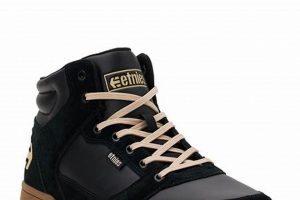
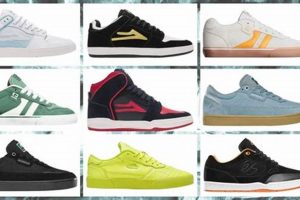
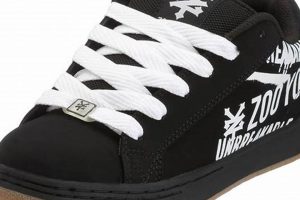
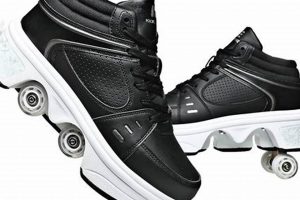
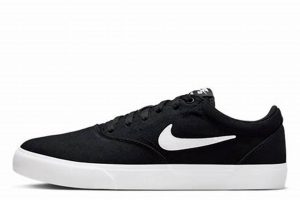
Footwear designed for skateboarding, often featuring a durable construction, enhanced grip, and impact protection, is crucial for the performance and safety of skaters. These specialized shoes are typically constructed with reinforced stitching, a flat outsole, and cushioning to withstand the stresses of skateboarding. An example includes low-profile models with suede or canvas uppers and vulcanized rubber soles.
The significance of appropriate footwear in skateboarding cannot be overstated. Specifically designed models offer enhanced board feel, preventing slippage and improving control. Their construction provides critical support and protection against the repetitive impacts and abrasions inherent in the sport. Historically, the evolution of skate shoes has mirrored the development of skateboarding itself, with improvements in materials and design driven by the needs of skaters.
The following sections will delve into specific aspects of this type of footwear, including material composition, technological innovations, and design considerations, all of which contribute to the overall performance and durability required for skateboarding.
Guidance for Selecting Skateboarding Footwear
The selection of appropriate skateboarding footwear is paramount for optimal performance, safety, and longevity within the sport. Adherence to the following guidelines can facilitate an informed decision.
Tip 1: Prioritize Durability. Skateboarding imposes significant wear and tear on footwear. Opt for models constructed with robust materials such as reinforced suede or canvas uppers. Stitching should be reinforced in high-abrasion areas.
Tip 2: Evaluate Sole Construction. Vulcanized rubber soles provide superior grip and board feel, essential for control. Examine the tread pattern for adequate traction. Cupsole constructions offer enhanced impact protection but may sacrifice board feel.
Tip 3: Assess Ankle Support. High-top or mid-top designs provide increased ankle stability, mitigating the risk of sprains. Low-top models offer greater freedom of movement but less protection.
Tip 4: Consider Impact Cushioning. Insoles and midsoles incorporating cushioning technologies, such as polyurethane or EVA foam, can absorb impact forces, reducing fatigue and minimizing the risk of injury.
Tip 5: Verify Fit Accuracy. Ensure a snug yet comfortable fit, allowing for natural foot movement without slippage. Ill-fitting footwear can compromise control and increase the likelihood of blisters or other foot ailments.
Tip 6: Examine Tongue and Collar Padding. Adequate padding around the tongue and collar enhances comfort and reduces the risk of lace bite and abrasion.
Tip 7: Inspect Lacing System. Recessed or reinforced eyelets can prevent premature wear and tear on laces, extending the lifespan of the footwear. Lace protection systems can further enhance durability.
Implementing these considerations promotes the selection of skateboarding footwear that delivers optimal performance, protection, and durability. Prioritizing these factors contributes to a more secure and enjoyable skateboarding experience.
The subsequent sections will address specific examples and further elaborate on relevant features contributing to a comprehensive understanding.
1. Durability

The connection between durability and skateboarding footwear is intrinsically linked to the demands placed upon it by the sport. Skateboarding involves constant abrasion against rough surfaces, repeated impacts, and stress on seams and materials. Footwear lacking in durability will quickly degrade, compromising performance and increasing the risk of injury. The selection of robust materials and reinforced construction methods is therefore paramount in skate shoe design. For instance, models employing double or triple stitching in high-wear areas, such as the ollie zone and toe cap, significantly extend the shoe’s lifespan. Canvas or suede uppers are usually seen on skate shoes. Leather, synthetic materials, or a blend are also seen on some shoe products.
The importance of durability extends beyond mere longevity. A durable shoe maintains its structural integrity, providing consistent support and protection throughout its use. This consistency is crucial for skaters who rely on predictable shoe performance for executing tricks and maneuvers. A shoe that prematurely loses its shape or cushioning can lead to decreased board feel, reduced impact absorption, and ultimately, a decline in performance. Real-world examples of this can be observed in the rapid wear patterns of non-skateboarding specific shoes when subjected to skateboarding activities. Common issues include sole separation, fabric tears, and lace breakage.
In summary, durability is a critical attribute of quality skateboarding footwear. It directly impacts the shoe’s lifespan, performance, and the skater’s safety. A thorough understanding of the relationship between materials, construction, and durability allows skaters to make informed choices, selecting footwear that can withstand the rigors of the sport and provide lasting performance. While style and other features are relevant, durability remains a foundational consideration.
2. Grip

Grip, the friction between the shoe’s sole and the skateboard’s griptape, is a fundamental performance characteristic of skateboarding footwear. The ability to maintain a secure and stable connection with the board directly impacts control, maneuverability, and ultimately, the skater’s safety and execution of tricks. The design and materials used in the sole of a skateboarding shoe are therefore crucial determinants of its grip capabilities.
- Vulcanized Rubber Composition
Vulcanized rubber, a common material in skateboarding shoe soles, offers a specific blend of flexibility and grip. The vulcanization process enhances the rubber’s durability and resistance to wear, while its inherent tackiness provides a secure bond with the griptape. The precise formulation of the rubber compound can influence the degree of grip, with some compounds engineered for enhanced stickiness. The effectiveness of vulcanized rubber can be observed in its widespread use across numerous models intended for skateboarding.
- Tread Pattern Design
The tread pattern on the sole further contributes to grip. Various patterns, such as herringbone or geometric designs, are engineered to maximize surface area contact and channel away debris. Deeper tread patterns generally offer greater grip on varied surfaces, while flatter patterns provide a more consistent feel on the griptape. The selection of a specific tread pattern often depends on the skater’s preference and skating style.
- Sole Flexibility
Sole flexibility is indirectly related to grip. A more flexible sole allows the foot to conform more closely to the shape of the skateboard, enhancing board feel and control. However, excessive flexibility can compromise support and durability. A balance between flexibility and stiffness is therefore essential for optimal grip and overall shoe performance.
- Durometer Rating
While less commonly publicized than tread pattern or material composition, the durometer rating of the rubber used in the sole indicates its hardness. Softer rubber compounds (lower durometer values) tend to offer greater grip but may wear down more quickly. Harder compounds (higher durometer values) are more durable but may sacrifice some grip. The durometer rating is an important factor in determining the sole’s resilience.
These facets, encompassing material composition, tread pattern, sole flexibility, and durometer rating, collectively determine the grip characteristics of skateboarding footwear. Manufacturers often prioritize a specific combination of these elements to cater to different skating styles and preferences. The impact on board control, trick execution, and skater safety highlight the importance of grip within the context of skateboarding and footwear.
3. Impact Absorption

In skateboarding, impact absorption within footwear mitigates the physical stress resulting from repetitive landings and high-impact maneuvers. Effective impact absorption is crucial for skater safety and comfort, reducing the risk of injuries such as heel bruises, ankle sprains, and stress fractures. Skateboarding footwear design integrates various technologies and materials to optimize this function. Within the context of the target keyword, this design can enhance the user experience.
- Midsole Materials
The midsole, positioned between the insole and outsole, is a primary component for impact absorption. Materials such as EVA (ethylene-vinyl acetate) foam and polyurethane are commonly employed due to their cushioning properties. EVA offers lightweight impact absorption, while polyurethane provides greater durability and support. The density and thickness of the midsole material influence the level of impact absorption, with denser and thicker midsoles generally offering greater protection. For instance, certain models within the product category incorporate dual-density midsoles, combining EVA for cushioning with a firmer material for stability.
- Insole Technology
The insole, the layer directly beneath the foot, can further enhance impact absorption. Insoles incorporating gel or foam inserts at key impact zones, such as the heel and forefoot, provide targeted cushioning. OrthoLite insoles, known for their open-cell foam structure, offer breathability and long-lasting cushioning, contributing to overall comfort and impact absorption. The integration of such insole technologies can reduce fatigue during prolonged skateboarding sessions.
- Outsole Construction
While the outsole primarily provides grip and durability, its construction can indirectly contribute to impact absorption. A thicker outsole made of resilient rubber can absorb some impact forces before they reach the midsole and foot. Cupsole constructions, which encase the foot in a supportive shell, often provide greater impact protection compared to vulcanized soles, which prioritize board feel. Different construction methods allow varied degrees of impact support.
- Heel Support and Cushioning
The heel area is particularly susceptible to impact forces during landings. Skateboarding footwear often incorporates specialized heel cushioning technologies, such as air pockets or gel inserts, to dissipate energy and reduce stress on the heel bone. Reinforced heel counters provide additional support and stability, minimizing the risk of ankle injuries. Adequate heel support and cushioning are vital for skaters performing high-impact tricks.
Collectively, these elementsmidsole materials, insole technology, outsole construction, and heel supportwork synergistically to provide effective impact absorption within skateboarding footwear. The strategic integration of these features aims to mitigate the physical demands of skateboarding, enhancing skater comfort, and minimizing the risk of injury. These facets of design are considered during the creation of the product in question.
4. Board Feel

Board feel, in the context of skateboarding footwear, refers to the sensitivity and directness with which a skater can perceive the contours and movements of the skateboard through their shoes. A high degree of board feel allows for precise control and nuanced adjustments, while a lack of board feel can lead to a disconnected and less responsive riding experience. Its relation to skateboarding footwear products affects a user’s capacity to react during the activity.
- Sole Thickness and Construction
The thickness and construction of the shoe’s sole directly impact board feel. Thinner soles, particularly those of vulcanized construction, allow for a more direct connection between the foot and the board, enhancing sensitivity to subtle movements and variations in the riding surface. Conversely, thicker soles, especially those utilizing cupsole construction, prioritize impact absorption at the expense of board feel. The degree to which users can connect with the skateboard is affected by the construction of the shoes.
- Sole Material Hardness
The durometer, or hardness, of the sole material also influences board feel. Softer rubber compounds tend to conform more readily to the shape of the skateboard, increasing the contact area and enhancing sensitivity. Harder compounds, while more durable, can create a more rigid and less responsive feel. The relationship between sole hardness and board feel is an important design consideration, requiring a balance between sensitivity and longevity.
- Upper Flexibility and Material
The flexibility and material of the shoe’s upper can also affect board feel, albeit indirectly. A flexible upper allows the foot to move more naturally within the shoe, enhancing the skater’s ability to feel the board’s movements. Stiff or restrictive uppers can impede foot movement and reduce board feel. The material is also important because the type will add or deduct from the board feel based on its ability to connect with the user.
- Insole Design and Material
The design and material of the insole can further modulate board feel. Thin, low-profile insoles provide a more direct connection to the sole, enhancing sensitivity. Thicker, cushioned insoles prioritize comfort and impact absorption, potentially reducing board feel. The choice of insole material, such as foam or gel, can also influence the skater’s perception of the board. If a shoe has more cushion, there is less contact with the skateboard.
These facets directly influence the degree of board feel experienced by the skater. In the context of skateboarding, these design elements should be viewed with an objective understanding of the benefits to users. By considering these factors, skaters can select models that offer the desired balance between board feel, impact absorption, and overall performance.
5. Ankle support

Ankle support is a critical feature within skateboarding footwear, including models produced by the identified brand. The function of ankle support directly impacts skater safety and performance, mitigating the risk of sprains and injuries resulting from the high-impact nature of skateboarding. The design and construction of the shoe significantly determine the level of support provided. A lack of adequate ankle support can lead to instability, particularly during landings and tricks, increasing the likelihood of ankle-related injuries. An example of this is observed when skaters attempt complex maneuvers, placing substantial stress on the ankle joint; inadequate support can result in immediate injury or chronic strain.
Specific design elements contribute to effective ankle support. High-top or mid-top silhouettes extend coverage above the ankle joint, providing increased stability and protection. Padded collars and reinforced heel counters further enhance support by securing the foot within the shoe and preventing excessive movement. The rigidity and construction of the upper material also play a role, with stiffer materials offering greater support. Certain models incorporate internal or external support structures to reinforce the ankle area. For instance, some designs include molded heel cups that cradle the heel and provide additional stability. The practical application of this understanding lies in informing skaters to prioritize models with robust ankle support features, particularly if they engage in high-impact or technical skateboarding.
In summary, ankle support is an integral component of skateboarding footwear, contributing significantly to skater safety and performance. While design preferences vary, the importance of adequate ankle support should not be underestimated. Selecting skateboarding models with reinforced ankle support features is crucial for injury prevention and maintaining stability during skateboarding activities. The ongoing challenge remains in balancing the need for support with the desire for flexibility and board feel, requiring manufacturers to innovate in materials and construction methods to optimize both aspects.
6. Material Composition
The performance characteristics and longevity of specialized skateboarding footwear are inextricably linked to the selection and integration of construction materials. In the context of athletic footwear designed for skateboarding, the term “material composition” describes the specific selection of constituent elements within a skateboarding shoe. A strategic mix of construction materials contributes towards creating footwear appropriate for the rigors and specific demands of skateboarding. In the case of designs from a prominent athletic brand, the impact of construction materials is evidenced by designs constructed from strengthened suede, which contributes abrasion resistance. Such instances highlight a deliberate strategy of material selection tailored towards fulfilling the functional needs specific to the skateboarding shoe.
The outsole frequently comprises vulcanized rubber, a selection driven by its inherent grip and flexibility. This, combined with a fortified textile or leather upper, produces an exterior prepared to resist the abrasive forces common to the sport. Midsoles often incorporate expanded polymers such as EVA, balancing impact absorption with maintaining a reasonable weight. Specific iterations may further refine material selection; reinforcing high-wear areas with additional layers of synthetic materials or implementing unique construction techniques to extend the service life. These elements have allowed some shoes to become very effective at withstanding skateboarding.
In summary, the selection of materials for skateboarding footwear signifies a purposeful choice intended to achieve durability, grip, impact protection, and board feel. The interaction between the materials determines a product’s effectiveness. The careful consideration of these material properties and their combined contributions represents a key factor in the functionality and ultimate success of such products. The practical importance of this understanding emphasizes the need for skaters to make educated purchasing choices based on material composition.
7. Style
The aesthetic design, commonly termed “style,” exerts a measurable influence on the adoption and perception of athletic footwear intended for skateboarding. Style is not merely an ornamental aspect but serves as a communicative element, signaling affiliation, individual expression, and cultural understanding within the skateboarding community. The visual design of such footwear directly affects its market appeal, impacting purchasing decisions and brand loyalty. An example of this dynamic is observed in the recurring adoption of retro-inspired designs, which reflect a conscious connection to skateboarding’s historical roots, demonstrating the influence of style on consumer preference.
The integration of particular stylistic elements, such as color palettes, logos, and silhouettes, serves to reinforce a brand’s identity and establish its relevance within the skateboarding subculture. Footwear adorned with iconic logos or reflecting design cues from influential skaters resonates strongly with consumers seeking to align themselves with established figures or movements. Furthermore, the stylistic choices implemented in skateboarding footwear often mirror broader trends in fashion and street culture, influencing consumer perception and preference. The effectiveness of this relationship is evident in limited-edition releases and collaborations that combine skateboarding functionality with high-fashion aesthetics, driving demand and solidifying brand image.
Style, as a defining attribute of skateboarding footwear, operates beyond mere aesthetics. Style influences brand image, consumer perception, and market dynamics. While functional performance remains paramount, the incorporation of deliberate stylistic choices is a crucial factor in the overall success and cultural relevance. The persistent interaction between style, functionality, and cultural expression underscores the significance of aesthetic design in skateboarding footwear. This integration must align with the authentic design which defines skate culture.
Frequently Asked Questions
The following questions address common inquiries regarding athletic footwear designed for skateboarding, specifically focusing on key considerations for performance, durability, and safety.
Question 1: What specific design elements differentiate skateboarding footwear from general athletic shoes?
Skateboarding footwear commonly features reinforced stitching, durable uppers (often suede or canvas), and vulcanized rubber soles for enhanced grip and board feel. General athletic shoes may prioritize cushioning and flexibility over abrasion resistance.
Question 2: How does sole construction influence performance in skateboarding footwear?
Vulcanized soles offer superior board feel and flexibility, essential for control. Cupsole constructions provide enhanced impact protection, but may sacrifice some board feel. The choice depends on individual skating style and preference.
Question 3: What materials are optimal for the uppers of skateboarding footwear?
Suede is favored for its durability and abrasion resistance, while canvas provides breathability and flexibility. Reinforced stitching and additional layers in high-wear areas enhance longevity.
Question 4: Why is ankle support a critical consideration in skateboarding footwear?
High-top or mid-top designs provide increased ankle stability, mitigating the risk of sprains and injuries during landings and tricks. Padded collars and reinforced heel counters further enhance support.
Question 5: How does impact absorption technology contribute to the performance of skateboarding footwear?
Midsoles incorporating EVA foam or polyurethane cushion impacts and reduce fatigue. Insoles with gel or foam inserts in key impact zones offer targeted cushioning for enhanced comfort and protection.
Question 6: What factors should be considered when selecting skateboarding footwear to ensure optimal durability?
Examine the quality of stitching, the abrasion resistance of the upper material, and the thickness of the sole. Reinforced areas in high-wear zones, such as the ollie area and toe cap, indicate a focus on durability.
In summary, selecting appropriate skateboarding footwear necessitates a careful evaluation of design elements, materials, and construction methods. Prioritizing durability, grip, impact absorption, and ankle support contributes to enhanced performance and reduced risk of injury.
The subsequent section will examine specific examples and relevant features in greater detail, contributing to a more comprehensive understanding.
Conclusion
This exploration has detailed the key facets of athletic footwear tailored for skateboarding, commonly identified as “adidas skater shoes,” though applicable across brands. Primary considerations encompass durability, grip, impact absorption, board feel, ankle support, material composition, and style. These elements, when strategically integrated, determine the efficacy of such footwear in mitigating the physical demands and inherent risks associated with skateboarding. A clear understanding of these factors empowers informed selection, leading to improved performance and enhanced safety for the skater.
Continued advancements in material science and design innovation promise further refinements in skateboarding footwear. The ongoing pursuit of enhanced durability, responsiveness, and protection remains paramount. Individuals should thoughtfully apply the insights presented herein, recognizing that informed choices in footwear directly correlate to a safer and more rewarding skateboarding experience. The understanding of this subject matter is a continued process.