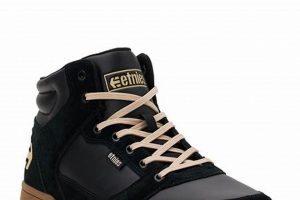
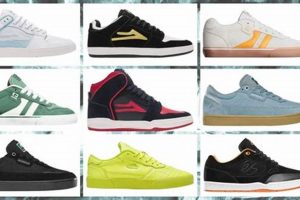
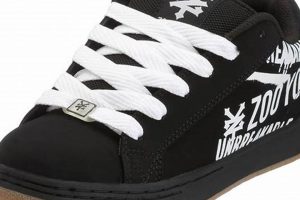
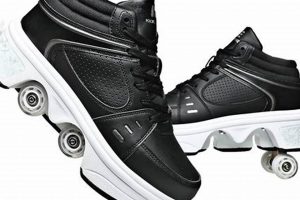
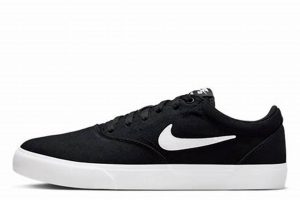
Footwear designed for skateboarding, often colored in a dark hue, provides the necessary grip, support, and durability required for performing tricks and navigating skateparks. These typically feature a flat, vulcanized rubber sole for optimal board feel and control. Reinforcements in high-wear areas, such as the toe and ollie pad, extend the lifespan of the shoe under rigorous use. For example, a skater might choose these for their resilience during street skating or park sessions.
The selection of appropriate skateboarding footwear significantly enhances a skater’s performance and safety. The robust construction protects the feet from impact and abrasion, while the grippy sole enables precise board control. Historically, such footwear evolved from repurposed athletic shoes to specialized designs incorporating features specifically tailored to the demands of skateboarding. This evolution reflects a growing understanding of the biomechanical needs of skaters and the importance of proper equipment.
The following sections will delve into specific aspects of this type of skateboarding equipment, examining the materials used in their construction, the various styles available, and factors to consider when choosing the optimal pair. Understanding these elements is crucial for both novice and experienced skaters seeking to maximize their skateboarding experience.
Selecting Durable Skateboarding Footwear
Choosing the correct footwear is paramount for both performance and safety in skateboarding. The following guidelines address key considerations when selecting footwear designed to withstand the rigors of skateboarding.
Tip 1: Prioritize Vulcanized Soles: Vulcanized soles, characterized by their strong bond between the rubber and upper, offer superior board feel and durability. This construction method is preferred for skateboarding due to its ability to withstand constant abrasion.
Tip 2: Inspect Stitching Quality: Examine the stitching around the sole and upper for robustness. Double or triple stitching indicates greater resistance to tearing and separation under stress.
Tip 3: Consider Suede or Leather Uppers: Uppers made from suede or leather offer enhanced durability and abrasion resistance compared to canvas alternatives. These materials provide better protection against wear and tear from grip tape.
Tip 4: Look for Reinforced Ollie Pads: The ollie pad, located on the lateral side of the forefoot, experiences significant wear during skateboarding. Reinforcements in this area extend the lifespan of the footwear.
Tip 5: Assess Ankle Support: Depending on personal preference and skateboarding style, consider footwear with adequate ankle support. High-top models offer increased stability and protection against ankle injuries.
Tip 6: Evaluate Cushioning: Impact protection is crucial for skateboarding. Insoles with adequate cushioning, such as polyurethane or EVA foam, absorb shock and reduce stress on the joints.
Tip 7: Check for Tongue Centering Straps: Tongue centering straps prevent the tongue from shifting during skateboarding, ensuring a comfortable and secure fit. This feature contributes to overall stability and control.
Selecting skateboarding footwear based on durability and performance features will enhance both the longevity of the equipment and the skater’s overall experience. These tips provide a foundation for making informed decisions when purchasing footwear intended for skateboarding.
The subsequent sections will further explore the maintenance and care of such footwear, addressing strategies for prolonging their lifespan and preserving their functionality.
1. Durability

Durability is a paramount characteristic of skateboarding footwear, and its relationship with shoes of a dark color, particularly black, warrants specific consideration. The color black, while primarily an aesthetic choice, indirectly influences perceived and actual durability. Darker colors are less prone to displaying visible signs of wear, such as scuffs and dirt, thereby maintaining a more presentable appearance for a longer duration. However, the true durability stems from the materials and construction techniques employed.
The impact of skateboarding on footwear is substantial, necessitating robust construction. For instance, the ollie maneuver subjects the lateral side of the shoe to intense abrasion from the grip tape. Skateboarding shoes engineered for durability incorporate features like reinforced stitching, abrasion-resistant materials (such as suede or leather), and strategically placed rubber overlays in high-wear zones. A failure to prioritize these features results in rapid deterioration, compromising performance and necessitating frequent replacements. Shoes lacking sufficient durability, regardless of their color, will exhibit premature wear, including sole separation, fabric tears, and compromised structural integrity. Real-world examples of durable skateboarding shoes often highlight the use of double or triple stitching in stress areas, vulcanized soles that resist separation, and internal reinforcements to support the foot during high-impact activities.
Understanding the connection between durability and the color selection within skateboarding footwear is pivotal for making informed purchasing decisions. While the color offers advantages in concealing wear, the underlying construction determines the actual lifespan of the product. Skaters should prioritize construction features and material quality over solely aesthetic considerations to ensure that the chosen footwear can withstand the demands of skateboarding. Failing to do so increases the likelihood of premature failure and associated costs of replacement. Therefore, the long-term value is determined by the combination of color and robust design, ensuring performance and appearance are maintained.
2. Boardfeel

Boardfeel, a critical element in skateboarding footwear, describes the tactile sensitivity a skater experiences with the skateboard. This sensitivity allows for nuanced control and precise execution of maneuvers. The design and construction of skateboarding footwear significantly influence boardfeel, with specific characteristics contributing to enhanced or diminished sensory feedback.
- Sole Thickness and Construction
Sole thickness directly impacts boardfeel. Thinner soles, particularly those constructed using vulcanization, permit greater sensory input. The reduced material between the foot and the board facilitates a more direct connection, allowing the skater to perceive subtle changes in the board’s position and orientation. Conversely, thicker soles, while potentially offering increased impact protection, can diminish boardfeel by dampening sensory feedback. The choice between sole thickness and impact protection often involves a trade-off based on individual preferences and skateboarding style.
- Outsole Material and Pattern
The composition and pattern of the outsole contribute to the tactile information transmitted to the skater’s foot. Softer rubber compounds generally provide enhanced grip and a more pliable feel, which translates to improved boardfeel. Intricate tread patterns can further enhance grip by providing multiple points of contact with the board’s surface. Conversely, harder rubber compounds or simpler tread patterns may reduce sensitivity and limit the skater’s ability to perceive subtle shifts in board position.
- Insole Material and Contouring
The insole, while primarily focused on comfort and cushioning, also influences boardfeel. Thin, flexible insoles allow for greater sensory feedback compared to thick, heavily cushioned insoles. Contoured insoles that conform to the foot’s natural shape can enhance the connection between the foot and the shoe, thereby improving boardfeel. The selection of insole material and design should consider the balance between comfort, support, and tactile sensitivity.
- Upper Material Flexibility
The flexibility of the upper material contributes to the overall feel and responsiveness of the shoe. Supple materials, such as suede or canvas, conform more readily to the foot’s shape and allow for greater freedom of movement, which can enhance boardfeel. Stiffer materials, while potentially offering increased support, may restrict movement and reduce sensitivity. The skater’s preference for flexibility versus support will influence the choice of upper material and its impact on boardfeel.
These facets of footwear design collectively determine the level of boardfeel experienced by the skater. The interplay between sole thickness, outsole material, insole design, and upper material flexibility creates a spectrum of tactile sensitivity. Choosing footwear that prioritizes boardfeel, while balancing other factors like durability and support, is crucial for skaters seeking optimal control and responsiveness. Skaters often experiment with different shoe styles to find the right balance of characteristics for enhanced performance.
3. Grip Strength

Grip strength, referring to the frictional force between the skateboarding shoe’s outsole and the skateboard’s grip tape, is a critical determinant of a skater’s control, stability, and execution of tricks. The composition and pattern of the outsole significantly impact this attribute. A high coefficient of friction enables the skater to maintain a secure connection with the board, facilitating precise movements and preventing slippage. Inadequate grip can lead to instability, failed attempts, and increased risk of injury. Shoes designed for skateboarding prioritize outsole materials formulated for optimal adhesion, with tread patterns engineered to maximize surface contact. Real-world examples include skaters relying on high-grip shoes to perform technical maneuvers, such as kickflips or grinds, where precise foot placement and board control are essential.
The color black, while not directly influencing grip strength from a material science perspective, indirectly impacts a skater’s perception and confidence. Black tends to conceal dirt and wear on the outsole, maintaining a cleaner appearance, which can psychologically reinforce the feeling of reliable grip. Furthermore, certain black rubber compounds, due to the carbon black additive used in their production, may exhibit enhanced durability compared to lighter colored counterparts. However, it is essential to recognize that the actual grip performance depends on the specific rubber formulation and tread design, rather than solely the color. Proper selection and maintenance of the outsole, including periodic cleaning, is crucial for preserving grip strength.
In conclusion, grip strength forms an indispensable component of skateboarding footwear, directly influencing a skater’s performance and safety. While the color black can provide aesthetic benefits and, in some cases, enhanced durability due to carbon black additives, the primary determinants of grip strength are the rubber compound and tread pattern. Skaters should prioritize shoes with outsoles engineered for optimal adhesion and maintain them properly to ensure consistent and reliable board control. The challenge lies in balancing grip strength with other factors, such as boardfeel and durability, to achieve the ideal footwear for individual skateboarding styles and preferences.
4. Ankle Support

Ankle support, a crucial consideration in skateboarding footwear, directly impacts stability and injury prevention. The connection between ankle support and dark-colored skateboarding shoes stems from the design implementations aimed at providing this support, rather than the color itself. High-top designs, often found in dark-colored or black skateboarding shoes, extend above the ankle joint, providing increased stability and limiting the range of motion. This restriction mitigates the risk of sprains and other ankle injuries common in skateboarding. Real-life examples include skaters recovering from ankle injuries often selecting high-top, dark skateboarding shoes for the added support during rehabilitation and subsequent skateboarding activities.
Further analysis reveals that the effectiveness of ankle support is contingent upon the material and construction of the shoe’s upper. Stiff materials, such as reinforced leather or synthetic fabrics, provide greater stability compared to more flexible materials like canvas. The internal padding and collar design also play a significant role in securing the ankle and preventing excessive movement. Skaters performing high-impact tricks or engaging in aggressive street skateboarding often benefit from the added support, experiencing reduced ankle strain and improved confidence in their movements. The selection of high-top or mid-top styles with robust ankle support complements the practical demands of various skateboarding disciplines.
In summary, while the color of skateboarding shoes does not directly influence ankle support, the design features incorporated into models that are frequently dark, such as high-top cuts and reinforced materials, provide crucial protection and stability. Understanding the relationship between these design elements and ankle support allows skaters to make informed decisions, balancing performance with injury prevention. The challenge lies in finding a shoe that offers sufficient support without sacrificing boardfeel or comfort. Prioritizing well-designed ankle support is essential for skaters seeking to minimize the risk of ankle injuries and optimize their skateboarding performance.
5. Impact Cushioning

Impact cushioning is a critical feature in skateboarding footwear, directly mitigating the forces experienced during landings and high-impact maneuvers. The integration of effective cushioning systems within skateboarding shoes, regardless of color, is essential for reducing stress on joints and preventing injuries. The relevance of impact cushioning to dark-colored, including black, skateboarding shoes lies in its contribution to the overall functionality and protective capabilities, allowing skaters to perform with greater confidence and reduced risk.
- Midsole Material and Construction
The midsole, situated between the outsole and the insole, serves as the primary impact absorption layer. Materials such as EVA (ethylene-vinyl acetate) and polyurethane (PU) are commonly employed due to their shock-absorbing properties. EVA provides a lightweight and flexible cushioning solution, while PU offers greater durability and energy return. The specific density and thickness of the midsole material directly influence the level of impact protection. Real-world examples include skaters landing ollies or kickflips where a well-cushioned midsole attenuates the impact forces, minimizing stress on the knees and ankles. Inadequate midsole cushioning increases the risk of joint pain and stress fractures.
- Insole Technology and Design
The insole contributes to impact cushioning by providing an additional layer of shock absorption directly beneath the foot. Advanced insole technologies, such as gel inserts or specialized foam compounds, further enhance cushioning capabilities. Contoured designs that support the arch and heel contribute to stability and distribute impact forces more evenly. Skaters utilizing shoes with advanced insole technologies report reduced foot fatigue and improved comfort during extended skateboarding sessions. Conversely, thin or poorly designed insoles offer minimal impact protection and can exacerbate foot discomfort.
- Outsole Pattern and Flexibility
The outsole, while primarily focused on grip, also plays a role in impact cushioning. The pattern and flexibility of the outsole influence the distribution of impact forces across the foot. Softer rubber compounds and flexible designs allow the outsole to deform and absorb some of the impact energy. The outsole’s design can be optimized to work in conjunction with the midsole and insole to provide a comprehensive cushioning system. Skaters performing tricks requiring significant ground contact, such as power slides or reverts, rely on the outsole to dissipate energy and maintain control. Rigid outsoles offer limited impact cushioning and can transmit forces directly to the foot.
- Heel Reinforcement and Airbag Technology
Heel reinforcement and airbag technology are specialized features designed to enhance impact cushioning specifically in the heel area. Reinforced heel counters provide additional support and stability, while airbags or gel inserts located within the heel offer targeted shock absorption. These features are particularly beneficial for skaters landing jumps or gaps, where the heel experiences significant impact forces. Shoes incorporating heel reinforcement and airbag technology provide superior impact protection and can reduce the risk of heel bruising or stress fractures. Skaters frequently prioritize these features when selecting footwear for aggressive skateboarding styles.
These facets of impact cushioning, working in concert, contribute to the overall protective capabilities of skateboarding footwear. The integration of effective midsole materials, advanced insole technologies, optimized outsole designs, and specialized heel reinforcement enhances the skater’s ability to withstand the demands of skateboarding. By understanding the interplay of these components, skaters can make informed decisions when selecting footwear, prioritizing models that provide adequate impact protection to mitigate injury risks and optimize performance. Black skateboarding shoes, like all other models, benefit from these cushioning technologies, underscoring the importance of focusing on functional features rather than solely aesthetic attributes.
6. Aesthetic Versatility

Aesthetic versatility, the capacity of an item to complement diverse styles and contexts, holds significant relevance to the ubiquitous nature of dark-colored skateboarding footwear. This attribute contributes to their widespread adoption and enduring appeal within the skateboarding community and beyond, transcending functional requirements to incorporate fashion considerations.
- Complementary to Diverse Skateboarding Styles
The dark hue serves as a neutral foundation, harmonizing with a wide spectrum of skateboarding apparel, ranging from minimalist streetwear to more expressive and individualized ensembles. This adaptability ensures that the footwear remains stylistically relevant regardless of evolving fashion trends or personal preferences. Examples include their integration with both baggy, retro-inspired clothing and more contemporary, streamlined outfits, demonstrating their capacity to adapt to varying aesthetic sensibilities.
- Adaptability to Varied Environments
The color facilitates a seamless transition between skateboarding environments and casual social settings. This adaptability allows skaters to wear the same footwear for both athletic performance and everyday activities without appearing incongruous or out of place. The neutrality is beneficial in environments where overt displays of subcultural affiliation might be perceived as inappropriate, maintaining a degree of subtlety and discretion.
- Mitigation of Visual Wear and Tear
Dark shades inherently mask dirt, scuffs, and other signs of wear and tear more effectively than lighter colors. This characteristic preserves a cleaner and more presentable appearance over an extended period, enhancing the perceived longevity and value of the footwear. Skaters, often subjected to abrasive environments, benefit from this ability to conceal visual damage, allowing the footwear to maintain a presentable aesthetic even after considerable use.
- Association with Classic and Timeless Designs
Dark, and especially black, footwear aligns with a long-standing tradition of classic and timeless design principles. This association imbues the footwear with a sense of permanence and stylistic credibility, transcending fleeting trends. Skaters seeking to project an image of understated cool or adherence to skateboarding’s heritage often gravitate towards these designs as a means of expressing their affiliation with the culture and its values.
These facets collectively contribute to the enduring aesthetic versatility. The ability to complement diverse styles, adapt to varied environments, mitigate visual wear and tear, and align with classic design principles underpins the popularity and continued relevance of these products in the skateboarding world and beyond. This enduring appeal underscores the intersection of functionality and aesthetics in shaping consumer preferences and reinforcing cultural associations.
Frequently Asked Questions
The following addresses common inquiries regarding skateboarding footwear, specifically focusing on aspects relevant to their design, performance, and maintenance.
Question 1: What are the primary benefits of selecting skateboarding footwear in a dark color, such as black?
Selecting skateboarding footwear in a dark color offers several practical advantages. Primarily, darker colors tend to conceal dirt, scuffs, and wear marks more effectively than lighter shades. This maintains a cleaner and more presentable appearance over a longer period, particularly important given the abrasive nature of skateboarding. While the color itself does not directly enhance performance characteristics, it contributes to the perceived longevity and aesthetic versatility of the footwear.
Question 2: Do the materials used in skate black shoes differ significantly from those used in other skateboarding shoes?
The materials used are not inherently different based on the color. Skateboarding footwear, regardless of hue, typically employs durable materials like suede, leather, canvas, and reinforced rubber. The selection of these materials is dictated by their abrasion resistance, flexibility, and support capabilities. However, some black rubber compounds may incorporate carbon black, a reinforcing filler that enhances durability, but this is material science, not because of the color black is chosen.
Question 3: How does the sole construction contribute to the performance of these shoes?
Sole construction is paramount in skateboarding footwear. Vulcanized soles, known for their flexibility and board feel, are commonly utilized. The vulcanization process bonds the rubber sole to the upper, creating a durable and responsive platform. The tread pattern also influences grip and control, with various patterns designed to optimize traction on the skateboard’s grip tape. The sole’s thickness affects board feel, with thinner soles providing greater sensitivity.
Question 4: What design elements enhance ankle support in skateboarding footwear?
Ankle support is typically enhanced through high-top designs that extend above the ankle joint, providing increased stability and limiting the range of motion. Reinforced padding around the collar and tongue also contributes to support. Stiff materials, such as leather or synthetic fabrics, offer greater stability compared to more flexible materials. The selection of appropriate ankle support depends on individual preferences and skateboarding style.
Question 5: How should skateboarding footwear be properly maintained to extend its lifespan?
Proper maintenance involves regular cleaning to remove dirt and debris, preventing premature wear of the materials. A soft brush and mild soap can be used to clean the upper and sole. Avoid harsh chemicals or abrasive cleaners that can damage the materials. Allow the footwear to air dry completely after cleaning. Rotating between multiple pairs of shoes can also extend their lifespan by allowing each pair to rest and recover between uses.
Question 6: Are skate black shoes suitable for all types of skateboarding?
Suitability for different skateboarding disciplines depends on the specific features of the footwear. Generally, such shoes are versatile and adaptable to various styles, including street skating, park skating, and vert skating. However, specific features, such as ankle support, sole thickness, and cushioning, may be more advantageous for certain disciplines. Skaters should consider their individual needs and preferences when selecting footwear for their specific style of skateboarding.
In summary, understanding the design elements, materials, and maintenance practices associated with skateboarding footwear is essential for optimizing performance and extending the lifespan of the equipment. Careful consideration of individual needs and preferences will ensure the selection of footwear that aligns with specific skateboarding styles and activities.
The following sections will further explore advanced topics related to skateboarding footwear, including customization options and emerging technologies in shoe design.
Conclusion
This exploration of skate black shoes has illuminated the multifaceted aspects of this specialized footwear. From the critical considerations of durability and boardfeel to the importance of grip strength, ankle support, impact cushioning, and aesthetic versatility, each element contributes to the skater’s performance and safety. The functional advantages of a dark color, primarily its ability to conceal wear and tear, further enhance the overall appeal. The materials, construction, and design features combine to create a product tailored to the demands of skateboarding.
The selection of appropriate footwear remains a crucial decision for skaters of all skill levels. By prioritizing the performance characteristics outlined herein, individuals can enhance their skateboarding experience and mitigate potential risks. The continued innovation in skateboarding shoe technology promises further advancements in durability, support, and control, shaping the future of the sport. Therefore, skaters are encouraged to remain informed and discerning in their footwear choices to maximize their capabilities and enjoyment.