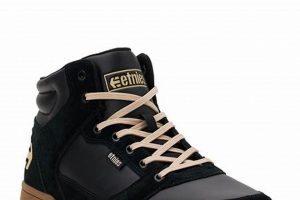
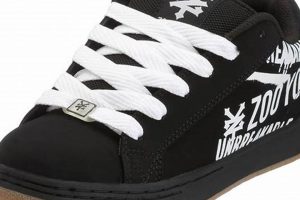
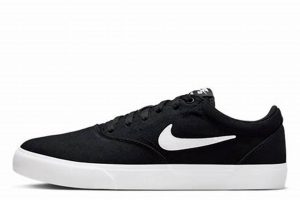
Footwear commonly associated with skateboarders typically exhibits specific design features that cater to the demands of the sport. These characteristics often include durable construction, reinforced stitching in high-wear areas, and vulcanized rubber soles for enhanced grip and board feel. For example, a low-profile silhouette paired with ample padding around the ankle provides both flexibility and protection during skateboarding maneuvers.
The selection of appropriate footwear is crucial for both performance and safety in skateboarding. Durable construction enhances longevity, reducing the need for frequent replacements. A strong connection to the board facilitates improved control and responsiveness, enabling skaters to execute tricks with greater precision. Furthermore, the cushioning systems often integrated into these designs mitigate impact forces, contributing to rider comfort and injury prevention. Historically, the evolution of this specialized footwear has mirrored the development of skateboarding itself, with advancements driven by the needs and preferences of practitioners.
The following sections will explore the various design elements, materials, and technological advancements contributing to the performance and durability of skateboarding-specific footwear. Factors influencing selection, such as personal preferences, skateboarding style, and intended use, will also be examined.
Guidance on Footwear Selection for Skateboarding
The selection of appropriate footwear significantly impacts performance, safety, and longevity in skateboarding. The following guidelines offer essential considerations for informed purchasing decisions.
Tip 1: Prioritize Durability. Reinforcement in high-abrasion zones, such as the toe and ollie area, is paramount. Examine the quality of stitching and the thickness of materials used in these critical locations.
Tip 2: Evaluate Sole Construction. Vulcanized soles provide superior grip and board feel, enabling precise control. Look for distinct tread patterns that enhance traction on various surfaces.
Tip 3: Assess Ankle Support and Padding. Adequate ankle support minimizes the risk of injury, particularly during landings and aggressive maneuvers. Sufficient padding cushions impact and enhances overall comfort.
Tip 4: Consider Material Composition. Leather and suede offer enhanced durability and abrasion resistance compared to canvas alternatives. Select materials based on the anticipated intensity and frequency of use.
Tip 5: Verify Fit and Comfort. Ensure a snug but not constricting fit. Ample toe room is essential to prevent discomfort during prolonged activity. Try on footwear with socks of comparable thickness to those typically worn while skateboarding.
Tip 6: Inspect the Lacing System. Recessed or reinforced eyelets and durable laces are necessary to withstand the rigors of skateboarding. Protective lace covers can further extend the lifespan of laces.
Adherence to these guidelines ensures that footwear selection aligns with the specific demands of skateboarding, promoting both performance enhancement and injury prevention. Choosing durable, well-fitting footwear is a fundamental investment in the skateboarding experience.
The following sections will delve into specific brands, models, and technological advancements in skateboarding footwear, providing a comprehensive overview of available options.
1. Reinforced Construction

Reinforced construction is a critical attribute of footwear designed for skateboarding, directly impacting durability and lifespan. The stresses imposed by skateboarding repeated abrasion against grip tape, impact from landings, and the consistent pressure applied during tricks necessitate robust structural integrity. Without reinforced construction, these shoes would rapidly deteriorate, rendering them unsuitable for the sport. This reinforcement manifests in several forms, including double or triple stitching in high-stress areas like the toe and ollie patch, additional layers of material bonded to the upper, and the incorporation of durable fabrics such as suede or reinforced canvas. For example, frequent skaters often note that shoes lacking reinforced stitching in the ollie area develop holes within a matter of weeks, whereas shoes with such reinforcement can withstand months of heavy use.
The practical significance of reinforced construction extends beyond simply prolonging the life of the footwear. It directly influences performance and safety. Shoes that maintain their structural integrity provide a more consistent and reliable platform for executing tricks. Deformities or failures in the upper or sole can disrupt balance and increase the risk of injury. Furthermore, reinforced construction contributes to the overall comfort and support provided by the shoe, reducing foot fatigue and minimizing the potential for blisters and other foot-related ailments. Many manufacturers of skateboarding footwear incorporate proprietary technologies and materials to enhance reinforcement, reflecting the understanding that this aspect is paramount for meeting the demands of the sport. For instance, some brands utilize vulcanized rubber sidewalls that extend higher onto the upper, providing additional protection against abrasion.
In summary, reinforced construction is not merely an optional feature but a fundamental requirement for skateboarding footwear. It directly addresses the extreme wear and tear associated with the sport, contributing to durability, performance, and safety. While variations exist in the specific types and methods of reinforcement, the underlying principle remains the same: to create footwear that can withstand the unique demands of skateboarding. Selecting footwear with robust reinforcement is a crucial consideration for any skateboarder seeking to maximize the lifespan of their shoes and minimize the risk of injury.
2. Vulcanized Rubber Soles

Vulcanized rubber soles are integral to footwear specifically designed for skateboarding, commonly termed “skater boy shoes,” due to the unique properties imparted by the vulcanization process. This process involves heating rubber with sulfur, resulting in a more durable, flexible, and resilient material. This contrasts with non-vulcanized rubber, which lacks the required grip and abrasion resistance necessary to withstand the demands of skateboarding. The connection between vulcanized rubber soles and skateboarding footwear is causal: the properties of vulcanized rubber directly address the needs of the sport, enhancing both performance and safety. For example, the increased grip afforded by vulcanized soles allows skaters to maintain board control during complex maneuvers. Without this grip, the risk of slipping and falling would significantly increase.
The importance of vulcanized rubber stems from its ability to withstand repeated impacts and abrasion against the skateboard’s grip tape and the ground. Consider the ollie, a fundamental skateboarding trick; the repeated scraping of the shoe against the grip tape necessitates a durable sole. Vulcanized rubber’s abrasion resistance extends the lifespan of the shoe, making it a more cost-effective choice for skateboarders. Furthermore, the flexibility of vulcanized rubber allows for enhanced board feel, enabling skaters to sense the board’s movements and make precise adjustments. This tactile feedback is crucial for executing technical tricks and maintaining stability. The vulcanization process also creates a strong bond between the rubber sole and the shoe’s upper, preventing separation under stress.
In summary, vulcanized rubber soles are not merely a design feature of skateboarding footwear; they are a functional necessity. The enhanced grip, durability, and flexibility provided by vulcanized rubber directly contribute to the performance, safety, and longevity of “skater boy shoes.” The understanding of this connection is crucial for both manufacturers and consumers, ensuring the selection of appropriate footwear for the demands of skateboarding. Choosing footwear without vulcanized rubber soles increases the risk of injury and reduces the lifespan of the shoe, making vulcanized rubber an indispensable component.
3. Ankle Support

Ankle support represents a critical design consideration in skateboarding footwear, influencing both performance and injury prevention. The repetitive and high-impact nature of skateboarding subjects the ankles to considerable stress, necessitating adequate support to mitigate the risk of sprains, strains, and other injuries.
- Injury Prevention
The primary function of ankle support in skateboarding shoes is to minimize the likelihood of ankle injuries. Skateboarding involves frequent landings, pivots, and sudden changes in direction, placing significant stress on the ankle joint. High-top designs or shoes with integrated support structures restrict excessive ankle movement, reducing the risk of inversion or eversion injuries. Failure to provide adequate ankle support can lead to chronic instability and long-term complications.
- Enhanced Stability and Control
Beyond injury prevention, ankle support contributes to enhanced stability and control during skateboarding. A secure and well-supported ankle allows skaters to maintain balance and execute tricks with greater precision. The increased proprioceptive feedback from a supported ankle improves spatial awareness and enables quicker reactions to changes in board position. This enhanced stability is particularly crucial for advanced maneuvers and high-impact landings.
- Design Variations and Material Selection
Ankle support in skateboarding footwear manifests in various design iterations. High-top designs inherently offer greater support than low-top alternatives. Internal or external support structures, such as reinforced heel counters and padded ankle collars, further enhance stability. Material selection also plays a crucial role. Stiffer materials provide greater support but may limit mobility, while more flexible materials offer increased range of motion but less protection. Manufacturers often balance these factors to optimize performance and comfort.
- Impact on Performance and Comfort
The level of ankle support directly influences both performance and comfort. Excessive support can restrict mobility and hinder certain skateboarding styles, while insufficient support increases the risk of injury. Finding the appropriate balance between support and flexibility is crucial for maximizing performance and preventing discomfort. Personal preferences, skateboarding style, and individual ankle strength should all be considered when selecting footwear with specific ankle support features.
The integration of effective ankle support mechanisms into skateboarding footwear represents a necessary compromise between protection and performance. While no shoe can completely eliminate the risk of injury, designs that prioritize ankle support significantly reduce the likelihood of ankle-related problems, contributing to a safer and more enjoyable skateboarding experience.
4. Abrasion Resistance

Abrasion resistance is a primary attribute of “skater boy shoes,” dictated by the intense surface friction inherent in skateboarding. The abrasive nature of skateboard grip tape, typically composed of silicon carbide granules bonded to an adhesive backing, necessitates robust materials in footwear construction. The constant contact between the shoe and grip tape during maneuvers like ollies and kickflips causes rapid material degradation. Consequently, the absence of sufficient abrasion resistance in “skater boy shoes” leads to premature wear and failure, rendering the footwear unsuitable for its intended purpose. For example, a shoe constructed from thin, non-reinforced canvas would likely develop holes in high-contact areas within a few skateboarding sessions. Inversely, shoes utilizing durable materials, such as suede or reinforced canvas, demonstrate a significantly prolonged lifespan under similar conditions.
The practical significance of abrasion resistance extends beyond mere durability. The structural integrity of the shoe directly affects performance. As the upper material deteriorates, the shoe loses its shape and support, negatively impacting board feel and control. Furthermore, compromised abrasion resistance can create safety hazards. Holes in the shoe expose the foot to potential injury from the grip tape or debris. Manufacturers address this challenge by incorporating specific design features and materials known for their resistance to abrasion. These include strategically placed rubber reinforcements, double or triple stitching in high-wear zones, and the use of abrasion-resistant fabrics. The choice of outsole material also contributes to overall abrasion resistance; vulcanized rubber, due to its inherent durability, is a common selection.
In summary, abrasion resistance is not merely a desirable feature but a fundamental requirement for “skater boy shoes.” Its presence directly dictates the footwear’s longevity, performance, and safety. By prioritizing materials and construction techniques that enhance abrasion resistance, manufacturers contribute to the overall functionality and value of skateboarding-specific footwear. An understanding of this connection is crucial for consumers seeking durable and reliable “skater boy shoes” that can withstand the demands of the sport.
5. Impact Absorption
Impact absorption is a critical performance characteristic of specialized skateboarding footwear, directly influencing rider comfort, injury prevention, and long-term joint health. The nature of skateboarding involves repeated landings and high-velocity impacts, placing substantial stress on the musculoskeletal system. Footwear lacking sufficient impact absorption transmits these forces directly to the rider’s feet, ankles, knees, and spine, potentially leading to chronic pain, joint damage, and acute injuries such as stress fractures. Therefore, the integration of effective impact absorption technologies is a crucial design element in “skater boy shoes”. For example, consider a skater performing a stair set jump: without adequate cushioning, the force of landing can cause immediate pain and, over time, contribute to conditions like plantar fasciitis or arthritis. The presence of impact-absorbing materials within the shoe mitigates these risks by dissipating energy and reducing the peak force experienced by the body.
The implementation of impact absorption in skateboarding footwear typically involves the incorporation of specialized materials and structural designs. Common materials include closed-cell foams like polyurethane or ethylene-vinyl acetate (EVA), often strategically placed in the midsole or heel of the shoe. These materials compress upon impact, absorbing energy and reducing the shock transmitted to the rider. Additionally, some designs incorporate air pockets or gel-filled compartments for enhanced cushioning. Consider the practical application of these technologies: a skater landing a trick with poorly cushioned shoes might experience jarring sensations and potential discomfort, while the same trick executed with footwear featuring advanced impact absorption would result in a smoother, more controlled landing with reduced stress on the joints. The level of impact absorption required varies depending on the skater’s skill level, skateboarding style, and the types of terrain encountered. Aggressive styles involving large jumps and technical tricks necessitate greater cushioning than casual cruising.
In conclusion, impact absorption represents a fundamental performance requirement in “skater boy shoes”. Its presence directly influences rider comfort, injury risk, and long-term physical well-being. While various technologies and materials exist to enhance impact absorption, the underlying principle remains the same: to mitigate the forces generated during skateboarding and protect the rider from potential harm. The selection of footwear with appropriate impact absorption features is essential for any skateboarder seeking to maximize performance and minimize the risk of injury. Challenges remain in balancing impact absorption with board feel and flexibility, but ongoing innovation in materials science and footwear design continues to improve the effectiveness and comfort of skateboarding shoes.
Frequently Asked Questions
The following addresses common inquiries and misconceptions regarding footwear specifically designed for skateboarding, often referred to as “skater boy shoes”. Information is presented to provide clarity on their functionality, design, and selection.
Question 1: What distinguishes “skater boy shoes” from general athletic footwear?
Skateboarding footwear prioritizes durability, grip, and board feel. Specialized construction techniques, reinforced materials in high-wear areas, and vulcanized rubber soles distinguish it from general athletic footwear, which often emphasizes cushioning and support for running or other sports.
Question 2: Why are vulcanized soles prevalent in skateboarding shoes?
Vulcanized rubber soles offer a superior combination of grip, flexibility, and durability necessary for skateboarding. The vulcanization process enhances the rubber’s strength and bonding capabilities, providing the grip needed for board control and withstanding the abrasive forces exerted during skateboarding maneuvers.
Question 3: How important is ankle support in skateboarding footwear?
Ankle support is crucial for injury prevention and stability. High-top designs or shoes with integrated ankle support structures minimize the risk of sprains and strains by restricting excessive ankle movement during landings and other high-impact activities.
Question 4: What materials are commonly used in “skater boy shoes” and why?
Durable materials such as suede, leather, and reinforced canvas are frequently utilized due to their abrasion resistance. These materials withstand the friction generated by contact with grip tape and other surfaces, prolonging the lifespan of the footwear.
Question 5: How does the design of “skater boy shoes” contribute to board feel?
A thin midsole and flexible sole construction maximize board feel, allowing skaters to sense the board’s movements and make precise adjustments. Minimal padding in certain areas enhances tactile feedback, enabling greater control and responsiveness.
Question 6: Are “skater boy shoes” suitable for activities other than skateboarding?
While designed specifically for skateboarding, “skater boy shoes” can be worn for casual purposes. However, their specialized construction may not provide optimal support or cushioning for other athletic activities, such as running or basketball. The emphasis on durability and board feel often results in a trade-off in comfort for extended periods of walking or standing.
In summary, “skater boy shoes” are engineered to meet the specific demands of skateboarding, prioritizing durability, grip, ankle support, and board feel. Understanding these design considerations is crucial for selecting appropriate footwear and ensuring a safe and enjoyable skateboarding experience.
The following section will provide insight into the historical evolution and cultural significance of specific footwear models.
Conclusion
This exploration has detailed the functional and design attributes defining “skater boy shoes.” The analysis underscored the criticality of reinforced construction, vulcanized rubber soles, ankle support mechanisms, abrasion-resistant materials, and impact absorption technologies. These features collectively address the rigorous demands of skateboarding, directly influencing performance, safety, and product longevity.
The information presented facilitates informed decision-making regarding footwear selection. Continued advancements in material science and design are anticipated to further optimize skateboarding-specific footwear. A comprehensive understanding of these factors remains essential for practitioners seeking to maximize performance potential and mitigate the inherent risks associated with the sport.