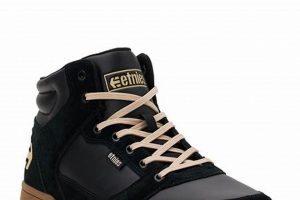
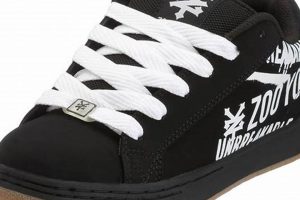
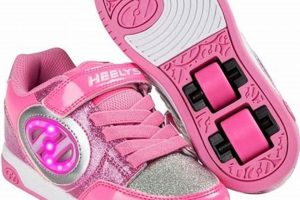
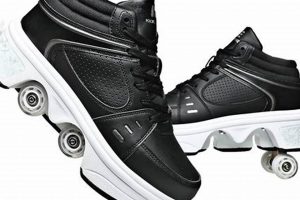
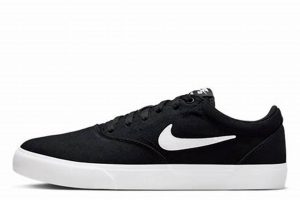
Footwear designed for skateboarding activities, typically characterized by a flat, durable sole, reinforced stitching, and a padded construction, are commonly used by female skateboarders. These shoes prioritize board feel, grip, and protection against impact during tricks and maneuvers. A common example includes low-profile sneakers with suede or canvas uppers and vulcanized rubber soles.
The adoption of specialized footwear contributes significantly to enhanced performance and safety in skateboarding. These shoes offer superior grip on the board, facilitating better control and reducing the risk of slips. Furthermore, the padded design protects the feet from the repetitive stresses and potential injuries associated with skateboarding. Historically, the design and availability of these shoes have evolved alongside the sport, reflecting a growing awareness of the specific needs of skateboarders.
The following sections will delve into the specific features, benefits, and selection criteria for skateboarding footwear tailored to the female skater, addressing aspects such as construction materials, outsole technologies, fit considerations, and the impact on overall skateboarding experience.
Essential Considerations for Footwear Selection
Selecting appropriate footwear for skateboarding demands attention to detail, as it significantly impacts performance, comfort, and safety. The following tips provide guidance on choosing skateboarding shoes that meet specific needs and preferences.
Tip 1: Prioritize Durability: The frequent friction and impact inherent in skateboarding necessitate durable materials. Opt for shoes constructed with reinforced stitching, particularly in high-wear areas such as the ollie zone, to extend the lifespan of the footwear.
Tip 2: Assess Sole Construction: Vulcanized rubber soles are a common choice due to their flexibility and board feel. Cupsole constructions offer greater impact protection, suitable for skaters who frequently perform aerial tricks. Evaluate the sole pattern to ensure adequate grip and traction.
Tip 3: Consider Upper Material: Suede and canvas are prevalent upper materials, offering varying degrees of durability and breathability. Suede provides enhanced durability and board feel, while canvas offers better breathability and is often lighter. Select the material that best suits the intended skateboarding environment and style.
Tip 4: Evaluate Padding and Support: Adequate padding around the ankle and tongue areas provides cushioning and support, reducing the risk of injury. Consider shoes with impact-absorbing insoles to further mitigate the effects of hard landings.
Tip 5: Ensure Proper Fit: A snug but not constricting fit is crucial for optimal board control and comfort. Ensure sufficient room in the toe box to allow for natural foot movement. Ill-fitting footwear can hinder performance and increase the risk of blisters or other foot ailments.
Tip 6: Research Brand Reputation: Established skateboarding shoe brands often have a proven track record of quality and performance. Research customer reviews and testimonials to gain insights into the durability and overall satisfaction of different models.
Tip 7: Account for Skateboarding Style: The preferred skateboarding style should influence footwear selection. Technical skaters may prioritize board feel and flexibility, while transition skaters may require more cushioning and ankle support.
Selecting the right skateboarding shoes requires careful consideration of durability, sole construction, upper material, padding, fit, brand reputation, and skateboarding style. Adhering to these tips enhances the skateboarding experience, promotes safety, and extends the lifespan of the footwear.
The subsequent sections will explore specific brands and models, offering a comparative analysis of features and benefits to further assist in informed decision-making.
1. Durability

Durability constitutes a critical attribute of skateboarding shoes, significantly influencing their lifespan and performance under demanding conditions. Skateboarding, by its nature, subjects footwear to intense abrasion, impact, and repetitive stress. The interaction between the shoe and the skateboard deck, particularly during ollies and other tricks, generates considerable friction. Consequently, the selection of robust materials and reinforced construction techniques becomes paramount in mitigating premature wear and tear. For example, the frequent use of suede or canvas uppers combined with double or triple stitching in high-stress areas directly enhances the shoe’s resistance to damage.
The importance of durability extends beyond mere longevity. Shoes that quickly deteriorate can compromise board feel and responsiveness, potentially hindering the skater’s ability to execute tricks safely and effectively. Moreover, worn-out soles can diminish grip, increasing the risk of slippage and injury. Therefore, durable skateboarding shoes represent a practical investment, reducing the need for frequent replacements and ensuring consistent performance over time. Brands often incorporate abrasion-resistant rubber compounds in the outsoles and reinforce the ollie zone with additional layers of material to enhance durability.
In summary, the relationship between durability and skateboarding shoes is one of direct causality. Skateboarding’s inherent demands necessitate robust footwear construction. Prioritizing durability translates to enhanced performance, improved safety, and reduced long-term costs. While other factors such as board feel and comfort remain important, the fundamental ability of the shoe to withstand the rigors of skateboarding underpins its overall value.
2. Board Feel

Board feel, in the context of skateboarding footwear, refers to the sensitivity and responsiveness a skater experiences when interacting with the board. This tactile connection is significantly influenced by the shoe’s sole thickness, flexibility, and overall design. Footwear designed to maximize board feel typically features thinner soles constructed from vulcanized rubber, allowing for a more direct perception of the board’s contours and movements. This sensitivity is crucial for executing technical maneuvers, providing the skater with precise control and feedback necessary for successful trick execution and board manipulation.
The significance of board feel is particularly relevant for female skateboarders. A heightened sense of connection with the board enables improved balance, coordination, and confidence, contributing to a more effective and enjoyable skateboarding experience. Skaters often modify their footwear or choose specific models to optimize board feel based on their individual style and preferences. For example, skaters focused on technical street skating often favor shoes with minimal padding and flexible soles to maximize their sensitivity and control during intricate tricks. Conversely, skaters prioritizing impact absorption for vert or park skating may compromise some board feel for increased cushioning and support.
In summary, board feel represents a critical element in the overall performance and satisfaction derived from skateboarding footwear. The construction and design choices directly affect the skater’s ability to perceive and respond to the board’s movements, ultimately influencing their control and execution. Understanding the nuances of board feel allows skateboarders, including female skateboarders, to make informed decisions about their footwear, selecting models that best align with their individual needs and skateboarding style. Recognizing that a skater shoes for women need Board Feel to be top performance.
3. Ankle Support

Ankle support, a critical consideration in skateboarding footwear, directly impacts the safety and performance of skaters. The design and construction of skateboarding shoes influence the degree of stability and protection afforded to the ankle joint, which is subjected to significant stress during various skateboarding maneuvers. Footwear that effectively supports the ankle reduces the risk of sprains and other injuries, allowing skaters to perform with greater confidence and control.
- High-Top vs. Low-Top Design
High-top shoes provide enhanced ankle support compared to low-top designs. The extended upper section of high-tops wraps around the ankle, offering increased stability and limiting excessive range of motion. Low-top shoes, while offering greater flexibility and mobility, provide less direct ankle support. The choice between high-top and low-top designs depends on the skater’s individual preferences and skateboarding style. For instance, skaters who frequently perform aerial tricks or grind rails may benefit from the added support of high-tops, while those who prioritize board feel may prefer the freedom of movement afforded by low-tops.
- Padding and Collar Construction
The amount and type of padding around the ankle collar contribute significantly to ankle support and comfort. Thicker padding provides increased cushioning and impact absorption, reducing the risk of bruising or strain. The collar construction, whether it is a traditional padded collar or a more contoured design, also affects the fit and stability of the shoe. A well-designed collar should provide a secure and comfortable fit without restricting movement excessively.
- Internal Support Structures
Some skateboarding shoes incorporate internal support structures, such as reinforced heel counters or internal stabilizers, to enhance ankle stability. These features help to control pronation and supination, reducing the risk of ankle rolling or twisting. The effectiveness of these internal support structures varies depending on the design and materials used. They are often integrated seamlessly into the shoe’s construction to provide discreet but effective support.
- Lacing System and Fit
The lacing system plays a crucial role in securing the foot and ankle within the shoe. A well-designed lacing system allows for a customized fit, providing support and preventing excessive movement. Properly tightening the laces can significantly improve ankle stability and reduce the risk of injury. Additionally, the overall fit of the shoe is essential for effective ankle support. A shoe that is too loose or too tight will not provide adequate support and may increase the risk of discomfort or injury.
These components collectively influence the level of ankle support provided by skateboarding footwear. The consideration of high-top versus low-top design, padding and collar construction, internal support structures, and lacing system contribute to informed decisions concerning footwear for skateboarding, recognizing the importance of protection against common skateboard-related injuries. Therefore, in skater shoes for women Ankle Support is a main consideration.
4. Grip Traction

Grip traction, in the context of skateboarding shoes, directly influences a skater’s ability to maintain control and execute maneuvers effectively. The outsole design and rubber compound utilized are primary determinants of grip traction. A shoe that provides inadequate grip increases the risk of slippage, leading to potential falls and hindering performance. Conversely, superior grip traction enables a secure connection between the skater and the board, facilitating precise movements and confident execution of tricks. For example, a skater attempting a kickflip requires reliable grip to keep their feet securely planted on the board during the rotation. Without sufficient grip traction, the skater is more likely to lose balance and fail the trick.
The rubber compound used in the outsole construction is a key factor in determining grip traction. Softer, tackier rubber compounds typically provide better grip than harder, more durable compounds. However, softer rubber may wear down more quickly, necessitating a balance between grip performance and durability. Outsole patterns also contribute to grip traction. Herringbone or waffle patterns are commonly employed to maximize surface contact with the skateboard deck. The depth and spacing of the pattern influence the ability of the shoe to grip the board effectively. Furthermore, some brands incorporate proprietary rubber compounds or outsole patterns designed to enhance grip performance under specific conditions, such as wet or dry surfaces.
Effective grip traction is a fundamental requirement in skater shoes for women, supporting balance and control during the complex movements involved in skateboarding. Understanding the role of rubber compounds and outsole patterns enables informed selection of footwear that enhances performance and minimizes the risk of injury. The interplay between grip performance and durability remains a key consideration, influencing the overall value and longevity of skateboarding shoes.
5. Impact Cushioning

Impact cushioning is a vital component of skateboarding shoes, directly addressing the repetitive stress and potential for injury inherent in the sport. Skateboarding involves frequent jumping, landing, and performing tricks, all of which subject the feet and joints to significant impact forces. Inadequate cushioning can lead to discomfort, fatigue, and an increased risk of stress fractures, heel bruises, and other lower extremity injuries. Therefore, the inclusion of effective impact cushioning is particularly crucial in footwear designed for skateboarding, especially when considering skater shoes for women. For instance, a skater attempting a stair set or performing a trick within a skatepark experiences considerable force upon landing. Shoes with insufficient cushioning may transmit this force directly to the foot, leading to discomfort and potential injury. Conversely, shoes with effective cushioning absorb and dissipate this force, reducing the strain on the foot and lower leg.
The specific materials and technologies used in skateboarding shoes to provide impact cushioning vary across brands and models. Common cushioning materials include ethylene-vinyl acetate (EVA) foam, polyurethane (PU) foam, and gel inserts. EVA foam is a lightweight and versatile material that provides a good balance of cushioning and board feel. PU foam offers superior cushioning and energy return but may be heavier and less flexible than EVA foam. Gel inserts provide targeted cushioning in high-impact areas, such as the heel. Furthermore, some skateboarding shoe brands have developed proprietary cushioning technologies designed to optimize impact absorption and energy transfer. These technologies may involve the use of specialized foam formulations, geometric designs, or air-filled chambers. The choice of cushioning material and technology depends on the intended use of the shoe and the skater’s individual preferences. A skater who prioritizes board feel may opt for a shoe with minimal cushioning, while a skater who performs high-impact tricks may prefer a shoe with maximum cushioning.
In summary, impact cushioning is an essential feature of skater shoes for women, mitigating the risks associated with the high-impact nature of skateboarding. Understanding the role of cushioning materials and technologies enables informed decision-making when selecting footwear, promoting safety, comfort, and performance. The integration of effective impact cushioning into skateboarding shoe design represents a crucial advancement in injury prevention, allowing skaters to pursue their passion with greater confidence and reduced risk. The lack of adequate impact cushioning can result in lasting injuries, which is why skater shoes for women are manufactured with this consideration.
Frequently Asked Questions
This section addresses common inquiries regarding footwear specifically designed for female skateboarders. The following questions and answers aim to provide clear and concise information to assist in informed decision-making.
Question 1: Are dedicated “skater shoes for women” necessary, or can any skateboarding shoe be worn?
While any skateboarding shoe can technically be worn, footwear specifically designed for women often incorporates fit considerations and potentially aesthetic preferences tailored to the female foot. The necessity is dependent on individual comfort and performance requirements.
Question 2: What differentiates skateboarding shoes from regular sneakers?
Skateboarding shoes are typically constructed with durable materials, reinforced stitching, and a flatter, grippier sole designed to withstand the abrasion and impact associated with skateboarding. Regular sneakers often lack these features.
Question 3: How should skateboarding shoes fit?
Skateboarding shoes should fit snugly but not constrictingly. Ample room in the toe box is necessary to prevent discomfort during prolonged use. A secure fit around the heel is also crucial to prevent slippage.
Question 4: How frequently should skateboarding shoes be replaced?
The lifespan of skateboarding shoes depends on the frequency and intensity of use. Wear and tear should be monitored regularly, and shoes should be replaced when the sole loses grip, the upper becomes excessively worn, or the cushioning deteriorates.
Question 5: What are the key features to consider when purchasing skater shoes for women?
Key features include durability, board feel, ankle support, grip traction, and impact cushioning. These factors collectively influence performance, safety, and comfort.
Question 6: How does one clean and maintain skateboarding shoes?
Cleaning methods vary depending on the material of the shoe. Generally, gentle soap and water can be used to clean the upper, while a brush can be used to remove dirt and debris from the sole. Proper drying techniques are essential to prevent damage.
Selecting appropriate skateboarding footwear requires careful consideration of various factors. The answers provided address some of the most frequently asked questions related to skater shoes for women.
The subsequent section will discuss specific brands and models of skateboarding shoes, offering a comparative analysis to facilitate the selection process.
Concluding Remarks
The preceding analysis has explored the critical features and considerations associated with footwear specifically designed for female skateboarders. Durability, board feel, ankle support, grip traction, and impact cushioning have been identified as paramount attributes, each contributing significantly to performance, safety, and comfort. Understanding these elements enables informed decision-making when selecting appropriate skateboarding shoes, reflecting the unique demands placed upon footwear within this dynamic sport.
The ongoing evolution of skateboarding shoe technology underscores a commitment to optimizing the skateboarding experience. Selecting footwear that aligns with individual needs and preferences represents a pivotal step in maximizing performance potential and mitigating the risk of injury. Therefore, a comprehensive understanding of the factors discussed remains essential for all female skateboarders seeking to enhance their skills and pursue their passion with confidence. The purchase must not take it easy.