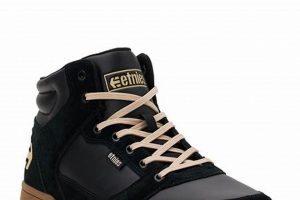
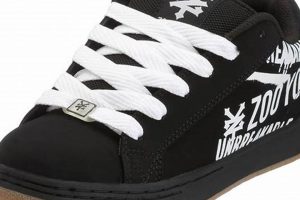
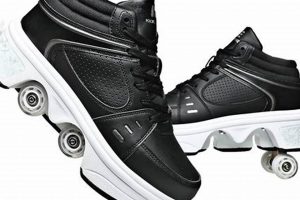
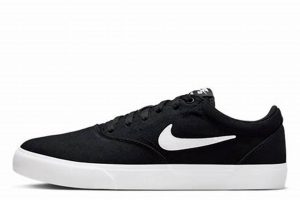
Footwear designed for skateboarding, characterized by a completely black color scheme across all components, including the upper, sole, laces, and any branding elements, offers a specific aesthetic favored by some skateboarders and consumers. This type of shoe provides a visually uniform appearance. As an example, a skateboarding shoe constructed with a black suede upper, black rubber sole, black laces, and a debossed black logo would fit this description.
The popularity of monochromatic dark footwear stems from its versatility and practical benefits. Its understated nature lends itself to various personal styles, minimizing visual distractions. The dark color also offers a degree of practicality, concealing dirt and wear, extending the perceived lifespan of the item. Historically, dark-colored skateboarding shoes gained traction within the skateboarding community due to their association with a minimalist and functional approach to both fashion and skating performance.
This examination will delve into the construction materials common in this kind of shoe, performance features relevant to skateboarding, and notable brands offering this specific colorway within their product lines. Furthermore, the article will consider maintenance strategies to prolong the appearance and functionality, and buying considerations regarding fit, durability, and overall value.
Selection and Maintenance Tips
The following guidelines will aid in selecting and maintaining skateboarding footwear featuring a predominantly black color profile. These recommendations focus on optimizing performance and longevity.
Tip 1: Material Assessment: Prioritize uppers constructed from durable materials such as suede, leather, or reinforced canvas. These materials offer abrasion resistance crucial for skateboarding. For example, suede is known for its ability to withstand repetitive contact with grip tape.
Tip 2: Sole Construction Evaluation: Examine the sole’s vulcanization or cupsole construction. Vulcanized soles provide superior board feel and flexibility, while cupsole construction offers enhanced impact protection. A sole with deep treads improves grip and control.
Tip 3: Stitching Reinforcement Inspection: Scrutinize the stitching around high-stress areas, such as the toe cap and ollie area. Double or triple stitching indicates enhanced durability. Reinforcement in these zones minimizes premature wear.
Tip 4: Lace Protection Consideration: Seek out designs featuring recessed eyelets or reinforced lace areas. These features protect laces from abrasion and breakage during skateboarding maneuvers. Options include lace loops or internal lace systems.
Tip 5: Regular Cleaning Protocol: Implement a routine cleaning schedule to remove dirt and debris. Use a soft brush and mild soap to clean the upper. This prevents dirt from embedding into the material and causing degradation.
Tip 6: Sole Edge Maintenance: Clean the sidewalls of the sole regularly to maintain a clean appearance. A specialized sole cleaner or a simple damp cloth can remove scuff marks and grime. This preserves the shoe’s overall aesthetic.
Tip 7: Strategic Drying Procedures: Air-dry footwear after use, particularly if exposed to moisture. Avoid direct sunlight or high heat, as these can damage the materials and cause discoloration. Properly dried shoes maintain their shape and integrity.
Adherence to these guidelines will extend the usable lifespan of dark-colored skate footwear and optimize its performance characteristics, ensuring a balance of style and functionality.
This concludes the section on selection and maintenance. The article will now proceed to address brand comparisons and aesthetic considerations.
1. Aesthetics
Aesthetics, concerning skateboarding footwear, represents the visual attributes influencing a user’s perception and preference. Its relevance is heightened in “triple black skate shoes” due to the emphasis on a uniform color scheme, impacting the product’s visual appeal and market positioning.
- Minimalist Design
The all-black colorway fosters a minimalist aesthetic, valued for its simplicity and versatility. This design choice eliminates visual complexity, allowing the shape and construction of the shoe to take precedence. An example includes the adoption of this style by skaters favoring an understated look that avoids conspicuous branding or color contrasts. This minimalist approach can enhance the shoe’s perceived sophistication.
- Versatility in Styling
The absence of color variation enhances the adaptability of the shoe to diverse personal styles and clothing choices. The neutral tone allows for seamless integration into various wardrobe ensembles, ranging from casual to more curated looks. This versatility broadens the appeal of “triple black skate shoes” to consumers seeking a multipurpose footwear option. For instance, these shoes can be paired with jeans, chinos, or even tailored trousers without creating a visual conflict.
- Association with Subculture
Historically, darker color palettes in skate footwear have been associated with a non-conformist aesthetic and a rejection of mainstream fashion trends. The adoption of “triple black skate shoes” may reflect a deliberate association with this subcultural identity, signaling a connection to skateboarding’s countercultural roots. This connection can reinforce a brand’s credibility within the skateboarding community.
- Concealment of Wear
While primarily aesthetic, the dark colorway offers the practical benefit of concealing dirt, scuffs, and other signs of wear that are inherent in skateboarding activities. This extends the perceived lifespan of the shoe and maintains a cleaner appearance for a longer duration. This practical aspect aligns with the functional demands of skateboarding, where footwear is subjected to significant physical stress. A shoe that continues to look presentable despite wear is a tangible advantage.
The convergence of minimalist design, styling versatility, subcultural associations, and practical considerations solidifies the critical role of aesthetics in defining the value proposition of “triple black skate shoes.” This comprehensive understanding informs design decisions, marketing strategies, and ultimately, consumer preferences.
2. Durability

Durability is a critical attribute of skateboarding footwear, influencing both performance and longevity. Its significance is amplified in the context of “triple black skate shoes,” where the aesthetic uniformity can mask wear and tear, necessitating a rigorous examination of construction and materials. Durability, therefore, directly correlates with the value proposition of these shoes.
- Material Selection and Abrasion Resistance
The materials used in the upper construction directly dictate the shoe’s ability to withstand the abrasive forces encountered during skateboarding. Suede, leather, and reinforced canvas are commonly employed for their abrasion-resistant properties. For instance, the ollie area of the shoe, subjected to frequent contact with the skateboard’s grip tape, requires robust material capable of resisting wear. The choice of material directly affects the shoe’s lifespan and resistance to damage.
- Sole Construction and Bond Strength
The bond between the sole and the upper is paramount to the shoe’s structural integrity. Vulcanized soles, characterized by their chemical bond, offer superior flexibility and board feel but may exhibit lower abrasion resistance than cupsole constructions. Cupsole designs, where the sole is stitched or glued to the upper, typically offer greater impact protection and durability. The selection of sole construction and the strength of the bond influence the shoe’s ability to withstand the stresses of skateboarding.
- Stitching and Reinforcement Techniques
The quality and placement of stitching significantly impact the overall durability of “triple black skate shoes.” Double or triple stitching in high-stress areas, such as the toe cap and heel, reinforces the shoe’s structure and prevents premature failure. Reinforcements, such as rubber overlays or additional layers of material, can further enhance durability in specific zones. The meticulous application of stitching and reinforcement techniques contributes directly to the shoe’s ability to withstand rigorous use.
- Hardware and Lace Durability
While often overlooked, the durability of laces and eyelets is essential for the shoe’s functionality. Laces constructed from high-tensile strength materials and reinforced eyelets can prevent breakage and ensure a secure fit. Metal eyelets, for instance, are more resistant to wear and tear than plastic alternatives. The selection of durable hardware contributes to the overall lifespan and usability of “triple black skate shoes.”
The interplay between material selection, sole construction, stitching techniques, and hardware durability collectively determines the resistance of “triple black skate shoes” to the demands of skateboarding. Prioritizing these aspects is essential for consumers seeking longevity and performance in their footwear. Furthermore, a durable shoe reduces the environmental impact associated with frequent replacements.
3. Grip

Grip, in the context of skateboarding footwear, denotes the frictional force between the shoe’s sole and the skateboard’s grip tape, facilitating board control and maneuverability. For “triple black skate shoes,” grip assumes paramount importance due to the absence of visually distinguishing features that might compensate for substandard performance. The color has no impact on a shoe’s grip. The sole pattern and material composition directly dictate the shoe’s efficacy in maintaining contact with the skateboard. Inferior grip can lead to decreased board control, increasing the risk of falls and hindering the execution of tricks. Real-world examples of substandard grip include instances where skateboarders experience foot slippage during ollies or other technical maneuvers, resulting in failed attempts and potential injury. A practical understanding of grip mechanics allows consumers to make informed decisions regarding footwear selection, prioritizing shoes with sole designs and materials optimized for skateboarding.
The effectiveness of grip is primarily determined by two factors: the rubber compound used in the sole and the tread pattern. Softer rubber compounds, typically with a durometer rating between 50A and 70A, provide enhanced friction compared to harder compounds. The tread pattern influences the surface area in contact with the grip tape, as well as the ability to channel away debris that can reduce friction. Herringbone or geometric tread patterns are frequently employed in skateboarding shoes to maximize grip. Furthermore, the sole’s flexibility contributes to grip, allowing the shoe to conform to the contours of the skateboard deck and maintain consistent contact. Shoes lacking these design features may compromise grip, irrespective of color profile.
In summary, the connection between grip and “triple black skate shoes” lies in the critical need for these shoes to deliver exceptional performance despite their understated aesthetic. The practical significance of understanding grip mechanics extends to both the consumer, enabling informed purchasing decisions, and the manufacturer, guiding the design and material selection process. The challenge remains in balancing grip with other factors such as durability and board feel. Effective grip is an indispensable component, directly impacting skateboarder safety and skill progression.
4. Comfort
Comfort, as a factor in skateboarding footwear, directly influences performance and wearability. The impact of comfort is amplified in “triple black skate shoes,” where aesthetic simplicity necessitates superior functionality. Discomfort can lead to reduced performance, premature fatigue, and an overall negative skateboarding experience. Therefore, the construction of these shoes must prioritize comfort-enhancing features to ensure optimal user satisfaction.
- Internal Padding and Cushioning
Internal padding, specifically in the collar and tongue, provides cushioning and support, reducing friction and preventing chafing. High-density foam padding absorbs impact and provides a secure fit. The absence of adequate padding can result in blisters and discomfort, especially during prolonged skateboarding sessions. For instance, a shoe lacking sufficient padding around the ankle can cause irritation and restrict movement. The strategic placement and quality of internal padding are critical for enhancing comfort in “triple black skate shoes.” Prioritizing these design aspects helps alleviate common discomforts.
- Insole Design and Arch Support
The insole plays a pivotal role in providing arch support and cushioning the foot against impact. Ortholite or memory foam insoles offer superior comfort and shock absorption compared to standard flat insoles. Proper arch support helps distribute weight evenly across the foot, reducing strain and preventing foot fatigue. Lack of adequate arch support can lead to plantar fasciitis and other foot problems. For instance, a molded insole that conforms to the foot’s natural shape can enhance comfort and stability. “Triple black skate shoes” benefit from advanced insole designs that optimize comfort and support during high-impact activities.
- Breathability and Ventilation
Breathability is essential for maintaining a comfortable internal environment within the shoe. Perforations in the upper material and moisture-wicking linings promote airflow and prevent sweat buildup. Excessive moisture can lead to blisters, odor, and discomfort. Breathable materials like mesh or perforated leather enhance ventilation and keep the foot dry. An example includes a shoe with strategically placed perforations in the toe box and side panels to improve airflow. “Triple black skate shoes” that prioritize breathability help regulate temperature and minimize discomfort during extended use.
- Flexibility and Range of Motion
Flexibility in the sole and upper construction allows for a natural range of motion and prevents restriction during skateboarding maneuvers. A flexible sole enables the foot to bend and flex comfortably, facilitating board feel and control. Stiff or inflexible materials can hinder movement and cause discomfort. A shoe with a vulcanized sole typically offers greater flexibility compared to a cupsole design. “Triple black skate shoes” should strike a balance between support and flexibility to ensure optimal comfort and performance. An articulated design that mimics the foot’s natural movement enhances comfort and responsiveness.
The integration of internal padding, supportive insoles, breathable materials, and flexible construction collectively enhances the comfort of “triple black skate shoes,” contributing to a more enjoyable skateboarding experience. Prioritizing these features ensures that the shoe not only meets aesthetic expectations but also provides the necessary support and cushioning for prolonged use. As the preceding facets are explored, it underscores its importance.
5. Impact Absorption

Impact absorption in skateboarding footwear is a critical factor influencing rider safety and comfort. It is especially important in “triple black skate shoes,” where the monochromatic design may obscure advanced cushioning technologies, requiring a focus on construction and materials to ensure adequate protection.
- Midsole Composition and Density
The midsole, positioned between the upper and outsole, is the primary component responsible for impact absorption. Materials such as EVA (ethylene-vinyl acetate) and polyurethane are commonly employed due to their cushioning properties. Higher density foams offer increased impact resistance but may reduce board feel. An example of this is a skater landing a jump; the midsole absorbs the force, reducing stress on the joints. Choosing the right midsole material is crucial for balancing protection and board feel in “triple black skate shoes”.
- Heel Cushioning Systems
The heel is subject to significant impact during landings. Integrated cushioning systems, such as air pockets or gel inserts, are often incorporated into the heel region to enhance shock absorption. These systems dissipate energy upon impact, reducing the risk of heel bruising and other injuries. A real-world scenario is a skater performing a drop-in; the heel cushioning protects against the impact. Enhanced heel cushioning systems are a beneficial feature in “triple black skate shoes” for improved rider comfort.
- Insole Contribution to Impact Reduction
The insole, while primarily focused on comfort, can also contribute to impact absorption. Insoles constructed from memory foam or gel materials provide additional cushioning and support. Thicker insoles offer greater impact protection but may reduce board feel. For instance, an upgraded insole can improve comfort and absorb shock. Insoles are an important component, contributing in “triple black skate shoes”.
- Outsole Design and Material
The outsole, though primarily responsible for grip and durability, can indirectly influence impact absorption. A thicker outsole provides a greater buffer between the foot and the ground. The material used in the outsole can also affect impact distribution. Rubber compounds with higher elasticity offer better shock absorption. Consider the act of walking normally; the outsole assists in softening ground contact. Outsole design, in conjunction with the midsole, helps improve impact absorption in “triple black skate shoes”.
The integration of these impact absorption elements within “triple black skate shoes” is essential for rider safety and comfort. The selection of appropriate materials and construction techniques directly influences the shoe’s ability to mitigate the forces experienced during skateboarding. The discussion transitions to explore “Board Feel” and its correlation to the shoes.
6. Board Feel
Board feel, in the context of skateboarding footwear, represents the tactile sensitivity transmitted from the skateboard deck to the rider’s feet, facilitating nuanced control and responsiveness. In “triple black skate shoes,” where aesthetic considerations may prioritize a minimalist design, the maintenance of optimal board feel becomes a crucial determinant of performance. A reduction in board feel can diminish the rider’s ability to perceive subtle changes in the board’s position, thereby impacting trick execution and overall control.
- Sole Thickness and Composition
Sole thickness directly influences the proximity of the foot to the skateboard deck. Thinner soles generally enhance board feel, allowing for a more direct connection. The composition of the sole material also plays a significant role, with softer rubber compounds providing greater sensitivity. Conversely, thicker or denser soles can dampen board feel, reducing the rider’s ability to perceive subtle variations in terrain or board angle. The choice of sole thickness and material is thus a critical design consideration in “triple black skate shoes,” balancing board feel with impact protection. For example, a vulcanized sole, typically thinner and more flexible, offers enhanced board feel compared to a cupsole construction.
- Midsole Presence and Material
The presence of a midsole, positioned between the insole and outsole, can impact board feel. While midsoles offer cushioning and impact absorption, they can also reduce sensitivity to the board. The material used in the midsole influences the extent of this reduction, with denser materials providing greater cushioning but diminished board feel. In “triple black skate shoes,” the selection of midsole material should prioritize a balance between impact protection and tactile sensitivity. Eliminating the midsole altogether can maximize board feel but may compromise impact protection during high-impact maneuvers.
- Upper Construction and Flexibility
The construction of the upper can indirectly influence board feel by affecting the overall flexibility of the shoe. A more flexible upper allows the foot to conform to the shape of the board, enhancing sensitivity. Conversely, a stiff or restrictive upper can limit foot movement and reduce board feel. Materials such as suede or canvas, known for their flexibility, are often favored in skateboarding shoes to maximize board feel. In “triple black skate shoes,” the upper construction should prioritize flexibility to ensure optimal tactile feedback. For example, an upper constructed from multiple panels of flexible material can enhance board feel compared to a single, rigid piece of material.
- Insole Thickness and Density
The insole, in direct contact with the foot, can significantly impact board feel. Thinner insoles typically enhance board feel by minimizing the distance between the foot and the board. However, thinner insoles may offer reduced cushioning and support. The density of the insole material also influences board feel, with denser materials providing greater support but diminished sensitivity. In “triple black skate shoes,” the selection of insole thickness and density should prioritize a balance between board feel and comfort. A custom insole designed to conform to the foot’s shape can enhance both comfort and board feel.
The maintenance of optimal board feel in “triple black skate shoes” necessitates a careful consideration of sole thickness, midsole presence, upper construction, and insole characteristics. The selection of materials and construction techniques should prioritize a balance between tactile sensitivity, impact protection, and overall comfort. Furthermore, the rider’s individual preferences and skateboarding style may influence the ideal balance between these factors. The synthesis of these elements is essential for maximizing performance and control.
7. Material Quality
Material quality is a paramount determinant of performance, longevity, and overall value in skateboarding footwear. Its significance is especially pronounced in the context of “triple black skate shoes” due to the monochromatic aesthetic. Surface imperfections or material degradation are more readily apparent, placing a premium on the inherent quality of the components used.
- Upper Material Integrity
The composition of the upper material, whether suede, leather, or canvas, directly influences abrasion resistance and structural integrity. High-grade suede, for example, exhibits superior resistance to tearing and scuffing compared to lower-quality alternatives. The integrity of the upper is critical for withstanding the repetitive contact with grip tape and other abrasive surfaces encountered during skateboarding. Substandard upper materials are prone to premature wear, compromising both the shoe’s aesthetic appeal and its functional performance. A poorly constructed upper can lead to blowouts and reduced support, negating any aesthetic advantages of the “triple black” design.
- Sole Compound Durability
The rubber compound used in the outsole dictates grip, durability, and resistance to wear. High-quality rubber compounds offer enhanced traction and abrasion resistance compared to cheaper alternatives. The durability of the sole is essential for maintaining consistent grip over time, as well as withstanding the constant pressure and friction experienced during skateboarding. Inferior sole compounds are prone to rapid wear, leading to reduced grip and compromised board control. The selection of a durable sole compound is therefore crucial for ensuring the long-term performance and safety of “triple black skate shoes.”
- Stitching and Construction Robustness
The quality of stitching and the overall construction techniques employed significantly influence the shoe’s structural integrity. Reinforced stitching in high-stress areas, such as the toe cap and heel, enhances durability and prevents premature failure. Precisely applied stitching, using high-tensile strength thread, minimizes the risk of seams unraveling or breaking under stress. Poorly executed stitching can lead to structural weaknesses and reduced lifespan. Robust construction methods are essential for ensuring that “triple black skate shoes” can withstand the rigors of skateboarding without compromising their structural integrity or aesthetic appeal.
- Hardware and Lacing System Reliability
The durability and reliability of hardware components, such as eyelets and laces, are integral to the overall performance and longevity of skateboarding shoes. Metal eyelets offer superior resistance to wear and tear compared to plastic alternatives, preventing the laces from fraying or breaking prematurely. High-quality laces, constructed from durable materials, maintain their integrity and prevent stretching or snapping under tension. Unreliable hardware can compromise the fit and functionality of the shoe, leading to discomfort and reduced performance. The use of durable and reliable hardware is therefore essential for ensuring the long-term usability and performance of “triple black skate shoes.”
The correlation between material quality and the performance of “triple black skate shoes” is undeniable. Each component, from the upper material to the hardware, contributes to the shoe’s overall durability, functionality, and aesthetic appeal. Prioritizing high-quality materials and construction techniques is essential for ensuring that these shoes not only meet the visual expectations associated with the “triple black” aesthetic but also deliver the performance and longevity required for skateboarding.
Frequently Asked Questions
The following section addresses common inquiries regarding skateboarding footwear characterized by a completely black color scheme across all components.
Question 1: What defines “triple black” in the context of skateboarding shoes?
The designation “triple black” signifies that the entire shoe, including the upper, sole, laces, stitching, and any branding elements, is rendered in black. There are no contrasting colors present.
Question 2: Are “triple black skate shoes” inherently more durable than other colorways?
The color of the shoe has no bearing on its durability. Durability is determined by the materials used (e.g., suede, leather, reinforced canvas) and the construction techniques employed (e.g., vulcanized or cupsole construction, reinforced stitching).
Question 3: Do “triple black skate shoes” offer any performance advantages?
No, the color has no impact on performance. Performance is influenced by factors such as grip, board feel, impact absorption, and overall comfort, all of which are independent of the shoe’s color.
Question 4: Are “triple black skate shoes” suitable for all skateboarding styles?
Suitability depends on the specific features of the shoe, not the color. The design (low-top or high-top), sole construction (vulcanized or cupsole), and material composition should align with the individual’s skateboarding style and preferences.
Question 5: How should “triple black skate shoes” be cleaned and maintained?
Cleaning should be performed using a soft brush, mild soap, and water. Avoid harsh chemicals or abrasive cleaners. Allow the shoes to air dry away from direct sunlight or heat. Regular cleaning can prolong the shoe’s appearance and lifespan.
Question 6: Are there specific brands known for producing high-quality “triple black skate shoes”?
Several brands offer this colorway across their product lines. Assessing individual models based on construction, materials, and user reviews is more informative than focusing solely on brand reputation. Established skateboarding brands are generally considered to be a safe bet.
In summary, while the “triple black” aesthetic offers a visually uniform appearance, the fundamental performance and durability characteristics of skateboarding shoes remain independent of color. Careful consideration of materials, construction, and features is essential for selecting appropriate footwear.
This concludes the FAQ section. The next section will focus on product examples.
Conclusion
This exploration has examined various facets of skateboarding footwear characterized by a uniformly black color scheme. From materials and construction techniques to aesthetic considerations and performance attributes, several factors contribute to the overall value proposition. Material selection, sole construction, stitching, impact absorption, board feel, and comfort have each been addressed, highlighting their relative importance in the context of skateboarding. Ultimately, the suitability is dependent on a confluence of characteristics that transcend purely aesthetic considerations.
While the monochromatic design offers a distinct visual appeal, the enduring utility rests upon informed selection and diligent maintenance. Continuous innovation in materials and construction methods promises to further refine the performance and durability, ultimately shaping the future trajectory. The ultimate selection is a reflection of the informed consumer’s individual needs and preferences.