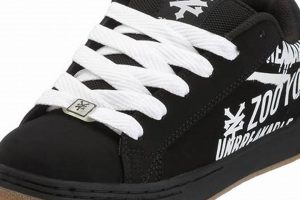
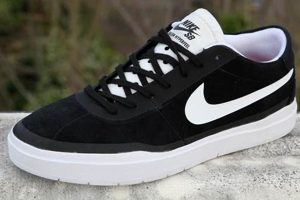
Footwear designed specifically for skateboarding incorporates features that enhance performance and provide protection. These include durable construction, vulcanized rubber soles for grip, and reinforced areas to withstand the stresses of skateboarding. An example is a low-profile shoe with suede or leather uppers, featuring padded collars and tongues for added comfort and support during tricks and maneuvers.
Appropriate footwear is essential for both safety and optimal execution of skateboarding techniques. The grip provided by the soles allows for better board control, while the durable construction protects the feet from impact and abrasion. The evolution of these specialized shoes mirrors the development of skateboarding itself, with manufacturers continually innovating to meet the evolving demands of riders. Originally, skaters simply used canvas tennis shoes, but as the sport matured, so did the requirements for specialized footwear, leading to the designs seen today.
The selection of appropriate gear will be covered, including factors such as sole construction, upper material, and overall design considerations that contribute to performance and longevity. Specific features offering enhanced protection and board feel are of particular interest to many skaters. Furthermore, maintenance techniques will be addressed to maximize the lifespan of the equipment.
Guidance on Selecting Durable Footwear
Selecting the proper footwear for skateboarding involves careful consideration of several key factors to ensure both performance and longevity.
Tip 1: Assess Sole Construction. Vulcanized rubber soles are standard due to their flexibility and grip. Look for soles with a high durometer rating, indicating increased durability against wear and tear on abrasive surfaces.
Tip 2: Evaluate Upper Material. Suede or leather uppers offer a balance of durability and board feel. Reinforced stitching in high-wear areas, such as the toe and ollie patch, extends the shoe’s lifespan.
Tip 3: Prioritize Padding and Support. Padded collars and tongues contribute to comfort and ankle support, reducing the risk of injury during landings and tricks. Inner soles with arch support can enhance stability.
Tip 4: Consider Cupsole vs. Vulcanized Construction. Cupsole construction provides greater impact protection and support, while vulcanized construction offers enhanced board feel and flexibility. Choose the construction type based on individual skating style and preference.
Tip 5: Inspect Lacing Systems. Recessed or reinforced lacing systems prevent laces from tearing during tricks. Alternative lacing patterns can also provide a more secure fit and reduce wear.
Tip 6: Check for Breathability. Perforations or mesh panels in the upper material improve breathability, reducing moisture buildup and improving comfort during extended use.
Tip 7: Select the Appropriate Size. Ensure a snug but comfortable fit, allowing for slight movement but preventing excessive slippage. Trying on footwear with skateboarding socks is recommended to ensure accurate sizing.
Following these guidelines can lead to the selection of footwear that offers optimal performance, protection, and longevity, ultimately enhancing the skateboarding experience.
The next section will delve into maintaining and caring for the selected items to prolong their usability.
1. Durability under stress

The ability of skateboarding footwear to withstand significant and repetitive stress is a paramount consideration in their design and construction. The constant friction, impact, and abrasion inherent in skateboarding necessitate materials and construction techniques that prioritize longevity and resistance to failure.
- Material Selection and Reinforcement
The choice of materials, such as suede, leather, or reinforced synthetics, directly influences the footwear’s capacity to endure stress. These materials are often combined with reinforcing elements, like double stitching, ollie pads, and toe caps, to fortify areas prone to wear. For example, a suede upper with a reinforced toe cap can significantly increase the shoe’s lifespan compared to a canvas upper with minimal reinforcement. The implication is reduced frequency of replacement, leading to cost savings and consistent performance.
- Sole Construction and Bonding
The bond between the upper and the sole is critical for resisting separation under stress. Vulcanized construction, where the sole is chemically bonded to the upper through heat and pressure, is a common technique used for its superior bond strength and flexibility. Cupsole construction, which involves stitching and gluing the upper to a pre-molded sole, offers greater impact protection and structural integrity. The choice between these methods depends on the intended skating style and the level of stress anticipated. Sole delamination compromises the functionality and safety of the footwear.
- Impact Resistance and Cushioning
Skateboarding involves repetitive impacts, particularly during landings. The incorporation of cushioning technologies, such as polyurethane midsoles or gel inserts, helps to absorb these impacts and reduce stress on the foot and joints. High-density foams in the heel area can further mitigate impact forces. Over time, the cushioning can degrade, diminishing its effectiveness and increasing the risk of injury. The selection of durable, high-quality cushioning materials is essential for maintaining performance and protection.
- Abrasion Resistance and Surface Contact
The outsole material directly contacts abrasive surfaces like concrete and asphalt. High-abrasion rubber compounds are used to maximize the outsole’s lifespan. Tread patterns are designed to provide grip and wear evenly, maintaining consistent performance. Softer rubber compounds may offer superior grip initially but will wear down more quickly. Harder compounds offer greater durability but may sacrifice some grip. The optimal balance depends on the skater’s preference and the type of surfaces encountered.
These facets collectively demonstrate the importance of durability under stress for skateboarding footwear. Selection of durable materials, robust construction techniques, impact-resistant cushioning, and abrasion-resistant outsoles directly contribute to the footwear’s ability to withstand the rigors of skateboarding, ensuring long-lasting performance and protection. Failure in any of these areas can compromise the skater’s performance and safety.
2. Grip for control

The attribute of grip is paramount in skateboard footwear, directly influencing the skater’s ability to maintain control and execute maneuvers effectively. The outsole’s composition and design dictate the level of adhesion between the shoe and the skateboard, with consequences for both performance and safety.
- Rubber Compound Formulation
The specific rubber compound used in the outsole is a primary determinant of grip. Softer rubber compounds generally exhibit greater frictional properties, enhancing adherence to the skateboard deck. However, softer compounds tend to wear down more rapidly. Conversely, harder compounds offer increased durability but may sacrifice some grip. The selection of the appropriate rubber compound involves a trade-off between grip and longevity. For example, a skater prioritizing technical street skating might opt for a softer, more pliable rubber, while a park skater may prefer a harder, longer-lasting compound.
- Tread Pattern Design
The tread pattern on the outsole also contributes significantly to grip. Intricate patterns with numerous contact points enhance surface area and improve adhesion. Herringbone, waffle, or hexagonal patterns are common, each offering varying degrees of grip and flexibility. The depth and spacing of the tread elements influence their ability to conform to the deck’s surface irregularities. A deeper tread pattern may provide better grip on rougher surfaces, while a shallower pattern may offer greater board feel and responsiveness. Consider, for instance, shoes designed for vert skating that feature a more pronounced tread pattern to lock in on coping.
- Vulcanization Process
The method by which the outsole is attached to the upper, typically through vulcanization, affects the shoe’s overall flexibility and board feel. Vulcanization involves bonding the rubber to the upper using heat and pressure, creating a durable and flexible connection. A well-vulcanized sole allows the foot to conform closely to the deck, maximizing board feel and control. Poor vulcanization can lead to stiffness and reduced sensitivity. The integrity of the vulcanized bond directly impacts the shoe’s ability to transmit subtle movements and adjustments from the skater’s foot to the board.
- Surface Cleanliness and Maintenance
Even the most advanced rubber compound and tread pattern are ineffective if the outsole is dirty or contaminated. Accumulation of dirt, debris, or oil can significantly reduce grip. Regular cleaning with a brush and mild detergent is essential for maintaining optimal performance. Furthermore, avoiding contact with abrasive or chemically active substances prolongs the outsole’s lifespan and preserves its grip properties. A skater’s awareness of their skating environment and adherence to basic maintenance practices can significantly influence their level of control.
In summary, the relationship between grip and control in skateboard footwear is multifactorial, encompassing the rubber compound, tread pattern, vulcanization process, and maintenance practices. A skater’s awareness of these factors and careful selection of footwear can significantly enhance their ability to control the skateboard and execute maneuvers with precision. The interplay of these variables underscores the importance of grip as a foundational element of skateboarding performance.
3. Impact absorption capability
Impact absorption capability constitutes a critical performance characteristic of skateboard footwear, directly influencing rider safety and comfort. The repetitive nature of skateboarding, involving jumps, landings, and other high-impact maneuvers, places considerable stress on the musculoskeletal system. Footwear incorporating effective impact absorption mitigates these forces, reducing the risk of injuries such as heel bruising, ankle sprains, and stress fractures. The design and materials used in the midsole and insole are pivotal in determining the shoe’s ability to dissipate impact energy. For example, polyurethane or EVA foam midsoles are commonly employed for their cushioning properties, effectively attenuating the forces generated during landings. Furthermore, gel or air-filled inserts can be strategically placed to provide targeted impact protection in high-stress areas like the heel.
The effectiveness of impact absorption is contingent upon several factors, including the thickness and density of the cushioning materials, the shoe’s overall construction, and the skater’s weight and skill level. A thicker midsole generally offers greater impact protection, but may also compromise board feel and control. Denser materials provide better cushioning but can also increase the shoe’s weight. Consequently, manufacturers strive to strike a balance between impact absorption, board feel, and overall performance. Real-world examples include skaters who choose shoes with enhanced heel cushioning to protect against repeated high-impact landings in skateparks, or those selecting thinner, more responsive soles for greater board feel in street skating. Understanding the nuances of impact absorption allows skaters to make informed choices that align with their individual needs and skating styles.
In conclusion, impact absorption capability represents a fundamental aspect of skateboard footwear design, directly impacting rider safety, comfort, and performance. The selection of appropriate cushioning materials and construction techniques plays a crucial role in mitigating the forces generated during skateboarding, reducing the risk of injury and enhancing overall enjoyment. While challenges remain in balancing impact absorption with other performance characteristics, ongoing innovations in materials and design promise to further improve the effectiveness of skateboard footwear in protecting riders from the stresses of the sport.
4. Ankle support offered

Ankle support is a critical design consideration in skateboard footwear due to the inherent risk of ankle injuries in skateboarding. The degree of support offered directly influences the skater’s stability, control, and protection during landings, tricks, and general board handling.
- Collar Height and Padding
The height and padding of the shoe collar significantly impact ankle support. Higher collars provide greater coverage and stability, limiting excessive ankle movement. Padding around the collar enhances comfort and further stabilizes the ankle joint. For example, some high-top skateboard shoes offer substantial collar padding, reducing the likelihood of ankle sprains during forceful landings. This design feature is particularly beneficial for skaters who frequently engage in high-impact activities. The implication is a direct correlation between collar design and the level of ankle protection afforded.
- Internal Heel Counter Structure
The internal heel counter, located within the shoe’s heel, provides structural reinforcement and prevents excessive heel movement. A rigid or semi-rigid heel counter stabilizes the rearfoot, reducing the risk of ankle roll. Skate shoes with robust heel counters offer increased stability and support, particularly during lateral movements. Real-world applications of this feature include skaters who perform technical flip tricks, where precise foot placement and ankle stability are essential. Shoes with well-designed heel counters minimize the risk of ankle injuries during these maneuvers. The absence of a supportive heel counter can significantly increase the risk of ankle instability.
- Lacing System Integration
The lacing system plays a vital role in securing the foot within the shoe and contributing to overall ankle support. Lacing patterns that extend higher up the ankle, such as those found in mid-top or high-top designs, offer greater adjustability and support. Securely tightened laces prevent excessive foot movement within the shoe, enhancing stability. Certain lacing systems also incorporate features like reinforced eyelets or lace locks to maintain tension and prevent loosening during use. A practical example is a skater tightening their laces before attempting a trick, ensuring that their foot is securely locked into the shoe and that adequate ankle support is in place. A poorly designed or improperly tightened lacing system negates the benefits of other ankle support features.
- Outsole Stability Features
The outsole design can indirectly influence ankle support by contributing to overall stability. Wider outsoles provide a broader base of support, reducing the likelihood of ankle roll. Outsole patterns with enhanced traction also improve stability, particularly on uneven surfaces. Some skateboard shoes incorporate specific outsole features, such as medial or lateral support pods, to further enhance stability and prevent ankle inversion or eversion. Consider how a skater benefits from a shoe with a stable outsole when landing on a sloped or uneven surface. The integration of outsole stability features complements other ankle support mechanisms, contributing to a more secure and stable skating experience.
These facets collectively underscore the importance of ankle support in skateboard footwear design. The interplay between collar height, heel counter structure, lacing system, and outsole stability features determines the level of protection and stability offered. Skaters should carefully consider these factors when selecting shoes, prioritizing designs that provide adequate ankle support for their specific skating style and activity level.
5. Board feel sensitivity

Board feel sensitivity, a critical characteristic of skateboarding footwear, directly influences a skater’s control and connection with the skateboard. It refers to the degree to which a skater can perceive the board’s contours, movements, and reactions through the soles of their feet. This sensitivity enables subtle adjustments and precise maneuvers, contributing significantly to performance and safety. For example, a skater performing a kickflip relies on board feel to understand the board’s rotation and time their landing accurately. Shoes with thick, inflexible soles diminish this sensitivity, leading to less precise control. Conversely, footwear with thin, flexible soles enhances board feel, allowing for a more intuitive connection. Therefore, the design and construction of these shoes are intrinsically linked to board feel sensitivity.
The materials and construction methods employed in skateboard footwear significantly affect board feel. Vulcanized soles, characterized by their flexibility and thin profile, generally provide superior board feel compared to cupsole constructions, which offer greater impact protection but can sacrifice sensitivity. The thickness and density of the insole also play a crucial role, with thinner, less dense insoles enhancing board feel. Real-world applications demonstrate this: technical street skaters often favor vulcanized shoes with minimal insole cushioning, prioritizing board feel for executing intricate tricks. Park skaters, on the other hand, might opt for cupsoles with thicker insoles to absorb impact, even if it means sacrificing some board feel. This indicates a trade-off between board feel sensitivity and impact protection, with skaters choosing footwear that aligns with their skating style and terrain.
In conclusion, board feel sensitivity is an indispensable attribute of skateboard footwear, directly influencing a skater’s ability to control the board and execute maneuvers effectively. While the pursuit of enhanced board feel may necessitate compromises in impact protection, understanding the interplay between materials, construction, and individual skating styles enables informed footwear selection. Challenges remain in optimizing both board feel and impact absorption, but ongoing innovations in skateboard shoe technology continue to refine this balance. The ability to discern and appreciate board feel is a crucial element in the overall skateboarding experience, linking skater and board in a synergistic relationship.
Frequently Asked Questions
The following questions address common inquiries and concerns regarding specialized footwear for skateboarding, providing informative and factual responses.
Question 1: What distinguishes skate board shoes from ordinary athletic shoes?
Skate board shoes feature specific design elements tailored for skateboarding, including durable construction materials, reinforced stitching, vulcanized rubber soles for enhanced grip, and often, additional padding for impact absorption. Ordinary athletic shoes typically lack these skateboarding-specific features.
Question 2: How does sole construction affect skateboarding performance?
Sole construction is crucial. Vulcanized soles provide superior board feel and flexibility, enabling precise movements. Cupsole construction offers greater impact protection and stability, suitable for high-impact activities. Sole selection depends on individual skating style and priorities.
Question 3: What materials are most durable for skate board shoes?
Suede and leather are commonly used for uppers due to their abrasion resistance. Reinforced stitching in high-wear areas, such as the toe and ollie patch, extends lifespan. The outsole should consist of a high-abrasion rubber compound.
Question 4: How important is ankle support in skate board shoes?
Ankle support is significant for preventing injuries. Higher collars, padded linings, and secure lacing systems enhance stability and reduce the risk of ankle sprains, particularly during landings and tricks.
Question 5: What is the significance of board feel in skate board shoes?
Board feel refers to the ability to sense the board’s contours and movements through the soles. It is vital for control and executing precise maneuvers. Thin, flexible soles, especially those with vulcanized construction, maximize board feel.
Question 6: How should skate board shoes be maintained to prolong their lifespan?
Regular cleaning with a brush and mild detergent removes dirt and debris, preserving grip. Laces should be inspected and replaced as needed. Avoiding contact with abrasive or chemically active substances prevents premature wear.
These questions and answers provide a foundational understanding of footwear considerations. Prioritizing durability, grip, support, and board feel is key to enhancing the overall skating experience.
The next article section addresses specific shoe models available in the market.
Conclusion
This exploration has detailed the multifaceted aspects of skateboard shoes, underscoring their specialized design and construction. The discussion encompassed durability, grip, impact absorption, ankle support, and board feel all critical attributes influencing performance and safety. The information presented facilitates informed decision-making when selecting appropriate gear. Further, it emphasizes the understanding and evaluation of the features that meet the demands and circumstances of individual skating. These factors ensure the functionality and longevity of the footwear.
The continued innovation in skate board shoes necessitates ongoing evaluation of evolving materials and design. Prioritizing quality and appropriate selection ensures skaters are well-equipped for the demands of the sport. Awareness of the aspects, as described, allows individuals to proceed with a better understanding.
![Best Skate Shoes Globe: [Brand] & Styles! | Learn to Surf & Skate: A Beginner's Step-by-Step Guide](https://universitysurfandskate.com/wp-content/uploads/2026/04/th-208-300x200.jpg "Best Skate Shoes Globe: [Brand] & Styles! Learn to Surf & Skate: A Beginner's Step-by-Step Guide")
![The Ultimate Skate Authentic Shoe Guide - [Brand Name] Styles! | Learn to Surf & Skate: A Beginner's Step-by-Step Guide](https://universitysurfandskate.com/wp-content/uploads/2026/04/th-195-300x200.jpg "The Ultimate Skate Authentic Shoe Guide - [Brand Name] Styles! Learn to Surf & Skate: A Beginner's Step-by-Step Guide")