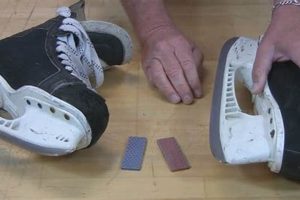
The term refers to ice skates manufactured several decades ago, typically embodying design aesthetics and construction techniques prevalent in earlier eras. These items may have been used for recreational skating, figure skating, or hockey during their time. An example would be a pair of leather-booted skates with riveted blades dating back to the early 20th century.
These artifacts provide a tangible link to the past, offering insights into the evolution of winter sports and manufacturing processes. They serve as collectables, representing periods of technological advancement and stylistic trends. Furthermore, they offer a unique perspective on the social history of leisure activities. Their study allows a greater understanding of how individuals engaged in recreation during different historical epochs.
The following discussion will delve into various aspects, including identification, preservation, and the market value of these historical sporting goods. Factors influencing their condition and authenticity will also be examined, providing potential collectors and enthusiasts with essential information.
Tips for Assessing Historical Skating Equipment
Proper evaluation requires careful observation and a detailed understanding of manufacturing techniques and historical context. These guidelines will assist in evaluating examples of historical skating equipment and determining their authenticity and condition.
Tip 1: Examine the Blade Construction. Riveted blades are characteristic of older skates, while welded blades generally indicate more recent manufacture. The type of steel and the blade’s profile should align with the skate’s supposed era.
Tip 2: Evaluate the Boot Material. Leather was the predominant material for skate boots until synthetic materials gained prominence. The quality and tanning of the leather can provide clues about the skate’s age and intended use.
Tip 3: Inspect the Fastening Mechanisms. Early skates often employed buckle-and-strap systems. The design and materials of these fastenings should be consistent with the expected period.
Tip 4: Assess the Presence of Markings and Stamps. Manufacturer’s marks, patent numbers, or size stamps can aid in identifying the origin and age of the equipment. Research these markings to verify their validity.
Tip 5: Check for Signs of Wear and Damage. Wear patterns, such as creases in the leather or rust on the blades, can offer insights into the skate’s history. However, excessive damage may detract from its value.
Tip 6: Consider the Overall Design and Style. The skate’s silhouette, the shape of the boot, and the style of the blade should be representative of the period in which it was purportedly made. Consult historical catalogs or photographs for reference.
Tip 7: Investigate Provenance. Information regarding the skate’s history, such as previous ownership or use in a specific event, can significantly enhance its desirability and value. Documentation, such as old photographs or receipts, can support the provenance.
Thorough evaluation of these elements will contribute to a more accurate assessment of the age, authenticity, and historical significance of the equipment. By carefully considering these factors, enthusiasts can make informed decisions about acquisition and preservation.
With these tips in mind, the following sections will elaborate on the practical aspects of collecting and maintaining these artifacts of sporting history.
1. Rarity

The scarcity of a particular model directly influences its desirability and, consequently, its market value. Several factors contribute to low availability. Limited production runs during the original manufacturing period, coupled with attrition due to wear, damage, or disposal over time, decreases the number of surviving examples. Skates used for specialized purposes, such as speed skating or specific figure skating disciplines, often had restricted production and are now less frequently encountered. The presence of unique design features or patents further contributes to the item’s distinctiveness. For example, a skate featuring an early iteration of adjustable blade technology or a unique method of securing the boot would be considered more exceptional. The survival of skates associated with significant historical events or notable individuals elevates their prominence.
The ability to accurately assess scarcity depends on a thorough understanding of production methods and historical distribution patterns. Catalog research, historical society archives, and specialized collector communities serve as valuable resources for determining the frequency of particular skate models. In certain circumstances, seemingly identical skates can exhibit subtle variations in manufacturing detail that signify different production batches. These variations, although minor, can distinguish a relatively common skate from a rarer, more valuable version. The identification of manufacturer’s markings, patent numbers, and specific design implementations contributes to verifying the skate’s production period and potential market demand.
Ultimately, recognizing the relationship between low availability and increased valuation is essential for both collectors and historical researchers. The pursuit of scarce models can present challenges, including higher acquisition costs and the potential for encountering fakes. Nonetheless, the understanding gained from studying exceptional pieces of historical sporting equipment illuminates the evolution of design and manufacturing within the context of cultural significance.
2. Condition

The state of preservation significantly impacts the value and historical integrity. Deterioration, resulting from environmental factors and usage, diminishes aesthetic appeal and structural soundness. Rust accumulation on blades compromises performance and authenticity. Leather degradation, characterized by cracking, dryness, or mildew, weakens the boot’s integrity. Missing components, such as straps or buckles, detract from the completeness and functional representation of its original form. Consider a pair of 1920s figure skates; if stored improperly, moisture could induce corrosion on the blades, rendering them unsuitable for display or potential restoration. Another example is a pair of pre-war hockey skates; frequent use without proper drying could lead to leather rot, undermining the boot’s support and historical accuracy. These effects are interconnected; poor storage leads to degradation, which then reduces value and hinders preservation efforts.
Assessing condition requires careful examination. Blades should be inspected for rust, pitting, and edge damage. Leather boots should be evaluated for flexibility, cracks, and signs of mold. Stitching should be examined for breaks or unraveling. Hardware, including buckles and rivets, should be checked for corrosion or breakage. Any non-original modifications or repairs should be noted, as these can impact authenticity. Professional restoration can mitigate certain forms of damage, but irreversible degradation, such as severe rust or extensive leather rot, permanently reduces value. Maintenance strategies, including proper cleaning, drying, and storage, are essential for slowing the degradation process. Leather conditioning prevents drying and cracking, while rust inhibitors protect the blades from corrosion. Storage in a climate-controlled environment minimizes exposure to moisture and temperature fluctuations.
In summary, condition is a critical factor when assessing. Its impact extends beyond mere aesthetics, influencing historical interpretation and market value. Understanding the degradation processes and implementing preventative measures is vital for safeguarding these tangible links to sporting history. Preserving the condition of these items ensures their continued availability for study, display, and the appreciation of future generations.
3. Authenticity
Verification of the genuine origin and historical accuracy of these objects is crucial for collectors, historians, and enthusiasts. The presence of verifiable characteristics validates the item’s significance and market value. Counterfeit or misrepresented skates diminish historical interpretation and collector confidence.
- Manufacturer’s Markings
Genuine markings from known manufacturers, such as CCM, Starr, or Union Hardware, provide direct evidence of origin. Identifying the specific font, style, and placement of these marks, and cross-referencing with historical catalogs, confirms authenticity. Absence of a known mark, or inconsistencies in its appearance, raise concerns about the item’s veracity.
- Patent Numbers and Design Features
Skates with unique design elements protected by patents can be traced through historical records. Patent numbers stamped on the blade or boot correspond to specific innovations registered at the time of manufacture. Matching these numbers with patent documents validates the originality and time period of the item. Mismatched or absent patent information casts doubt on authenticity.
- Material Consistency
Materials employed in skate construction varied across time periods. Early skates used specific types of steel for blades and tanning processes for leather boots. Examination of these materials through microscopic analysis or comparison with known samples can reveal inconsistencies. Use of modern materials in purportedly historical skates indicates a reproduction.
- Historical Provenance
Documentation tracing the ownership and history of a specific pair enhances authenticity. This includes receipts, photographs, or affidavits from previous owners. Skates with a verifiable connection to a significant historical event or person have increased credibility. Lack of provenance diminishes the ability to confirm authenticity.
These elements intertwine to establish legitimacy. Without reliable confirmation, the historical value is compromised. Careful evaluation of these aspects protects collectors and maintains the integrity of historical sporting artifacts. Authentication practices ensure that these objects serve as accurate representations of their time, enriching the understanding of winter sports history.
4. Material
The composition of vintage ice skates is a key determinant of their age, performance characteristics, and preservation requirements. The materials used reflect the technological capabilities and manufacturing practices of the period in which they were produced.
- Blade Steel Composition
Early blades often utilized carbon steel, known for its hardness and ability to hold an edge, but susceptible to corrosion. Later skates incorporated alloy steels, providing enhanced resistance to rust and improved durability. The type of steel used can indicate the age and intended purpose, with higher-quality steel generally found in skates designed for professional or competitive use. An examination of the steel’s microstructure can further reveal details regarding heat treatment and manufacturing processes.
- Boot Leather Characteristics
Leather was the primary material for skate boots, with variations in tanning processes and leather grades influencing the boot’s flexibility, water resistance, and longevity. Vegetable-tanned leather, common in earlier skates, offered rigidity and durability, while chrome-tanned leather, introduced later, provided increased pliability. The presence of specific markings, such as manufacturer stamps or size indications, can aid in identifying the source and quality of the leather used.
- Fastening Hardware Components
Buckles, straps, and rivets were essential components for securing the boot to the foot and blade. Early skates employed brass or iron hardware, prone to corrosion. Later designs incorporated steel or nickel-plated components, offering improved resistance to environmental degradation. The design and materials used in these fastenings reflect the technological advancements of the time and provide clues to the skate’s production period.
- Blade Mounting Methods
The manner in which the blade was attached to the boot varied, reflecting evolving manufacturing techniques. Riveting was a common method in earlier skates, providing a secure but relatively inflexible connection. Later skates utilized more sophisticated mounting systems, incorporating screws or welding, offering greater adjustability and potentially enhanced performance. These mounting techniques reflect the precision engineering of the period and contribute to the overall functionality.
The interrelation of these components dictates performance and value. Careful analysis of these materials enables a deeper understanding of manufacturing and innovation, and allows a more thorough assessment of their historical importance.
5. Era
The historical period during which ice skates were manufactured exerts a profound influence on their design, materials, and intended use. The “Era” serves as a primary determinant of a skate’s characteristics, reflecting the prevailing technological capabilities, material availability, and social context of the time. For example, skates produced during the late 19th century, the Victorian Era, often featured ornate detailing, riveted blade construction, and leather boots made from less refined tanning processes. This reflects the manufacturing capabilities and aesthetic preferences of that period. A direct consequence of this period’s technology is that these skates are heavier and less efficient compared to later models.
In contrast, skates from the mid-20th century, specifically the 1950s and 1960s, showcase advancements in material science and production techniques. The utilization of synthetic materials, improved steel alloys, and more streamlined designs reflects the post-war industrial boom. These skates often exhibit a greater emphasis on performance and user comfort, with features such as padded boots and adjustable blades. The impact of the “Era” is also evident in the evolution of ice skate designs tailored to specific disciplines, such as figure skating or hockey. As these sports became increasingly specialized, so too did the skates used by their practitioners.
Understanding the “Era” is essential for collectors and historians as it provides a framework for interpreting the significance of these objects. Correctly identifying the manufacturing period allows for accurate authentication, assessment of value, and a deeper appreciation of the cultural and technological forces that shaped the evolution of winter sports equipment. A failure to consider the “Era” can lead to misinterpretations and an inaccurate assessment of its historical relevance. The subsequent sections will delve into the effect on function.
6. Function
The intended purpose dictated the design and construction of the equipment. Recreational, figure, and hockey skates exhibit distinct characteristics tailored to specific activities. Recreational skates prioritized comfort and stability for general use. Figure skates emphasized blade curvature and boot support for performing intricate maneuvers. Hockey skates focused on protection and maneuverability for competitive play.
A late 19th-century figure skate, for example, had a longer, more curved blade than a contemporary recreational skate, facilitating complex skating patterns. The boot would have provided rigid ankle support for executing jumps and spins. Conversely, a turn-of-the-century hockey skate featured a shorter, flatter blade for rapid acceleration and tight turns, along with reinforced leather boots to withstand impacts. Examining vintage skates from different eras and disciplines reveals a direct correlation between the intended use and the design features implemented by manufacturers.
An understanding of the original purpose informs restoration and preservation efforts. A restored pair of figure skates should retain the blade curvature and boot stiffness necessary for their intended function. A hockey skate, similarly, needs to preserve its blade profile and boot reinforcement to maintain its historical integrity. Recognizing the relationship between intended use and design features enhances appreciation for the ingenuity of past manufacturers and provides a tangible link to the evolution of winter sports.
Frequently Asked Questions Regarding Vintage Ice Skates
This section addresses common inquiries concerning the identification, valuation, and preservation of historical ice skating equipment.
Question 1: What are the key indicators of age for a pair of “vintage ice skates”?
The construction materials (leather vs. synthetics), blade attachment methods (riveted vs. welded), and presence of manufacturer’s markings are primary indicators. Older skates typically exhibit leather boots, riveted blades, and manufacturer’s marks consistent with historical records. Consult historical catalogs and patent databases for verification.
Question 2: How does condition influence the value?
Condition is paramount. Skates in excellent condition, exhibiting minimal rust, intact leather, and original components, command significantly higher prices than those with extensive damage or missing parts. Professional restoration can enhance value, but irreversible damage diminishes desirability.
Question 3: Are reproductions common, and how can they be identified?
Reproductions exist and often lack the quality materials and construction techniques of originals. Examine manufacturer’s markings, material composition, and overall design for inconsistencies. Compare with known examples and consult expert opinions when uncertainty arises.
Question 4: What is the best method for preserving leather skate boots?
Leather requires regular conditioning to prevent drying and cracking. Use a specialized leather conditioner sparingly. Store in a cool, dry environment away from direct sunlight to minimize degradation. Avoid excessive humidity, which promotes mold growth.
Question 5: How should rust be removed from blades without causing damage?
Light surface rust can be removed with fine steel wool and a rust inhibitor. Avoid abrasive cleaners, which can scratch or damage the blade surface. For severe rust, consult a professional restorer. Ensure blades are thoroughly dried after use to prevent corrosion.
Question 6: What resources are available for researching and identifying vintage ice skates?
Historical catalogs, manufacturer’s archives, online collector communities, and specialized books offer valuable information. Consult with experienced collectors or appraisers for expert opinions and verification of authenticity.
These FAQs provide a foundation for understanding key considerations related to vintage ice skating equipment. Diligence in research and careful examination are essential for accurate assessment and preservation.
The following article section provides information on notable manufacturers of skating equipment.
Conclusion
The preceding discussion has illuminated key aspects concerning, demonstrating its relevance as historical artifacts. Authentication, condition assessment, material analysis, and era determination all contribute to a comprehensive understanding of their significance. Recognizing that these historical artifacts represent more than mere sporting equipment establishes their cultural importance.
Continued exploration and preservation are crucial for ensuring future generations appreciate the craftsmanship and cultural context of . Diligent study and responsible stewardship safeguard the legacy of winter sports and the tangible reminders of technological innovation.