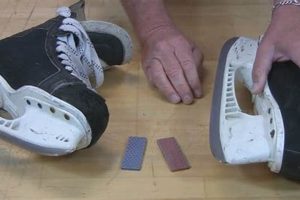
The query concerns the permissibility of transporting bladed footwear designed for gliding on ice aboard commercial aircraft. These items, typically consisting of a boot attached to a metal blade, are frequently used in recreational and competitive ice sports.
Understanding regulations pertaining to transporting sporting equipment is crucial for travelers. Adherence to established guidelines prevents delays at security checkpoints and ensures the safety of both passengers and flight crew. The transportation of potentially hazardous items, even those intended for recreational use, is subject to security protocols.
This article will address whether these items are permitted in carry-on baggage, checked baggage, or both, examining applicable Transportation Security Administration (TSA) guidelines and airline policies.
Guidance Regarding Transporting Ice Skates on Aircraft
The following recommendations outline best practices when transporting bladed ice footwear on commercial airlines, ensuring compliance with security regulations and minimizing potential travel disruptions.
Tip 1: Check TSA Guidelines Directly: Consult the Transportation Security Administration (TSA) website for the most current regulations regarding sporting equipment. Policies are subject to change, and verification prior to travel is essential.
Tip 2: Utilize Checked Baggage: While TSA guidelines generally permit these items in both carry-on and checked baggage, placing them in checked baggage is the recommended approach. This minimizes potential scrutiny at security checkpoints and reduces the risk of carry-on items exceeding size or weight restrictions.
Tip 3: Protect the Blades: Employ blade guards or wraps to shield the sharp edges. This measure safeguards baggage handlers and prevents damage to other items in the suitcase. Consider securing the guards with tape to prevent accidental dislodgement.
Tip 4: Declare at Security (If Necessary): Should the item be transported in carry-on baggage, declare its presence to security personnel during screening. This proactive approach can expedite the inspection process.
Tip 5: Pack Securely: Enclose the item in a protective case or wrap it securely within clothing in the suitcase. This prevents movement during transit and minimizes the risk of damage to the skates or other belongings.
Tip 6: Consider Airline-Specific Rules: While TSA guidelines provide a baseline, individual airlines may have more restrictive policies regarding size, weight, or specific items. Review the airline’s baggage policies prior to departure.
Adherence to these guidelines facilitates a smoother travel experience and reduces the potential for delays or complications related to security regulations. Prior planning and careful packing are crucial.
The next section will address related considerations and potential exceptions to these general guidelines.
1. TSA Guidelines

Transportation Security Administration (TSA) guidelines serve as the primary regulatory framework governing items permitted on commercial aircraft within the United States. These guidelines directly impact the ability to transport sporting equipment, including bladed ice footwear, influencing where and how they can be carried.
- Permitted Status
The TSA generally permits ice skates in both carry-on and checked baggage. However, this permission is contingent on adherence to specific security protocols. The ultimate decision regarding whether an item is allowed through security rests with the TSA officer.
- Discretionary Authority
TSA officers possess the authority to prohibit any item deemed potentially hazardous, even if that item is technically permitted under standard guidelines. Factors such as the item’s condition, how it is packaged, and the officer’s judgment may influence the outcome.
- Checked Baggage Recommendation
While carry-on transport is often allowed, TSA recommends placing ice skates in checked baggage. This reduces the likelihood of delays or complications during the security screening process. Packing them in checked baggage can streamline the security process.
- Up-to-Date Information
TSA policies are subject to change. Travelers are advised to consult the official TSA website or mobile app for the most current regulations before traveling with sporting equipment. Relying on outdated information can lead to unnecessary difficulties.
In summary, while TSA guidelines typically allow for bladed ice footwear, several factors can affect whether or not they are permitted through security. Understanding these guidelines and exercising caution in packing and presentation are crucial for a seamless travel experience.
2. Checked Baggage Recommended

The recommendation to transport ice skates as checked baggage directly addresses potential complications associated with carrying them on board an aircraft. While regulations often permit the transport of these items in carry-on luggage, placing them in checked baggage mitigates the risk of heightened scrutiny at security checkpoints. This stems from the inherent nature of ice skates: their bladed design may trigger concerns regarding their potential use as a weapon, leading to more thorough inspections and potential delays. Choosing to check the skates bypasses this potential issue, streamlining the passenger’s progress through security.
The practical significance of adhering to this recommendation is evident in real-life scenarios. A figure skater traveling to a competition, for example, may encounter significant delays and questioning if attempting to carry skates as carry-on items, especially if security personnel are unfamiliar with the specific regulations. By checking the skates, the skater avoids this potential disruption, ensuring timely arrival at the gate. Furthermore, the secure environment of checked baggage can better protect the skates from damage during transit, especially when packaged appropriately with blade guards.
In conclusion, the suggestion to utilize checked baggage for ice skates is not merely a convenience but a proactive measure to minimize potential security-related delays and ensure the safe transport of these specialized items. While permitted in carry-on under certain conditions, opting for checked baggage offers a more predictable and efficient travel experience. This ultimately underscores the importance of understanding and adhering to recommended packing guidelines for sporting equipment on commercial flights.
3. Blade Protection

Blade protection is a critical consideration when transporting ice skates on aircraft. The presence of exposed, sharpened blades presents potential risks during handling and transport, necessitating measures to mitigate these risks and ensure compliance with safety regulations. These precautions directly impact the feasibility and method of transporting skates, influencing whether they are suitable for carry-on or checked baggage.
- Injury Prevention
The primary function of blade protection is to prevent accidental injuries to baggage handlers, security personnel, and passengers. Exposed blades pose a laceration hazard. Guards constructed from materials like hard plastic or durable fabric effectively cover the sharp edges, minimizing the risk of cuts or punctures. Without adequate blade protection, transporting skates presents an unacceptable safety risk, potentially leading to refusal of transport.
- Damage Mitigation
Blade guards also prevent damage to the skates themselves and to other items within the baggage. Without protection, the blades can be easily nicked, dulled, or bent, compromising their performance. Furthermore, unprotected blades can damage clothing, luggage linings, or other fragile items within the suitcase. Proper guards help maintain the integrity of the skates and their contents.
- Security Compliance
While TSA guidelines may permit skates in carry-on baggage, the presence of unprotected blades can trigger heightened security scrutiny. Security personnel may be concerned about the potential use of the blades as weapons. Blade guards demonstrate a commitment to safety and reduce the likelihood of questions or delays at security checkpoints. Adequate protection projects responsible handling of potentially hazardous sporting equipment.
- Airline Regulations
Individual airlines may have specific requirements regarding the packaging of sporting equipment, including skates. Some airlines may mandate blade protection as a condition of transport, regardless of TSA guidelines. Failure to comply with these regulations can result in the refusal of transport or additional baggage handling fees. Consulting the airline’s policy prior to travel is essential.
Effective blade protection is not merely a suggestion but a practical necessity when transporting skates. By minimizing the risk of injury and damage, and by demonstrating compliance with security and airline regulations, adequate protection directly facilitates the ability to bring skates on an aircraft, whether as carry-on or checked baggage. The absence of appropriate safeguards can lead to complications, delays, or outright denial of transport.
4. Airline Restrictions
Individual airline policies governing baggage represent a critical factor in determining the feasibility of transporting ice skates on aircraft. While Transportation Security Administration (TSA) guidelines provide a baseline, specific airlines retain the authority to implement more restrictive regulations regarding the size, weight, and acceptable contents of baggage, thereby directly influencing whether or not ice skates can be accommodated on a particular flight.
- Size and Weight Limitations
Airlines impose limitations on the dimensions and weight of both carry-on and checked baggage. Ice skates, especially when packaged with protective gear, may exceed these limitations, resulting in additional fees or the requirement to ship the items separately as cargo. A skater traveling with oversized skates might find that carry-on transport is not an option, necessitating the payment of excess baggage charges for checked transport, if permitted at all.
- Sporting Equipment Policies
Many airlines have specific policies pertaining to sporting equipment, including ice skates. These policies may dictate how skates must be packaged, the liability coverage for damage during transit, and any associated fees. An airline’s policy might require skates to be encased in a hard-shell container to be accepted as checked baggage, regardless of TSA allowances, impacting the traveler’s packing preparations.
- International Travel Considerations
For international flights, airline restrictions can be further complicated by variations in regulations between different countries and carriers. What is permitted on a domestic flight may be prohibited on an international one, requiring travelers to research and comply with the policies of all airlines involved in their itinerary. A connecting flight on a foreign airline may impose stricter rules on skate transport, potentially requiring the skater to repack or even abandon their equipment if unprepared.
- Liability Waivers and Declared Value
Airlines often limit their liability for damage or loss of sporting equipment. Travelers may be required to sign a waiver acknowledging this limited liability or to declare a higher value for the skates and pay an additional fee for increased coverage. A competitive skater transporting valuable, custom-made skates should consider declaring their value and paying the associated fee to ensure adequate compensation in case of loss or damage, especially if the airline’s standard liability coverage is insufficient.
These facets underscore the imperative for travelers to consult directly with the specific airline before attempting to transport ice skates. TSA guidelines provide a general framework, but adherence to individual airline policies is paramount to avoid complications, delays, and potential financial burdens. Proactive verification of these restrictions is a crucial step in ensuring a smooth and hassle-free travel experience when carrying sporting equipment.
5. Carry-on Scrutiny

The level of scrutiny applied to carry-on baggage significantly affects the practicality of transporting ice skates on aircraft. While official regulations may permit these items in the cabin, the potential for heightened inspection necessitates careful consideration of packing methods and traveler preparedness.
- Perceived Threat Potential
The inherent design of ice skates, incorporating sharpened metal blades, can trigger increased security concerns due to the potential for use as a weapon. This perception leads to more thorough examinations of baggage containing these items, potentially resulting in delays or the confiscation of the skates if deemed unsafe or non-compliant with regulations. A traveler attempting to carry skates with inadequately protected blades may face extensive questioning and potential denial of boarding with the items.
- Discretion of Security Personnel
Transportation Security Administration (TSA) officers retain the discretionary authority to prohibit any item deemed potentially hazardous, irrespective of general guidelines. This subjectivity means that even if skates technically meet carry-on criteria, a security officer’s judgment can override this permission. The officer may focus on blade sharpness, handle design, or other features to reach the conclusion that the skates pose too great a risk in the passenger cabin.
- Packaging Requirements and Presentation
The manner in which ice skates are packaged and presented to security personnel influences the level of scrutiny they receive. Skates that are securely encased in protective guards or cases, and declared openly to security, are less likely to raise concerns than those that are loosely packed or concealed. A traveler who proactively informs security about the skates and demonstrates adherence to safety protocols may experience a smoother screening process.
- Impact on Travel Time
Heightened carry-on scrutiny inevitably increases the time required to pass through security checkpoints. Additional inspections, questioning, and potential bag searches contribute to delays, which can be particularly problematic for travelers with tight connections or time-sensitive itineraries. The potential for these delays is a significant disadvantage to transporting ice skates as carry-on items, often outweighing the convenience of keeping them readily accessible.
The likelihood of increased scrutiny significantly affects the practicality of transporting ice skates in carry-on baggage. While not strictly prohibited, the potential for delays, questioning, and discretionary prohibitions makes checked baggage a more reliable and less stressful option for most travelers. Therefore, a comprehensive understanding of these factors is crucial for making informed decisions about how to transport these items safely and efficiently.
6. Secure Packaging
Secure packaging is paramount when considering the transport of ice skates on commercial aircraft. The manner in which these items are prepared for transit directly influences their acceptability by security personnel and airlines, thereby dictating whether they can be transported effectively.
- Blade Protection and Injury Prevention
Adequate blade protection is fundamental for preventing injuries to baggage handlers, security personnel, and other passengers. Covering the sharp blades with durable guards made of hard plastic or reinforced fabric minimizes the risk of accidental cuts or punctures. Failure to adequately protect the blades can lead to refusal of transport. For example, loose skates placed directly into a suitcase without blade covers pose a significant safety hazard and would likely be rejected during security screening.
- Damage Mitigation and Equipment Preservation
Secure packaging mitigates the risk of damage to the skates themselves and to other items in the baggage. Unprotected blades can be easily nicked, dulled, or bent during transit, compromising their performance. Furthermore, they can damage clothing or other fragile items within the suitcase. Encasing the skates in a protective case or wrapping them securely prevents movement and abrasion. Consider a scenario where custom-fitted skates, without proper padding, are damaged by the shifting contents of a suitcase, rendering them unusable for a competition.
- Compliance with Airline and TSA Regulations
Properly securing ice skates demonstrates a commitment to safety and compliance with Transportation Security Administration (TSA) guidelines and individual airline regulations. Secure packaging reduces the likelihood of questions or delays at security checkpoints. Airlines may have specific requirements regarding the packaging of sporting equipment, and compliance is essential to avoid refusal of transport or additional baggage handling fees. An example is an airline mandating that all sporting blades be encased in a hard-shell container, regardless of TSA allowances.
- Minimizing Liability and Loss Potential
Secure packaging minimizes the potential for damage or loss, reducing the airline’s liability and protecting the traveler’s investment. Properly packaged skates are less likely to be mishandled or damaged during transit. For valuable skates, declaring their value and paying for additional insurance coverage is prudent. In a situation where poorly packaged skates are lost or damaged, the airline’s liability may be limited, resulting in financial loss for the traveler.
In summary, secure packaging is an indispensable element in the process of transporting ice skates on commercial aircraft. It addresses safety concerns, prevents damage, ensures regulatory compliance, and mitigates potential financial losses. The effectiveness of these measures directly influences the feasibility of bringing skates on board, emphasizing the need for careful preparation and adherence to established guidelines.
Frequently Asked Questions
This section addresses common inquiries regarding the carriage of bladed ice footwear on commercial flights. It aims to provide clarity on regulations and best practices for ensuring a smooth travel experience.
Question 1: Are ice skates permitted in carry-on baggage?
Answer: Yes, the Transportation Security Administration (TSA) generally permits ice skates in carry-on baggage. However, security personnel retain discretionary authority to prohibit any item deemed potentially hazardous.
Question 2: Is it preferable to pack ice skates in checked baggage?
Answer: Yes, transporting ice skates in checked baggage is generally recommended. This minimizes potential scrutiny at security checkpoints and reduces the risk of delays.
Question 3: What precautions should be taken to protect the blades?
Answer: Employ blade guards or wraps made of durable materials to shield the sharp edges. This safeguards baggage handlers and prevents damage to other items in the luggage.
Question 4: Do airlines have specific regulations regarding ice skates?
Answer: Yes, individual airlines may have specific policies regarding size, weight, and acceptable contents of baggage, including sporting equipment. Consult the airline’s baggage policies prior to departure.
Question 5: What happens if a TSA officer deems ice skates unsafe for carry-on?
Answer: The officer may require the skates to be placed in checked baggage or prohibit them from being transported on the aircraft. Adherence to the officer’s decision is mandatory.
Question 6: Is it necessary to declare ice skates at security checkpoints?
Answer: If transporting ice skates in carry-on baggage, declaring their presence to security personnel during screening can expedite the inspection process.
In summary, while ice skates are typically permitted on aircraft, understanding and adhering to both TSA guidelines and airline policies is crucial for a hassle-free travel experience. Preparation and careful packing are essential.
The subsequent section will provide a concluding overview, reinforcing key considerations for travelers transporting bladed ice footwear.
Concluding Remarks
The inquiry “can you bring ice skates on a plane” necessitates a nuanced understanding of regulations and practical considerations. While generally permitted by the Transportation Security Administration (TSA), the ultimate determination hinges on adherence to specific guidelines and the discretion of security personnel. Checked baggage remains the recommended method to mitigate potential complications, and secure packaging is crucial for preventing injury and damage.
Navigating the intricacies of transporting sporting equipment demands proactive engagement with both TSA guidelines and individual airline policies. Careful planning and adherence to established protocols will promote a seamless travel experience. Prioritization of these measures ensures compliance and minimizes potential disruption when transporting bladed ice footwear.