![Top-Rated: Best Ice Skates for Men [Buyer's Guide]](data:image/svg+xml;base64,PHN2ZyB4bWxucz0iaHR0cDovL3d3dy53My5vcmcvMjAwMC9zdmciIHdpZHRoPSI0NzQiIGhlaWdodD0iODkiIHZpZXdCb3g9IjAgMCA0NzQgODkiPjxyZWN0IHdpZHRoPSIxMDAlIiBoZWlnaHQ9IjEwMCUiIHN0eWxlPSJmaWxsOiNjZmQ0ZGI7ZmlsbC1vcGFjaXR5OiAwLjE7Ii8+PC9zdmc+ "Top-Rated: Best Ice Skates for Men [Buyer's Guide] Learn to Surf & Skate: A Beginner's Step-by-Step Guide")
The selection of appropriate footwear for ice skating significantly impacts performance and comfort. This gear, designed specifically for male skaters, offers varied features catering to different skill levels and skating disciplines.
Properly chosen equipment enhances maneuverability, provides essential ankle support, and contributes to injury prevention. Historically, advancements in materials and design have progressively improved the skater’s experience and capabilities on the ice.
Considerations for selecting suitable equipment include intended use (recreational, figure skating, hockey), boot stiffness, blade quality, and overall fit. Evaluating these factors ensures the skater obtains equipment aligned with their individual needs and goals.
Selecting Appropriate Ice Skates
The procurement of ice skates necessitates careful consideration to ensure optimal performance and safety. Attention to specific features and characteristics is paramount.
Tip 1: Determine Skill Level: Novice skaters benefit from boots offering greater ankle support, while experienced skaters may prefer increased flexibility for advanced maneuvers.
Tip 2: Identify Skating Discipline: Hockey skates, figure skates, and recreational skates possess distinct design features tailored to their respective activities. Select the style that aligns with the intended use.
Tip 3: Evaluate Boot Stiffness: Higher boot stiffness provides superior support for demanding skating activities. Recreational skaters often find softer boots more comfortable for extended wear.
Tip 4: Assess Blade Quality: High-quality blades, constructed from durable steel, maintain a sharper edge and enhance glide performance. Regular sharpening is essential for optimal function.
Tip 5: Prioritize Proper Fit: Skates should fit snugly, allowing minimal foot movement within the boot. Ill-fitting skates can lead to discomfort, blisters, and reduced control.
Tip 6: Consider Blade Radius: The blade radius influences maneuverability and stability. A smaller radius facilitates tighter turns, while a larger radius provides increased stability.
Tip 7: Examine Lacing System: Effective lacing systems ensure a secure and customizable fit. Consider features like speed lacing for convenient adjustments.
Careful adherence to these considerations contributes to the selection of equipment that optimizes the skating experience and minimizes the risk of injury.
The subsequent sections delve into specific product recommendations and address frequently asked questions regarding ice skate maintenance and care.
1. Ankle Support

Ankle support represents a foundational element in ice skate construction, directly influencing the skater’s stability, control, and injury prevention. Its significance cannot be overstated when evaluating optimal equipment for male skaters.
- Lateral Stability and Control
Adequate ankle support mitigates excessive lateral movement of the ankle joint. This stabilization is critical for maintaining balance during turns, jumps, and rapid changes in direction. Insufficient support can lead to instability and diminished control, particularly in demanding skating disciplines such as hockey and figure skating. Example: Hockey skates with reinforced ankle supports allow for sharper turns and quicker stops, reducing the risk of ankle sprains.
- Injury Prevention
Strong ankle support serves as a protective mechanism against common skating injuries, including ankle sprains and stress fractures. The rigid structure of the boot reduces the likelihood of excessive ankle inversion or eversion, minimizing strain on ligaments and tendons. Example: Skates designed for recreational skating often feature moderate ankle support to provide adequate protection for beginners while maintaining comfort.
- Energy Transfer and Efficiency
Effective ankle support facilitates efficient transfer of energy from the skater’s leg to the blade. A stable ankle platform minimizes energy loss due to unwanted movement, enabling more powerful strides and improved skating performance. Example: Figure skates with high stiffness ratings in the ankle provide the necessary support for executing complex jumps and spins with precision.
- Customization and Fit
Ankle support can be further enhanced through custom fitting and modifications. Heat-moldable boots allow for personalized shaping around the ankle, optimizing support and comfort. Aftermarket ankle supports can also be added to existing skates to address specific stability concerns. Example: Elite-level skaters often undergo custom boot fittings to ensure that their skates provide maximum ankle support and a tailored fit.
The interplay between these facets underscores the importance of ankle support in determining the overall quality of ice skates for men. Prioritizing adequate support contributes to enhanced performance, reduced injury risk, and a more enjoyable skating experience. Failure to consider this critical element can lead to compromised stability and increased susceptibility to ankle-related injuries.
2. Blade Quality

Blade quality is a critical determinant in the performance and longevity of ice skates. The material composition, manufacturing process, and maintenance directly affect a skater’s control, speed, and overall experience. Therefore, evaluating blade quality is paramount when selecting superior ice skates.
- Steel Composition and Hardness
The type of steel used in blade construction dictates its hardness and edge retention. High-carbon steel blades maintain a sharper edge for a longer duration compared to lower-grade steel. This improved edge provides enhanced grip and maneuverability on the ice. For example, stainless steel blades offer corrosion resistance but may require more frequent sharpening, impacting the blade’s long-term utility.
- Blade Profile and Radius
The blade’s profile, including the radius of the blade’s curve, influences the skater’s agility and stability. A smaller radius facilitates tighter turns, while a larger radius promotes stability at higher speeds. The blade profile impacts the ease with which a skater can execute specific maneuvers. For instance, figure skates necessitate a more pronounced rocker profile than hockey skates to facilitate spins and jumps.
- Manufacturing Precision
Precise manufacturing processes are essential for ensuring consistent blade thickness, curvature, and edge alignment. Imperfections in blade construction can lead to uneven glide, reduced control, and potential safety hazards. Blades crafted using advanced techniques, such as computer numerical control (CNC) machining, offer superior precision and uniformity. Example: Blades that are perfectly aligned enhance the skaters ability to generate power efficiently through each stride.
- Maintenance and Sharpening
Regular blade maintenance, including sharpening and honing, is crucial for preserving optimal performance. A dull blade reduces grip and control, increasing the risk of falls and injuries. Proper sharpening techniques maintain the blade’s edge and profile, ensuring consistent performance over time. Professional sharpening services can optimize blade performance based on individual skating style and discipline.
The interplay between steel composition, blade profile, manufacturing precision, and consistent maintenance dictates blade quality, which, subsequently, determines the overall quality and performance of ice skates. Choosing skates with high-quality blades ensures optimal performance, longevity, and safety on the ice, and is a pivotal element in discerning ideal equipment.
3. Proper Fit

Proper fit constitutes a foundational element in the selection of ice skates, significantly influencing performance, comfort, and safety. The attainment of an accurate fit optimizes the skater’s connection to the ice and enhances control.
- Foot Measurement and Size Selection
Accurate foot measurement is the initial step in ensuring proper fit. Length and width should be determined while wearing appropriate skating socks. The resulting measurements guide the selection of the correct skate size, accounting for potential discrepancies between brands and models. For example, a skater with a wide foot may require a specialized skate model designed to accommodate greater width.
- Heel Lock and Ankle Support
A secure heel lock prevents unwanted foot movement within the boot, enhancing stability and responsiveness. The skater’s heel should remain firmly in place during skating movements. Insufficient heel lock can lead to blisters, reduced control, and potential ankle instability. Example: Skates with heat-moldable liners allow for customized shaping around the heel and ankle, optimizing support and fit.
- Toe Clearance and Comfort
Adequate toe clearance is essential for comfort and injury prevention. The toes should not be excessively cramped or compressed within the boot. A small amount of space (approximately a finger’s width) between the longest toe and the boot’s end is generally recommended. Example: Skates with adjustable toe boxes provide a customizable fit, accommodating variations in foot shape and toe length.
- Lacing and Customization
The lacing system plays a critical role in securing the skate to the foot and adjusting the overall fit. Proper lacing techniques distribute pressure evenly across the foot, preventing discomfort and maximizing support. Skaters may employ different lacing patterns to address specific fit issues or accommodate individual preferences. Example: Skaters with high arches may benefit from skipping a lace eyelet to reduce pressure on the top of the foot.
The convergence of precise measurement, secure heel lock, adequate toe clearance, and effective lacing culminates in a skate that fits optimally, enhancing performance, minimizing discomfort, and reducing the risk of injury. Prioritizing proper fit ensures the skater obtains equipment that aligns with their individual needs, maximizing the benefits of the equipment.
4. Stiffness Rating

Stiffness rating represents a crucial specification in ice skate design, significantly influencing performance characteristics. This parameter dictates the boot’s resistance to flex, impacting power transfer, ankle support, and overall control. Understanding stiffness rating is essential in discerning appropriate equipment for male skaters.
- Energy Transfer Efficiency
Higher stiffness ratings facilitate more efficient energy transfer from the skater’s leg to the blade. This reduced energy loss results in more powerful strides and improved acceleration. Conversely, lower stiffness ratings allow for greater ankle flexion, potentially enhancing agility and maneuverability, albeit at the expense of energy efficiency. Example: Elite-level hockey players often prefer skates with high stiffness ratings to maximize power and speed.
- Ankle Support and Stability
Stiffer boots provide increased ankle support, reducing the risk of ankle injuries and enhancing stability during demanding skating maneuvers. This is particularly important for skaters executing jumps, spins, or abrupt changes in direction. However, excessive stiffness can restrict ankle movement, potentially hindering the execution of certain skills. Example: Figure skates designed for advanced jumps typically feature high stiffness ratings to provide the necessary ankle support and stability.
- Skill Level and Skating Style
The optimal stiffness rating depends on the skater’s skill level and skating style. Novice skaters may benefit from softer boots that allow for greater ankle flexion, promoting better balance and control. Experienced skaters, on the other hand, may prefer stiffer boots that provide enhanced power and support for advanced techniques. Example: Recreational skaters often opt for skates with moderate stiffness ratings that offer a balance between comfort and support.
- Boot Material and Construction
The materials and construction methods employed in skate boot manufacturing directly influence the stiffness rating. Boots constructed from stiff materials, such as carbon fiber or reinforced synthetics, generally exhibit higher stiffness ratings than those made from softer materials like leather or traditional synthetics. The layering and shaping of these materials further contribute to the overall stiffness characteristics. Example: Composite hockey skates utilize advanced materials and construction techniques to achieve exceptional stiffness and responsiveness.
The interplay between energy transfer, ankle support, skill level, and boot construction determines the appropriate stiffness rating for individual skating needs. Selecting equipment with a stiffness rating aligned with the skater’s skill, discipline, and performance goals is crucial for optimizing the skating experience. This underscores the importance of considering stiffness rating when selecting optimal equipment.
5. Intended Use
The concept of “Intended Use” is inextricably linked to the selection of appropriate ice skates for men. The specific application for which the skates are intended dictates the design features, material composition, and performance characteristics required for optimal functionality. Failure to align equipment with its intended purpose can lead to compromised performance, increased risk of injury, and diminished user satisfaction. For example, utilizing figure skates for ice hockey would severely impede performance due to the blade’s profile and boot construction, which are designed for artistry and precision rather than rapid acceleration and impact resistance. This necessitates a careful evaluation of the skater’s primary activity before selecting appropriate gear.
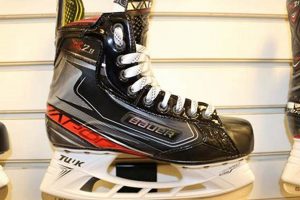
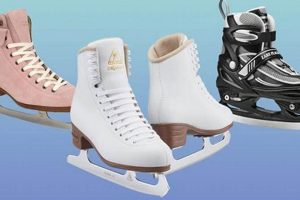
Further illustrating the impact of intended use, recreational skating necessitates a different set of attributes compared to competitive figure skating or hockey. Recreational skates prioritize comfort, ease of use, and affordability, typically featuring softer boot materials, less aggressive blade profiles, and simpler lacing systems. In contrast, figure skates require high levels of ankle support, precisely engineered blades for executing jumps and spins, and heat-moldable boots for a customized fit. Hockey skates demand robust construction, reinforced ankle support, and specialized blade geometries optimized for speed, agility, and puck handling. The selection of appropriate ice skates mandates thorough consideration of these nuanced requirements.
In conclusion, the intended use serves as a primary determinant in selecting optimal ice skates for men. A comprehensive understanding of the skater’s activities, skill level, and performance objectives is essential for identifying equipment that aligns with their specific needs. Disregarding this connection can result in suboptimal performance and increased risk of injury, underscoring the practical significance of careful consideration. Selecting footwear that aligns with the skater’s intended purpose ensures an enhanced and more fulfilling skating experience.
Frequently Asked Questions
This section addresses common inquiries concerning the selection, maintenance, and usage of ice skates.
Question 1: How does one determine the appropriate skate size?
Accurate foot measurement, while wearing skating socks, is paramount. Consult sizing charts specific to the skate manufacturer, as variations exist. Professional fitting services offer precision in size determination.
Question 2: What is the recommended frequency for skate blade sharpening?
Sharpening frequency depends on usage intensity and ice conditions. Signs of dullness, such as reduced glide or difficulty maintaining edges, indicate the need for sharpening. Professional sharpening ensures proper edge geometry.
Question 3: How can one mitigate the formation of blisters while skating?
Properly fitting skates are essential. Specialized skating socks minimize friction. Consider heat-molding the skate boot for a customized fit. Addressing pressure points with padding can alleviate discomfort.
Question 4: What are the key distinctions between hockey skates and figure skates?
Hockey skates prioritize agility and protection, featuring a shorter, more rounded blade and reinforced boot construction. Figure skates emphasize precision and artistry, incorporating a longer, flatter blade with toe picks and a more flexible boot.
Question 5: How does one properly care for ice skate blades to prevent corrosion?
After each use, thoroughly dry the blades with a clean cloth. Store skates in a well-ventilated area to prevent moisture accumulation. Blade guards protect against damage during transport and storage.
Question 6: Can aftermarket insoles improve the fit and comfort of ice skates?
Aftermarket insoles can enhance arch support, cushioning, and overall fit. Select insoles specifically designed for athletic footwear, considering individual foot biomechanics.
Addressing these common inquiries facilitates informed decision-making and enhances the skating experience.
The subsequent section explores specific product recommendations, providing a comparative analysis of leading ice skate models.
Conclusion
The selection process for best ice skates for men involves careful consideration of intended use, blade quality, ankle support, and overall fit. Prioritizing these elements ensures optimal performance and minimizes potential for injury. Varied skill levels and skating disciplines necessitate tailored equipment selections, underscoring the importance of aligning features with individual needs.
Informed selection of ice skates represents a critical investment in both performance and safety. Continued advancements in materials and design will further refine equipment options, providing skaters with enhanced capabilities and comfort. Emphasizing informed decision-making will lead to greater proficiency and enjoyment on the ice.