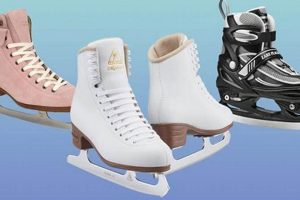
Blades attached to specialized footwear designed for gliding across ice surfaces encompass a variety of types, each engineered for specific activities. These include models tailored for figure skating, hockey, recreational skating, and speed skating, among others. Each variation possesses distinct features in blade length, curve, boot construction, and support levels.
The selection of appropriate footwear of this nature is crucial for both performance and safety. The right model enhances control, agility, and comfort while mitigating the risk of injury. Historically, advancements in materials and design have progressively refined these tools, optimizing them for specialized disciplines and accommodating diverse skill levels.
The subsequent sections will delve into the specific characteristics, features, and intended uses of several prominent categories, providing a detailed comparison to inform purchasing decisions and enhance understanding of the available options.
Guidance on Selecting Appropriate Ice Skates
Choosing the correct model is essential for optimal performance and injury prevention. Consider the following points to ensure an informed decision.
Tip 1: Determine the Primary Intended Use:Different skating disciplines necessitate distinct blade and boot characteristics. Figure skates feature a toe pick for jumps and spins, while hockey skates prioritize agility and protection. Recreational models offer general-purpose support, and speed skates emphasize efficiency. Defining the activity is the first step in narrowing down the options.
Tip 2: Assess Skill Level: Novice skaters typically benefit from models that provide enhanced ankle support and stability. Advanced skaters may require more specialized models that afford greater flexibility and responsiveness. Consider current ability and progression goals when evaluating support features.
Tip 3: Prioritize Proper Fit: Ill-fitting footwear can cause discomfort, blisters, and reduced control. Seek professional fitting services to ensure correct sizing and to address individual foot morphology. Consider heat-moldable options for a customized fit.
Tip 4: Evaluate Blade Quality: Blade materials and construction significantly impact performance. High-carbon steel blades offer superior edge retention compared to stainless steel. Regularly sharpen blades to maintain optimal grip and glide.
Tip 5: Research Boot Construction: The rigidity of the boot influences support and responsiveness. Stiffer boots are generally preferred for advanced maneuvers, while softer boots offer greater comfort for recreational skating. Evaluate the composition and layering of the boot material.
Tip 6: Consider Maintenance Requirements: All varieties require routine maintenance to ensure longevity and optimal performance. This includes drying the blades after each use to prevent rust, sharpening the blades regularly, and inspecting boots for damage.
Selecting the proper equipment involves a careful evaluation of the intended use, skill level, fit, blade quality, and boot construction. Prioritizing these factors will enhance enjoyment and minimize the risk of injury.
The subsequent article sections will elaborate on specific types, providing a comprehensive overview of their unique attributes and applications.
1. Figure Skating Footwear

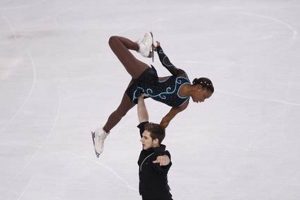
Figure skating necessitates specialized footwear engineered for executing intricate maneuvers on ice. The specific design features directly influence a skater’s ability to perform jumps, spins, and footwork sequences. The boot’s rigid construction provides crucial ankle support, facilitating precise control and preventing injury during high-impact landings. The blade’s unique curvature and the presence of a toe pick enable specific movements integral to the discipline.
One fundamental example of this integration lies in the toe pick, a serrated edge at the front of the blade. This feature is indispensable for initiating jumps, such as the Axel and Lutz, where the skater uses the toe pick to launch into the air. The blade’s overall curvature, or rocker, allows for smooth transitions between edges, facilitating intricate footwork patterns and controlled spins. Professional models feature heat-moldable boots, providing a customized fit that enhances comfort and responsiveness, maximizing the skater’s connection to the ice.
In summary, footwear designed for figure skating are not merely accessories but integral components that enable athletes to achieve peak performance. The boots’ stiffness, the blades’ design, and the toe pick’s presence are all carefully calibrated to meet the demands of the discipline. The continued advancement in materials and design allows skaters to push the boundaries of athletic achievement. Understanding these specific requirements is essential for both athletes and equipment manufacturers.
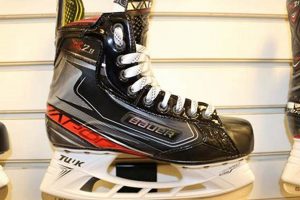
2. Hockey Performance

The performance of hockey players is intrinsically linked to the specific features engineered into hockey footwear. The causation is evident: a properly designed and fitted model directly enhances a skater’s agility, speed, and stability, all essential components of effective play. Agility is amplified through boot construction that allows rapid directional changes, while speed is improved through efficient energy transfer from the skater’s leg to the ice surface. Stability, particularly during physical contact, is enhanced by robust ankle support and reinforced boot materials. Without appropriate equipment tailored to the rigors of the sport, a player’s potential is fundamentally limited. For example, a defenseman requiring enhanced lateral movement to defend against attacking players benefits substantially from a boot offering greater ankle flexibility.
A practical application of understanding this connection is evident in the equipment choices made by professional players. Manufacturers constantly refine their models, incorporating feedback from professionals to optimize designs for specific roles and playing styles. Strikers often favor models emphasizing responsiveness and acceleration, while goalies require designs with enhanced protection and lateral stability. The selection of an improper skate, such as one lacking sufficient ankle support, can increase the risk of injury and impair a player’s ability to perform critical tasks, like quick stops or evasive maneuvers. Thus, the appropriate footwear is not merely an accessory but rather a critical tool that dictates the level of performance.
In summary, the correlation between footwear design and hockey performance cannot be overstated. Optimizing equipment for the specific demands of the sport improves on-ice capabilities and reduces injury risks. The continuous advancements in materials and design driven by both player feedback and scientific analysis serve to further solidify the importance of carefully selecting the appropriate equipment. Understanding these factors provides a competitive edge by enhancing a player’s potential and promoting long-term athletic sustainability.
3. Recreational Comfort

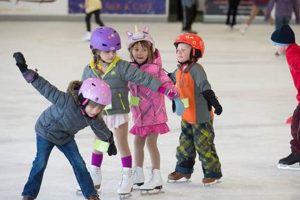
The intersection of recreational skating and equipment design necessitates a focus on comfort to maximize enjoyment and encourage participation. Models designed for recreational use prioritize features that reduce fatigue and minimize discomfort, contrasting with the performance-oriented features found in specialized varieties. These comfort factors directly influence the overall skating experience and play a significant role in user satisfaction.
- Ankle Support and Padding
Recreational varieties typically feature softer boot construction and increased padding around the ankle. This provides adequate support for beginners while minimizing pressure points and chafing. Conversely, advanced models prioritize rigid support for enhanced control, potentially sacrificing comfort for experienced skaters.
- Blade Design for Stability
The blade profile on recreational models often emphasizes stability over maneuverability. A flatter blade with less aggressive curves provides a more forgiving experience for novice skaters, reducing the likelihood of accidental falls. This contrasts with the more pronounced blade curvatures found on figure or hockey types, which facilitate advanced movements.
- Moisture-Wicking Liners
Prolonged skating can lead to perspiration, causing discomfort and potentially contributing to the development of blisters. Recreational skates often incorporate moisture-wicking liners to manage perspiration and maintain a comfortable internal environment. This is especially important for longer skating sessions, during which moisture buildup can become a significant issue.
- Adjustability and Fit
Recreational options frequently offer adjustability features to accommodate a wider range of foot sizes and shapes. Adjustable straps and buckles allow for a more customized fit, enhancing comfort and control. Proper fit is crucial for preventing blisters and ensuring a secure, comfortable skating experience. Models tailored for comfort typically prioritize ease of adjustment over the precision fit found in performance-oriented types.
In summary, recreational skates prioritize comfort through features like enhanced padding, stable blade designs, moisture-wicking liners, and adjustable fit systems. These design considerations cater to novice and casual skaters, maximizing their enjoyment and encouraging continued participation in the activity. The selection of proper equipment tailored to recreational use emphasizes user-friendly features and overall comfort, differing substantially from the performance-driven design characteristics of specialized types.
4. Speed Efficiency
The attainment of speed efficiency in ice skating is directly attributable to specialized equipment design. Speed skates, a distinct category within the broader spectrum of ice skating equipment, exemplify this connection. The design elements, including blade length, boot height, and overall construction, are specifically engineered to minimize friction and maximize the transfer of energy from the skater’s muscles to the ice surface. For instance, the elongated blade of speed skates allows for a longer stride length, thus enabling the skater to cover more distance with each push. The reduced boot height, compared to figure or hockey types, facilitates greater ankle flexion, enhancing the skater’s ability to generate power. These design features directly contribute to increased velocity and reduced energy expenditure over a given distance. The practical consequence of this design is evident in competitive speed skating events, where even minor improvements in efficiency can translate into significant advantages, determining the outcome of races. The evolution of speed skate design serves as evidence of the cause-and-effect relationship between equipment characteristics and athletic performance.
The optimization of speed efficiency is also reflected in the materials used in the construction of speed skates. Lightweight yet durable materials, such as carbon fiber, are employed to minimize the overall weight of the equipment, thus reducing the energy required to propel the skater forward. Aerodynamic considerations further influence the design, with streamlined boot profiles aimed at minimizing air resistance. These engineering details, while seemingly minor, collectively contribute to a noticeable improvement in performance. Furthermore, the rigidity of the boot is crucial for ensuring efficient power transfer. A stiffer boot minimizes energy loss due to deformation, channeling the skater’s force directly into the blade. The customization of boot fit, often achieved through heat-molding techniques, further enhances efficiency by ensuring a secure and responsive interface between the skater’s foot and the equipment. The impact of these design choices is demonstrable in laboratory settings, where comparative testing reveals significant differences in speed and energy consumption between different models.
In summary, the pursuit of speed efficiency in ice skating has driven the development of specialized equipment characterized by elongated blades, low-cut boots, lightweight materials, and aerodynamic profiles. The relationship between these design elements and athletic performance is supported by both theoretical principles and empirical evidence. Challenges remain in further optimizing designs to minimize friction and maximize power transfer, requiring continuous innovation in materials science and engineering. The understanding of these principles is not limited to competitive athletes; recreational skaters seeking to improve their speed and endurance can benefit from an awareness of the impact equipment has on their overall performance. Ultimately, the intersection of design and athletic performance underscores the importance of informed equipment selection in achieving speed efficiency.
5. Blade Material
The selection of blade material constitutes a critical design parameter across various types. Blade material directly influences performance characteristics such as edge retention, glide efficiency, and resistance to corrosion. Variations in material composition are tailored to meet the specific demands of each discipline. For example, figure skating blades frequently utilize high-carbon steel to maintain a sharp edge for executing precise maneuvers, while hockey varieties may incorporate stainless steel for enhanced durability and resistance to the abrasive conditions of ice rinks.
The practical significance of blade material selection is evident in competitive skating. A blade constructed from substandard material will exhibit diminished edge control, leading to reduced performance quality and potentially increased risk of injury. Moreover, the frequency of sharpening required to maintain optimal blade performance is directly influenced by the material composition. Improper blade material may necessitate more frequent maintenance, increasing the operational costs associated with skating. Real-world examples include the increased use of coated blades to optimize gliding abilities.
In conclusion, the blade material selection is not merely a technical detail but rather a fundamental element that influences skating performance, maintenance requirements, and overall durability. The challenge lies in balancing the competing demands of edge retention, resistance to corrosion, and affordability to achieve optimal performance for the intended application. Future advancements in material science will likely continue to refine blade compositions, further optimizing performance across different disciplines.
6. Boot Support

Boot support, a crucial design element, exhibits a direct correlation to the intended use of diverse models. The level of support provided by a skate’s boot directly influences the skater’s stability, control, and ability to execute specific maneuvers. Figure skating boots, characterized by their high and rigid construction, provide the necessary ankle support for performing complex jumps and spins. This enhanced support enables skaters to maintain balance and control during high-impact landings. Hockey boots, conversely, prioritize a balance between support and flexibility, allowing for the rapid lateral movements essential for the sport. Insufficient boot support can lead to instability and an increased risk of ankle injuries, underscoring its practical significance.
Recreational models generally feature a softer boot construction, offering moderate support for comfortable and stable skating. The increased flexibility permits a wider range of motion, catering to novice skaters who require less specialized support. Speed skates, conversely, prioritize efficiency and power transfer, featuring low-cut boots that allow for maximum ankle flexion. While these speed models offer minimal ankle support, they are designed for experienced skaters with highly developed balance and control. These real-world examples illustrate the cause-and-effect relationship between boot support and the capabilities that are appropriate to specific disciplines.
Understanding the role of boot support is essential for selecting appropriate equipment. Improper support can lead to reduced performance, discomfort, and an elevated risk of injury. The challenge lies in balancing the need for support with the requirements of each skating style. Future developments may incorporate adaptable support systems, allowing skaters to customize the level of support based on their individual needs and skating style. Ultimately, boot support is a fundamental consideration that significantly impacts the skating experience and athletic performance.
7. Sizing Precision

Sizing precision constitutes a fundamental element in the effective utilization of ice skating equipment. Variations in foot morphology and activity-specific requirements necessitate careful attention to fit. Inadequate sizing can lead to diminished performance, increased risk of injury, and compromised user experience across all disciplines, from figure skating to speed skating. The internal dimensions of the boot must correspond accurately to the skater’s foot length and width to ensure optimal control and comfort. Real-world examples include the occurrence of blisters and pressure sores resulting from ill-fitting skates, hindering a skater’s ability to perform effectively. Improper sizing directly impacts the skater’s ability to transfer force efficiently, potentially leading to fatigue and reduced agility. Understanding this connection is crucial for both recreational and competitive skaters seeking to maximize their performance and minimize the risk of discomfort or injury.
The practical application of precise sizing extends beyond simple foot measurements. Factors such as sock thickness, foot volume, and individual preferences for tightness must be considered. Professional fitting services employ specialized tools and techniques to assess these variables, ensuring a customized fit that accommodates individual needs. Moreover, different models from different manufacturers exhibit variations in sizing standards, further emphasizing the importance of trying on equipment prior to purchase. In competitive settings, customized boots are often fabricated to precisely match the skater’s foot, optimizing energy transfer and minimizing friction. Failure to address these nuances can result in equipment that compromises performance and increases the risk of overuse injuries.
In conclusion, sizing precision is not merely a matter of selecting the correct number but rather a holistic process that involves careful assessment of individual needs and equipment characteristics. The challenges associated with achieving optimal fit necessitate professional guidance and a commitment to thorough evaluation. Prioritizing sizing precision enhances performance, minimizes risk, and contributes to a more enjoyable and sustainable skating experience. The benefits of carefully selected equipment are undeniable, underscoring the importance of sizing precision as a fundamental element across various kinds of equipment.
Frequently Asked Questions About Footwear Used on Ice
The following addresses common inquiries and clarifies misconceptions regarding ice skating equipment.
Question 1: What distinguishes figure skating blades from hockey blades?
Figure skating blades incorporate a toe pick, utilized for initiating jumps and spins. Hockey blades lack this feature, prioritizing agility and acceleration on the ice.
Question 2: Is it necessary to sharpen new equipment?
Yes. New equipment rarely possesses an optimal edge. Professional sharpening is recommended prior to initial use to ensure adequate grip and control.
Question 3: How does boot stiffness affect performance?
Increased boot stiffness provides greater ankle support and enhanced control, particularly beneficial for advanced maneuvers. Softer boots offer increased comfort but may compromise stability for high-impact activities.
Question 4: What are the key considerations when selecting for recreational use?
Comfort and stability are paramount. Features such as enhanced padding, moisture-wicking liners, and a less aggressive blade profile contribute to a more enjoyable experience.
Question 5: How does the blade material influence performance?
Blade material impacts edge retention, glide efficiency, and resistance to corrosion. High-carbon steel offers superior edge retention, while stainless steel provides increased durability.
Question 6: What is the importance of proper sizing?
Proper sizing is critical for comfort, control, and injury prevention. Ill-fitting equipment can lead to blisters, reduced agility, and an increased risk of ankle injuries.
Selecting the appropriate ice skating equipment requires careful consideration of various factors, including the intended use, skill level, and individual preferences. Consulting with a qualified professional is recommended to ensure optimal fit and performance.
The next section explores advancements in ice skating technology.
Different Kinds of Ice Skates
This exposition has addressed the multifaceted aspects of varying blade and boot configurations, underscoring their distinct features and intended applications. From the specialized designs of figure skating to the performance-oriented models for hockey and the comfort-focused recreational options, each category caters to specific performance demands and skill levels. Materials, construction, and sizing precision emerge as crucial factors in optimizing performance and minimizing risks associated with improper equipment selection.
Continued advancements in design and materials are poised to further refine these athletic tools, offering greater customization and enhanced performance capabilities. As technology evolves, a comprehensive understanding of the available options remains paramount for athletes, coaches, and enthusiasts seeking to maximize their potential and ensure a safe and rewarding skating experience. Further research and informed decision-making are encouraged to foster a deeper appreciation for the nuanced world of skating equipment.