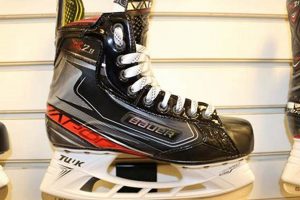
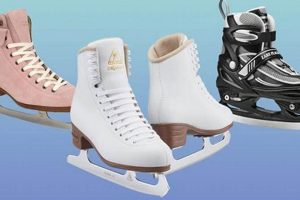
Protective coverings designed for blades and wheels allow for safe ambulation off of designated skating surfaces. These accessories, typically constructed from rubber or plastic, prevent damage to the blades of ice skates and the wheels of roller skates when walking on concrete, tile, or other abrasive terrains. For example, a figure skater might use these guards to walk from the locker room to the ice rink without dulling their blades.
The use of these protective items extends the lifespan of both types of skates. They mitigate the risk of damage that occurs from exposure to rough surfaces and contaminants. Historically, skaters often faced the challenge of maintaining the sharpness of their blades or the smoothness of their wheels. The introduction of these coverings offered a practical solution, ensuring consistent performance and reducing the frequency of replacements or repairs.
This article will explore the various types available, their specific applications for different skating disciplines, and provide guidance on selecting the most appropriate option for individual needs.
Guidance on Utilizing Blade and Wheel Protectors
The following recommendations are designed to ensure optimal usage and longevity of blade and wheel protection devices.
Tip 1: Select appropriate size: The protector should fit snugly on the blade or wheel, without being too tight as to cause damage or too loose as to easily dislodge.
Tip 2: Maintain cleanliness: Regularly clean the interior of the protector to remove debris that can abrade the blades or wheels during use.
Tip 3: Use designated protectors: Employ protectors specifically designed for the type of skate (ice or roller) to ensure proper fit and protection.
Tip 4: Avoid prolonged use on abrasive surfaces: While providing protection, excessive walking on rough surfaces while using the protectors can still contribute to wear and tear.
Tip 5: Inspect for damage: Periodically examine the protectors for cracks, tears, or other forms of degradation that could compromise their effectiveness. Replace damaged protectors promptly.
Tip 6: Store skates properly: Even with protectors in place, store skates in a dry environment to prevent corrosion or deterioration of the blades and wheels.
Tip 7: Replace worn protectors: Protectors are consumable items and should be replaced when signs of wear become evident. Compromised protection could lead to damage, undermining the purpose of the skate guards.
Adhering to these guidelines will maximize the protective qualities of these accessories, contributing to the prolonged lifespan and performance of skating equipment.
The subsequent sections of this article will delve into the specific types and materials utilized in the construction of these vital protective devices.
1. Material Composition

The effectiveness of a protective covering for skate blades or wheels is intrinsically linked to its material composition. The choice of material directly influences the guard’s ability to absorb impact, resist abrasion, and maintain structural integrity over repeated use. For instance, a guard constructed from a low-density polymer may offer minimal protection against sharp objects or rough surfaces, leading to potential damage to the skate blade or wheel it is intended to safeguard. Conversely, a guard fashioned from high-durometer rubber or reinforced plastic provides superior protection against wear and tear, extending the lifespan of both the skate and the guard itself. Consider a figure skater who regularly walks on concrete surfaces to reach the rink. Guards made of a soft, flexible material would quickly degrade, offering inadequate protection, while those composed of a more robust, abrasion-resistant polymer would better withstand the rigors of daily use.
The material selection also impacts the guard’s functional characteristics beyond simple protection. The grip provided by the material affects stability while walking. A rubber-based compound typically provides a higher coefficient of friction, reducing the likelihood of slipping, especially on smooth or wet surfaces. Moreover, the weight and flexibility of the material can influence the user’s comfort and ease of movement. Stiff, heavy guards may feel cumbersome and restrict natural gait, while lightweight, more pliable options offer a more comfortable and unobtrusive experience. For example, ice skate guards utilized in hockey typically prioritize impact resistance and durability due to the aggressive nature of the sport, opting for materials like high-impact polypropylene. Roller skate guards, particularly those used in artistic or recreational skating, often emphasize flexibility and weight reduction to allow for greater freedom of movement during off-ice training.
In summary, the material composition of skate guards is a critical factor in determining their protective capabilities, durability, and user-friendliness. Understanding the properties of different materials enables informed selection, ensuring that the guard is appropriate for the specific type of skating, usage frequency, and environmental conditions. The correct material choice translates to enhanced skate performance, reduced maintenance costs, and improved overall safety for the skater.
2. Blade Protection

Effective blade protection is paramount for preserving the integrity and performance of ice skates. Protective coverings designed to shield the blades from damage during off-ice ambulation are essential components in skate maintenance and longevity.
- Minimizing Surface Contact
These accessories act as a barrier, reducing direct contact between the sharpened blade edge and abrasive surfaces such as concrete or tile. By preventing this contact, the rate of blade dulling is significantly reduced, preserving the skater’s edge and minimizing the need for frequent sharpening. For example, a figure skater walking from a dressing room to the ice rink utilizes these coverings to maintain the blade’s precision and performance.
- Preventing Corrosion
Blade protectors often incorporate moisture-wicking materials or ventilation to mitigate corrosion. After skating, residual moisture on the blade can lead to rust formation, compromising its structural integrity. Guards designed with these features help to keep the blades dry, thus preventing corrosion and extending their lifespan. In humid environments, this aspect of blade protection is particularly critical.
- Absorbing Impact
Blade coverings provide a degree of impact absorption, safeguarding the blade from minor shocks and bumps encountered during off-ice movement. This protection is particularly important when transporting skates, as accidental impacts can cause nicks or distortions to the blade edge. Durable guard materials, such as high-density plastics, effectively cushion the blade against these impacts, preserving its alignment and sharpness.
- Safe Handling
These protective devices also facilitate safer handling of skates when they are not in use. By covering the sharp blade edge, the risk of accidental cuts or injuries during storage and transportation is minimized. This is especially important in environments where skates may be accessed by individuals unfamiliar with their potential hazards. For example, families traveling with young skaters can use these guards to ensure safe handling and storage of the equipment.
These facets collectively contribute to comprehensive blade protection. The use of appropriate coverings safeguards the blade’s edge, prevents corrosion, absorbs impacts, and ensures safer handling, all of which are critical for maintaining the skater’s performance and extending the lifespan of their skates.
3. Wheel Preservation
Wheel preservation, in the context of roller skates, is directly linked to the usage of protective coverings when off designated skating surfaces. Abrasive terrains, such as concrete or asphalt, induce wear on roller skate wheels, reducing their diameter and altering their durometer, or hardness. Protective guards serve as a barrier, mitigating direct contact with these surfaces and thereby preserving the original wheel characteristics. For example, a roller derby skater traversing a parking lot between practice sessions and the rink benefits from using wheel guards, preventing premature degradation of high-performance wheels designed for specific track conditions. This preservation extends the wheel’s lifespan, optimizes grip, and maintains consistent roll speed.
The composition of the wheel directly impacts the severity of wear. Softer wheels, offering enhanced grip, are more susceptible to damage compared to harder wheels designed for speed. Consequently, appropriate protective measures are crucial for softer wheels. Furthermore, environmental factors, such as the presence of debris or chemicals on walking surfaces, exacerbate wheel deterioration. Protective coverings prevent the absorption of these contaminants, which can compromise the wheel’s integrity and affect its performance. Consider a recreational skater utilizing outdoor roller skates; wheel protectors minimize the collection of dirt and gravel, preserving the wheel’s smoothness and preventing irregularities in roll.
Ultimately, wheel preservation through the use of appropriate protective coverings contributes to cost-effectiveness and optimal skating performance. By minimizing wear and tear, skaters reduce the frequency of wheel replacements, saving both time and expense. Moreover, the sustained consistency in wheel characteristics ensures predictable handling and responsiveness, critical for both recreational and competitive skating. While the benefits of protective wheel coverings are evident, challenges remain in promoting their widespread adoption and ensuring their proper use. Skaters must be educated on the long-term advantages and encouraged to integrate the usage of protective guards into their regular skating routine.
4. Surface Compatibility

Surface compatibility is a critical consideration in the design and selection of protective devices for both roller skate wheels and ice skate blades. The protective capability of these guards directly correlates to the type of surface encountered off the designated skating area. Using a guard designed for a smooth, relatively clean surface on a rough, abrasive terrain will result in accelerated wear of the guard and inadequate protection for the skate’s wheels or blades. For example, a thin rubber guard intended for indoor use on tile floors will quickly deteriorate when used on outdoor concrete, failing to prevent damage to roller skate wheels. Conversely, a robust, heavily treaded guard may offer excessive grip and impede natural movement on a smooth, indoor surface. Understanding this relationship is essential for maximizing the lifespan of the skates and ensuring user safety.
The material composition of the guard must align with the typical surfaces encountered. Harder plastics, often incorporating textured patterns, provide durability and traction on abrasive terrains. Softer materials, such as rubber or pliable polymers, offer adequate protection on smoother surfaces while minimizing slippage. Ice skate blade guards, in particular, must address the potential for corrosion resulting from melted ice residue. Guards designed with moisture-wicking materials or ventilation holes prevent moisture build-up, mitigating rust formation. The practical application of this knowledge involves assessing the skater’s environment and selecting guards accordingly. A competitive figure skater transitioning from the ice rink to a carpeted dressing room requires a different level of protection than a roller derby skater navigating a gravel parking lot.
In summary, surface compatibility is an indispensable component in optimizing the protective function of both roller skate and ice skate guards. The appropriate selection of a guard, based on the anticipated surface conditions, directly impacts the longevity of the skates and the safety of the user. Challenges remain in educating skaters regarding the nuances of surface compatibility and encouraging the consistent use of appropriate protective gear. This understanding will safeguard equipment and promote a safer, more sustainable skating experience.
5. Size Variations

The effectiveness of protective coverings for roller skate wheels and ice skate blades is directly contingent upon appropriate sizing. Size variations within this product category accommodate the diverse dimensions of skate blades and wheels, ensuring a secure fit and optimal protective functionality. A guard that is too large will fail to provide adequate coverage, leaving portions of the blade or wheel exposed to potential damage. Conversely, a guard that is too small may be difficult to install and could exert undue pressure on the skate components, potentially leading to structural compromise. Therefore, understanding and adhering to size specifications is critical for effective equipment maintenance.
The specific sizing conventions for blade and wheel coverings vary across manufacturers and skating disciplines. Ice skate blade guards often feature adjustable mechanisms to accommodate varying blade lengths and profiles. These mechanisms may include adjustable straps, expandable sections, or modular components that allow for customization. Roller skate wheel guards, on the other hand, are typically sized according to wheel diameter and width. Precise measurements are essential to ensure compatibility, as variations in wheel size are common across different roller skating styles, such as inline, quad, and speed skating. Practical application of this understanding involves consulting manufacturer sizing charts and verifying measurements before purchase.
In conclusion, size variations represent a fundamental aspect of protective devices for skating equipment. The selection of properly sized guards is paramount for ensuring optimal protection, preventing damage, and extending the lifespan of roller skate wheels and ice skate blades. While the availability of diverse sizes addresses the needs of a broad range of skaters, continued emphasis on clear and consistent sizing information is necessary to mitigate potential confusion and ensure effective equipment maintenance practices.
6. Durability Factors

The service life of protective coverings for roller skate wheels and ice skate blades is directly influenced by several durability factors. The material composition, manufacturing process, and usage patterns exert significant influence on the guard’s resistance to wear, tear, and environmental degradation. For instance, guards constructed from low-grade polymers are more susceptible to cracking or splitting under stress, particularly when exposed to temperature fluctuations or abrasive surfaces. Conversely, those fabricated from reinforced plastics or high-durometer rubber exhibit superior resilience and longevity. A practical example is the difference in wear observed between inexpensive, generic guards and those specifically engineered for high-impact use in demanding environments like roller derby or figure skating.
Furthermore, the design and construction of the guard play a crucial role in its overall durability. Guards with reinforced seams, impact-absorbing structures, or integrated drainage systems are better equipped to withstand the rigors of regular use. The presence of sharp edges or improperly finished surfaces can accelerate wear on the skates themselves or compromise the integrity of the guard. For example, a blade guard with a poorly designed closure mechanism may fail to securely grip the blade, leading to slippage and increased friction, ultimately shortening its lifespan. Consistent cleaning and maintenance practices also impact durability. Removal of dirt, debris, and moisture prevents corrosion and reduces the abrasive effects of contaminants on the guard’s surface.
In conclusion, the longevity and effectiveness of protective coverings for skating equipment are determined by a confluence of durability factors, spanning material selection, design considerations, and maintenance protocols. Understanding these factors allows skaters to make informed purchasing decisions and adopt proactive maintenance practices, maximizing the lifespan of both the guards and the underlying skates. The ongoing development of more durable and resilient materials, coupled with enhanced manufacturing techniques, promises to further extend the service life of these essential protective accessories.
Frequently Asked Questions Regarding Roller Skate Ice Skate Guards
The following questions address common inquiries and concerns regarding the use and maintenance of protective coverings for skating equipment.
Question 1: Why is protection necessary for roller skate wheels and ice skate blades when not in use?
Protection is necessary to prevent damage from abrasive surfaces, debris, and environmental factors that can compromise performance and lifespan. Contact with these elements can lead to dulling of blades and wear of wheels, impacting maneuverability and safety.
Question 2: What materials are most suitable for roller skate ice skate guards?
Suitable materials include durable plastics, high-durometer rubber, and composite materials designed to withstand abrasion, impact, and moisture. The specific choice depends on the intended use and environment.
Question 3: How often should roller skate ice skate guards be replaced?
Replacement frequency depends on usage intensity and environmental conditions. Guards should be replaced when signs of wear, such as cracks, tears, or significant material loss, are evident.
Question 4: Can any type of guard be used interchangeably between roller skates and ice skates?
No, guards are typically designed specifically for either roller skates or ice skates due to differences in blade and wheel geometry. Using the incorrect type can result in inadequate protection or damage to the equipment.
Question 5: Is cleaning required for roller skate ice skate guards, and if so, what is the recommended procedure?
Cleaning is recommended to remove debris and moisture that can accelerate wear and corrosion. Use a damp cloth and mild detergent, ensuring the guard is thoroughly dried before use.
Question 6: Are there specific storage recommendations for skates with protective coverings in place?
Store skates in a dry, well-ventilated environment to prevent moisture buildup and corrosion. Avoid prolonged exposure to direct sunlight or extreme temperatures, which can degrade the guard material.
These answers provide a general overview of common questions. Consult manufacturer guidelines for specific recommendations related to individual products.
The next section will provide a summary.
Conclusion
This article has explored the functionality, materials, sizing, and maintenance of roller skate ice skate guards. The importance of selecting appropriate guards based on skate type, usage environment, and individual needs has been emphasized. Key factors impacting guard durability and performance, including material composition, construction, and cleaning practices, have also been discussed.
The proper utilization of roller skate ice skate guards contributes significantly to the longevity and optimal performance of skating equipment. A continued commitment to quality, innovation, and skater education will ensure the ongoing effectiveness of these essential protective devices.