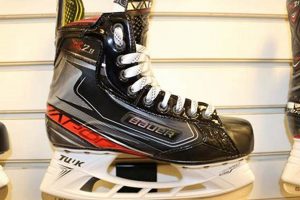
Rigidity around the lower leg and foot is essential for maintaining balance and control during ice skating. This support system, frequently integrated into the boot design or added as an external accessory, minimizes lateral movement and enhances stability on the ice. An example includes a high-cut boot with reinforced panels, which constrains the ankle’s range of motion.
Adequate stability in this area is paramount for preventing injuries such as sprains and fractures. Furthermore, it contributes significantly to improved skating performance, enabling skaters to execute precise turns, jumps, and landings. Historically, innovations in materials and construction techniques have steadily enhanced the effectiveness and comfort of these stability mechanisms.
The following sections will delve into the various types of solutions available, materials used in construction, fitting considerations, and maintenance best practices, providing a comprehensive understanding of how to optimize lower extremity stability for ice skating.
Optimizing Lower Extremity Stability on Ice
Achieving proper lower extremity stability on ice is crucial for safety and performance. The following guidance provides key considerations for ensuring adequate support.
Tip 1: Evaluate Boot Stiffness: Assess the rigidity of the skate boot. A stiffer boot generally provides greater restriction of movement and enhanced stability, particularly beneficial for skaters performing advanced maneuvers.
Tip 2: Consider External Braces: For individuals with pre-existing ankle instability or those requiring additional support, external ankle braces may be necessary. Consult with a qualified medical professional to determine appropriate brace type and fit.
Tip 3: Ensure Proper Lacing: Utilize proper lacing techniques to achieve a secure and comfortable fit. Lace tightness should be adjusted according to individual preferences and skating style, ensuring firm support without restricting circulation.
Tip 4: Select Appropriate Skate Size: A properly sized skate is fundamental for optimal support. The foot should fit snugly within the boot, with minimal heel lift and adequate toe space. Ill-fitting skates compromise stability and increase the risk of injury.
Tip 5: Inspect Hardware Regularly: Routinely inspect all hardware components, including laces, eyelets, and buckles, for signs of wear or damage. Replace worn or damaged components promptly to maintain structural integrity.
Tip 6: Break-In Skates Gradually: New skates often require a break-in period to conform to the individual’s foot shape. Gradual usage, combined with professional skate fitting services, can optimize comfort and stability.
Tip 7: Seek Professional Advice: Consultation with a qualified skate technician or medical professional is recommended for personalized guidance on optimizing lower extremity stability, especially for individuals with specific needs or concerns.
Implementing these recommendations promotes enhanced stability, reduces the risk of injury, and improves overall skating performance.
The concluding section will summarize the key aspects of stability mechanisms and provide resources for further information.
1. Boot Stiffness
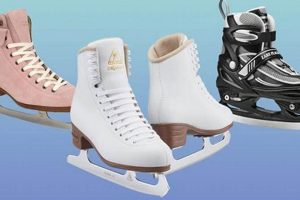
Boot stiffness is a primary determinant of lower extremity stability in ice skates. The rigidity of the boot’s construction directly influences the extent to which the ankle can move laterally and vertically. A stiffer boot provides greater resistance to these movements, effectively limiting the ankle’s range of motion. This constrained movement reduces the risk of sprains and other injuries resulting from excessive ankle deviation during skating maneuvers. For example, figure skates designed for advanced jumps and spins typically feature significantly stiffer boots compared to recreational skates intended for general use, demonstrating a cause and effect relationship.
The practical significance of understanding boot stiffness lies in its impact on performance and safety. A skater whose boot is insufficiently stiff may experience difficulty maintaining balance during demanding maneuvers, leading to decreased control and increased risk of falls. Conversely, a boot that is excessively stiff may restrict mobility and hinder the skater’s ability to execute certain techniques effectively. Therefore, selecting skates with an appropriate level of boot stiffness, tailored to the individual skater’s skill level and skating style, is crucial. This selection process often involves expert consultation to ensure optimal support and comfort. Considerations such as the skater’s weight, ankle strength, and the frequency of use also contribute to choosing the correct boot stiffness.
In summary, boot stiffness is an integral component of comprehensive lower extremity stability for ice skating. While higher stiffness generally correlates with enhanced support, the appropriate level of stiffness is contingent upon the individual skater’s needs and skill set. Overlooking this factor can compromise both performance and safety. Continued advancements in skate boot technology are striving to balance stiffness with flexibility, aiming to provide skaters with the optimal combination of support and maneuverability.
2. Lace Tightness

Lace tightness constitutes a critical, adjustable component in optimizing lower extremity stability within ice skates. Its precise manipulation can significantly influence the degree of support provided to the ankle, impacting both performance and injury risk. The following aspects elaborate on this relationship.
- Distribution of Pressure
Consistent lace tightness throughout the boot’s lacing system ensures an even distribution of pressure across the foot and ankle. Uneven pressure can create localized stress points, diminishing overall support and potentially causing discomfort or blisters. Skilled skaters often adjust lace tightness strategically, tightening specific areas to enhance support during particular maneuvers.
- Ankle Fixation
Adequate lace tightness is essential for maintaining firm fixation of the ankle within the boot. Insufficient tightness allows for excessive ankle movement, increasing the risk of sprains and reducing control during skating. Conversely, over-tightening can restrict blood flow and cause numbness, which can lead to impaired performance and potential injury.
- Dynamic Adjustment
Lace tightness can be dynamically adjusted to accommodate varying skating demands. For instance, a skater might loosen the laces slightly before performing a jump to allow for greater ankle flexion, then re-tighten them for enhanced stability upon landing. This adaptability is crucial for optimizing both performance and protection.
- Material Influence
The material composition of both the laces and the skate boot impacts the effectiveness of lace tightness. Stretchy laces may require more frequent tightening, while a poorly constructed boot may deform under pressure, negating the benefits of tight lacing. Selecting high-quality laces and a structurally sound boot is therefore essential.
In summary, lace tightness represents a nuanced and adaptable element within the broader framework of stability. Its effectiveness hinges on proper technique, appropriate equipment, and a thorough understanding of its dynamic interplay with other factors such as boot stiffness and skater skill. Neglecting the importance of lace tightness can undermine the overall effectiveness of stability strategies, increasing the likelihood of injury and hindering performance gains.
3. Proper Fit

Optimal stability in ice skating is inextricably linked to proper fit of the skates. A skate that fits correctly enhances the effectiveness of integrated or external support mechanisms, directly influencing performance and safety.
- Heel Lock
Secure heel lock is essential for preventing excessive foot movement within the boot. Heel slippage diminishes the boot’s capacity to provide effective stabilization. A well-fitted heel minimizes displacement, maximizing the impact of the skate’s structure on ankle alignment. Examples include skaters experiencing reduced agility due to heel lift, as the foot’s position isn’t consistently supported by the boot’s stabilizing features.
- Instep Conformance
The instep, the arched portion of the foot, requires snug but not constrictive contact with the skate’s tongue and lacing system. Gaps in this area compromise the ability to uniformly distribute pressure and leverage the boot’s structure for stability. Insufficient instep contact leads to instability during forward and backward movements, negatively impacting performance during turns and jumps. This instability prevents full utilization of ankle support characteristics.
- Ankle Pocket Contact
The “ankle pocket,” the area around the ankle bones (malleoli), must provide firm contact without excessive pressure. Gaps permit lateral ankle movement, negating the benefits of the skate’s designed support. Conversely, excessive pressure can cause discomfort and compromise circulation. A proper fit within the ankle pocket facilitates optimal engagement of support features.
- Toe Box Space
Adequate toe box space allows for natural toe splay without constriction. While not directly influencing stability, insufficient space can lead to foot fatigue, altering gait and indirectly impacting ankle control. This space facilitates prolonged skating comfort, enhancing the skater’s capacity to maintain correct posture and technique, which complements the stabilization mechanisms.
In summary, proper fit functions as the foundational element upon which effective stabilizing mechanisms are built. Without appropriate fit, the capacity of a skate to protect and enhance performance is significantly compromised. Proper boot size and professional fitting are essential.
4. Brace Usage
External ankle braces serve as an adjunct to integrated stability features in ice skates, providing supplemental support when intrinsic boot characteristics are insufficient. The necessity for brace usage often arises from pre-existing ankle instability, previous injuries, or the demands of high-impact skating disciplines. While a properly fitted skate boot contributes substantially to stabilization, the addition of a brace offers an extra layer of protection against excessive inversion, eversion, and plantarflexion, mitigating the risk of recurrent sprains or more severe injuries. For instance, skaters recovering from ligament tears may require brace usage during rehabilitation to gradually reintroduce stress to the affected joint while minimizing the likelihood of re-injury.
The selection of an appropriate brace type depends on the specific needs of the skater and the nature of any underlying conditions. Hinged braces offer a greater range of motion while still providing lateral support, whereas rigid braces offer maximal restriction of movement. Careful consideration of factors such as brace size, material composition, and adjustability is crucial to ensure a comfortable and effective fit. Furthermore, consultation with a medical professional or a qualified skate technician is recommended to determine the optimal brace configuration and ensure proper implementation. Correct brace placement and secure fastening are essential for realizing the intended benefits of brace usage.
In conclusion, brace usage represents a targeted intervention strategy within the broader context of ankle support for ice skates. It provides an additional safeguard against injury, particularly for individuals with compromised ankle stability or those engaging in demanding skating activities. Although not universally required, the judicious application of external braces can significantly enhance safety and promote continued participation in ice skating.
5. Material Strength
Material strength is a foundational element in the efficacy of lower leg support in ice skates. The materials employed in the skate’s construction, particularly in the boot and any reinforcement components, directly correlate with the degree of stability and protection offered to the ankle. Higher tensile strength and resistance to deformation enable the skate to withstand the forces generated during skating maneuvers, preventing excessive ankle movement and minimizing the risk of injury. For example, a skate constructed with a high-density polymer shell will generally offer greater resistance to torsional forces compared to a skate made from a more flexible material, resulting in improved stability and control for the skater.
The practical significance of understanding material strength lies in its direct impact on the skater’s ability to perform complex movements and maintain balance. Skates constructed with weaker materials may deform under stress, compromising ankle support and increasing the likelihood of sprains or fractures. Conversely, skates built with high-strength materials offer enhanced protection and stability, allowing skaters to execute challenging maneuvers with greater confidence. This is evident in professional-grade skates, which often incorporate advanced composite materials such as carbon fiber or Kevlar to maximize strength-to-weight ratio and provide optimal ankle support. These skates enable higher-level performance by withstanding more extreme forces and preventing injury. Regular maintenance and timely replacement of skates are crucial to ensuring material integrity and consistent performance.
In summary, material strength is a critical determinant of the protective capabilities. Selecting skates constructed from durable, high-strength materials is essential for maximizing stability and reducing injury risk. Overlooking this factor can compromise both performance and safety. Continued advancements in materials science are contributing to the development of increasingly lightweight and robust skate designs, further enhancing and pushing material strength boundaries.
6. Impact Resistance
Impact resistance is a crucial attribute of effective ankle support mechanisms in ice skates. The capacity to absorb and dissipate energy from sudden impacts directly mitigates the risk of ankle injuries, such as contusions, fractures, and sprains. Skaters routinely encounter impacts from falls, collisions with other skaters, or contact with the rink boards. Without adequate impact resistance, the force of these events transmits directly to the ankle joint, potentially exceeding its physiological tolerance and leading to injury. High-density foams, specialized padding, and strategically placed reinforcement materials within the boot contribute to enhanced impact resistance. The cause-and-effect relationship is clear: insufficient impact resistance increases the likelihood of ankle injury, while robust impact resistance significantly reduces this risk.
The implementation of impact-resistant materials often involves a layered approach. The outer shell of the skate, typically composed of rigid plastics or composites, provides initial protection against direct impact and penetration. Beneath this shell, energy-absorbing foams, such as ethylene-vinyl acetate (EVA) or specialized gels, dissipate the remaining force. Furthermore, strategic placement of padding around vulnerable areas, such as the malleoli (ankle bones), further enhances impact resistance. For example, figure skates designed for high-impact landings often incorporate reinforced padding around the ankle to minimize the risk of bone bruising or fractures. Hockey skates frequently feature impact-resistant shields to protect against puck strikes and collisions with other players.
In summary, impact resistance is an indispensable component of comprehensive ankle support in ice skates. Adequate impact resistance mitigates the potential for ankle injury from a variety of impact scenarios encountered during skating activities. The use of appropriate materials and strategic design considerations are paramount in maximizing the effectiveness of these energy-absorbing mechanisms. Consequently, skaters should prioritize skates that demonstrate robust impact resistance to ensure optimal protection and reduce the risk of ankle-related injuries.
Frequently Asked Questions
The following addresses prevalent inquiries regarding lower extremity stability in ice skating, providing objective information on optimization and injury prevention.
Question 1: How does boot stiffness influence stability?
Boot stiffness dictates the degree of ankle movement restriction. A stiffer boot limits lateral and vertical motion, enhancing stability but potentially reducing maneuverability. Boot selection must align with the skater’s skill level and intended use.
Question 2: What role does proper skate fit play in stability?
A properly fitted skate ensures secure heel lock, instep conformance, and appropriate ankle pocket contact. These factors prevent excessive foot movement within the boot, maximizing the effectiveness of stabilizing features. Ill-fitting skates compromise stability and elevate injury risk.
Question 3: When is the use of an external ankle brace indicated?
External ankle braces are typically recommended for individuals with pre-existing instability, a history of ankle injuries, or those participating in high-impact skating activities. A brace provides supplemental support and mitigates the risk of recurrent sprains.
Question 4: How does lace tightness affect ankle support?
Lace tightness directly impacts ankle fixation within the boot. Consistent lace tightness distributes pressure evenly, ensuring secure support without restricting circulation. Dynamic adjustment of lace tightness can accommodate varying skating demands.
Question 5: What material properties are critical for boot construction?
High tensile strength and resistance to deformation are essential material properties. These characteristics enable the skate to withstand forces generated during skating, preventing excessive ankle movement and minimizing injury risk. Advanced composite materials offer optimal strength-to-weight ratios.
Question 6: How does impact resistance contribute to injury prevention?
Impact resistance is essential for absorbing and dissipating energy from falls, collisions, and contact with rink boards. High-density foams and strategically placed padding within the boot minimize the risk of ankle contusions, fractures, and sprains.
In summary, optimizing stability necessitates a multifaceted approach encompassing appropriate boot stiffness, proper fit, targeted brace usage (if indicated), controlled lace tightness, durable material construction, and robust impact resistance.
Further exploration of specific skate models and fitting techniques can provide additional insight.
Ankle Support for Ice Skates
This exposition has elucidated the multifaceted nature of lower extremity stability in ice skating, emphasizing the crucial role of robust support systems. Proper boot stiffness, precise fit, strategic brace utilization, controlled lace management, durable material composition, and effective impact resistance converge to minimize injury potential and maximize performance capabilities. Each element functions as an integral component within a complex biomechanical framework.
The pursuit of enhanced stability necessitates a meticulous approach, demanding informed decision-making and, when appropriate, professional consultation. As skating disciplines evolve and technological advancements emerge, continued diligence in optimizing lower leg support remains paramount for safeguarding the well-being of participants across all skill levels.