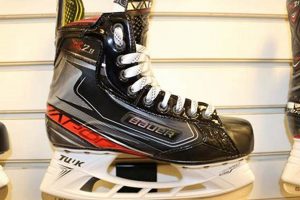
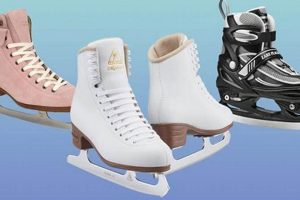
The process of heat molding hockey or figure skating footwear, commonly referred to as baking, involves using controlled heat to soften the boot’s materials. This allows the boot to conform more precisely to the wearer’s foot shape during the cooling process. This customized fit can enhance comfort and performance on the ice. The method is applicable to many modern skate models utilizing thermo-moldable materials.
Achieving a customized fit through heat molding can result in improved responsiveness and reduced discomfort, leading to better skating performance and prolonged training sessions. Historically, professional fitting was exclusively available at specialized skate shops, but advancements in materials and technology have enabled some skaters to undertake this process independently. The potential for cost savings and increased convenience are significant drivers for home-based methods.
The subsequent sections will outline the necessary precautions, equipment, and step-by-step instructions required to safely and effectively execute this procedure at home. Focus will be given to temperature control and boot protection, as well as proper lacing techniques to ensure optimal fit. Considerations for different skate materials and potential risks will also be addressed.
Important Considerations for Heat Molding Footwear at Home
Successful heat molding requires meticulous attention to detail and adherence to safety guidelines. Deviation from recommended procedures can result in damage to the equipment or injury to the user. The following are crucial tips to maximize efficacy and minimize potential risks.
Tip 1: Temperature Accuracy is Critical: Employ an oven thermometer to verify the actual internal temperature. Relying solely on the oven’s dial can lead to inaccurate heating, potentially damaging the boot’s materials. Deviation of more than five degrees Celsius from the manufacturer’s recommendation is unacceptable.
Tip 2: Protect Vulnerable Components: Remove laces, footbeds, and any removable hardware before initiating the heating process. Shield sensitive areas, such as logos or carbon fiber elements, with heat-resistant tape to prevent discoloration or warping. Improper protection can void the warranty.
Tip 3: Gradual Heating is Preferable: Avoid rapid temperature increases. Preheating the oven to the target temperature before placing the skates inside allows for more even heat distribution. Abrupt temperature changes can cause uneven molding and structural weaknesses.
Tip 4: Maintain Constant Supervision: Never leave the skates unattended during the heating process. Regularly monitor the boot’s condition for signs of overheating, such as bubbling or deformation. Immediate intervention can prevent irreversible damage.
Tip 5: Proper Lacing Technique is Paramount: Upon removing the skates from the oven, lace them firmly but not excessively. Ensure uniform pressure distribution across the foot to facilitate optimal molding. Incorrect lacing can lead to pressure points and discomfort.
Tip 6: Allow Adequate Cooling Time: Maintain a seated position with knees at a 90-degree angle for the entire cooling duration, typically 15-20 minutes. Premature movement can disrupt the molding process and compromise the fit. This ensures optimal retention of the newly formed shape.
Tip 7: Consider Professional Consultation: If uncertain about any aspect of the process, seek guidance from a qualified skate technician. Professional assessment can mitigate the risk of error and ensure a safe and effective outcome. Expert intervention may be necessary for complex adjustments.
Adherence to these guidelines significantly increases the likelihood of achieving a comfortable and performance-enhancing fit. Prioritizing safety and precision throughout the process is essential for preserving the integrity of the equipment and the skater’s well-being.
The subsequent section will address troubleshooting common issues encountered during home heat molding, offering practical solutions and alternative approaches.
1. Temperature Precision

Temperature precision represents a critical factor in the success of heat molding ice skates at home. Deviations from recommended temperature ranges can lead to irreversible damage to the boot’s structural integrity and compromise its performance characteristics.
- Material Degradation Thresholds
Ice skate boots are often constructed from composite materials that possess specific temperature degradation thresholds. Exceeding these thresholds during the baking process can cause the polymers within the composite to break down, leading to softening, warping, or delamination of the boot. For example, a boot designed to withstand temperatures up to 170F may experience irreversible structural damage if exposed to 200F. Accurate temperature monitoring is, therefore, essential to prevent this degradation.
- Adhesive Bond Integrity
Many skate components, such as liners and outsoles, are bonded to the boot shell using heat-sensitive adhesives. Maintaining precise temperature control during heat molding prevents the adhesives from weakening or failing. For instance, if the temperature is too low, the adhesive may not properly soften and bond, resulting in separation of the liner from the shell. Conversely, excessive temperatures can cause the adhesive to liquify and lose its bonding strength altogether, thereby compromising the skate’s structural stability. Accurate temperature control ensures adhesive integrity.
- Thermoformable Liner Optimization
The heat molding process relies on the thermoformable properties of the inner liner to conform to the skater’s foot. Precise temperature control is required to achieve optimal liner softening without causing damage. Insufficient heat may result in incomplete molding and persistent pressure points, while excessive heat can cause the liner to shrink or lose its shape. This requires a narrow margin of temperature control. This is imperative for achieving a custom fit.
- Boot Component Expansion and Contraction
Different materials within the skate boot, such as plastics, foams, and metals, expand and contract at different rates when heated. Maintaining a consistent and precise temperature throughout the baking process minimizes differential expansion and contraction, preventing internal stress and potential structural weaknesses. For example, an uneven temperature gradient across the boot could cause the plastic shell to expand more rapidly than the metal eyelets, potentially leading to stress fractures or premature wear around the lacing system. Thus, temperature uniformity is critical.
In summary, the success of heat molding skates at home is significantly impacted by temperature accuracy. The risks of exceeding the material degradation thresholds, compromising the adhesive bond integrity, failing the thermoformable liner optimization, and having inconsistent boot component expansion and contraction rates, are significantly high when there is a temperature error. Proper knowledge of material characteristics and diligent monitoring are required for the safe and effective alteration of ice skate footwear.
2. Component Protection

In the context of heat molding ice skates at home, component protection refers to the preventative measures taken to safeguard vulnerable parts of the skate from heat damage. The practice is intrinsically linked to the long-term integrity and functionality of the skates. Without adequate component protection, the elevated temperatures employed during the baking process can lead to deformation, discoloration, or outright failure of sensitive elements, thereby undermining the entire customization effort. The cause-and-effect relationship is direct: exposure to excessive heat (the cause) results in damage (the effect), highlighting the critical importance of proactive shielding.
Examples of vulnerable components include, but are not limited to: logos and graphic elements, which can fade or warp under heat; delicate stitching, which may become brittle or unravel; speed lacing systems, which could melt or deform; and any carbon fiber elements, which are susceptible to delamination if overheated. One practical application of component protection involves using heat-resistant tape (e.g., aluminum foil tape) to cover logos or graphics. Similarly, padding or wrapping around speed lacing systems can insulate them from direct heat exposure. Failing to protect these components can result in aesthetic damage or functional impairment. For example, melted speed lacing systems render the skates virtually unusable until the system is replaced and could negatively impact the structural integrity.
Component protection is an integral element of safely baking ice skates at home. It prevents the unwanted effects of high-temperature exposure on vulnerable skate components. The effectiveness of component protection directly influences the long-term preservation and performance of the modified skate equipment. By recognizing the cause-and-effect relationship, and the practical steps one should take to protect vulnerable areas, those who mold hockey or figure skates can significantly improve the outcome of their at-home adjustment efforts, minimizing the risk of damage and prolonging the usable lifespan of the skate boots.
3. Gradual Heating
Gradual heating represents a critical parameter within the at-home heat molding procedure for ice skates. Applying heat incrementally, instead of rapidly, serves to mitigate stress on the composite materials constituting the skate boot. A sudden temperature increase induces differential expansion rates within these materials, leading to potential delamination or structural weakening. The cause-and-effect is clear: rapid temperature change causes material stress, resulting in compromised integrity. Conversely, a gradual temperature increase allows for more uniform expansion, reducing internal stress and preserving the materials original properties. For instance, an oven preheated to the target temperature before the introduction of the skate boots promotes even heat distribution, minimizing stress concentrations.
The importance of gradual heating extends to the adhesives used in bonding various skate components. Rapid heating can cause these adhesives to degrade or fail prematurely. By contrast, a gradual increase in temperature allows the adhesives to soften and bond optimally, enhancing the overall structural stability of the skate. As a real-world example, consider a skate with a carbon fiber shell bonded to a thermoformable liner. Rapid heating could cause the carbon fiber to expand faster than the liner, stressing the adhesive bond and potentially leading to separation over time. Gradual heating, however, promotes a more even expansion rate, ensuring a robust and lasting bond between the two materials.
In summary, the practice of gradual heating is fundamentally linked to the durability and performance of heat-molded ice skates. It minimizes the risks associated with material stress, adhesive degradation, and uneven expansion rates. Although some may consider expedited heating methods to save time, the potential for long-term damage outweighs any perceived short-term benefit. Maintaining a slow and controlled heating process is vital for ensuring the structural integrity and performance of heat-molded ice skates, contributing directly to skater safety and equipment longevity.
4. Constant Monitoring
The practice of constant monitoring during the heat molding of ice skates at home is a non-negotiable element of the process. It mitigates the risk of overheating, material degradation, and potential injury. Continuous observation enables immediate intervention in response to anomalies, ensuring the desired outcome is achieved without compromising the integrity of the equipment or the safety of the user.
- Early Detection of Material Stress
Constant monitoring allows for the early detection of material stress, identifiable through visual cues such as bubbling, discoloration, or deformation. These signs indicate that the boot is exceeding its thermal tolerance. Early detection enables immediate removal from the heat source, preventing irreversible damage that would render the skates unusable. For example, if the plastic shell begins to warp, immediate intervention can prevent further degradation and potentially salvage the molding process.
- Temperature Regulation and Adjustment
Oven temperatures can fluctuate unexpectedly, even when set to a specific value. Continuous monitoring, using an independent thermometer, allows for real-time adjustments to compensate for these fluctuations. If the oven temperature exceeds the recommended range, adjustments to the oven settings are necessary. This proactive regulation prevents overheating and ensures that the boot is exposed to the appropriate thermal conditions for optimal molding. Precision and control are crucial for success.
- Prevention of Adhesive Failure
The adhesives that bond the various components of an ice skate boot can weaken or fail if exposed to excessive heat. Constant monitoring allows for the detection of adhesive failure, indicated by separation or bubbling between the liner and the shell. Early detection prompts immediate removal from the heat source and potentially, if the separation has not progressed too far, additional measures to reinforce the adhesive bond after the boot has cooled. The ability to preemptively address adhesive failure is crucial for preserving the structural integrity of the skate.
- Ensuring Uniform Heat Distribution
Uneven heat distribution within the oven can lead to inconsistent molding, resulting in pressure points and discomfort. Constant monitoring involves observing the boot from multiple angles, ensuring that all areas are heating uniformly. If uneven heating is detected, repositioning the boot within the oven may be necessary. Consistent observation and timely adjustments promote even heat distribution, resulting in a more comfortable and customized fit.
In conclusion, constant monitoring is an indispensable component of the heat molding process. It functions as a safeguard against potential hazards, ensuring that the desired outcome is achieved safely and effectively. Through early detection of material stress, temperature regulation, prevention of adhesive failure, and ensuring uniform heat distribution, constant monitoring maximizes the likelihood of a successful molding process and extends the lifespan of the ice skates. Neglecting constant monitoring significantly increases the risk of damage and injury, rendering it a critical, non-negotiable aspect of the procedure.
5. Lacing Technique

Lacing technique, in the context of heat molding hockey or figure skates at home, significantly influences the final fit and performance characteristics of the boot. Proper lacing ensures that the softened materials conform accurately to the foot’s contours during the cooling process, optimizing comfort and support. Conversely, improper lacing can lead to uneven pressure distribution, discomfort, and compromised performance. The steps below delineate the critical aspects of lacing as it relates to heat molding.
- Uniform Pressure Distribution
The primary function of lacing during the cooling phase is to apply consistent pressure across the foot. This uniformity encourages the softened boot materials to mold evenly, eliminating pressure points that could cause discomfort or blisters. Inconsistent lacing, such as overly tightened areas, can lead to localized pressure and hinder proper molding in other regions. For example, if the instep is laced too tightly, the boot may not adequately conform to the arch, resulting in inadequate support. A consistent and even approach is essential.
- Heel Lock Enhancement
Effective lacing contributes to secure heel lock, preventing unwanted movement within the boot. During the cooling process, proper lacing helps mold the heel cup to the precise shape of the wearer’s heel, minimizing slippage and maximizing energy transfer. A heel lock that is loose diminishes the skaters power and control, while secure heel support will make their performance and power be maximized. This is why you need to focus on the lock-heel component.
- Ankle Support Customization
Lacing technique also allows for customized ankle support. By adjusting the tightness of the laces around the ankle, the skater can fine-tune the level of support provided by the boot. For example, a tighter lacing pattern around the ankle can provide additional stability for skaters who require greater support, while a looser pattern may be preferred by those who seek greater flexibility. Lacing the ankles with varying tension is the key aspect of customizing your own ice skates.
- Preventing Over-Tightening
While secure lacing is crucial, over-tightening can impede the molding process and cause discomfort. Excessive pressure can restrict blood flow and prevent the boot from fully conforming to the foot. The goal is to achieve a snug fit without constricting the foot. A good measure is being able to slide a finger, with minimal resistance, between the tongue and the shin. Avoid overtightening and aim for a balanced approach.
These considerations highlight the integral role of lacing technique in the at-home heat molding process. By prioritizing uniform pressure distribution, heel lock enhancement, ankle support customization, and preventing over-tightening, skaters can optimize the fit and performance of their boots. The time investment and attention to detail dedicated to lacing directly contribute to the success of the entire molding procedure, leading to a more comfortable, supportive, and performance-enhancing fit. Ignoring appropriate lacing techniques has a high chance of damaging the skate, and the heat molding efforts were all for nothing.
6. Cooling Duration
The cooling duration, following the heating phase of ice skate molding, is a critical determinant of the final boot fit. This period allows the softened materials to solidify while conformed to the unique shape of the skater’s foot. Insufficient or improperly managed cooling can compromise the customization process, leading to discomfort or diminished performance.
- Material Stabilization
During the heating process, the thermoformable materials within the skate boot become pliable. The cooling duration facilitates the stabilization of these materials in their newly molded shape. Premature movement or removal of the foot before complete cooling can result in deformation or loss of the customized fit. For example, if a skater stands up and walks around before the boot has fully cooled, the weight and pressure can alter the intended shape, negating the benefits of the molding process.
- Adhesive Setting
The adhesives used to bond various components of the skate boot, such as the liner to the shell, require adequate time to set properly. The cooling duration allows these adhesives to fully cure, ensuring a strong and durable bond. Rushing the cooling process can compromise the adhesive bond, leading to separation or delamination of the boot components over time. This is especially important in skates with complex construction, involving multiple layers of materials and adhesives.
- Minimizing Residual Stress
Rapid cooling can induce residual stress within the boot materials, potentially leading to cracking or premature wear. A prolonged cooling duration allows for a gradual reduction in temperature, minimizing stress concentrations and promoting greater long-term durability. This is particularly important for high-performance skates constructed from advanced composite materials, which can be more susceptible to stress-induced damage.
- Proper Lace Tension Maintenance
Maintaining consistent lace tension throughout the cooling duration is crucial for ensuring a precise and supportive fit. The laces act as a mold, holding the boot firmly against the foot as the materials solidify. Loosening or adjusting the laces prematurely can disrupt the molding process and compromise the desired fit. A best practice is to maintain a snug but not overly tight lacing pattern throughout the cooling period to achieve the most effective results.
In summation, the cooling duration is not merely a passive waiting period; it is an active phase that significantly impacts the outcome of the ice skate molding process. Proper execution of this phase, with attention to material stabilization, adhesive setting, stress minimization, and lace tension maintenance, is essential for achieving a comfortable, supportive, and performance-enhancing fit. Neglecting the importance of cooling duration can undermine the entire molding effort, resulting in a less than satisfactory outcome. Therefore, individuals who are learning “how to bake ice skates at home” must prioritize and respect each of these key parameters to ensure the method is effective.
7. Expert Consultation
The practice of heat molding ice skates at home presents an array of challenges and potential pitfalls. Expert consultation, while not always pursued, can serve as a critical safeguard, mitigating risks and optimizing the outcome of the procedure. Seeking guidance from experienced professionals, such as skate technicians or knowledgeable retailers, provides access to specialized knowledge and techniques unavailable to the average user.
- Assessment of Boot Suitability
Not all ice skates are designed for home heat molding. Expert consultation can provide an objective assessment of a particular boot’s construction and suitability for the process. A technician can identify materials that are prone to damage or features that may require specialized handling. For example, some high-end figure skates with intricate lacing systems may necessitate professional heat molding to prevent damage to delicate components. An expert may also offer alternative solutions, like boot stretching, if the model isn’t suitable for heat molding.
- Customized Temperature Recommendations
While manufacturers provide general temperature guidelines, the optimal heat setting can vary based on individual boot characteristics and oven performance. Expert consultation can offer customized temperature recommendations based on the specific skate model and the user’s equipment. A technician, drawing on experience with similar boots, can fine-tune the temperature range to achieve optimal molding without risking damage. Generalized instructions from the manufacturer are not always sufficient, and a qualified opinion provides further support.
- Troubleshooting and Problem Solving
Even with careful execution, unexpected issues can arise during the heat molding process, such as uneven molding or adhesive separation. Expert consultation provides access to troubleshooting advice and problem-solving strategies. A technician can diagnose the cause of the issue and recommend corrective actions, potentially saving the boot from irreversible damage. For instance, if the liner begins to separate from the shell during heating, an expert can advise on appropriate adhesive repair techniques and preventive measures for future attempts.
- Optimal Fit Evaluation
Achieving a truly customized fit requires more than just heat molding; it necessitates a thorough evaluation of the boot’s interaction with the skater’s foot. Expert consultation includes assessment of the fit before and after heat molding, identifying pressure points or areas of discomfort that may require further adjustment. A technician can recommend specific lacing patterns, insole modifications, or padding adjustments to optimize comfort and performance. This is essential, as comfort and support from the new mold will increase the chance for success.
The connection between “expert consultation” and “how to bake ice skates at home” is, therefore, one of risk mitigation and performance optimization. While home heat molding offers the potential for a customized fit, it also carries inherent risks. Seeking expert advice minimizes these risks, maximizes the likelihood of a successful outcome, and ultimately contributes to a more comfortable and performance-enhancing skating experience. Considering the investment in high-quality skates, a consultation can be viewed as insurance against potential damage and a pathway to achieving the best possible fit.
Frequently Asked Questions
This section addresses common inquiries regarding the process of heat molding hockey or figure skates at home. The aim is to provide clarity and guidance on key considerations and potential challenges.
Question 1: Can all ice skates be heat molded at home?
No. Only skates specifically designed with thermoformable materials are suitable for home heat molding. Attempting to heat mold non-thermoformable skates can result in irreversible damage. Consult the manufacturer’s specifications before proceeding.
Question 2: What is the ideal oven temperature for heat molding skates?
The recommended temperature varies depending on the skate model and manufacturer. Typically, the range falls between 170F (77C) and 200F (93C). Adhering to the manufacturer’s guidelines is crucial. Use an oven thermometer to verify the actual temperature.
Question 3: How long should skates be baked in the oven?
The duration of baking depends on the specific skate model. Generally, a time frame of 8 to 12 minutes is standard. Constant monitoring is essential to prevent overheating and potential damage. Follow all directions given by the specific skates manufacturer.
Question 4: Can heat molding fix existing fit issues, such as pressure points?
Heat molding can alleviate minor fit issues by conforming the boot to the foot’s contours. However, it is not a substitute for proper skate sizing. Severe fit problems require professional attention or a different skate model.
Question 5: What are the risks associated with heat molding skates at home?
Potential risks include overheating, material degradation, adhesive failure, and burns. Careful adherence to instructions and constant monitoring are necessary to mitigate these risks. If problems arise during the heat molding process, stop immediately.
Question 6: How many times can ice skates be heat molded?
Repeated heat molding can weaken the boot’s materials and compromise its structural integrity. It is generally recommended to limit heat molding to a maximum of two or three times. Consult with a skate technician before attempting multiple heat molding sessions.
The information provided here serves as a general guide. The process of heat molding ice skates at home is complex and requires careful attention to detail. Adhering to manufacturer guidelines and seeking professional advice when necessary are paramount for a successful and safe outcome.
The subsequent section will provide a detailed step-by-step guide for “how to bake ice skates at home”.
Concluding Remarks on Heat Molding Ice Skates at Home
This exploration of the procedure for heat molding hockey and figure skates within a domestic setting has outlined essential considerations for achieving optimal results. From temperature control to component protection and cooling duration management, each aspect contributes to the customization process. It is imperative to emphasize that this undertaking is not without inherent risks and should be approached with meticulous precision.
While the potential benefits of a customized fit are undeniable, the ultimate decision to pursue this process independently rests with the individual. Should the skater choose to proceed, a thorough understanding of the associated risks, coupled with unwavering adherence to safety guidelines, is paramount. Furthermore, consultation with qualified professionals remains a prudent course of action, ensuring both the longevity of the equipment and the safety of the individual involved. This may influence the overall outcome of “how to bake ice skates at home”.