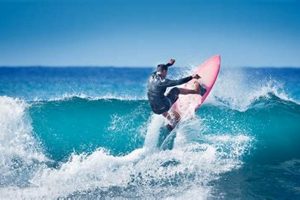
This location, situated at the easternmost end of the Balboa Peninsula, is renowned for its powerful waves that form when swells reflect off the artificial jetty. These conditions create steep, fast-breaking waves that attract experienced bodyboarders and surfers seeking a challenging ride. These waves are a consequence of particular swell directions combined with the jetty’s unique design, resulting in a phenomenon characterized by significant wave heights and a short, intense ride.
The area’s reputation as a premier big-wave location is deeply intertwined with the history of extreme wave riding. Over decades, it has served as a proving ground for watermen and women pushing the boundaries of what is possible. The intense waves demand a high level of skill, physical conditioning, and local knowledge to navigate safely. The area has been documented extensively in surf media, further cementing its status in the broader surfing community.
The following will explore the origins and evolution of this area’s wave characteristics, the potential hazards associated with these conditions, optimal times for witnessing this unique phenomenon, and the necessary safety precautions for those engaging with the waves.
Approaching this dynamic wave environment requires careful planning and respect for its inherent dangers. Prioritize safety and informed decision-making before entering the water.
Tip 1: Prioritize Local Knowledge: Consult experienced local surfers and lifeguards regarding current conditions, hazards, and entry/exit points. Their insight is invaluable for safe navigation.
Tip 2: Assess Swell Direction and Size: Waves are heavily influenced by swell direction. Certain angles create more powerful, unpredictable conditions. Evaluate wave size carefully against personal skill level.
Tip 3: Understand the Impact Zone: The area directly in front of the jetty is a high-impact zone. Avoid lingering in this area, as waves break with immense force, creating strong currents.
Tip 4: Employ Appropriate Equipment: Utilize equipment specifically designed for heavy wave conditions, such as reinforced leashes, high-volume boards, or bodyboards with secure handholds. Ensure equipment is in optimal condition.
Tip 5: Maintain Physical Fitness: Riding these waves demands a high level of cardiovascular fitness and upper body strength for paddling and duck diving. Regular training is essential.
Tip 6: Practice Wave Positioning: Successful wave riding depends on accurate wave positioning. Anticipate wave direction and adjust position accordingly to avoid being caught inside.
Tip 7: Be Aware of Crowd Management: The popularity of the location results in crowded conditions. Exercise caution and respect the established pecking order to minimize conflicts and maintain safety.
Adhering to these tips promotes a safer and more enjoyable experience when confronting the formidable waves. Prioritizing preparation and awareness is crucial.
The following section addresses the historical significance of this challenging wave and its contribution to the landscape of extreme water sports.
1. Wave Formation

The wave dynamics in this area are a direct result of specific oceanographic and man-made factors converging at this precise coastal location. Understanding these influences is crucial to comprehending the powerful and unique wave characteristics.
- Swell Direction and Refraction
South and southwest swells are the primary drivers. As these swells approach the coastline, the artificial jetty acts as an obstacle. This obstruction causes the waves to refract, bending their path and concentrating their energy. The angle of incidence of the swell is critical, as subtle variations can significantly alter wave size and shape.
- Jetty Reflection and Amplification
A key characteristic of this location is wave reflection off the jetty. When an incoming wave encounters the hard surface of the jetty, a portion of its energy is reflected back into the path of subsequent incoming waves. This reflected energy constructively interferes with the incoming wave, causing an amplification of wave height. This interaction contributes to the formation of the characteristically steep and powerful waves.
- Bathymetry and Bottom Contours
The underwater topography plays a crucial role. The rapidly shoaling seabed near the beach, combined with the presence of a deeper channel adjacent to the jetty, contributes to a rapid increase in wave steepness. The bathymetry forces the waves to compress vertically, resulting in a sudden and dramatic increase in wave height just before breaking.
- Wave Period and Energy Transfer
Wave period, the time between successive wave crests, significantly impacts the energy contained within the wave. Longer period swells carry more energy and, when combined with the jetty’s reflective properties, result in larger and more powerful waves. The transfer of energy from deep water to the shallow nearshore zone is highly efficient, leading to the release of immense power upon impact.
The interplay of swell direction, jetty reflection, bathymetry, and wave period generates the signature waves. These combined factors create a challenging and dynamic environment, attracting experienced water sports enthusiasts while simultaneously presenting inherent risks that must be carefully assessed. The precise alignment of these elements dictates the potential for exceptional or hazardous wave conditions.
2. Jetty Influence
The defining characteristic of this surf location is directly attributable to the presence and design of the artificial jetty. This structure, extending perpendicular to the shoreline, fundamentally alters the behavior of incoming waves, transforming what would otherwise be a typical beach break into a unique and often extreme surf environment. The jetty acts as a catalyst, initiating a series of wave phenomena that are essential to the location’s identity.
The primary effect of the jetty is wave reflection. As swells approach the coast, a portion of the wave energy impacts the solid structure of the jetty. This energy is then reflected back outward, interfering with subsequent incoming waves. This interference is constructive, meaning the reflected wave adds to the height and power of the incoming wave. The result is an amplified wave that breaks with significantly more force and intensity than would occur in the absence of the jetty. This amplification is particularly pronounced during south swells, which strike the jetty at an optimal angle for reflection.
Furthermore, the jetty’s presence creates a localized zone of increased wave steepness. As waves refract around the jetty, their energy is compressed into a smaller area. This compression leads to a rapid increase in wave height and a steeper wave face. The steep wave face, combined with the shallow water depth near the beach, contributes to the location’s reputation for producing powerful shorebreak conditions. The jetty, therefore, is not merely a passive element of the landscape but an active agent shaping the very nature of the surfing experience, dictating the wave characteristics that define the area. Its influence extends beyond simple wave reflection to encompass a complex interplay of wave dynamics that are crucial to the formation and character of the waves.
3. Riding Skill

Proficiency in navigating the area’s waves transcends mere recreational surfing; it represents a convergence of physical prowess, refined technique, and acute environmental awareness. Success and safety hinge upon a developed skillset capable of managing the extreme conditions inherent to this location.
- Wave Reading and Anticipation
The ability to accurately assess incoming wave sets, predict wave behavior, and identify optimal take-off points is paramount. Misjudging wave size, direction, or breaking point can quickly lead to hazardous situations. This skill requires extensive experience observing wave patterns and understanding the subtle nuances of the local swell dynamics.
- Paddling Power and Positioning
Efficient and powerful paddling is crucial for catching waves and maintaining position in the line-up. The strong currents and powerful impact zone necessitate a high level of cardiovascular fitness and upper body strength. Precise positioning, informed by wave reading skills, is essential to avoid being caught inside and to maximize wave-riding opportunities.
- Drop Technique and Board Control
The steep wave faces demand a controlled and precise drop. Hesitation or incorrect foot placement can result in a missed wave or a severe wipeout. Once on the wave, maintaining balance and controlling board direction are critical for navigating the fast-breaking waves. This skill requires refined technique and a deep understanding of board dynamics.
- Impact Zone Navigation and Recovery
Even with advanced skills, wipeouts are inevitable. Knowing how to navigate the impact zone, protect oneself from the force of the breaking wave, and quickly recover after a fall is crucial for safety. This includes holding one’s breath for extended periods, understanding current patterns, and using equipment effectively to resurface and return to the line-up.
These interwoven skill sets, honed through experience and rigorous training, are not merely advantageous; they are essential for safe and successful interaction. The potential consequences of inadequate riding skill are significant, underscoring the necessity for a high degree of proficiency when engaging with the waves.
4. Potential Hazards

The area presents a multitude of potential hazards directly related to its unique wave characteristics and physical environment. The powerful waves generated by the jetty’s influence, combined with shallow water depths, create a high-risk environment for even experienced water sports enthusiasts. Failure to recognize and mitigate these hazards can result in serious injury or even fatality. The potential for strong currents pulling individuals away from shore, the risk of collision with the jetty itself, and the sheer force of the breaking waves are significant concerns. A real-life example is the frequent occurrence of injuries such as dislocations, fractures, and concussions sustained from being slammed onto the hard-packed sand by the intense shorebreak. Understanding these potential hazards is, therefore, a fundamental component of engaging safely with the location.
The practical significance of acknowledging these risks extends beyond personal safety. Lifeguard resources are frequently strained due to the high number of rescues required, especially during periods of large swells. Local authorities often issue warnings and closures based on wave conditions, underscoring the inherent dangers. Furthermore, the knowledge of potential hazards informs the development of appropriate safety protocols, equipment standards, and risk management strategies. For instance, the use of specialized leashes, helmets, and other protective gear is directly linked to mitigating the known risks of impact injuries. Similarly, the establishment of designated swim zones and restricted access areas aims to minimize exposure to the most hazardous areas.
In summary, the potential hazards associated with this surf location are an integral aspect of its character and cannot be ignored. These dangers are a direct consequence of the wave dynamics created by the interaction between swell direction and the artificial jetty. Recognizing, understanding, and respecting these potential hazards are essential for responsible participation and for ensuring the safety of all individuals who choose to engage with this challenging environment. Successfully navigating requires a balance of skill, knowledge, and a proactive approach to risk management.
5. Optimal Conditions
Achieving prime wave conditions at this location is dependent on a confluence of meteorological and oceanographic factors. These conditions dictate the size, shape, and power of the waves, influencing the overall surfing experience and safety. The alignment of these factors determines whether the waves are manageable for experienced riders or become excessively dangerous, leading to closures.
- Swell Direction
South and southwest swells are most conducive to creating optimal wave conditions. These swell directions align favorably with the jetty, maximizing wave reflection and amplification. A slight variation in swell angle can significantly alter wave shape and size. Swells arriving from other directions, such as the west or northwest, typically produce less desirable conditions with reduced wave heights and a less defined break.
- Swell Period
A longer swell period, typically 10 seconds or greater, indicates more energy within the wave. These longer period swells are more effectively amplified by the jetty, resulting in larger and more powerful waves. Shorter period swells tend to produce smaller, less organized waves that lack the intensity associated with the location. The ideal swell period falls within a range that balances wave size and manageability.
- Tidal Influence
Tidal fluctuations can impact wave breaking patterns. Lower tides often lead to more abrupt and powerful wave breaks due to the decreased water depth over the shallow sandbar. Higher tides can result in slightly less intense waves, but may also create stronger currents. The optimal tidal stage is generally mid-tide, which balances wave power and navigability.
- Wind Conditions
Light offshore winds are ideal as they groom the wave face, creating a clean and well-defined shape. Onshore winds can negatively impact wave quality, resulting in choppy conditions and reduced wave height. Calm wind conditions are also favorable, allowing for consistent and predictable wave breaks.
The presence of optimal conditions transforms this specific coastal area into a unique destination. These conditions necessitate expertise, physical fitness, and adherence to safety protocols. It is crucial to assess conditions accurately before engaging in water activities and prioritizing personal safety.
6. Historical Significance

The location possesses a prominent place in the history of both surfing and bodyboarding. Its unique wave characteristics have shaped the evolution of these sports, serving as a proving ground for athletes and influencing equipment design. The historical narrative provides context for understanding the area’s present-day status and its ongoing impact on wave riding culture.
- Early Adoption by Bodyboarders
The location was initially embraced by bodyboarders who recognized the potential of its powerful shorebreak. The steep, fast-breaking waves provided an ideal environment for developing new riding techniques and pushing the limits of the sport. Early pioneers often experimented with fin designs and board shapes to maximize performance in these challenging conditions, influencing the trajectory of bodyboarding equipment development.
- Influence on Big-Wave Surfing
The spot became recognized as a location for surfers seeking to hone their skills in larger, more powerful waves. Its reputation attracted surfers who eventually sought to tackle even larger waves at other locations. The experience gained here, navigating steep drops and turbulent conditions, provided a valuable foundation for success in big-wave surfing. It became a stepping stone for surfers aspiring to challenge themselves in increasingly demanding environments.
- Media Representation and Cultural Impact
The location has been featured extensively in surf and bodyboarding media, solidifying its place in the collective consciousness of wave riding enthusiasts. Iconic photographs and video footage have showcased the dramatic wave conditions and the skill of the athletes who ride them. This media exposure has contributed to the location’s status as a destination and has influenced the perception of extreme wave riding.
- Evolution of Safety Measures
The inherent dangers associated with the location have driven the development of improved safety measures and rescue techniques. Lifeguards have implemented specialized training and equipment to respond effectively to incidents in the challenging wave environment. The ongoing need to mitigate risks has fostered a culture of safety awareness among riders and has influenced the design of personal protective gear.
The historical development of wave riding at this specific location is intrinsically linked to the evolution of the sports themselves. Its challenging conditions have shaped riding styles, influenced equipment design, and driven the development of safety protocols. The area’s enduring legacy continues to inspire and challenge wave riders, solidifying its position as a landmark in the history of surfing and bodyboarding.
7. Localism

Localism, the practice of prioritizing access and respect based on established presence within a community, manifests distinctly at this surf location. Its challenging conditions and limited wave opportunities intensify competition, shaping a unique social dynamic within the water.
- Priority and Lineup Etiquette
Localism dictates an implicit hierarchy within the lineup. Individuals who are recognized as long-standing members of the community often receive preferential treatment in wave selection. This system, while informal, can influence wave access and create tension between locals and visiting surfers. Enforcement of this priority system can range from subtle social cues to more overt displays of dominance, impacting the overall surfing experience for non-locals.
- Knowledge of Conditions and Hazards
Local surfers possess an intimate understanding of the specific wave dynamics, rip currents, and potential hazards associated with the area. This knowledge translates to a greater ability to navigate the challenging conditions safely and efficiently. Localism, in this context, can serve as a mechanism for transmitting essential information about the environment. Newcomers often rely on the guidance of local surfers to learn about specific hazards and to understand appropriate safety precautions.
- Protection of the Environment
Some local communities adopt a sense of stewardship over their surf breaks, actively working to protect the environment from pollution and overuse. This sense of ownership can lead to proactive efforts to maintain the cleanliness of the beach and to advocate for responsible coastal management practices. Localism, in this context, can be a positive force for environmental conservation, as established members of the community take responsibility for preserving the integrity of their surf break.
- Potential for Conflict and Exclusion
The practice of localism, while often rooted in a desire to protect resources and maintain order, can also lead to conflict and exclusion. Visiting surfers may encounter hostility or resentment from local surfers, particularly during periods of peak swell or crowding. This tension can manifest as verbal altercations, intentional wave interference, or even more aggressive behavior. The potential for conflict underscores the importance of respecting local customs and demonstrating awareness of the established social dynamics.
These elements highlight the multifaceted nature of localism in the context of this dynamic surf location. It influences wave access, environmental stewardship, and the overall social environment within the water. Understanding the dynamics of localism is essential for any surfer seeking to engage respectfully and safely with this iconic wave.
Frequently Asked Questions
The following addresses common inquiries regarding the surf location, focusing on safety, wave dynamics, and local regulations. This information is intended to provide clarity and promote responsible engagement with this challenging environment.
Question 1: What makes conditions particularly dangerous?
Conditions are primarily dangerous due to the combination of powerful waves refracting off the jetty and the shallow water depth. This results in a steep, fast-breaking wave that slams directly onto the sand. The risk of spinal injuries, concussions, and dislocations is elevated due to the force of impact.
Question 2: When are swells typically at their largest?
Swells generally reach their peak during the late summer and early fall months, coinciding with the hurricane season in the Eastern Pacific Ocean. These swells generate the long-period energy needed to create significantly large waves.
Question 3: Are there specific regulations restricting access or activities?
Local authorities implement closures or restrictions based on wave height and hazardous conditions. Swimming is often prohibited during periods of large swells, and access to certain areas near the jetty may be restricted. Failure to adhere to these regulations can result in fines or other penalties.
Question 4: What level of experience is necessary to engage safely?
A high level of experience is required. Individuals should possess advanced wave-riding skills, a thorough understanding of ocean currents, and the ability to navigate heavy shorebreak conditions. Novice surfers and swimmers are strongly discouraged from entering the water during periods of significant wave activity.
Question 5: What type of equipment is recommended?
Appropriate equipment includes reinforced leashes, high-volume boards or bodyboards with secure handholds, and personal protective gear such as helmets or impact vests. Equipment should be in optimal condition and specifically designed for heavy wave conditions.
Question 6: How can the most current information about conditions be obtained?
Consulting local lifeguards, experienced surfers, and reliable surf forecasting websites is essential. Real-time information regarding wave height, tide levels, and potential hazards should be obtained before entering the water. Heeding posted warnings and advisories is crucial for safety.
Prudent decision-making and respect for prevailing conditions are paramount for mitigating the inherent risks. This area requires a comprehensive understanding of the environment and a commitment to personal safety.
The following information will address the environmental aspects and preservation efforts associated with this specific coastal area.
Conclusion
This exploration of this surf location has illuminated the complex interplay of factors that contribute to its unique and challenging character. The wave formation, influenced by the artificial jetty, creates a dynamic environment demanding advanced skill and acute awareness of potential hazards. Historical significance and localism further shape the experience, adding layers of complexity to responsible engagement. A thorough understanding of these aspects is paramount for mitigating risks and appreciating the area’s role in surfing culture.
Continued vigilance regarding safety protocols, respect for local customs, and proactive environmental stewardship are essential for preserving the integrity of this iconic wave for future generations. Recognizing the inherent power and potential dangers of surf the wedge newport beach necessitates a commitment to responsible participation and a deep respect for the ocean environment. Only through informed decision-making and unwavering adherence to safety guidelines can individuals safely experience the allure of this unique wave location.