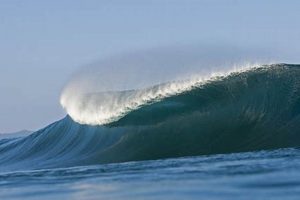
Information regarding wave conditions, weather, and tides at a specific coastal location is compiled in a concise bulletin. This resource is typically used by surfers and other water sports enthusiasts to assess the suitability of the area for their activities. An example includes details about wave height, period, wind speed and direction, and water temperature for a particular beach.
The value of such data lies in its ability to inform safety decisions, optimize recreational experiences, and provide a historical record of environmental conditions. Access to this information allows individuals to make informed judgments about potential hazards, select appropriate equipment, and plan their activities around peak conditions. Furthermore, the collection and analysis of these reports contribute to a broader understanding of coastal dynamics and climate change impacts.
The following discussion will delve into the specifics of how such reports are generated, where they can be accessed, and the factors that influence the reliability of the data they contain.
Guidance Based on Coastal Condition Assessments
The following recommendations are predicated on access to timely and accurate coastal condition evaluations. These insights aim to improve safety and optimize experiences for individuals engaging in ocean-based activities.
Tip 1: Consult Multiple Sources. Reliance on a single data point is inadvisable. Cross-reference information from various platforms, including official meteorological services and local observations, to gain a comprehensive understanding of current circumstances.
Tip 2: Understand Wave Height Reporting Conventions. Significant wave height, typically reported, represents the average of the highest one-third of waves. Individual waves may exceed this value, potentially posing an increased risk.
Tip 3: Assess Wind Direction and Strength. Onshore winds generally degrade conditions, leading to choppy water and reduced wave quality. Conversely, offshore winds can create smoother wave faces, but may also present hazards to those drifting offshore.
Tip 4: Monitor Tidal Fluctuations. Tidal changes significantly impact wave break and current strength. Familiarize oneself with the tidal range for the specific location and adjust activities accordingly.
Tip 5: Evaluate Water Temperature. Prolonged exposure to cold water can lead to hypothermia. Assess water temperature and utilize appropriate thermal protection, such as wetsuits or rash guards, to mitigate this risk.
Tip 6: Identify Potential Hazards. Be aware of submerged objects, rip currents, and marine life. Scout the area at low tide to identify potential obstructions and inquire about recent sightings of dangerous species.
Tip 7: Heed Local Warnings and Regulations. Respect designated swimming areas and heed any posted warnings or advisories from lifeguards or local authorities. These measures are designed to ensure public safety and should not be disregarded.
Adherence to these recommendations, informed by diligent observation and a commitment to safety, will contribute to a more rewarding and secure experience. Continuously reassess conditions and prioritize personal safety above all else.
The subsequent segment will address the geographic specificities related to the interpretation of data in the context of the region in question.
1. Wave Height

Wave height constitutes a primary element within a surf report for Matunuck, Rhode Island. It directly influences the suitability of the location for surfing and other water-based activities. An accurate assessment of wave height is essential for determining the level of difficulty and potential hazards present at the beach. The reported measurement, typically expressed in feet, represents the vertical distance between the crest and trough of a wave. For instance, a reported wave height of 3-4 feet would indicate moderate conditions suitable for intermediate surfers, while heights exceeding 6 feet would signify advanced conditions potentially hazardous for inexperienced individuals. The validity of wave height data is often derived from buoys, local observations, and weather models.
Real-world examples illustrate the practical significance of understanding wave height. In instances where forecasts predict a significant increase in wave height due to an approaching storm, local authorities may issue warnings or close the beach to the public. Conversely, periods of consistently low wave height may attract beginner surfers seeking to practice fundamental skills in a safer environment. Furthermore, knowledge of historical wave height data allows surfers to anticipate seasonal trends and plan their trips accordingly. The interaction between wave height and other factors, such as wind direction and tidal stage, further compounds the complexity of the surfing experience.
In summary, wave height serves as a foundational metric within coastal condition assessments. Challenges associated with accurate measurement and prediction necessitate the consultation of multiple data sources. Understanding the implications of wave height, coupled with other environmental factors, is critical for promoting safety and enhancing the overall surfing experience at Matunuck and similar coastal locations. Further research into predictive modeling and real-time monitoring can lead to improved data accuracy and accessibility.
2. Wind Direction
Wind direction plays a crucial role in shaping wave characteristics and overall conditions at Matunuck. Its influence is a key component of coastal condition assessments and directly affects the quality of the surfing experience.
- Onshore Winds
Onshore winds blow from the ocean towards the shore. They typically degrade wave quality by creating choppy conditions, reducing wave height, and causing waves to break irregularly. At Matunuck, strong onshore winds can render the surf unsuitable for most surfers, especially beginners. Conversely, persistent onshore winds can also lead to the formation of sandbars, which, over time, can influence wave shape and break patterns.
- Offshore Winds
Offshore winds blow from the land out to sea. These winds tend to groom the waves, creating smoother wave faces and holding waves up for longer periods. At Matunuck, offshore winds are highly desirable for surfing as they enhance wave quality and provide opportunities for more advanced maneuvers. However, strong offshore winds can also pose a safety risk by pushing surfers further out to sea, making it difficult to paddle back to shore.
- Side Shore Winds
Side shore winds blow parallel to the shoreline. These winds can have varying effects depending on their strength and direction relative to the wave break. A slight side shore wind can sometimes improve wave shape by creating a longer, more gradual break. However, strong side shore winds can create currents that make it difficult to maintain position in the lineup and increase the risk of being swept down the beach.
- Wind Swell Interaction
Wind direction also interacts with swell direction to determine the overall surf conditions. For example, a groundswell approaching from the south combined with offshore winds can create ideal surfing conditions at Matunuck. Conversely, a windswell generated by a local storm combined with onshore winds can result in messy, unrideable waves. Understanding the relationship between wind direction and swell direction is crucial for accurately predicting surf conditions.
In summary, wind direction significantly impacts the suitability of Matunuck for surfing and other water activities. Its effect on wave quality, coupled with swell direction and local geography, must be considered when interpreting the data. Access to reliable wind direction information, combined with an understanding of its implications, is essential for safe and enjoyable ocean experiences.
3. Tidal Influence

Tidal influence represents a critical factor in the evaluation of coastal conditions. Its impact on wave characteristics, current strength, and water depth necessitates careful consideration when assessing suitability for surfing and other water activities.
- Tidal Range Modulation
The magnitude of tidal fluctuation directly affects wave break. A high tidal range can submerge or expose sandbars, altering wave shape and breaking intensity. For example, at Matunuck, a high tide may cause waves to break further offshore, reducing their size and power near the beach. Conversely, a low tide may result in waves breaking closer to shore with increased intensity, potentially creating hazardous conditions. Understanding the tidal range for a specific date and time is crucial for predicting the surfing conditions accurately.
- Current Generation
Tidal flow generates currents that can significantly impact surfers and swimmers. Ebb tides, flowing seaward, can create strong offshore currents that pose a risk to those caught unaware. Flood tides, flowing landward, may create rip currents along the shoreline, particularly near inlets and jetties. Analyzing the tidal phase in conjunction with local bathymetry helps identify areas prone to strong currents and potential hazards. Real-world examples include instances of surfers requiring rescue due to being swept out to sea by strong ebb tides or struggling against rip currents generated by flood tides.
- Inlet Dynamics
The presence of inlets or breachways significantly complicates tidal influence. These narrow passages amplify tidal flow, resulting in exceptionally strong currents and localized changes in water depth. At Matunuck, the proximity of Potter Pond to the ocean creates such a scenario. The ebb and flood tides rushing through this inlet generate powerful currents that affect wave conditions and present a challenge to water users. Awareness of these inlet dynamics is essential for assessing the safety of surfing or swimming near these areas.
- Timing and Wave Interaction
The timing of high and low tides relative to swell arrival can significantly alter the quality. An incoming tide coinciding with a new swell may create larger, more powerful waves, while an outgoing tide coinciding with a fading swell may result in smaller, weaker waves. Consideration of these temporal relationships is necessary for optimizing recreational experiences and avoiding disappointment. This interaction requires careful monitoring and experience to predict accurately.
In summary, tidal influence is a multifaceted element that profoundly affects wave characteristics, current strength, and overall safety. Its interaction with other factors, such as swell direction, wind conditions, and local bathymetry, further complicates the assessment. A thorough understanding of these dynamics is indispensable for making informed decisions regarding participation in water activities at Matunuck.
4. Water Temperature

Water temperature constitutes a critical variable within a surf report, directly impacting the physiological safety and comfort of individuals engaged in water activities. Its inclusion within a surf report for Matunuck provides essential information for selecting appropriate thermal protection, such as wetsuits or rash guards. Water temperature fluctuates seasonally, with significant drops occurring during the winter months and peak warmth reached during the summer. Low water temperatures can lead to hypothermia, a potentially life-threatening condition characterized by a rapid decrease in core body temperature. A surf report that omits water temperature data compromises the ability of individuals to make informed decisions regarding their safety.
The practical significance of water temperature data is illustrated by real-world scenarios. During the spring and fall shoulder seasons, when air temperatures may be relatively mild, water temperatures can remain significantly colder. Surfers relying solely on air temperature as a guide may underestimate the need for adequate thermal protection, increasing their risk of developing hypothermia. Conversely, during the summer months, consistently warm water temperatures may allow surfers to forego wetsuits altogether, enhancing comfort and freedom of movement. Local surf shops and rental facilities often use water temperature data to advise customers on the appropriate gear selections. Furthermore, scientific studies have demonstrated a direct correlation between water temperature and the incidence of cold-water shock, a physiological response that can lead to drowning.
In summary, water temperature is an indispensable component of a comprehensive coastal assessment. Its inclusion within surf reports empowers individuals to make informed decisions regarding thermal protection, minimizing the risk of hypothermia and other cold-related illnesses. While water temperature is readily measured using various sensor technologies, ensuring the accuracy and reliability of reported data remains a challenge. Continued efforts to improve data collection methods and dissemination practices are essential for promoting safety and enhancing the overall surfing experience at Matunuck and similar coastal locations.
5. Rip Currents

Rip currents constitute a significant hazard within the coastal environment, influencing the safety considerations detailed in a coastal condition assessment. Their presence and intensity directly affect the suitability of Matunuck, Rhode Island, for water activities, particularly surfing and swimming. A comprehensive analysis of potential rip current formation is a crucial element in the formulation of a reliable coastal condition assessment.
- Formation Mechanisms
Rip currents form as a result of wave action transporting water towards the shoreline. This accumulated water must return to the sea, often concentrating into narrow channels where it flows rapidly offshore. Common formation sites include breaks in sandbars, areas near jetties or piers, and locations where wave energy converges. In the context of a coastal condition assessment, identifying these potential formation zones is essential for predicting the likelihood and location of rip currents.
- Indicators and Visual Cues
Recognizing visual cues indicative of rip currents is critical for mitigating risk. These indicators include a channel of choppy, discolored water moving seaward; a line of foam or debris moving offshore; and a break in the pattern of incoming waves. Integration of visual observations into a coastal condition assessment enhances its accuracy and provides timely warnings to beachgoers. Such observations should be made consistently and communicated effectively.
- Impact on Water Safety
Rip currents pose a serious threat to swimmers and surfers, capable of quickly carrying individuals away from the shore. The force of the current can exhaust even experienced swimmers, leading to panic and potential drowning. A responsible coastal condition assessment must include a clear and concise evaluation of rip current risk, providing guidance on safe swimming areas and appropriate responses to encountering a rip current. These reports should emphasize the importance of swimming parallel to the shore to escape the current’s pull.
- Predictive Modeling and Forecasting
Advanced modeling techniques are increasingly utilized to predict rip current formation based on wave conditions, tidal fluctuations, and coastal morphology. Integration of these predictive models into a coastal condition assessment enhances its proactive capabilities, allowing for early warnings and preventative measures. However, the accuracy of these models is dependent on the quality and availability of real-time data and the expertise of those interpreting the results. Limitations of the models must be clearly communicated to avoid overreliance on automated predictions.
The accurate identification and assessment of rip current risk are integral to the utility of a coastal condition assessment. By incorporating detailed observations, predictive modeling, and clear communication of potential hazards, these reports contribute significantly to enhancing water safety and promoting responsible use of coastal resources. Continuous improvement in rip current forecasting and public education remains essential for minimizing the risks associated with these powerful natural phenomena.
6. Local Hazards

Local hazards represent a critical component of coastal condition assessments, directly influencing safety considerations within reports. Their specific identification and integration into a Matunuck assessment is not merely a formality but a necessity for informed decision-making. The omission of these potential threats compromises the practical utility and validity of any coastal condition report. Causes of these hazards can range from natural geological formations to human-induced alterations of the coastal environment. An example includes submerged rocks that, while consistently present, become increasingly dangerous during periods of higher wave energy or lower tidal levels. These rocks can cause injuries to surfers and damage equipment. The inclusion of such specific hazard information, coupled with its correlation to prevailing conditions, significantly enhances the report’s actionable value.
The presence of strong currents near the breachway connecting Potter Pond to the ocean provides another real-life illustration. These currents, exacerbated by tidal fluctuations and storm surge, can quickly overwhelm even experienced swimmers and surfers. A comprehensive assessment should delineate the areas affected by these currents, indicating periods of increased risk based on tidal state and weather patterns. Furthermore, the presence of marine life, such as jellyfish or potentially dangerous fish species, requires inclusion. Their prevalence often fluctuates seasonally and is influenced by water temperature and salinity. These examples underscore that the significance of local hazard information extends beyond a mere listing; rather, its relevance lies in its contextual application within the ever-changing conditions reported.
In conclusion, the detailed identification and contextual integration of local hazards are crucial for ensuring the accuracy and effectiveness of coastal condition reports. Challenges persist in consistently gathering and disseminating this information, particularly in dynamic coastal environments. Continuous monitoring and collaboration between local authorities, experienced water users, and scientific researchers are essential for mitigating risk and promoting safer recreational activities at Matunuck and similar coastal locations. Disregarding or minimizing this information is a negligent oversight that undermines the very purpose of providing assessments.
Frequently Asked Questions
The following addresses common inquiries regarding the interpretation and application of coastal condition reports for Matunuck, Rhode Island. These responses aim to provide clarity and promote safer engagement with the marine environment.
Question 1: What constitutes a reliable source for information regarding conditions?
Multiple sources, including National Weather Service data, local lifeguard observations, and reputable surf forecasting websites, contribute to a comprehensive understanding of conditions. Cross-referencing data from several sources is advisable.
Question 2: How frequently are Matunuck evaluations updated?
Update frequency varies depending on the data source. Official meteorological services typically provide updates several times daily, while local observations may be less frequent. Real-time buoy data provides continuous information but may not capture localized conditions.
Question 3: What is the meaning of “significant wave height” as reported?
Significant wave height represents the average height of the highest one-third of waves within a given period. Individual waves may exceed this measurement, potentially posing an increased risk.
Question 4: How does wind direction influence surf conditions?
Offshore winds generally improve wave quality by creating smoother surfaces. Onshore winds tend to degrade wave quality, resulting in choppy conditions. Side shore winds can create currents that may make positioning difficult.
Question 5: What role do tides play in safety considerations?
Tidal fluctuations impact current strength, wave break, and water depth. Ebb tides can generate strong offshore currents, while flood tides may create rip currents near inlets and jetties.
Question 6: What measures should be taken upon encountering a rip current?
Avoid swimming directly against the current. Instead, swim parallel to the shore until outside the current’s flow, then swim towards the beach. If unable to escape, signal for help and remain calm.
Understanding the nuances of these evaluations requires a commitment to continuous learning and a healthy respect for the inherent variability of coastal conditions. Consultation with experienced local water users is also encouraged.
The subsequent section will delve into resources where you can find this information.
Conclusion
The preceding sections have explored the multifaceted nature of the data, emphasizing the variables influencing its accuracy and utility. Critical elements such as wave height, wind direction, tidal influence, water temperature, rip currents, and local hazards directly impact safety and recreational planning.
Consistent consultation of a “matunuck surf report,” combined with careful observation and a respect for the ocean’s inherent unpredictability, promotes informed decision-making. This practice contributes to both individual well-being and the responsible enjoyment of coastal resources. Further advancements in data collection and predictive modeling hold the potential to enhance the precision and accessibility, further improving the safety and experience for all users of this dynamic coastal environment.