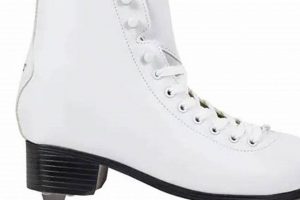
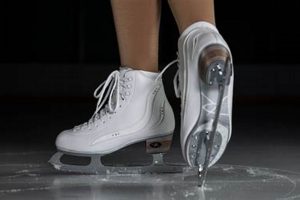
Equipment used for gliding on ice, characterized by a blade attached to a boot, enables complex movements and artistry. These specialized boots and blades, when utilized on a frozen surface, permit athletes to execute jumps, spins, and intricate footwork patterns. For example, a skater might use a particular type of blade designed for enhanced edge control to perform a triple axel jump.
Such equipment plays a critical role in the performance of athletes in a specific winter sport. The design and precision of the blades are essential for stability, control, and the successful execution of technically demanding elements. Throughout history, advancements in blade technology and boot construction have progressively allowed for more complex and athletic performances on the ice. These innovations have influenced the evolution of competitive routines and the aesthetic appeal of the discipline.
The selection and maintenance of this essential sporting equipment are paramount for safety and optimal performance. The type of boot and blade employed can vary depending on the skater’s skill level and the specific requirements of their routine. Understanding these variations and their impact on movement are crucial considerations for both athletes and coaches.
Equipment Optimization Guidelines
This section outlines critical guidelines for selecting and maintaining essential equipment to enhance performance and ensure safety.
Tip 1: Blade Selection: Matching blade profile to skating style is paramount. A blade with a larger rocker may suit skaters focusing on spins, while a straighter blade may benefit those emphasizing jumps. Consider consulting with a qualified coach or fitter to assess individual needs.
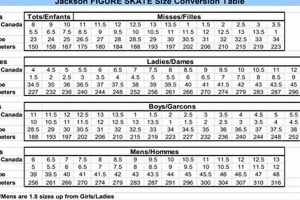
Tip 2: Boot Fit: Ensuring a snug, yet comfortable boot fit is crucial. Ill-fitting boots can lead to blisters, ankle instability, and impaired performance. Professional fitting is recommended to properly mold the boot to the skater’s foot.
Tip 3: Blade Sharpening: Regular blade sharpening is necessary to maintain optimal edge control. The frequency of sharpening depends on ice conditions and the skater’s practice intensity. Seek a qualified technician familiar with figure skating blade geometries.
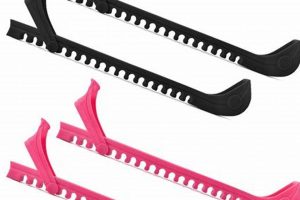
Tip 4: Blade Protection: Proper blade protection is vital to prevent nicks and rust. Always use soakers to absorb moisture after each session and hard guards when walking off the ice.
Tip 5: Boot Maintenance: Regularly inspect boots for wear and tear. Check laces, hooks, and soles for damage and replace them as needed. Wipe down boots after each use to remove moisture and dirt.
Tip 6: Alignment Assessment: Professional assessment of blade alignment relative to the boot is recommended. Misalignment can lead to biomechanical imbalances and increased risk of injury. Minor adjustments can significantly improve performance and reduce strain.
Implementing these guidelines maximizes the functionality of equipment, contributing to enhanced performance, injury prevention, and longevity of the skating investment.
Adhering to these principles will support the skater’s journey toward optimal performance and safe practice.
1. Blade Profile

The blade profile, a fundamental characteristic of equipment, significantly influences a skater’s ability to execute specific maneuvers. It refers to the curvature of the blade along its longitudinal axis. This curvature, or rocker, directly impacts the skater’s balance, edge control, and ability to perform turns, spins, and jumps. A more pronounced rocker allows for quicker turns and enhanced maneuverability, while a flatter profile provides greater stability for landings and forward skating. The selection of an appropriate blade profile is, therefore, critical for success in figure skating disciplines.
Consider, for instance, the difference between blades favored by skaters specializing in freestyle versus those focusing on ice dance. Freestyle skaters, who frequently perform complex jumps and spins, often prefer blades with a deeper rocker. This allows for sharper turns leading into jumps and faster spin initiation. Conversely, ice dancers, whose routines emphasize intricate footwork and partnered movements, might benefit from a flatter profile, which offers increased stability and smoother transitions between edges. This highlights how different skating styles necessitate distinct blade profile characteristics.
Ultimately, the blade profile serves as a key component in the skater’s performance. Understanding the specific effects of rocker on balance, edge control, and maneuverability is essential for both skaters and coaches. Proper blade selection, tailored to the individual’s skating style and skill level, contributes to improved performance, reduced risk of injury, and enhanced enjoyment of the sport. The interplay between blade profile and skating style underscores its importance within the broader context of figure skating.
2. Boot Stiffness

Boot stiffness within figure skating equipment directly influences performance and injury prevention. Greater stiffness provides increased ankle support, which is crucial for executing complex jumps, spins, and landings. The stiffness characteristic originates from the materials and construction of the boot. A rigid boot transfers energy more efficiently from the skater’s leg to the blade, allowing for a more powerful and controlled skating experience. Insufficient stiffness compromises stability and increases the risk of ankle sprains or other injuries during high-impact maneuvers. For example, skaters attempting multi-rotational jumps require boots with high stiffness ratings to withstand the forces generated during rotation and landing. The boot acts as a lever, and its rigidity ensures minimal energy loss and maximum control.
The selection of appropriate boot stiffness depends on the skater’s skill level, body weight, and skating style. Beginner skaters often benefit from boots with moderate stiffness, which allows for greater flexibility and easier development of fundamental skills. Advanced skaters, conversely, typically require significantly stiffer boots to meet the demands of technically challenging routines. The practical application of this understanding involves careful assessment by qualified coaches or fitters. These professionals evaluate the skater’s individual needs and recommend boots with appropriate stiffness characteristics. Properly fitted and appropriately stiff boots contribute to improved performance, reduced fatigue, and enhanced confidence on the ice.
In summary, boot stiffness is a critical component influencing the efficacy and safety of figure skating. Its effect on ankle support, energy transfer, and injury prevention cannot be overstated. Challenges remain in developing materials and construction techniques that offer both high stiffness and optimal comfort. Further research into boot design and customization will likely contribute to improved performance and reduced risk of injury in the sport. The understanding of boot stiffness, alongside other equipment characteristics, is paramount for skaters, coaches, and equipment manufacturers alike.
3. Ankle Support
Ankle support, a critical element in equipment design, directly impacts performance and injury prevention. Insufficient or inadequate support compromises stability and control, while excessive restriction may hinder mobility. The design and construction of the boot component, including materials and lacing systems, are primary determinants of ankle support levels.
- Boot Stiffness and Material Composition
The stiffness of the boot shell is a primary factor in providing lateral and medial ankle support. Stiffer materials, such as reinforced polymers or leather, limit ankle joint movement and prevent excessive pronation or supination. Boots designed for advanced skaters exhibit significantly higher stiffness ratings compared to those intended for beginners. This increased rigidity provides the necessary stability for complex jumps and landings. Improper boot selection, failing to account for the skater’s skill level and body weight, can lead to compromised ankle support and increased risk of injury.
- Lacing Systems and Closure Mechanisms
Lacing systems play a critical role in customizing ankle support. Traditional lacing allows for targeted tightening in specific areas of the boot, enabling skaters to fine-tune the level of support according to their needs. Power straps and buckle systems further enhance adjustability and can provide additional reinforcement in key areas, such as the ankle joint. Incorrect lacing techniques or improperly adjusted closure mechanisms may result in inadequate support, leading to instability and potential injuries. Skaters should be instructed on proper lacing techniques to optimize ankle support and ensure a secure and comfortable fit.
- Boot Height and Cuff Design
The height of the boot cuff directly influences the degree of ankle support provided. Higher cuffs offer greater stability and limit range of motion, while lower cuffs allow for increased flexibility and maneuverability. The cuff design, including its shape and padding, also contributes to overall support and comfort. Boots with anatomically shaped cuffs provide a more secure and supportive fit, reducing pressure points and minimizing the risk of chafing or irritation. The selection of an appropriate boot height and cuff design is, therefore, crucial for optimizing ankle support and performance.
- Customization and Orthotic Intervention
In cases of biomechanical abnormalities or pre-existing ankle conditions, customization and orthotic intervention may be necessary to enhance ankle support. Custom-molded footbeds or orthotics can provide additional arch support and correct alignment issues, reducing stress on the ankle joint. Heat-moldable boots allow for further customization of the boot shell to conform to the skater’s individual foot shape, improving fit and comfort. Skilled boot fitters and medical professionals should be consulted to determine the appropriate level of customization and orthotic intervention required.
The multifaceted nature of ankle support underscores its integral role in mitigating injury risk and facilitating optimal performance in ice figure skating. A comprehensive understanding of boot stiffness, lacing systems, boot height, and customization options allows for informed equipment selection and adaptation, optimizing both athlete well-being and technical proficiency. Proper utilization of these components is essential for maximizing stability, control, and confidence on the ice.
4. Edge Control

Edge control is paramount within ice figure skating; it enables skaters to execute intricate maneuvers, maintain balance, and generate power. Without mastery of edge control, the execution of jumps, spins, and footwork becomes significantly compromised. The ability to manipulate the edges of the blade precisely is the foundation upon which all advanced techniques are built.
- Blade Angle and Pressure
The angle at which the blade contacts the ice, combined with the pressure applied, directly determines the trajectory and speed of movement. A shallower angle and lighter pressure facilitate gliding, while a steeper angle and greater pressure enable sharper turns and acceleration. For instance, when executing a spiral, maintaining a consistent blade angle and pressure is critical for sustaining the position without wobbling or losing balance. Varying these factors allows skaters to transition seamlessly between different movements, controlling their momentum and direction.
- Blade Curvature (Rocker)
The curvature of the blade, known as the rocker, significantly affects edge control. A more pronounced rocker allows for tighter turns and quicker changes in direction, while a flatter rocker provides greater stability and control for linear movements. Consider a skater performing a triple axel jump; a well-defined rocker is essential for initiating the jump with sufficient speed and precision, allowing for the necessary rotation in the air. The design of the rocker contributes directly to the skater’s ability to control the blade’s contact with the ice, enabling complex maneuvers.
- Body Alignment and Posture
Proper body alignment and posture are integral to effective edge control. Maintaining a balanced center of gravity and aligning the body over the skating edge allows for optimal control and stability. For example, during a spin, precise body alignment is critical for maintaining balance and preventing the spin from becoming unstable. Poor posture or misalignment can disrupt the skater’s balance, leading to loss of control and potential falls. The skaters musculoskeletal system must be aligned with gravity’s pull in order to fully realize the power of the blade edging.
- Ice Surface Conditions
The quality of the ice surface affects edge control. Smooth, hard ice provides optimal grip and allows for precise movements, while soft or uneven ice can compromise edge control and increase the risk of slippage. Skaters must adapt their technique based on the ice conditions, adjusting their blade angle and pressure accordingly. In competitions, ice maintenance is crucial for ensuring consistent conditions and allowing skaters to perform at their best. A skilled skater can intuit the ice conditions, and adjust accordingly to maintain control.
These interconnected facets of edge control underscore its central role in defining a skater’s proficiency. Mastering edge control requires constant practice and refinement, integrating blade mechanics, body mechanics, and adaptability to variable ice conditions. Edge control is a vital component in the discipline. It elevates the artistic and athletic performance on ice.
5. Blade Sharpening

Blade sharpening is a critical maintenance procedure that directly affects the performance and safety of ice figure skating. The sharpness and integrity of the blade edges are essential for executing precise maneuvers, maintaining control, and preventing injuries. Neglecting blade sharpening results in compromised edge control, leading to difficulties in performing jumps, spins, and turns.
- Edge Integrity and Grip
Sharpening restores the integrity of the blade edges, creating a distinct inner and outer edge that provides grip on the ice. Dull edges cause slippage, reducing control and increasing the risk of falls. For instance, when executing a Lutz jump, the skater relies on a sharp outside edge to initiate the takeoff. A dull edge can cause the skater to lose control and abort the jump. The sharpness of the edges directly impacts the skater’s ability to maintain stability and execute complex elements with confidence.
- Channel Depth and Water Film
The sharpening process creates a channel, or “hollow,” along the length of the blade. This channel affects the interaction between the blade and the ice surface. The depth of the hollow influences the amount of water film created beneath the blade, which is crucial for gliding. A deeper hollow provides greater grip but also increases friction, while a shallower hollow allows for smoother gliding but reduces edge control. Skaters must consider the depth of the hollow when sharpening their blades, balancing the need for grip with the desire for effortless gliding.
- Sharpening Frequency and Technique
The frequency of sharpening depends on the skater’s skill level, skating frequency, and ice conditions. More advanced skaters who practice frequently may require sharpening as often as once a week, while recreational skaters may only need to sharpen their blades every few months. The technique used to sharpen the blades is also critical. Improper sharpening can damage the blades, altering their profile and affecting their performance. It is recommended that blade sharpening be performed by a qualified technician who is familiar with figure skating blades.
- Blade Protection and Maintenance
Proper blade protection and maintenance are essential for preserving the sharpness of the edges. After each skating session, the blades should be dried thoroughly to prevent rust. Soakers, which are absorbent covers, should be used to protect the blades while in storage. Hard guards should be used when walking on surfaces other than ice to prevent nicks and scratches. Neglecting blade protection can lead to premature dulling of the edges and reduced performance.
These considerations regarding blade sharpening are fundamental for optimizing performance and ensuring safety in figure skating. Neglecting this crucial aspect can compromise edge control and raise the risk of injuries. Routine maintenance and sharpening must be incorporated into the athlete’s schedule to uphold safety and performance standards on the ice.
6. Proper Fit

The concept of proper fit within the context of figure skating equipment represents a critical, causal factor influencing performance and safety. Incorrectly fitted skates induce a cascade of negative effects, ranging from compromised stability and control to heightened risk of injury. A boot that is too large fails to provide adequate ankle support, hindering the skater’s ability to execute precise movements and maintain balance. Conversely, a boot that is too small restricts blood flow and causes discomfort, impeding performance and potentially leading to long-term foot problems. Real-world examples underscore the significance: a skater with improperly fitted boots may struggle with jump landings, exhibit inconsistent spin control, and experience increased fatigue, all directly attributable to the ill-fitting equipment. This understanding emphasizes that proper fit is not merely a matter of comfort, but an integral component of effective and safe figure skating.
Practical applications of this understanding permeate all levels of figure skating, from recreational to professional. Coaches and skate technicians emphasize the importance of professional fitting to ensure that boots conform precisely to the skater’s foot shape and size. This involves careful measurement, assessment of foot biomechanics, and, in some cases, customization of the boot through heat molding or the addition of orthotics. Furthermore, regular monitoring of the fit is essential, particularly for young skaters whose feet are still growing. Failure to address fit issues promptly can impede skill development and increase the likelihood of overuse injuries. The meticulous attention to fit reflects the recognition that the skate functions as an extension of the skater’s body, and its proper integration is paramount for optimal performance.
In summary, proper fit is an indispensable element in the realm of figure skating, wielding direct and significant influence over performance, safety, and long-term athletic development. Challenges remain in achieving a consistently accurate and comfortable fit, particularly given individual variations in foot shape and biomechanics. Ongoing research into skate design and fitting techniques aims to address these challenges, ensuring that all skaters have access to equipment that supports their athletic goals while minimizing the risk of injury. Recognizing the importance of proper fit and prioritizing meticulous fitting procedures represents a fundamental aspect of responsible figure skating practice.
Frequently Asked Questions
This section addresses common inquiries regarding equipment vital to figure skating, offering insights to enhance understanding and safety.
Question 1: What distinguishes a blade intended for figure skating from one used in hockey?
Figure skating blades possess a pronounced curve, or rocker, and a toothed toe pick, enabling skaters to execute jumps and spins. Hockey blades lack these features, prioritizing speed and maneuverability for linear skating.
Question 2: How often should blades be sharpened?
Sharpening frequency depends on skating frequency, skill level, and ice conditions. Advanced skaters may require sharpening weekly, while recreational skaters may sharpen bi-annually. A qualified technician assesses blade integrity to determine the need for sharpening.
Question 3: What factors determine boot stiffness appropriateness?
Boot stiffness selection depends on skill level, body weight, and skating style. Advanced skaters require stiffer boots for support during complex maneuvers, while beginners benefit from more flexible boots for easier skill development.
Question 4: How does blade rocker affect skating performance?
A pronounced rocker facilitates tighter turns and quicker changes in direction. A flatter rocker offers greater stability for linear skating and landings. The appropriate rocker depends on the skater’s preferred style and discipline.
Question 5: What role does proper lacing play in ankle support?
Proper lacing techniques allow for customizable ankle support. Targeted tightening in specific areas of the boot enhances stability and prevents excessive ankle movement, reducing the risk of injury.
Question 6: How do ice conditions influence equipment selection and maintenance?
Soft ice necessitates more frequent sharpening to maintain edge control. Hard ice requires less frequent sharpening but may demand greater precision in blade alignment to prevent excessive friction. Proper blade maintenance, including drying and protection from rust, extends the lifespan of the equipment regardless of ice conditions.
Understanding equipment characteristics is critical for optimizing performance and ensuring safety. Regular maintenance and informed equipment selection are essential for all skaters.
The next article section will discuss the role of coaches and skilled technicians in equipment selection.
Conclusion
This exploration has underscored the multifaceted nature of equipment used in a specific winter sport. The interplay of blade profile, boot stiffness, ankle support, edge control, blade sharpening, and proper fit dictates both performance capability and injury risk. Optimization of these elements necessitates a comprehensive understanding of their individual and collective effects.
Continued research and refinement in equipment design and maintenance are essential for advancing athletic potential and ensuring skater safety. Prioritizing informed equipment selection and meticulous maintenance protocols is paramount for realizing the full benefits of this technically demanding and visually captivating discipline.