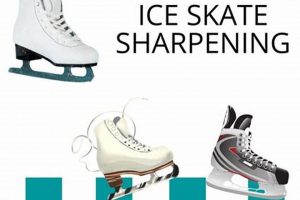
The apparatus worn on the feet that facilitates gliding across ice surfaces comes in specialized forms dictated by the intended activity. Two prominent examples of this specialized equipment are designed for different ice-based pursuits. The distinctions manifest in blade design, boot construction, and overall function, reflecting the disparate demands of each sport. For example, one type features a shorter, curved blade with a toe pick, enabling complex jumps and spins, while the other utilizes a longer, flatter blade for speed and agility in team play.
Understanding the nuances between these variations is critical for both participants and observers. Selection of the appropriate type can significantly impact performance, safety, and the ability to execute specific maneuvers. The evolution of each design reflects centuries of refinement, driven by advancements in materials science and the increasing athleticism of the respective disciplines. Their development mirrors the unique historical trajectories and competitive landscapes of the sports they serve.
The following sections will delve into a comparative analysis of the blade profiles, boot construction materials, support characteristics, and intended usage scenarios for each type. The analysis will highlight the specific features that optimize performance within each discipline, clarifying the critical differences between these essential pieces of sporting equipment.
Guidance on Distinguishing Ice Hockey Skates and Figure Skates
The following guidance aims to clarify the differences between the two types of ice skates, enabling informed selection based on intended use. It is imperative to choose the appropriate skate type to maximize performance and minimize the risk of injury.
Tip 1: Blade Curvature: Observe the blade profile. Figure skates possess a more pronounced curvature along the blade’s length, facilitating tighter turns and spins. Ice hockey skates feature a flatter profile, prioritizing linear speed and agility.
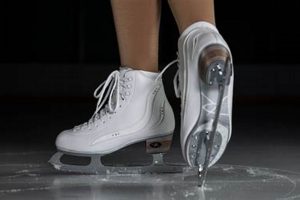
Tip 2: Toe Pick Presence: Identify the presence of a toe pick. Figure skates are characterized by a series of teeth at the front of the blade, essential for executing jumps and spins. Ice hockey skates lack this feature, promoting unobstructed forward movement.
Tip 3: Boot Stiffness: Evaluate boot rigidity. Figure skate boots are generally stiffer, providing enhanced ankle support necessary for landing jumps. Ice hockey skate boots offer greater flexibility, enabling sharper turns and quicker acceleration.
Tip 4: Blade Length: Compare blade length relative to boot size. Figure skate blades typically extend slightly beyond the heel of the boot. Ice hockey skate blades are generally shorter, optimizing maneuverability in confined spaces.
Tip 5: Ankle Support Height: Examine the height of the boot around the ankle. Figure skate boots extend higher up the ankle, providing maximum stability. Ice hockey skate boots are often lower, allowing for greater range of motion during skating strides.
Tip 6: Intended Use Assessment: Determine the primary skating activity. If the focus is on jumps, spins, and artistic expression, figure skates are appropriate. If the objective is team play, speed, and puck handling, ice hockey skates are required.
By recognizing the aforementioned differentiating features, individuals can effectively select the equipment best suited to their specific needs, ensuring both performance enhancement and safety on the ice.
The subsequent section will address common misconceptions regarding the use and maintenance of both types of skates, providing practical insights for optimal performance and longevity.
1. Blade Curvature

Blade curvature, also known as the rocker, significantly differentiates ice hockey skates from figure skates. The rocker describes the continuous curve along the length of the blade. The degree of curvature directly influences the skate’s maneuverability, speed, and stability. In figure skates, a deeper rocker facilitates tighter turns and allows for the execution of spins on a smaller contact point. This design characteristic is fundamental for performing complex routines and jumps, as it enables the skater to maintain balance during rapid rotations and precise movements. The curvature is precisely calibrated to allow for optimal edge control necessary for tracing figures and landing jumps.
In contrast, ice hockey skates exhibit a shallower rocker. This flatter profile maximizes the blade’s contact with the ice surface, promoting greater straight-line speed and efficient energy transfer during strides. The reduced curvature enhances stability at high speeds, crucial for navigating the rink and reacting quickly in dynamic gameplay scenarios. A shallower rocker is less conducive to tight turns and spins; however, it prioritizes the agility and responsiveness required for quick stops, starts, and changes of direction essential in hockey. The blade is engineered to provide optimal grip and power when pushing off and maintaining speed while skating.
Therefore, blade curvature is a defining characteristic impacting the functionality and application of each skate type. The distinct rocker profiles reflect the differing demands of figure skating and ice hockey. Selecting a skate with the appropriate blade curvature is critical for maximizing performance and ensuring safety within each respective discipline. Understanding the relationship between blade curvature and skate performance is vital for skaters seeking to optimize their skills and maintain control on the ice.
2. Toe Pick

The toe pick is a defining feature of figure skates, representing a significant point of divergence from ice hockey skates. This set of serrated teeth located at the front of the figure skate blade serves a critical function in enabling specific maneuvers inherent to the sport. Its absence on ice hockey skates is not an oversight but rather a deliberate design choice reflecting the different performance requirements of each discipline. The presence of the toe pick facilitates jumps, spins, and certain footwork elements unique to figure skating. For example, the skater utilizes the toe pick to initiate jumps such as the Lutz or the Flip, embedding it into the ice to generate the necessary lift and rotation. Similarly, the toe pick assists in maintaining balance and control during intricate spin sequences. The absence of this feature would render these techniques virtually impossible.
Ice hockey skates, in contrast, are designed for speed, agility, and rapid directional changes. The presence of a toe pick would impede these movements, potentially causing tripping or instability during gameplay. The smooth, uninterrupted blade surface of a hockey skate allows for seamless gliding and efficient power transfer, essential for accelerating, stopping, and executing sharp turns. The strategic omission of the toe pick prioritizes safety and performance within the high-speed, contact-driven environment of ice hockey. The risk of catching the toe pick on the ice during a stride or a sudden maneuver would significantly increase the likelihood of falls and injuries, thus justifying its absence.
In summary, the presence or absence of the toe pick is a fundamental distinction between figure skates and ice hockey skates, directly correlated with the specific skill sets and performance demands of each sport. The toe pick is integral to the execution of figure skating techniques, whereas its absence on ice hockey skates enhances safety and agility, aligning with the requirements of dynamic gameplay. The functionality serves as a prime example of how specialized equipment design caters to the unique challenges and objectives within distinct athletic domains.
3. Boot Stiffness

Boot stiffness is a critical design parameter differentiating ice hockey skates from figure skates, directly influencing performance, support, and injury prevention. The level of rigidity is tailored to the specific movements and stresses encountered in each discipline, reflecting a fundamental difference in athletic demands. This attribute influences energy transfer, ankle stability, and overall control on the ice.
- Lateral Support and Ankle Stability
Figure skate boots necessitate exceptional lateral support to stabilize the ankle during landings from jumps and execution of complex spins. High boot stiffness minimizes ankle roll and provides a rigid platform for energy transfer during rotations. Ice hockey skate boots require a degree of flexibility to facilitate the deep knee bends and rapid directional changes crucial for skating agility. Excessive stiffness would impede range of motion and hinder performance.
- Energy Transfer Efficiency
Stiffer figure skate boots optimize energy transfer from the skater’s leg to the blade, maximizing the force applied during jumps and generating propulsion. This minimizes energy loss through boot deformation. Ice hockey skate boots strike a balance between stiffness and flexibility to allow for responsive skating strides and powerful acceleration. Too much stiffness can reduce a skater’s ability to generate explosive movements and maintain optimal stride length.
- Impact Absorption and Injury Mitigation
Figure skate boots often incorporate specialized padding and construction techniques to absorb impact forces generated during landings from high jumps. This helps reduce the risk of ankle and leg injuries. Ice hockey skate boots prioritize impact protection from external forces, such as pucks and collisions with other players. Stiffer materials and reinforced construction provide a barrier against blunt trauma.
- Material Composition and Construction
Figure skate boots are typically constructed from multiple layers of stiff leather or synthetic materials, often heat-moldable to conform to the skater’s foot. This customized fit enhances support and control. Ice hockey skate boots commonly utilize composite materials and advanced molding techniques to achieve a balance of stiffness, weight, and comfort. The materials are selected for their durability and ability to withstand the rigors of competitive play.
In summary, the divergent requirements of figure skating and ice hockey dictate distinct boot stiffness characteristics. Figure skates prioritize maximum ankle support and energy transfer for jumps and spins, while ice hockey skates balance support with the flexibility necessary for agility and impact protection. Selecting the appropriate boot stiffness is paramount for optimizing performance and minimizing the risk of injury in each discipline, further emphasizing the fundamental differences between the equipment used in these two ice sports.
4. Ankle Support

Ankle support represents a crucial differentiator between ice hockey skates and figure skates, dictating stability, injury prevention, and the capacity to execute sport-specific maneuvers. The level and type of support are meticulously engineered to align with the biomechanical demands of each activity. Insufficient or inappropriate ankle support can lead to compromised performance and heightened risk of injury.
- Boot Height and Stiffness
Figure skates generally feature a higher boot that extends further up the ankle compared to ice hockey skates. This increased height, combined with stiffer materials like reinforced leather or composite synthetics, provides maximum lateral support. The rigid structure minimizes ankle flexion and eversion, crucial for stabilizing the joint during landings from jumps and executing intricate spins. Ice hockey skates typically employ a lower cut boot, allowing for greater range of motion and forward flexion necessary for powerful strides and quick transitions. While offering less direct lateral support, they often incorporate internal padding and lacing systems to enhance stability without restricting agility. The variance in height and stiffness reflects the differing needs for controlled stability versus dynamic mobility.
- Lacing Systems and Closure Mechanisms
The lacing system plays a pivotal role in customizing ankle support. Figure skates often utilize intricate lacing patterns that allow skaters to precisely adjust the tightness and distribution of pressure around the ankle. This fine-tuning capability ensures a snug, secure fit, maximizing support and preventing slippage during demanding routines. Power straps, commonly found in ice hockey skates, provide additional reinforcement across the ankle joint, enhancing stability during rapid acceleration and directional changes. These straps offer a quicker, more convenient adjustment compared to traditional lacing, facilitating on-the-fly modifications during gameplay. The lacing and closure systems are integral to tailoring ankle support to individual anatomical variations and preferred performance characteristics.
- Internal Padding and Heel Counters
Strategic placement of internal padding contributes significantly to ankle support and comfort. Figure skates frequently incorporate dense, anatomically shaped padding around the ankle bones to minimize pressure points and enhance stability. This padding acts as a cushion, absorbing impact forces and preventing chafing during prolonged use. Ice hockey skates often feature molded heel counters that provide a secure, contoured fit around the heel and ankle. This design element minimizes heel lift and slippage, contributing to overall stability and preventing ankle instability during skating strides. The selection and configuration of internal padding and heel counters are critical for optimizing both support and comfort within each skate type.
- Customization and Fit
The ability to customize the fit of the skate is paramount for achieving optimal ankle support. Heat-moldable figure skate boots allow for precise contouring to the individual’s foot and ankle shape, maximizing contact and minimizing empty space that could compromise stability. Similarly, custom footbeds and orthotics can be incorporated into both figure and ice hockey skates to provide personalized arch support and alignment, addressing biomechanical imbalances that may contribute to ankle instability. A properly fitted skate, tailored to the specific anatomy of the skater, is essential for maximizing the effectiveness of the built-in ankle support features and preventing potential injuries.
The preceding discussion underscores the critical relationship between ankle support and skate design in both figure skating and ice hockey. Each sport demands a unique balance of stability, flexibility, and impact protection, necessitating specialized features in skate construction. By understanding the nuances of boot height, lacing systems, internal padding, and customization options, skaters can select the appropriate equipment to optimize performance and mitigate the risk of ankle injuries, highlighting the importance of informed equipment selection for success and safety on the ice.
5. Blade Length

Blade length is a defining characteristic that significantly differentiates ice hockey skates from figure skates, influencing maneuverability, stability, and overall performance. The variations in blade length are not arbitrary; rather, they are carefully calibrated to suit the specific demands and techniques employed in each sport.
- Maneuverability and Agility
Figure skate blades are typically longer, extending slightly beyond the heel of the boot. This extended length provides a greater surface area for edge control, enabling intricate turns, spins, and complex footwork sequences. The longer blade allows figure skaters to maintain balance and stability while executing demanding maneuvers. In contrast, ice hockey skate blades are shorter relative to the boot. This shorter length enhances agility and allows for quicker turns and rapid changes of direction, crucial for navigating the fast-paced, dynamic environment of a hockey game. The reduced blade length promotes responsiveness and maneuverability in tight spaces.
- Speed and Acceleration
The shorter blade length of ice hockey skates facilitates faster acceleration and higher top speeds. The reduced weight and length allow for more efficient strides and rapid leg turnover. Hockey players rely on speed and agility to gain an advantage on the ice, and the shorter blade length optimizes these attributes. Figure skate blades, while enabling intricate maneuvers, are not optimized for pure speed. The longer blade requires more energy to propel and maintain momentum, making it less conducive to rapid acceleration and high-speed skating.
- Stability and Balance
Figure skate blades are designed to provide maximum stability during complex rotations and landings. The longer blade offers a larger platform for balance, enabling skaters to maintain control while executing jumps and spins. The extended length helps distribute weight and reduce the risk of losing balance during demanding routines. Ice hockey skate blades prioritize agility over absolute stability. While stability is still important, the shorter blade length allows for greater freedom of movement and quick adjustments to maintain balance during dynamic gameplay. The focus is on responsiveness and the ability to react quickly to changing conditions on the ice.
- Blade Construction and Material
The materials used in the blade influence overall performance. High-quality steel allows for sharp edges that are essential for both types of skating. However, the longer blades of figure skates require greater precision in manufacturing to ensure consistent curvature and edge quality along the entire length. Ice hockey skate blades are engineered for durability and resistance to impact, reflecting the physical demands of the sport. The shorter length facilitates greater stiffness and reduces the risk of bending or breaking during collisions.
In conclusion, blade length is a critical factor differentiating ice hockey skates from figure skates. The longer blade of figure skates optimizes maneuverability and stability for complex routines, while the shorter blade of ice hockey skates enhances agility and speed for dynamic gameplay. These design variations reflect the distinct biomechanical demands of each sport, underscoring the importance of selecting the appropriate skate type to maximize performance and minimize the risk of injury.
6. Blade Material

The composition of the blade in both ice hockey skates and figure skates is a critical factor influencing performance, durability, and maintenance requirements. The choice of material directly affects the blade’s ability to hold an edge, withstand stress, and resist corrosion. While both types of skates utilize steel as the primary component, the specific alloys and hardening processes differ to accommodate the unique demands of each discipline. High-carbon steel is frequently employed due to its hardness and ability to maintain a sharp edge. However, untreated high-carbon steel is susceptible to rust, necessitating regular maintenance. The material’s properties determine the frequency of sharpening and the blade’s lifespan under typical usage conditions. Improper material selection can lead to premature wear, compromised performance, and increased risk of failure.
Figure skate blades, for example, often incorporate a higher percentage of chromium to enhance corrosion resistance, reflecting the greater exposure to moisture during intricate routines and frequent edge work. The blades may also undergo specialized heat treatments to achieve optimal hardness and flexibility, allowing them to withstand the stresses of landing jumps and performing spins. Ice hockey skate blades, in contrast, may prioritize impact resistance and toughness, utilizing alloys that provide greater resilience against puck impacts and collisions with other players. The selection of material is often a trade-off between edge retention, durability, and weight. Lighter materials can improve agility but may compromise the blade’s ability to withstand heavy use. Real-world examples include professional hockey players who require blades that can withstand the rigors of daily practice and intense gameplay, while figure skaters need blades that maintain a precise edge for executing complex routines.
Understanding the relationship between blade material and performance is essential for selecting and maintaining skates effectively. Skaters and coaches must consider the intended use, skill level, and environmental conditions when choosing the appropriate blade material. Regular inspection and maintenance, including sharpening and rust prevention, are crucial for prolonging the life of the blades and ensuring optimal performance. The choice of blade material is an integral component of overall skate performance and significantly contributes to a skater’s ability to execute their skills effectively and safely.
7. Usage Scenario

The selection between ice hockey skates and figure skates is fundamentally determined by the intended usage scenario. The specific activities for which the skates are designed dictate the features and characteristics that optimize performance and safety. Each sport imposes unique demands on the equipment, necessitating specialized designs. Ice hockey, a team-based sport involving speed, agility, and physical contact, requires skates engineered for rapid acceleration, quick turns, and impact resistance. Figure skating, conversely, prioritizes precision, balance, and artistry, demanding skates capable of facilitating intricate footwork, jumps, and spins. A figure skater attempting to play ice hockey with their equipment would be at a distinct disadvantage, lacking the necessary support and blade profile for efficient skating and puck handling. Similarly, an ice hockey player using figure skates would struggle to maintain balance and control, especially during high-speed maneuvers and physical confrontations.
The correlation between usage scenario and skate design is evident in various aspects. For instance, the toe pick on figure skates is indispensable for executing jumps and spins, while its absence on ice hockey skates prevents interference with skating strides and reduces the risk of accidental tripping. The stiffer boot construction of figure skates provides the necessary ankle support for landing jumps, whereas the more flexible boot of ice hockey skates allows for greater ankle mobility and agility. These differences are not merely aesthetic; they are functionally determined by the specific movements and stresses encountered in each sport. Real-world examples include competitive figure skaters utilizing custom-fitted boots with specific blade profiles tailored to their individual skating style and jump repertoire, or professional hockey players relying on reinforced skate boots designed to withstand the impact of pucks and collisions.
In summary, the usage scenario is the primary determinant in choosing between ice hockey skates and figure skates. Understanding the specific demands of each sport is crucial for selecting the appropriate equipment and maximizing performance. The specialized designs of each skate type reflect the unique challenges and objectives within their respective disciplines. The intentional engineering and meticulous design are all designed to optimize the wearer capabilities to the best performance for that sport. Failing to recognize this fundamental distinction can result in compromised performance, increased risk of injury, and an inability to fully participate in the chosen activity.
Frequently Asked Questions
The following section addresses common inquiries regarding the distinctions between ice hockey skates and figure skates, providing clarity on their respective features and intended applications.
Question 1: Is it acceptable to use figure skates for ice hockey?
Using figure skates for ice hockey is strongly discouraged. The design differences, particularly the presence of a toe pick and the blade curvature, impede agility and increase the risk of injury in the dynamic environment of ice hockey.
Question 2: Can ice hockey skates be used for figure skating?
While basic skating is possible, ice hockey skates are not suitable for executing the jumps, spins, and intricate footwork characteristic of figure skating. The lack of a toe pick and the flatter blade profile limit the ability to perform these maneuvers.
Question 3: How does the boot stiffness differ between the two types of skates?
Figure skate boots are generally stiffer, providing enhanced ankle support necessary for landing jumps. Ice hockey skate boots offer more flexibility, enabling greater range of motion and agility during skating strides.
Question 4: What is the purpose of the toe pick on figure skates?
The toe pick serves as an essential tool for initiating jumps, spins, and certain footwork elements unique to figure skating. It allows the skater to gain purchase on the ice and generate the necessary lift and rotation.
Question 5: How often should the blades be sharpened on each type of skate?
Sharpening frequency depends on usage and skating surface conditions. However, figure skate blades generally require more frequent sharpening due to the intricate edge work and greater surface contact. Ice hockey skate blades are sharpened as needed to maintain edge for turning and stopping.
Question 6: Are there hybrid skates that combine features of both ice hockey and figure skates?
While some recreational skates may incorporate elements of both designs, true hybrid skates suitable for advanced performance in either discipline are uncommon. Specialization is paramount for optimal results.
Understanding the nuances addressed in these questions is crucial for selecting the appropriate equipment and ensuring both performance enhancement and safety on the ice.
The subsequent section will explore the historical evolution of both ice hockey skates and figure skates, tracing their development from rudimentary beginnings to the sophisticated equipment of today.
Ice Hockey Skates vs Figure Skates
This exploration has elucidated the fundamental differences between ice hockey skates and figure skates. The analysis encompassed blade profile, boot construction, support characteristics, and intended usage scenarios. The design choices reflect the unique biomechanical demands and performance objectives of each discipline. Differentiation is paramount, given the distinct requirements for agility, stability, and specialized maneuvers.
The information presented is intended to inform equipment selection and enhance awareness of the critical engineering principles underlying these specialized sporting tools. Recognizing these distinctions fosters a deeper appreciation for the nuances of both ice hockey and figure skating, promoting informed participation and optimized performance in either pursuit.