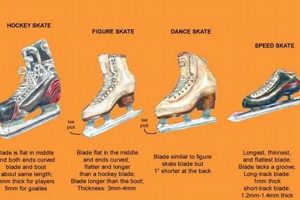
Specialized footwear designed for ice skating, enabling specific maneuvers and artistry on the ice, is characterized by a high boot for ankle support and a bladed sole with a specific curvature and toe pick. These skates are commonly employed in the discipline of figure skating, allowing athletes to execute jumps, spins, and intricate footwork. The design and materials used influence the skater’s performance and control.
The use of appropriate skating equipment is paramount for safety, performance enhancement, and the execution of advanced figure skating techniques. Historical development has yielded ongoing improvements in blade design, boot construction, and material composition, contributing to enhanced responsiveness and durability. Proper fit and maintenance are essential for optimizing the equipment’s effectiveness and longevity. These factors directly impact an athletes comfort and capability on the ice.
The following discussion will delve into the specific elements influencing the selection and maintenance of figure skating equipment, examining the implications of blade design, boot construction, and appropriate fitting procedures. This exploration provides an understanding of the crucial role these components play in the overall performance and safety of figure skaters.
Guidance for Optimal Figure Skating Equipment Selection and Maintenance
Effective use and care of figure skating equipment contributes significantly to performance and safety. The following recommendations emphasize essential considerations for selecting and maintaining such equipment.
Tip 1: Blade Selection Based on Skill Level: Novice skaters should prioritize blades with a less aggressive profile and smaller toe picks to facilitate balance and controlled movements. More advanced skaters may benefit from blades with more pronounced curves and larger toe picks, enabling complex jumps and spins.
Tip 2: Boot Stiffness Matching Skating Proficiency: Beginners generally benefit from boots offering moderate stiffness for increased ankle support. As skills progress, stiffer boots that offer increased responsiveness and control may become necessary for executing advanced maneuvers.
Tip 3: Professional Fitting for Optimal Comfort and Performance: A qualified skate technician should conduct a professional fitting to ensure proper boot size and width. Ill-fitting boots can cause discomfort, blisters, and hinder performance, while correct fitting allows for optimal energy transfer and control.
Tip 4: Regular Blade Sharpening for Enhanced Edge Control: Consistent blade sharpening is critical for maintaining clean edges, which are essential for executing turns, jumps, and spins. The frequency of sharpening depends on ice time and skating style; however, periodic inspection is recommended.
Tip 5: Proper Storage and Drying to Prevent Corrosion: After each skating session, blades should be thoroughly dried with a clean cloth and protected with blade covers to prevent rust. Boots should be stored in a well-ventilated area to prevent moisture buildup and odor.
Tip 6: Routine Inspection for Wear and Tear: Regularly inspect boots for signs of damage, such as cracks or loose stitching. Check blades for chips, excessive wear, or signs of detachment. Early detection of these issues can prevent more serious problems and extend the life of the equipment.
Adhering to these guidelines regarding selection, fitting, and maintenance ensures figure skating equipment remains in optimal condition, contributing to both enhanced performance and reduced risk of injury.
The subsequent sections of this discussion will explore specific equipment modifications and advanced maintenance techniques, further improving skater performance and equipment longevity.
1. Blade Quality

The quality of the blade is a critical determinant of performance characteristics in ice skating. Its composition, construction, and design directly impact the skater’s ability to execute maneuvers and maintain stability.
- Steel Composition and Hardness
The steel alloy used in the blade dictates its hardness, edge retention, and resistance to corrosion. Higher-quality blades are typically manufactured from high-carbon steel, providing superior edge sharpness and durability compared to blades made from softer metals. Edge retention directly influences the skater’s ability to maintain control during intricate footwork and landings. Blades crafted from less durable alloys are prone to dulling, requiring more frequent sharpening and impacting performance consistency.
- Blade Curvature and Radius of Hollow (ROH)
The curvature of the blade, encompassing both the rocker and the radius of hollow, significantly influences the skater’s agility and glide. The rocker, or longitudinal curve, determines the maneuverability of the blade. A more pronounced rocker facilitates tighter turns, while a flatter rocker provides greater stability for straight-line skating. The ROH, the concave shape ground into the blade’s underside, governs edge engagement with the ice. A deeper ROH offers more bite, enhancing control during jumps and spins, while a shallower ROH provides smoother glide.
- Blade Mounting and Alignment
Precise blade mounting and alignment are crucial for optimal performance. Misaligned blades can cause instability, uneven wear, and difficulty in executing specific skating elements. Improper alignment can shift the skater’s center of gravity, leading to balance issues and increased risk of falls. Skilled technicians ensure that blades are correctly positioned relative to the boot, taking into account the skater’s individual anatomy and skating style.
- Toe Pick Configuration and Placement
The toe pick, a series of serrated teeth located at the front of the blade, plays a key role in jump takeoffs and specific footwork sequences. The size, shape, and placement of the toe pick affect the skater’s ability to initiate jumps and control their rotation. Larger toe picks provide more grip for powerful jumps, while smaller toe picks offer greater precision for intricate footwork. The configuration of the toe pick must be carefully considered based on the skater’s skill level and the types of elements they perform.
The interplay between these elements underscores the importance of selecting blades that are tailored to the skater’s individual needs and preferences. Prioritizing blade quality through careful material selection, precise construction, and expert fitting ensures optimal performance and safety for figure skaters.
2. Boot Stiffness
Boot stiffness is a critical parameter in figure skating equipment that significantly influences performance and skater safety. The degree of rigidity provided by the boot directly impacts ankle support, control, and the ability to execute complex maneuvers. The appropriate stiffness level is highly dependent on the skater’s skill level, body weight, and skating style.
- Ankle Support and Stability
Boot stiffness provides essential ankle support, preventing excessive pronation or supination, which can lead to injury. Stiffer boots offer greater resistance to ankle movement, crucial for landing jumps and maintaining balance during spins. Insufficient support can result in ankle strain, while excessive stiffness may limit range of motion and flexibility.
- Energy Transfer and Responsiveness
Rigid boots facilitate efficient energy transfer from the skater’s legs to the blade. This is especially vital for generating power during jumps and executing quick turns. A stiffer boot reduces energy loss through flexing, allowing for more direct control over the blade. Less experienced skaters might find excessively stiff boots challenging to control, hindering development of proper technique.
- Impact Absorption and Protection
Stiffer boots offer increased protection against impacts and shocks, particularly during landings. The rigid structure helps to dissipate forces, reducing the risk of stress fractures or other injuries. Adequate padding within the boot further enhances shock absorption, contributing to overall comfort and safety.
- Skill Level and Progression
The appropriate boot stiffness should align with the skater’s skill level and skating progression. Novice skaters typically benefit from boots with moderate stiffness, providing a balance of support and flexibility to aid in learning fundamental skills. As skaters advance and begin executing more complex elements, stiffer boots become necessary to provide the support and responsiveness required for advanced techniques.
Therefore, selecting figure skating boots with the appropriate stiffness is paramount for optimizing performance, minimizing injury risk, and supporting the skater’s technical development. Professional fitting and guidance from experienced coaches are essential in determining the ideal boot stiffness for individual needs. The integration of blade quality and construction with correct boot stiffness optimizes the overall capability and safety for a skater.
3. Ankle Support
Ankle support constitutes a fundamental element in the design and functionality of specialized ice skating footwear. Its presence directly influences skater stability, control, and the prevention of injuries during practice and performance.
- Lateral Stability and Injury Prevention
The primary function of ankle support is to provide lateral stability to the ankle joint, mitigating the risk of sprains and other injuries. This is achieved through the high boot construction and rigid materials, restricting excessive ankle movement during jumps, spins, and landings. Insufficient support may compromise balance, leading to falls and potential damage to ligaments and tendons.
- Force Transmission and Responsiveness
Adequate ankle support facilitates efficient force transmission from the skater’s lower body to the blade. Stiffer boots, commonly employed in advanced skating disciplines, minimize energy loss due to flexing, enabling more precise control over the blade’s edges. This direct connection allows skaters to execute intricate footwork and maintain balance during demanding maneuvers. Proper fit enhances stability to avoid unnecessary motion that may affect overall skating experience.
- Boot Height and Cuff Design
Variations in boot height and cuff design impact the degree of ankle support. Taller boots generally offer greater stability, while lower-cut designs provide increased freedom of movement. The cuff, the upper portion of the boot, can be molded or padded to conform to the skater’s ankle anatomy, ensuring a secure and comfortable fit. The skater should perform a test for their agility while minimizing possibilities of injuries while doing complex movements.
- Material Composition and Construction
The materials used in boot construction contribute significantly to ankle support. Leather, synthetics, and composite materials are commonly employed, each offering varying degrees of stiffness and durability. Reinforced areas around the ankle provide additional support, preventing the boot from collapsing under pressure. A combination of materials may offer an ideal balance of stability, comfort, and longevity.
The significance of adequate ankle support in figure skating footwear cannot be overstated. Prioritizing this aspect during equipment selection ensures both enhanced performance and reduced risk of injury, promoting long-term participation and success in the sport.
4. Proper Fit
The accurate fit of figure skating boots constitutes a critical factor influencing performance, comfort, and injury prevention. Ill-fitting boots can impede the skater’s ability to execute maneuvers and increase the risk of blisters, ankle strain, and other complications. Thus, careful attention to proper fit is paramount.
- Length and Width Considerations
Accurate determination of foot length and width is essential. Insufficient length leads to toe compression, causing discomfort and potential long-term damage. Excessive length compromises control and responsiveness. Similarly, inadequate width restricts blood flow and can result in numbness, while excessive width allows for unwanted foot movement within the boot. Precise measurements using a Brannock device, or similar tool, provide a starting point for selecting the appropriate boot size.
- Ankle and Heel Conformance
Proper heel lock is crucial for stability and injury prevention. The heel should be securely held in place within the boot, preventing slippage during skating. Insufficient heel hold leads to instability and increased risk of ankle sprains. The boot’s ankle area should conform snugly to the skater’s ankle, providing necessary support without restricting range of motion. Customizable features, such as heat-moldable boots or adjustable ankle straps, enhance the precision of fit in these critical areas.
- Customization and Boot Shaping
Many figure skating boots offer customization options to further refine the fit. Heat molding allows the boot to conform more closely to the skater’s foot shape, eliminating pressure points and enhancing comfort. Padding adjustments and tongue modifications can address specific fit issues, such as high insteps or narrow ankles. Skilled boot fitters possess the expertise to make these adjustments effectively, ensuring an optimal fit tailored to the individual skater’s needs.
- Professional Fitting and Expertise
Seeking guidance from a qualified skate technician is highly recommended. Experienced fitters possess in-depth knowledge of boot construction, sizing variations across different brands, and techniques for addressing fit problems. They can assess the skater’s foot structure, analyze their skating style, and recommend boots that are best suited to their individual needs. A professional fitting often includes heat molding, padding adjustments, and blade alignment, ensuring a comprehensive and personalized fitting process.
The integration of precise measurements, consideration of ankle and heel conformance, customization options, and professional fitting services collectively contribute to achieving proper fit. This process ensures that the equipment enhances performance, minimizes discomfort, and safeguards against potential injuries, allowing skaters to maximize their potential and enjoy their time on the ice.
5. Edge Integrity

Edge integrity represents a fundamental characteristic of figure skating blades, directly influencing a skater’s ability to execute controlled movements and intricate maneuvers. Maintenance of sharp, unblemished edges is paramount for optimal performance and safety. Degradation of edge integrity leads to diminished control and increased risk of falls.
- Sharpness and Grip on the Ice
The sharpness of the blade’s edges determines its ability to grip the ice surface. A well-defined edge allows the skater to carve precise turns, maintain balance during spins, and execute controlled landings. Dull edges result in slippage, making it difficult to initiate edges and maintain stability. This lack of grip compromises the skater’s ability to control their movements, particularly during demanding sequences.
- Radius of Hollow (ROH) and Edge Angle
The radius of hollow (ROH) refers to the concave curvature ground into the underside of the blade, while the edge angle describes the angle at which the blade’s edges are sharpened. Both of these parameters affect the blade’s bite on the ice. A deeper ROH provides a more aggressive bite, enhancing control during jumps and spins, while a shallower ROH promotes smoother glide. The optimal ROH and edge angle depend on the skater’s skill level and preferred skating style. Improper adjustments can significantly diminish edge integrity and negatively impact performance.
- Nicks, Dings, and Corrosion
Physical damage to the blade’s edges, such as nicks, dings, and corrosion, directly compromises edge integrity. These imperfections disrupt the smooth surface of the edge, hindering its ability to grip the ice effectively. Even minor damage can create inconsistencies in the blade’s performance, making it difficult to execute precise movements. Regular inspection and prompt repair of any damage are essential for maintaining optimal edge integrity.
- Sharpening Frequency and Technique
Consistent sharpening is crucial for maintaining edge integrity. The frequency of sharpening depends on factors such as ice time, skating style, and blade quality. However, improper sharpening techniques can damage the blade and diminish its performance. Over-sharpening can weaken the blade, while under-sharpening fails to restore its sharpness. Seeking the services of a skilled skate technician who employs proper sharpening techniques ensures that the blades are sharpened correctly, maximizing their longevity and performance.
The connection between edge integrity and figure skating performance is undeniable. Prioritizing regular maintenance, proper sharpening techniques, and prompt repair of any damage will ensure that the skating equipment performs optimally, enhancing the skater’s ability to execute complex maneuvers with precision and control.
6. Maintenance Schedule

A structured schedule for maintaining figure skating equipment, including the specialized footwear used, directly influences performance, safety, and the lifespan of the investment. Proper maintenance mitigates the degradation of critical components, preventing sudden failures that could result in injury or diminished performance quality. The correlation between a proactive maintenance schedule and the sustained functionality of figure skates is significant, impacting the skater’s progression and overall experience. For example, neglecting regular blade sharpening can lead to dulled edges, impairing a skater’s ability to execute precise turns and jumps. The adoption of a consistent maintenance protocol ensures that the skates consistently perform as designed, providing a stable and reliable platform for the skater.
The specific elements of a maintenance schedule for such equipment include blade sharpening, boot inspection and cleaning, hardware tightening, and storage practices. Sharpening frequency depends on ice time, skating style, and blade quality, with visual inspections preceding each session to identify nicks or dull spots. Boots should be cleaned regularly to prevent material degradation from moisture and dirt. Hardware, such as screws and rivets, should be checked and tightened to prevent loosening, which compromises the structural integrity of the skate. Proper storage in a dry environment, with blade guards in place, prevents rust and corrosion, extending the life of the blades. A well-executed maintenance schedule also proactively addresses minor issues before they escalate into significant problems, minimizing the need for costly repairs or replacements.
In summary, a comprehensive maintenance schedule for figure skates is essential for maintaining performance, ensuring skater safety, and maximizing the lifespan of the equipment. Regular inspections, cleaning, sharpening, and hardware checks are crucial elements of this schedule. Neglecting maintenance can lead to diminished performance, increased risk of injury, and the need for premature equipment replacement. Therefore, integrating a structured maintenance schedule into a skater’s routine is a practical and effective way to protect their investment and enhance their overall skating experience.
7. Skating Level

The skater’s proficiency and experience level significantly dictate the appropriate selection of figure skating equipment. Determining the correct equipment directly influences performance, safety, and the development of proper technique. Equipment optimized for one skating level may be unsuitable or even detrimental for another.
- Beginner Skates: Support and Stability
Entry-level skates prioritize ankle support and overall stability. Softer leather or synthetic materials in the boot allow for greater flexibility, facilitating the development of fundamental skills. Blades are typically less aggressive, featuring flatter rockers and smaller toe picks to prevent accidental catching. Overly stiff boots or advanced blade designs can hinder progress at this stage, impeding the learning process. Examples include recreational models with padded liners and basic blade designs, often rented at ice rinks. These choices are designed to provide a stable and forgiving platform for new skaters.
- Intermediate Skates: Balancing Support and Performance
As skaters progress, equipment shifts toward a balance of support and performance-enhancing features. Boots offer increased stiffness compared to beginner models, providing improved responsiveness for executing jumps and spins. Blades incorporate a more pronounced rocker and slightly larger toe picks, allowing for greater maneuverability while still maintaining a degree of forgiveness. Skates in this category are often constructed with a combination of leather and synthetic materials, offering a compromise between comfort and durability. The selection may depend on the type of skating being trained, such as free-style or ice dance.
- Advanced Skates: Precision and Responsiveness
Advanced-level skates prioritize precision and responsiveness for executing complex maneuvers. Boots are constructed with very stiff materials, such as reinforced leather or carbon fiber, providing maximum ankle support and minimizing energy loss during jumps and landings. Blades feature aggressive rockers, large toe picks, and advanced edge configurations, enabling skaters to perform challenging elements with precision and control. Professional-grade equipment is often custom-fitted to the skater’s specific foot shape and skating style. These skates maximize power transfer, control, and maneuverability.
- Blade Profile and Edge Control
The profile and edge control characteristics of a blade can greatly assist or hinder progress. A flatter, more stable blade may initially be beneficial, however, as a skater’s edge control becomes finer, the skater may need to transition to a more parabolic shaped blade to allow for the more advanced edge control required for higher level skills.
In conclusion, selecting figure skating equipment necessitates careful consideration of the skater’s current skill level. Equipment should facilitate proper technique development and promote safe progression to more advanced skills. Professional guidance from experienced coaches and skate technicians is essential to ensure optimal equipment selection.
Frequently Asked Questions
The following section addresses common inquiries regarding equipment choices and maintenance for those engaged in figure skating. The information aims to clarify uncertainties and provide informed guidance.
Question 1: What distinguishes dedicated figure skating equipment from recreational ice skates?
Figure skates possess features specifically designed for jumps, spins, and intricate footwork. These include a higher boot for enhanced ankle support, a curved blade for maneuverability, and a toe pick for jump assistance. Recreational skates typically lack these specialized elements.
Question 2: How frequently should figure skate blades undergo sharpening?
The frequency of blade sharpening is influenced by ice time, skating style, and ice surface conditions. Visual inspection for dull edges should occur before each session. Professional sharpening should be undertaken when edges exhibit diminished grip or visible nicks.
Question 3: What criteria should govern the selection of boot stiffness for skates?
Boot stiffness should correspond to the skater’s skill level and body weight. Beginners generally benefit from moderate stiffness for increased support, while advanced skaters require stiffer boots for responsiveness and control during demanding maneuvers.
Question 4: How does blade rocker influence skating performance?
Blade rocker, the curvature of the blade, significantly affects maneuverability. A more pronounced rocker facilitates tighter turns, while a flatter rocker enhances stability for straight-line skating. Skaters should select a rocker profile suited to their skating style and preferred elements.
Question 5: What steps are involved in properly fitting figure skating boots?
Proper fitting involves accurate measurement of foot length and width, ensuring secure heel lock, and conforming ankle support. Heat molding and padding adjustments may be necessary to eliminate pressure points and optimize comfort. A professional skate technician should be consulted for expert fitting assistance.
Question 6: How should figure skates be stored to prevent damage and corrosion?
Following each skating session, blades should be thoroughly dried and protected with blade covers. Boots should be stored in a well-ventilated area to prevent moisture buildup. Regular cleaning and inspection for signs of wear or damage will prolong the equipment’s lifespan.
These questions address critical considerations for selecting and maintaining figure skating equipment. Addressing these factors appropriately ensures optimal performance, skater safety, and the longevity of the investment.
The following discussion will examine specific equipment modifications and advanced techniques to further enhance performance and equipment lifespan.
Lake Placid Figure Skates
The preceding analysis has explored the critical attributes influencing the selection, maintenance, and overall performance of specialized ice skating equipment. Key elements, encompassing blade quality, boot stiffness, ankle support, proper fit, edge integrity, maintenance protocols, and skating level, necessitate diligent consideration to optimize skater outcomes. Careful equipment assessment and consistent maintenance are critical elements of athletic progression and injury prevention.
The information provided herein is intended to facilitate informed decisions, promoting both enhanced performance and safety for skaters. Ongoing adherence to these outlined principles is essential for maintaining the equipment’s functional integrity and maximizing its service life. Responsible application of this knowledge is fundamental for fostering a safe and rewarding skating experience.