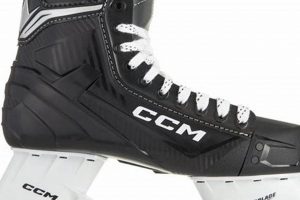
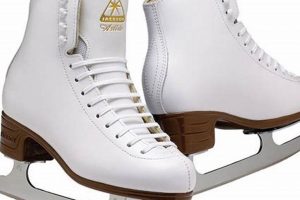
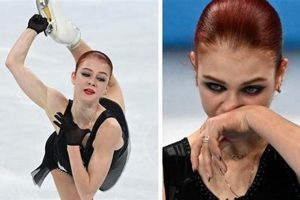
Figure skates are specialized footwear designed for the specific demands of the sport. They differ significantly from hockey skates or recreational skates, possessing features that allow for intricate movements, jumps, and spins on the ice. The primary distinguishing characteristic is the presence of toe picks, located at the front of the blade, which are crucial for launching jumps and providing stability during certain maneuvers. The blade itself is longer and straighter than a hockey blade, contributing to edge control and glide efficiency.
The unique design of these skates is integral to executing the complex elements that define the discipline. The sharpened edges of the blade, both inside and outside, enable skaters to carve precisely into the ice, controlling their direction and speed. The boot, typically made of stiff leather or synthetic materials, provides the necessary ankle support to withstand the forces generated during jumps and landings. Historically, the evolution of these skates has mirrored the progression of the sport, with ongoing refinements in blade design and boot construction to enhance performance and safety.
Understanding the specific components of figure skatesthe blade, the boot, and the manner in which they interactis essential for appreciating the technical artistry and athleticism of figure skating. The subsequent sections will delve into the individual elements of these skates and their significance in various aspects of the sport.
Tips Regarding Figure Skates
Proper selection and maintenance of figure skates are paramount for performance, safety, and longevity in the sport. Adhering to the following guidelines will optimize the skater’s experience.
Tip 1: Professional Fitting: Obtain a professional fitting from a reputable skate technician. Improperly fitted skates can lead to discomfort, blisters, and compromised performance. A qualified fitter will assess foot shape, size, and skating level to recommend the appropriate boot and blade combination.
Tip 2: Blade Sharpening: Maintain blade sharpness. Dull blades inhibit edge control and make executing turns and jumps difficult. The frequency of sharpening depends on skating frequency and ice quality; consult with a skate technician to establish a sharpening schedule.
Tip 3: Boot Care: Regularly clean and dry the boots after each skating session. Moisture can degrade the leather or synthetic materials, leading to reduced support and premature wear. Use a clean cloth to wipe down the exterior and allow the boots to air dry fully.
Tip 4: Blade Protection: Always use hard guards when walking off the ice to protect the blades from damage. Soft blade soakers should be used for storage to absorb moisture and prevent rusting.
Tip 5: Lacing Technique: Employ a consistent and proper lacing technique. The laces should be snug around the ankle for support but not so tight as to restrict circulation. Experiment with different lacing patterns to find what provides the optimal balance of support and flexibility.
Tip 6: Inspect for Damage: Regularly inspect the skates for any signs of damage, such as loose screws, cracks in the boot, or bent blades. Addressing minor issues promptly can prevent them from escalating into more significant problems.
Tip 7: Consider Skill Level: Recognize that different skill levels may require different types of figure skates. As a skater progresses, upgrading to a more supportive boot and a blade designed for advanced techniques may be necessary.
By following these tips, skaters can ensure that their figure skates provide the support, performance, and longevity required for successful training and competition. Proper care and maintenance are critical investments in the skater’s development.
The next section will explore the different brands and models of figure skates available on the market, offering insights into selecting the best option for individual needs and preferences.
1. Toe picks

Toe picks are a defining characteristic of figure skates, distinguishing them from other types of ice skates. Their precise configuration and utilization are integral to the execution of jumps and specific footwork elements within the sport, demanding careful consideration in skate design and skater technique.
- Jump Launch Assistance
Toe picks primarily function as a point of leverage for launching jumps. Skaters use the toe pick to dig into the ice, providing a stable anchor from which to generate upward momentum. Without toe picks, many jumps, such as the toe loop, Lutz, and flip, would be impossible to execute with the required height and control. Their strategic placement influences the jump’s trajectory and rotation.
- Footwork and Turns
Beyond jump assistance, toe picks are employed in specific footwork sequences and turns, offering added stability and control. While not the primary point of contact, they can provide a momentary point of contact for specific steps, allowing for sharper transitions and more intricate maneuvers. This application requires a high degree of precision and technique.
- Pick Design and Configuration
The design of the toe pick, including its size, shape, and configuration (number of points), varies among different skate models. Skaters may select skates with specific toe pick designs that complement their jumping style and preferences. Advanced skaters may prefer larger, more aggressive picks, while beginners might benefit from smaller, less pronounced picks to aid in stability.
- Skill Level Dependency
The effective use of toe picks is directly linked to the skater’s skill level. Novice skaters may initially struggle to control their movement with toe picks and can accidentally trip. As skill progresses, skaters learn to utilize toe picks intentionally and efficiently for increasingly complex elements. Mastering toe pick usage is a crucial step in advancing within the sport.
The integration of toe picks into figure skate design showcases a deliberate consideration of the specialized demands of the sport. Their role extends beyond simple jump assistance, influencing a range of movements and requiring refined technique. The design and utilization of toe picks highlight the sophisticated interplay between equipment and athleticism in figure skating.
2. Blade curvature

The blade curvature, or rocker, is a critical design element of figure skates. It influences maneuverability, stability, and the skater’s ability to execute specific elements. The curvature refers to the gradual arc along the length of the blade, from toe to heel. This arc dictates the amount of blade in contact with the ice at any given moment, directly affecting the skater’s balance and edge control. A more pronounced curvature allows for tighter turns and greater agility, while a flatter curvature provides increased stability and glide efficiency. The selection of an appropriate blade curvature is paramount for optimizing performance.
The curvature is ground into the blade during the manufacturing process and is subsequently maintained through sharpening. Different curvatures are suited to different skating styles and skill levels. For example, skaters performing advanced jumps and spins often prefer a more curved blade, enabling them to rotate more easily. Conversely, beginners may benefit from a flatter blade, offering enhanced stability as they develop their balance and control. Furthermore, blade curvature directly impacts edge control. The edges of the blade, both inside and outside, are used to create friction and direct movement on the ice. The rocker contributes to the skater’s ability to engage these edges effectively, allowing for precise carving and controlled transitions between edges.
In conclusion, blade curvature constitutes an integral component of figure skates. It significantly influences a skater’s ability to perform a diverse range of maneuvers, from simple glides to complex jumps and spins. Understanding the relationship between blade curvature and skating performance is crucial for selecting and maintaining appropriate equipment. The subtle variations in curvature, carefully engineered into each blade, contribute to the artistry and athleticism inherent in figure skating.
3. Boot stiffness

Boot stiffness is a fundamental characteristic of figure skates that directly impacts performance and safety. The degree of rigidity dictates the level of support provided to the skater’s ankle and lower leg, influencing control, stability, and the ability to execute complex elements.
- Support for Jumps and Landings
Higher boot stiffness is crucial for absorbing the impact forces generated during jumps and landings. The rigid structure minimizes ankle flexion, preventing injury and maintaining balance upon landing. Skaters performing advanced multi-rotational jumps require boots with a high stiffness rating to withstand the considerable stress placed on the ankle joint. Conversely, softer boots may be suitable for beginner skaters focusing on basic skills and edge work, where greater flexibility is desirable.
- Influence on Edge Control
Boot stiffness affects the skater’s ability to control the edges of the blade. A stiffer boot provides more direct transmission of force from the skater’s leg to the blade, allowing for precise carving and edge control. This is particularly important for executing intricate footwork sequences and turns. Softer boots may offer less immediate response, potentially compromising control and precision, especially at higher speeds or during complex maneuvers.
- Impact on Power Transfer
The boot’s stiffness influences the efficiency of power transfer from the skater’s body to the ice. A rigid boot minimizes energy loss due to flexing, ensuring that a greater proportion of the skater’s effort is translated into forward momentum and rotational force. This is particularly important for generating speed during stroking and gaining height during jumps. Less stiff boots absorb more energy, potentially reducing overall power output.
- Correlation with Skill Level
The appropriate boot stiffness correlates directly with the skater’s skill level. Beginner skaters typically benefit from boots with moderate stiffness, offering a balance between support and flexibility. As skaters progress and attempt more challenging elements, they require increasingly stiffer boots to provide the necessary support and control. Attempting advanced maneuvers in boots with insufficient stiffness can lead to injury and hinder skill development. Professional fitting ensures the boot stiffness matches the skater’s abilities.
The relationship between boot stiffness and figure skating performance underscores the importance of selecting equipment that aligns with individual skill levels and skating goals. The stiffness level is a critical factor in optimizing support, control, and power transfer, ultimately affecting a skater’s ability to execute complex routines and prevent injuries. A carefully chosen boot can enhance performance, whereas an inappropriate selection can hinder progression and increase the risk of harm.
4. Ankle support
Ankle support is a paramount consideration in the design and selection of figure skates. The structure of the skate boot, particularly around the ankle, directly influences a skater’s stability, control, and ability to execute complex maneuvers, contributing significantly to both performance and injury prevention.
- Boot Height and Cuff Design
The height of the boot and the design of its cuff play a crucial role in providing ankle support. Figure skate boots typically extend higher up the leg than hockey skates, offering greater stability and restricting excessive ankle movement. The cuff, the upper portion of the boot surrounding the ankle, is often reinforced with rigid materials to further enhance support. Variations in cuff design, such as articulated cuffs or those with adjustable features, allow for customization to accommodate individual ankle anatomy and skating style. Insufficient boot height or a poorly designed cuff can compromise ankle stability, increasing the risk of sprains or other injuries.
- Material Composition and Stiffness
The materials used in the construction of the skate boot directly impact its stiffness and, consequently, the level of ankle support it provides. Figure skate boots are commonly made from leather or synthetic materials, often reinforced with additional layers of supportive polymers. The stiffness of these materials is carefully calibrated to provide the necessary support for jumps, spins, and other demanding elements. Boots designed for advanced skaters typically feature stiffer materials to withstand higher impact forces and maintain ankle alignment during complex maneuvers. Conversely, boots intended for beginners may incorporate more flexible materials, allowing for greater range of motion as they develop their fundamental skills.
- Lacing Systems and Closure Mechanisms
The lacing system of a figure skate is integral to achieving a secure and supportive fit around the ankle. Laces should be tightened evenly to distribute pressure and prevent slippage or movement within the boot. Some figure skates also incorporate additional closure mechanisms, such as buckles or straps, to further enhance ankle support. These mechanisms can be adjusted to fine-tune the fit and provide targeted support to specific areas of the ankle. A properly laced and secured skate boot minimizes ankle instability and promotes efficient power transfer during skating movements.
- Internal Padding and Contouring
The internal padding and contouring of a figure skate boot contribute to both comfort and ankle support. Padding materials, such as foam or gel, cushion the ankle and reduce friction, preventing blisters and pressure points. The shape of the boot is carefully contoured to conform to the natural anatomy of the ankle, providing a snug and supportive fit. Proper contouring ensures that the ankle is held securely in place, minimizing excessive movement and enhancing stability. A well-padded and contoured boot can significantly improve a skater’s comfort and confidence on the ice.
The interplay between boot height, material composition, lacing systems, and internal padding collectively determines the level of ankle support offered by figure skates. The integration of these design elements is essential for enabling skaters to perform intricate routines with confidence and minimizing the risk of ankle-related injuries. The advancements of technology and a deep understanding of athlete biomechanics leads to continuous development to what kind of ankle support is required in figure skates.
5. Edge control
Edge control constitutes a fundamental element of figure skating, intrinsically linked to the specialized design of figure skates. The capacity to manipulate the edges of the skate blade with precision directly dictates a skater’s ability to execute intricate movements, maintain balance, and generate the necessary forces for jumps, spins, and turns. The specific characteristics of figure skates are engineered to optimize this critical skill.
- Blade Curvature and Edge Engagement
The curvature of the blade, also known as the rocker, facilitates edge engagement by creating a defined contact point between the blade and the ice. This curvature enables skaters to lean into edges, directing their movement and controlling their speed. The design of figure skates ensures a consistent and predictable rocker, allowing skaters to develop refined edge control techniques. Without this specific curvature, precise edge work would be significantly impaired.
- Blade Sharpening and Edge Definition
The edges of a figure skate blade are meticulously sharpened to create distinct inside and outside edges. These edges are the primary points of contact with the ice, enabling skaters to carve into the surface and execute controlled turns. The sharpness and definition of these edges directly impact the skater’s ability to maintain edge control and prevent slippage. Specialized sharpening techniques are employed to ensure optimal edge performance, a critical aspect of figure skate maintenance.
- Boot Stiffness and Force Transmission
The stiffness of the skate boot plays a vital role in transmitting force from the skater’s body to the blade edges. A stiff boot provides the necessary support to prevent ankle flexion, ensuring that the skater’s movements are directly translated to the blade. This direct force transmission enhances edge control, allowing skaters to maintain precise alignment and execute controlled movements. Flexible boots compromise edge control by absorbing energy and reducing the skater’s ability to manipulate the edges effectively.
- Toe Picks and Edge Assisted Maneuvers
While primarily used for jump assistance, toe picks indirectly contribute to edge control in specific maneuvers. During certain footwork sequences and turns, the toe picks can provide momentary stabilization, allowing skaters to maintain edge alignment and prevent unintended slippage. The strategic placement of toe picks on figure skates is carefully considered to complement edge control techniques and enhance overall stability.
The interplay between blade curvature, edge sharpening, boot stiffness, and toe pick placement highlights the intricate relationship between figure skate design and edge control. These interconnected elements contribute to the skater’s ability to execute a wide range of movements with precision, control, and artistry. The specialized characteristics of figure skates are specifically engineered to optimize edge control, making it a cornerstone of the sport.
6. Blade material

The selection of blade material is a critical determinant of performance in figure skates. The material directly impacts edge quality, durability, and the skater’s ability to maintain control. High-carbon steel is a prevalent choice due to its ability to hold a sharp edge, a necessity for executing precise turns and jumps. Stainless steel blades offer corrosion resistance, extending the lifespan of the equipment. The composition of the blade material influences the skater’s connection to the ice, dictating the level of feedback and responsiveness experienced during maneuvers. For example, a blade made of a softer steel might require more frequent sharpening but could provide a more forgiving feel for beginner skaters, while a harder steel blade would maintain its edge longer but demand a more skilled skater to fully utilize its potential.
Advanced manufacturing techniques have led to the development of blades incorporating multiple materials. Some blades feature a hard outer layer for edge retention and a softer inner core for shock absorption. This composite construction aims to optimize both performance and comfort. Furthermore, coatings are sometimes applied to the blade surface to reduce friction and enhance glide. Real-world examples include skaters using blades with chrome coatings to reduce drag and increase speed on the ice. Understanding the properties of different blade materials enables skaters and coaches to make informed decisions regarding equipment selection, tailoring their choice to specific skating styles and skill levels.
The selection of blade material presents a trade-off between edge retention, durability, and cost. While high-performance materials can enhance skating capabilities, they often require a greater financial investment. Challenges include selecting the appropriate material for a skater’s specific needs and ensuring proper blade maintenance to maximize performance and longevity. Ultimately, the choice of blade material contributes significantly to the overall performance and safety of figure skating.
7. Sharpening precision

Sharpening precision is a critical aspect of figure skate maintenance, directly impacting performance and safety. The specific design of figure skate blades necessitates a meticulous approach to sharpening to ensure optimal edge control and glide.
- Edge Creation and Maintenance
Sharpening precision involves creating and maintaining distinct inside and outside edges on the blade. These edges are crucial for carving into the ice, controlling direction, and executing turns. Imprecise sharpening can result in rounded or uneven edges, compromising the skater’s ability to maintain control and increasing the risk of falls. Professional sharpening services utilize specialized equipment to guarantee consistent edge quality.
- Hollow Depth and Blade Geometry
The “hollow,” or the concave curve ground into the blade between the edges, influences the amount of bite the edges have on the ice. Sharpening precision includes controlling the depth of this hollow to match the skater’s skill level and skating style. A deeper hollow provides more grip, beneficial for advanced skaters performing intricate maneuvers, while a shallower hollow offers greater glide and is often preferred by beginners. Incorrect hollow depth can hinder performance and make skating more difficult.
- Blade Alignment and Symmetry
Precise sharpening ensures that the edges are aligned and symmetrical along the length of the blade. Misalignment can cause the skate to pull to one side, making it difficult to maintain a straight line and compromising balance. Sharpening precision involves careful measurement and adjustment to ensure that both edges are equally sharp and properly aligned. This symmetry is essential for consistent performance and preventing injuries.
- Sharpening Frequency and Blade Longevity
The frequency of sharpening depends on ice conditions, skating frequency, and the hardness of the blade material. Sharpening precision includes removing only the minimum amount of steel necessary to restore the edges, maximizing the blade’s lifespan. Over-sharpening can prematurely wear down the blade, while infrequent sharpening leads to dull edges and reduced performance. Establishing a regular sharpening schedule with a qualified technician is vital for maintaining optimal blade condition.
The facets of sharpening precision underscore its importance in maximizing the potential of figure skates. The precise angles, hollow depth, and consistent symmetry maintained through expert sharpening practices are essential for enabling skaters to execute challenging elements with confidence and control. Ultimately, attention to detail in sharpening is a crucial investment in the skater’s development and safety.
Frequently Asked Questions
The following section addresses common inquiries regarding figure skates, clarifying their design, function, and maintenance.
Question 1: How do figure skates differ from hockey skates?
Figure skates are distinguished by the presence of toe picks and a longer, straighter blade. Hockey skates lack toe picks and feature a shorter, more curved blade designed for agility and rapid acceleration.
Question 2: What is the purpose of toe picks on figure skates?
Toe picks are primarily used for launching jumps and assisting with certain footwork elements. They provide a point of leverage for generating upward momentum and stability during specific maneuvers.
Question 3: How often should figure skate blades be sharpened?
The frequency of sharpening depends on ice conditions, skating frequency, and blade material. Professional skaters typically sharpen their blades every 10-20 hours of ice time. Consult with a qualified skate technician to establish an appropriate sharpening schedule.
Question 4: What factors influence the selection of boot stiffness in figure skates?
Boot stiffness is determined by the skater’s skill level, body weight, and the types of elements being performed. Advanced skaters require stiffer boots to provide adequate ankle support during jumps and landings, while beginners may benefit from more flexible boots.
Question 5: How should figure skates be properly cared for?
Proper care includes wiping down the boots after each use, protecting the blades with hard guards when walking off the ice, and storing the skates with soft blade soakers to absorb moisture. Regular professional sharpening is also essential.
Question 6: Can figure skates be used for recreational skating?
While figure skates can be used for recreational skating, their specialized design may not be ideal for beginners. Recreational skates typically offer more ankle support and a flatter blade, making them easier to control for novice skaters.
Understanding these key aspects of figure skates is crucial for ensuring optimal performance, safety, and enjoyment of the sport.
The subsequent section will provide resources for finding qualified skate technicians and retailers.
Conclusion
This article has explored the multifaceted nature of the equipment used in figure skating. The nuanced interplay of blade design, boot construction, and meticulous maintenance is central to the execution of this complex and demanding athletic pursuit. Attention to the details of the equipment contributes significantly to a skater’s ability to perform with precision, grace, and safety.
Therefore, a comprehensive understanding of the components is essential for all participants, from beginners to professionals. Continued research and development will undoubtedly refine the skates, further enhancing the capabilities of figure skaters and contributing to the sport’s enduring appeal.