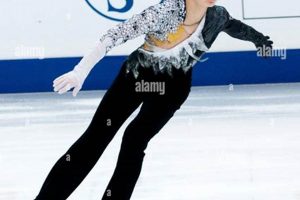
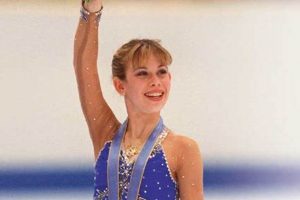
The discipline involves propelling oneself across an ice surface using specialized boots with blades attached, performing various jumps, spins, and step sequences. Execution requires a combination of balance, strength, agility, and artistry. For example, a skater might execute a triple axel jump, a complex maneuver involving three-and-a-half rotations in the air before landing on a single foot.
Proficiency yields numerous benefits, including enhanced physical fitness, improved coordination, and the development of mental focus and discipline. Historically, it has evolved from simple recreational skating to a highly competitive sport governed by strict rules and judged on both technical merit and artistic expression. The pursuit of excellence often involves years of dedicated training and coaching.
A deeper understanding requires exploring foundational techniques, advanced maneuvers, judging criteria, and the evolution of the sport’s various disciplines, such as singles, pairs, ice dance, and synchronized skating. Each discipline presents unique challenges and showcases different aspects of athletic and artistic skill on the ice.
Guidance for Success on the Ice
Achieving competence on the ice necessitates a dedicated approach encompassing fundamental techniques and consistent practice. Adherence to the following guidelines can facilitate progress and minimize the risk of injury.
Tip 1: Master Basic Skating Skills: Proficiency in fundamental movements, such as forward and backward skating, edges, and turns, forms the bedrock for more complex maneuvers. Consistent practice of these basics is crucial.
Tip 2: Seek Qualified Instruction: Guidance from a certified coach ensures proper technique and minimizes the development of detrimental habits. A qualified instructor can tailor training to individual needs and abilities.
Tip 3: Prioritize Core Strength and Flexibility: A strong core provides stability and control, while flexibility enhances range of motion and reduces the risk of muscle strains. Incorporate regular stretching and core strengthening exercises into the training regimen.
Tip 4: Practice Regularly and Consistently: Consistent practice is essential for muscle memory development and skill refinement. Adherence to a structured training schedule, even for short periods, yields better results than infrequent, lengthy sessions.
Tip 5: Focus on Proper Edge Control: Precise edge control is paramount for executing jumps, spins, and turns with accuracy and stability. Dedicated drills focusing on edge work are essential for advancement.
Tip 6: Utilize Off-Ice Training: Off-ice training complements on-ice practice by building strength, improving coordination, and simulating skating movements. Jump simulations, ballet exercises, and plyometrics can enhance on-ice performance.
Tip 7: Emphasize Injury Prevention: Implement preventative measures such as proper warm-up routines, appropriate equipment maintenance, and attentive listening to the body’s signals to minimize the risk of injuries. Correct any biomechanical imbalances that may contribute to injuries.
Diligent application of these principles, coupled with perseverance and dedication, will contribute significantly to a skater’s progress and overall enjoyment of the sport.
Consideration of the factors outlined above provides a foundation for further exploration into advanced techniques and competitive strategies.
1. Balance

Balance constitutes a critical element within the discipline. It directly influences the execution of jumps, spins, and turns, and its mastery is fundamental to achieving proficiency on the ice. Without a well-developed sense of equilibrium, skaters are unable to perform complex maneuvers safely and effectively.
- Static Equilibrium on Blades
Maintaining static equilibrium on a narrow blade requires constant adjustments and refined motor control. This involves positioning the body’s center of mass directly over the blade’s point of contact with the ice. For example, holding a spiral position necessitates maintaining a stable posture on a single blade while extending one leg, challenging the skater’s ability to counteract gravitational forces.
- Dynamic Equilibrium During Movement
Dynamic equilibrium refers to the ability to maintain balance while in motion. As skaters transition between edges, execute turns, and perform step sequences, they must continuously shift their weight and adjust their body position to maintain stability. The ability to control body momentum is crucial, particularly during complex footwork sequences and intricate turns.
- Balance in Rotational Movements
Rotational movements, such as spins and jumps, demand a high degree of balance and control. Skaters must be able to maintain a centered axis of rotation while executing multiple revolutions in the air or on the ice. Correct body alignment and core engagement are essential for minimizing deviations from the axis and maximizing spin speed and stability.
- The Role of Proprioception
Proprioception, or the body’s awareness of its position in space, plays a crucial role in maintaining equilibrium. Skaters rely on proprioceptive feedback from muscles, tendons, and joints to make subtle adjustments that prevent falls and maintain stability. Enhanced proprioceptive awareness improves a skater’s ability to react quickly to changes in balance and correct imbalances before they escalate.
The interplay between static, dynamic, and rotational equilibrium, augmented by proprioceptive awareness, underpins the skater’s ability to execute technically challenging elements. The pursuit of enhanced balance is an ongoing process, requiring consistent practice and dedicated training.
2. Edge Control

Edge control constitutes a cornerstone of proficiency in the discipline. Precise management of blade edges enables skaters to execute turns, jumps, and spins with accuracy and stability, influencing both technical execution and artistic expression.
- Inside and Outside Edges
Skaters utilize both inside and outside edges of the blade to generate power and control movement. The inside edge curves inward toward the body, while the outside edge curves outward. Mastery of both edges allows for nuanced control during turns and transitions. For example, a Mohawk turn involves shifting weight from one foot to the other while maintaining control of the inside and outside edges to change direction seamlessly.
- Deep vs. Shallow Edges
The depth of an edge refers to the angle at which the blade is tilted relative to the ice surface. A deep edge provides greater grip and allows for sharper turns, while a shallow edge facilitates smoother gliding and transitions. Controlled variation in edge depth is essential for executing complex footwork sequences and jumps. A shallow edge might be used for gliding across the ice before initiating a jump, while a deep edge is necessary for generating the necessary force for takeoff.
- Edge Transitions
The ability to seamlessly transition between edges is paramount for fluidity and efficiency. Edge transitions involve shifting weight and adjusting body alignment to move from one edge to another without losing momentum or balance. A well-executed edge transition appears effortless and contributes to the overall aesthetic appeal of the performance. A Chass, a connecting step often used in ice dance, requires precise edge transitions to maintain rhythm and flow.
- Impact on Jumps and Spins
Edge control directly influences the height, distance, and stability of jumps and the speed and centeredness of spins. Precise edge control during the takeoff of a jump allows the skater to generate the necessary upward and rotational force. Similarly, maintaining a stable edge during a spin ensures that the skater remains centered and avoids wobbling. A poor edge can lead to a failed jump or a wobbly, slow spin.
The interplay between inside and outside edges, deep and shallow edges, and smooth edge transitions underpins the technical foundation of this discipline. The cultivation of exceptional edge control is a continuous process, demanding rigorous training and focused attention to detail.
3. Jumping Technique

Effective jumping technique is integral to success within the realm of this athletic discipline. A skater’s ability to execute jumps with precision, height, and control significantly impacts both the technical score and the overall artistic impression.
- Takeoff Preparation and Edge Selection
The preparation phase prior to takeoff is critical for establishing momentum and alignment. Skaters utilize specific edges, typically the outside edge, to generate the necessary power for the jump. The accuracy of edge selection and the skater’s ability to maintain a deep, controlled edge during the approach directly influence the height and rotation achieved during the jump. For instance, in a Lutz jump, a skater must maintain a strong outside edge approach before toe-picking into the jump.
- Air Position and Rotation Mechanics
Once airborne, the skater must adopt a compact and controlled air position to maximize rotation speed and maintain balance. The arms are typically held close to the body, and the core muscles are engaged to stabilize the spine and facilitate rotation. The consistency and tightness of the air position directly affect the skater’s ability to complete the required number of rotations. A well-controlled air position will aid the skater’s ability to land the Salchow and loop jumps effectively.
- Landing Technique and Impact Absorption
The landing phase requires precise timing and controlled muscle engagement to absorb the impact of the jump. Skaters typically land on a single foot, bending the knee to cushion the impact and maintain balance. The ability to smoothly transition from the air to the ice and maintain a stable landing position is a key indicator of jump quality. The ability to maintain balance after landing a toe loop jump is crucial for performing combinations and sequences.
- Toe-Assisted vs. Edge Jumps
Jumps are categorized as either toe-assisted or edge jumps, depending on the method used for takeoff. Toe-assisted jumps, such as the Toe Loop, Lutz, and Flip, involve using the toe pick of the skate to generate additional lift. Edge jumps, such as the Salchow, Loop, and Axel, rely solely on the edge of the blade for takeoff. Each type of jump requires distinct technical skills and presents unique challenges in terms of edge control, body alignment, and timing. The utilization of edge jumps demonstrates control and mastery, and the mastery of any jumps demonstrates dedication to improve in the discipline.
Mastery of jumping technique requires years of dedicated practice and skilled coaching. The integration of precise takeoff preparation, controlled air position, and effective landing mechanics culminates in successful jump execution, which is paramount to achieving competitive success within this demanding and visually captivating sport. As proficiency increases, more challenging and complex jumps can be incorporated into the skater’s repertoire.
4. Spin Proficiency

Spin proficiency constitutes a fundamental aspect within the realm of this discipline. Its mastery directly impacts a skater’s overall score and contributes significantly to the aesthetic quality of a performance. Accurate execution requires a synthesis of balance, core strength, and precise body alignment. Without adequate spin skills, a skater’s ability to achieve competitive success is demonstrably limited, as spins comprise a mandatory element in most competitive programs. For example, a clean, well-centered layback spin enhances the artistic impression score, while a poorly executed spin with multiple wobbles detracts significantly.
The development of spin proficiency demands consistent practice and focused attention to detail. Skaters must cultivate the ability to maintain a stable axis of rotation while executing multiple revolutions on a single blade. Common variations include upright spins, sit spins, and camel spins, each requiring specific body positions and control. Furthermore, the ability to execute combination spins, seamlessly transitioning between different spin positions, is a crucial skill. The difficulty level and quality of execution are key components in evaluating spin performance. The performance of a well-executed change-foot spin on a centered axis is a testament to spin proficiency.
In summary, spin proficiency is inextricably linked to success in this sport. Its mastery requires a dedicated and focused approach to training, encompassing strength conditioning, balance exercises, and meticulous technique refinement. Poor spin execution can detrimentally impact overall performance, thus it demands prioritization for those seeking to excel. The continued development of spin skills represents a key challenge for skaters striving for competitive advancement.
5. Artistic Expression
Artistic expression serves as a vital component in the overall execution and evaluation within the discipline. While technical proficiency in jumps, spins, and footwork forms the foundation, the ability to communicate emotion, interpret music, and project personality elevates a performance from mere athleticism to an engaging narrative. The integration of artistic elements transforms a series of movements into a cohesive and captivating presentation. A skater demonstrating strong technical skills but lacking artistry may achieve a respectable technical score, but will likely fall short of a medal-winning performance, demonstrating how the lack of artistic skills will impact the overall performance.
The conveyance of artistic expression manifests through various channels. Choreography plays a crucial role, with routines designed to complement the selected music and highlight the skater’s individual strengths. Costume design also contributes, with attire often reflecting the theme and mood of the program. Facial expressions, body language, and the skater’s interaction with the audience further enhance the artistic impact. A skater performing to a somber piece of music might employ subtle facial expressions and graceful movements to convey a sense of melancholy, while a lively, upbeat program might feature more dynamic movements and a radiant smile. A skater who can present compelling artistic will achieve better overall score than the skaters who demonstrate only the technical skills.
Ultimately, artistic expression represents the intangible element that distinguishes a memorable performance from a technically sound one. It demands not only physical skill but also emotional intelligence, musicality, and a genuine connection with the material. While technical elements are objectively scored, artistic impression is judged subjectively, highlighting the inherent challenges in quantifying artistic merit. The ability to seamlessly blend technical prowess with compelling artistic interpretation is a hallmark of elite performers and a defining characteristic in this demanding and visually stimulating athletic pursuit. Without this, it’s just athleticism on ice and not a performance.
Frequently Asked Questions
The following addresses common inquiries regarding fundamental aspects, providing clarity and dispelling misconceptions surrounding its practice.
Question 1: What constitutes the primary difference between recreational skating and formal training in the discipline?
Recreational skating typically focuses on basic balance and propulsion, while formal training emphasizes structured skill development, including specific jumps, spins, and footwork patterns, under the guidance of a qualified coach.
Question 2: What is the minimum age for commencing structured training?
While individuals of any age can learn basic skating, structured training often begins around age five or six, allowing sufficient physical and cognitive development to grasp fundamental techniques.
Question 3: What initial equipment is required for participation?
Appropriate skates, fitted by a professional, are essential. Additional equipment may include protective gear, such as helmets and padding, particularly during initial training stages.
Question 4: How frequently should beginners practice to achieve noticeable progress?
Consistent practice is crucial. Beginners typically benefit from two to three sessions per week, each lasting approximately 30 to 60 minutes, to develop muscle memory and technique.
Question 5: What are the primary physical conditioning requirements for advancing in the sport?
Advancement necessitates a combination of strength, flexibility, balance, and cardiovascular endurance. Off-ice training, including core strengthening and plyometrics, is essential.
Question 6: How are performances evaluated in competitive settings?
Competitive performances are assessed based on technical merit, evaluating the difficulty and execution of required elements, and artistic impression, assessing choreography, musicality, and overall presentation.
Understanding these fundamental aspects is crucial for informed participation and realistic expectations regarding progress and achievement.
The subsequent section delves into the historical evolution of this discipline, tracing its origins and significant milestones.
Conclusion
This exploration has illuminated the multifaceted nature of the discipline. Mastering the art involves not only technical proficiency in jumps, spins, and footwork, but also the cultivation of balance, edge control, and artistic expression. The synthesis of these elements transforms a series of athletic movements into a compelling performance. How does one actually engage in figure skating? It requires dedicated training, skilled coaching, and a commitment to continuous improvement across all aspects of the sport.
The principles outlined herein serve as a foundation for understanding the complexities of this demanding pursuit. Continued exploration of advanced techniques, strategic program construction, and the evolving landscape of competitive criteria remains essential for those seeking to excel or simply appreciate the artistry and athleticism inherent within figure skating.