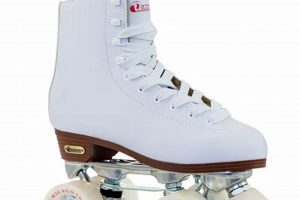
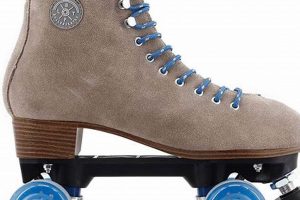
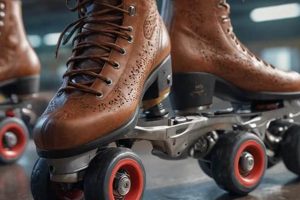
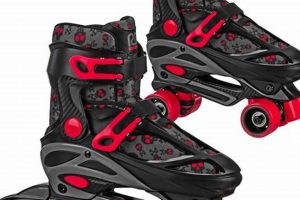
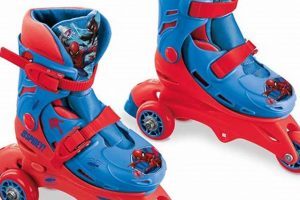
The phrase identifies the most suitable footwear for individuals new to the activity of roller skating. These products are designed to facilitate learning and promote safety during the initial stages of skill development. An example includes skates with enhanced ankle support and controlled wheel speed, which aid in balance and maneuverability for novice users.
Selecting appropriate equipment is paramount for a positive introduction to roller skating. Beginner-friendly designs can foster confidence, reduce the risk of injury, and encourage continued participation. Historically, advancements in materials and construction techniques have led to improved comfort and performance characteristics in entry-level models.
The following sections will delve into specific features and considerations when evaluating roller skates intended for those with limited or no prior experience. Factors such as boot type, wheel composition, and closure systems will be examined to provide a comprehensive understanding of the available options.
Guidance for Selecting Entry-Level Roller Skates
The subsequent recommendations provide insights into choosing appropriate roller skates for individuals new to the activity. Careful consideration of these points can contribute to a safer and more enjoyable learning experience.
Tip 1: Ankle Support Assessment: Prioritize skates offering substantial ankle support. Rigid or semi-rigid boots can reduce the likelihood of ankle strain and enhance stability, particularly for beginners who are still developing balance.
Tip 2: Wheel Durometer Evaluation: Lower durometer wheels (softer wheels) provide better grip and shock absorption, which is beneficial for navigating uneven surfaces often encountered during initial learning. Consider wheels with a durometer rating between 78A and 85A.
Tip 3: Bearing Precision Consideration: While high-end bearings are not essential for beginners, ensure that the skates are equipped with bearings that allow for smooth and consistent rolling. ABEC ratings (Annular Bearing Engineering Committee) indicate bearing tolerance; a rating of ABEC 3 or ABEC 5 is typically sufficient.
Tip 4: Closure System Inspection: Opt for skates with a secure and adjustable closure system. A combination of laces, buckles, and/or Velcro straps can provide a customized fit, maximizing comfort and control.
Tip 5: Brake Placement Verification: Verify that the skates have a functional and easily accessible brake. Heel brakes are common on beginner models, while toe stops are more prevalent on artistic skates. Ensure proper brake technique is understood and practiced.
Tip 6: Frame Material Selection: The skate frame, or chassis, should be constructed from a durable material such as aluminum or reinforced plastic. A sturdy frame provides stability and responsiveness.
Implementing these suggestions can increase the likelihood of a positive initial experience with roller skating, and improve control.
The final section will summarize safety considerations for individuals new to roller skating.
1. Ankle Support

Ankle support is a critical factor in the selection of appropriate roller skates for individuals new to the activity. The level of support provided directly impacts stability, control, and the potential for injury, influencing the overall learning experience.
- Injury Prevention
Adequate ankle support minimizes the risk of ankle sprains and other related injuries. Beginner skaters often lack the muscle strength and coordination required to maintain proper ankle alignment, making external support essential. High-cut boots and reinforced materials are common design elements that enhance stability and limit excessive ankle movement.
- Enhanced Stability
Improved stability allows beginners to focus on developing fundamental skating skills, such as balance and propulsion. Skates with strong ankle support reduce the amount of effort required to maintain upright posture, thereby increasing confidence and facilitating quicker progress. The rigid structure helps to control lateral movements, preventing wobbling and potential falls.
- Improved Control
Ankle support contributes to better control over the skates. By stabilizing the ankle joint, the skater can more effectively translate movements into directional changes and speed adjustments. This is particularly important when learning to navigate obstacles or execute basic maneuvers.
- Comfort and Fit
While the primary function is support, a well-designed ankle structure enhances comfort and fit. Proper ankle support distributes pressure evenly, preventing chafing and discomfort during extended skating sessions. A snug and secure fit ensures that the foot remains properly positioned within the skate, maximizing performance and minimizing the risk of blisters or other foot-related issues.
The incorporation of these facets into roller skate design contributes to a safer and more effective learning environment for beginners. By prioritizing ankle support, manufacturers can create products that promote skill development, reduce the likelihood of injury, and encourage continued participation in the activity.
2. Wheel Durometer

Wheel durometer is a crucial specification determining the hardness of roller skate wheels and is a significant factor when evaluating the suitability of roller skates for beginner users. This attribute directly influences grip, speed, and shock absorption, impacting both safety and ease of use.
- Grip Enhancement
Softer wheels, characterized by lower durometer ratings, provide increased grip on various surfaces. This is particularly beneficial for beginners who require enhanced stability and control while developing foundational skating skills. For example, wheels with a durometer of 78A offer superior grip compared to harder wheels, reducing the likelihood of slippage on uneven or slick surfaces. In turn, this promotes confidence and reduces the risk of falls.
- Shock Absorption
Lower durometer wheels absorb vibrations and impacts more effectively, resulting in a smoother and more comfortable ride. This is advantageous for beginners who may be skating on less-than-ideal surfaces, such as sidewalks or paved trails. The enhanced shock absorption minimizes fatigue and allows the skater to maintain balance and control over extended periods. An example of this is utilizing 82A wheels to skate on rough asphalt with more comfort.
- Speed Control
While harder wheels facilitate higher speeds, they also require greater skill and control. Softer wheels, conversely, offer more manageable speeds, allowing beginners to focus on mastering fundamental techniques. This reduced speed enhances safety and minimizes the potential for accidents. For instance, a beginner benefits by initially using 78-85A durometer wheels, then transitioning to harder wheels (85A+) as skill level and control improve.
- Surface Adaptability
The ideal wheel durometer can vary depending on the skating surface. Softer wheels are generally better suited for outdoor use on rougher surfaces, while harder wheels may perform well on smooth, indoor surfaces. When selecting roller skates for beginners, it is important to consider the surfaces on which they will be primarily skating. Choosing a versatile wheel durometer range can provide adaptability for different skating environments. An example is an 82A wheel functioning adequately on smooth concrete and rougher asphalt.
In summary, the selection of appropriate wheel durometer is critical for optimizing the experience of novice roller skaters. By prioritizing grip, shock absorption, and manageable speeds, appropriate durometer wheels contribute to a safer and more enjoyable introduction to the activity. Furthermore, the adaptability of the wheel to diverse surfaces can influence the overall learning curve and the skater’s confidence.
3. Bearing Smoothness
Bearing smoothness significantly influences the performance and usability of roller skates, particularly for beginners. The ease with which the wheels rotate directly affects the effort required for propulsion and the stability experienced by the user, impacting the learning process and overall enjoyment.
- Effort Reduction
Smoother bearings minimize frictional resistance, reducing the amount of energy required to maintain momentum. This is especially crucial for beginners who may lack the developed leg muscles and coordination of experienced skaters. Reduced effort translates to longer practice sessions with less fatigue, fostering skill development. For instance, ABEC 5 bearings require less push-off force compared to ABEC 1 bearings, extending skating time and reducing the strain on leg muscles.
- Enhanced Control
Consistent and predictable wheel rotation, facilitated by smoother bearings, contributes to improved control. Jerky or inconsistent movement can destabilize a beginner skater, increasing the risk of falls. Smooth bearings promote a more fluid and predictable skating experience, allowing the skater to focus on balance and technique. As an example, well-lubricated bearings provide a linear response to applied force, enhancing precision and stability during turns.
- Durability and Longevity
Higher-quality bearings, engineered for smoothness, typically exhibit greater durability and longevity. Reduced friction minimizes wear and tear, extending the lifespan of the bearings and reducing the need for frequent replacements. This is a cost-effective consideration for beginners, who may be using their skates frequently during the initial learning phase. For instance, bearings made from hardened steel alloys are more resistant to deformation and corrosion, ensuring smooth operation over extended periods.
- Noise Reduction
Smoother bearings generally operate with less noise compared to those with higher friction. This can contribute to a more pleasant skating experience, particularly in environments where noise pollution is a concern. Quiet bearings allow the skater to focus on their surroundings and improve spatial awareness. Example: Ceramic bearings are known for their exceptional smoothness and near-silent operation compared to traditional steel bearings.
The characteristics of smooth bearings directly correlate with the suitability of roller skates for novices. The diminished exertion, improved command, extended robustness, and quieter function create an ideal learning environment. The selection of skates equipped with adequately smooth bearings becomes a pivotal aspect of initiating a positive and efficacious skating journey, reinforcing that quality components make a tangible difference in the development of fundamental roller-skating skills.
4. Closure Security
Closure security refers to the reliability and adjustability of the mechanisms used to fasten roller skates to the feet. For beginner roller skates, secure closures are paramount because they directly impact stability, control, and injury prevention. A poorly secured skate allows excessive foot movement within the boot, leading to instability and an increased risk of ankle sprains or falls. Conversely, a well-designed closure system ensures a snug, supportive fit, enabling the skater to maintain balance and execute maneuvers with greater confidence. For instance, a combination of laces, buckles, and power straps can provide a customized and highly secure fit, accommodating various foot shapes and sizes while minimizing the likelihood of slippage or loosening during use. Such systems contribute significantly to a novice skaters ability to learn and progress safely.
The practical application of closure security manifests in various design features commonly found in beginner-oriented roller skates. Laces offer incremental adjustment for a precise fit across the instep, while buckles provide quick and easy fastening around the ankle. Power straps, often positioned across the lower leg, enhance ankle support and prevent heel lift. The effectiveness of these systems is contingent on their construction quality and proper usage. Inferior materials or poorly designed mechanisms can compromise security, rendering the skates unsuitable for beginners. Therefore, thorough evaluation of the closure system is essential when selecting roller skates for novice skaters. Regular inspection and maintenance of closures ensure their continued functionality and safety.
In summary, closure security is an indispensable element of roller skates designed for beginners. Its direct influence on stability, control, and injury prevention cannot be overstated. By prioritizing robust and adjustable closure systems, manufacturers can create products that instill confidence and facilitate skill development in novice skaters. Challenges related to closure security often involve finding the optimal balance between comfort, adjustability, and ease of use. Ultimately, a secure and well-fitted closure system is a critical component in promoting a positive and safe introduction to roller skating.
5. Brake Accessibility
Brake accessibility, the ease and speed with which a skater can engage the braking mechanism, is a critical attribute when evaluating roller skates for beginners. A readily accessible brake directly influences stopping distance and reaction time, factors paramount for safety and control, especially during the initial learning phase. Skates that offer poorly positioned or difficult-to-activate brakes present a significantly elevated risk of collisions and injuries for novice users. For example, skates with a brake pad positioned too high above the ground require excessive ankle flexion to engage, potentially causing instability and delayed braking response. Such designs are demonstrably unsuitable for beginners.
The practical significance of brake accessibility extends beyond immediate safety concerns. Confidence in one’s ability to stop reliably directly affects the skater’s willingness to explore and practice new skills. Skates equipped with easily accessible and responsive brakes foster a sense of security, encouraging beginners to push their limits and develop proficiency. Conversely, a lack of confidence in the braking system can inhibit progress and lead to frustration. A common example is the heel brake; its effectiveness depends on the skater’s ability to lift the toes while simultaneously shifting weight backward. Skates with easily adjustable heel brakes tailored to the skater’s stance or boot size enhance control.
Effective brake accessibility necessitates a combination of ergonomic design and intuitive operation. The brake should be positioned for easy reach and activation without requiring significant adjustments to the skater’s posture. Furthermore, the braking mechanism should provide a consistent and predictable response, allowing beginners to develop muscle memory and refine their braking technique. Skates that prioritize these design considerations demonstrably contribute to a safer and more rewarding learning experience. Poor design, such as slippery brake pads, increases risk. Ensuring accessible brakes is key in what defines “best roller skates for beginners”.
6. Frame Robustness

Frame robustness is a critical determinant in the selection of appropriate roller skates, particularly for novice users. The frame, or chassis, serves as the structural foundation of the skate, connecting the wheels to the boot and directly influencing stability, control, and durability. For individuals new to the activity, a robust frame is essential for providing a stable platform upon which to develop fundamental skating skills.
- Material Integrity
The composition of the frame significantly impacts its ability to withstand stress and resist deformation. Frames constructed from high-grade aluminum or reinforced composites offer superior strength and rigidity compared to those made from lower-quality plastics. A robust material ensures that the frame maintains its shape under load, preventing wobbling and enhancing control. For instance, a beginner executing a simple turn may inadvertently apply excessive force to one side of the skate. A frame constructed from a durable material will resist bending or twisting, maintaining stability and preventing a potential fall. The material chosen is thus core to what defines suitable beginner skates.
- Impact Resistance
Beginner skaters are more prone to falls and collisions, placing considerable stress on the skate frames. A robust frame can absorb impacts without cracking or breaking, protecting the skater from injury and extending the lifespan of the skates. Reinforced stress points, such as the areas around the wheel axles and mounting points, are particularly important for enhancing impact resistance. An example would be a skate frame encountering a curb; a robust frame would absorb the force, preserving the integrity of the skate.
- Stability and Control
A rigid and stable frame contributes directly to improved control and responsiveness. A frame that flexes excessively can lead to unpredictable handling, making it difficult for beginners to maintain balance and execute maneuvers accurately. A robust frame provides a solid platform for transferring energy from the skater’s foot to the wheels, resulting in more precise and controlled movements. Consider a beginning skater learning to navigate cones. A robust frame will maintain stability and control during turns and maneuvers.
- Long-Term Durability
Beginner skaters may subject their equipment to more wear and tear than experienced skaters, due to frequent use and less-than-perfect technique. A robust frame is more likely to withstand this abuse, providing years of reliable service. Investing in skates with a durable frame is a cost-effective decision in the long run, as it reduces the need for frequent replacements. For example, a beginner regularly skating outdoors on rough surfaces will benefit from a frame that is resistant to abrasion and corrosion, ensuring long-term durability and performance. Frame robustness ensures that “best roller skates for beginners” maintains its usefulness over time.
The selection of roller skates for beginners should prioritize frame robustness as a fundamental characteristic. The material integrity, impact resistance, stability, and long-term durability of the frame directly impact the skater’s safety, control, and overall enjoyment of the activity. Opting for skates with a well-constructed and robust frame is a critical step in ensuring a positive and successful introduction to roller skating.
Frequently Asked Questions
The following section addresses common inquiries regarding the selection and use of roller skates suitable for individuals new to the activity. The information presented aims to clarify key considerations and provide guidance for informed decision-making.
Question 1: What constitutes “best roller skates for beginners,” considering the range of available options?
The most appropriate roller skates for novice users typically exhibit specific characteristics: robust ankle support, moderate wheel durometer (78A-85A), smooth-rolling bearings (ABEC 3 or 5), secure closure systems (laces, buckles, straps), and durable frames constructed from materials such as aluminum or reinforced polymers.
Question 2: What is the significance of wheel durometer, and how does it impact a beginner’s skating experience?
Wheel durometer, measured on the A scale, indicates wheel hardness. Lower durometer values (e.g., 78A) signify softer wheels, which offer enhanced grip and shock absorption, beneficial for beginners learning to navigate uneven surfaces. Higher durometer wheels provide greater speed but require more control.
Question 3: How important is ankle support in beginner roller skates, and what features should be considered?
Ankle support is crucial for stability and injury prevention. Skates with high-cut boots, reinforced materials, and secure closure systems effectively limit ankle movement, reducing the risk of sprains. The boot should provide a snug and supportive fit without restricting range of motion.
Question 4: What role do bearings play in the performance of roller skates, and which bearing rating is suitable for beginners?
Bearings facilitate smooth wheel rotation. ABEC ratings (Annular Bearing Engineering Committee) indicate bearing tolerance; higher ratings signify greater precision. While high-end bearings are not essential for beginners, a rating of ABEC 3 or ABEC 5 typically provides adequate performance for recreational skating.
Question 5: What are the key safety considerations when using roller skates for the first time, irrespective of skate quality?
Regardless of skate selection, the employment of appropriate protective gearhelmet, wrist guards, elbow pads, and knee padsis paramount. Furthermore, beginners should practice in safe, controlled environments, away from traffic and obstacles, and prioritize mastering fundamental skills before attempting advanced maneuvers.
Question 6: How does one determine the appropriate skate size, and what are the consequences of wearing skates that are too large or too small?
Accurate sizing is essential for comfort and control. Skates should fit snugly without causing discomfort or restricting circulation. Wearing skates that are too large can compromise stability and increase the risk of injury, while skates that are too small can lead to blisters and foot pain. Consulting size charts and seeking professional fitting assistance is recommended.
In summary, selecting appropriate roller skates for beginners involves careful consideration of numerous factors, including wheel durometer, ankle support, bearing quality, closure security, and frame construction. Prioritizing safety and comfort is paramount for a positive and rewarding learning experience.
The subsequent section will delve into maintenance guidelines to ensure the longevity and optimal performance of beginner roller skates.
Conclusion
This discourse has examined the critical attributes defining the most suitable roller skates for novice users. Factors such as ankle support, wheel durometer, bearing smoothness, closure security, frame robustness, and brake accessibility collectively contribute to a safe and effective learning experience. Proper evaluation of these elements is essential for informed purchasing decisions.
The selection of appropriate equipment can significantly impact skill development and injury prevention. Continued adherence to established safety protocols, combined with informed equipment choices, will foster a positive environment for individuals embarking on the activity of roller skating. Future advancements in materials and design are anticipated to further enhance the performance and safety of beginner-level roller skates.