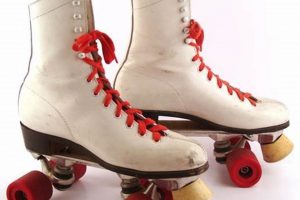
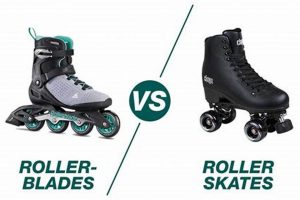
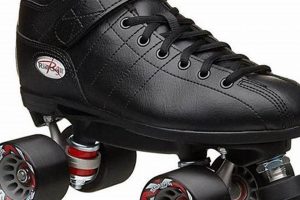
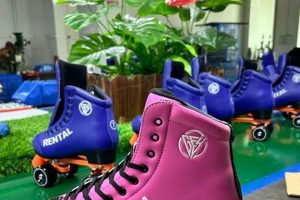
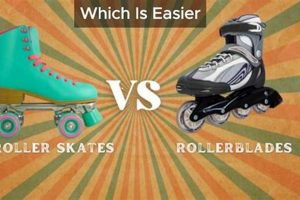
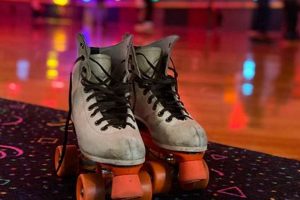
These recreational devices, characterized by four wheels arranged in a two-by-two configuration, are designed specifically for the anatomy and preferences of female users. They offer a stable platform for a variety of skating activities, from leisurely outdoor rolling to structured routines in rinks and studios. Adjustments in boot design, sizing, and wheel durometer contribute to a comfortable and responsive skating experience.
The appeal stems from their relative ease of use, offering increased stability for beginners while still providing opportunities for advanced maneuvers. Historically, these items have provided a source of exercise, social interaction, and artistic expression. Their continued popularity is based on their accessibility and potential for diverse applications, suitable for fitness, casual enjoyment, and organized sport.
The following sections will explore different aspects of this product category, including variations in design and construction, considerations for selecting appropriate models, and guidelines for maintenance and safe usage. These details are provided to give a comprehensive understanding of the features and considerations for owning and operating these items.
Essential Considerations for Female Quad Roller Skate Selection
Proper selection is crucial for ensuring a safe and enjoyable skating experience. Attention to specific design features and individual needs can significantly enhance performance and reduce the risk of injury.
Tip 1: Boot Fit: Prioritize a snug yet comfortable fit. Excess space can lead to instability and reduced control. Proper heel lock is essential to prevent slippage during movement.
Tip 2: Wheel Durometer: Softer wheels (lower durometer) offer greater grip on smoother surfaces, ideal for indoor rinks. Harder wheels (higher durometer) are more suited for outdoor use and provide increased speed.
Tip 3: Plate Material: Opt for aluminum plates for increased durability and responsiveness. Nylon plates offer a more budget-friendly option but may exhibit less rigidity and longevity.
Tip 4: Bearing Quality: High-quality bearings (ABEC rating) facilitate smoother and faster rolling. Regularly cleaning and lubricating bearings is essential for maintaining optimal performance.
Tip 5: Toe Stop Adjustment: Ensure the toe stop is properly adjusted to allow for controlled braking and stability during starts and stops. Regular inspection and replacement are crucial for safety.
Tip 6: Ankle Support: Evaluate the level of ankle support based on intended use. Higher boots provide greater stability for beginners, while lower-cut models offer increased maneuverability for advanced skaters.
Tip 7: Consider Skill Level: Beginner skaters should prioritize stability and comfort features, while experienced skaters may benefit from models with enhanced performance capabilities.
Careful attention to these elements can optimize both safety and enjoyment when using four-wheeled skates designed for women. These considerations will help ensure the equipment aligns with individual skating needs and capabilities.
The subsequent segments will address maintenance practices and safe usage guidelines, further augmenting the practical understanding of these devices.
1. Boot Comfort
Boot comfort is a critical factor influencing the overall experience and performance when using recreational footwear designed for women. The boot serves as the primary interface between the skater and the device, directly impacting control, stability, and the potential for discomfort or injury.
- Anatomical Fit
The boot should conform to the specific contours of the female foot, considering variations in arch support, width, and ankle shape. Improper fit can lead to pressure points, blisters, and reduced control. Manufacturers often incorporate gender-specific lasts (foot-shaped forms) during production to accommodate these anatomical differences. An incorrect size or shape compromises stability and skating efficiency.
- Padding and Cushioning
Adequate padding and cushioning within the boot’s interior are essential for shock absorption and reducing impact forces during skating. Materials such as memory foam or gel inserts can conform to the foot’s shape, providing customized support and mitigating discomfort caused by repetitive movements. Insufficient padding can lead to foot fatigue and potential stress injuries.
- Material Breathability
The materials used in boot construction should allow for adequate airflow to prevent moisture buildup and overheating. Breathable liners and ventilation systems can help to regulate foot temperature and reduce the risk of fungal infections or skin irritation. Non-breathable materials can create a damp environment, increasing the likelihood of discomfort and hygiene issues.
- Ankle Support and Flexibility
The boot should provide sufficient ankle support to prevent instability and reduce the risk of sprains or other injuries. However, it should also allow for a degree of flexibility to facilitate proper skating technique and range of motion. The balance between support and flexibility is crucial for optimizing performance and minimizing the risk of injury.
Collectively, these elements of boot comfort significantly affect the enjoyment and safety associated with recreational skates tailored for female use. Optimal boot design and construction directly contribute to a positive skating experience, enabling users to engage in activities for extended periods with reduced risk of discomfort or injury. Therefore, selection based on boot fit should be paramount.
2. Wheel Durometer
Wheel durometer is a critical specification impacting performance characteristics. It dictates hardness, affecting grip, roll speed, and durability, consequently influencing user experience. Selection hinges on surface type and skating style.
- Durometer Scale and Measurement
The durometer scale, typically ‘A’ scale for skate wheels, quantifies hardness. Lower numbers denote softer wheels; higher numbers, harder wheels. Measurement involves indenting the wheel material with a calibrated instrument. Numerical values serve as an objective metric for comparing wheel characteristics.
- Grip and Surface Interaction
Softer wheels (e.g., 78A-85A) exhibit increased grip, optimal for slick indoor surfaces or rough outdoor terrain. Harder wheels (e.g., 95A-101A) reduce grip, enhancing roll speed on smooth surfaces. Surface type directly influences optimal durometer selection to balance control and speed.
- Roll Speed and Efficiency
Harder wheels reduce rolling resistance, facilitating faster speeds with less effort. Softer wheels increase rolling resistance, requiring greater effort to maintain speed. Skaters must reconcile desired speed with necessary control based on their skill level and skating environment.
- Durability and Wear Resistance
Harder wheels exhibit greater resistance to abrasion and wear, extending lifespan, particularly on abrasive surfaces. Softer wheels wear more rapidly, necessitating more frequent replacement, especially during aggressive use. Wheel durability is a significant factor in long-term cost of ownership.
In recreational skating, particularly for women, selecting the appropriate wheel durometer enhances comfort and control. Improper selection can compromise safety and diminish the skating experience. Matching wheel hardness to the intended skating environment is paramount for optimal performance.
3. Plate Durability

Plate durability, the structural integrity of the chassis connecting the wheels to the boot, is a critical element in the performance and longevity of the female-specific skate. Its capacity to withstand stress and maintain alignment directly influences stability, control, and overall safety during skating.
- Material Composition and Strength
The materials used in plate construction, typically aluminum alloys or reinforced nylon polymers, dictate their inherent strength and resistance to deformation. Aluminum plates offer superior rigidity and impact resistance, essential for demanding maneuvers. Nylon plates, while lighter and more economical, may exhibit greater flexibility and reduced lifespan under heavy use. The selection of material directly impacts the plate’s ability to withstand operational stresses without compromising structural integrity.
- Stress Distribution and Design
Plate design influences how forces are distributed across the structure during skating. Well-engineered plates minimize stress concentrations, preventing premature failure at critical points such as mounting points or axle housings. Reinforcement ribs and optimized geometry contribute to enhanced load-bearing capacity and improved responsiveness. The design of the plate is crucial for ensuring uniform stress distribution and minimizing the risk of structural failure.
- Corrosion Resistance and Environmental Factors
Exposure to moisture, dirt, and other environmental contaminants can accelerate corrosion and degradation, particularly in metallic plates. Protective coatings and material selection (e.g., anodized aluminum) enhance corrosion resistance, extending the plate’s lifespan. Regular cleaning and maintenance are essential for mitigating the effects of environmental factors and preserving structural integrity.
- Maintenance and Longevity
Proper maintenance practices, including regular inspection for cracks, loose hardware, and corrosion, are essential for maximizing plate lifespan. Timely replacement of worn components, such as pivot cups or cushions, helps maintain optimal performance and prevent catastrophic failure. The longevity of the plate is directly linked to diligent maintenance and adherence to recommended operating parameters.
The correlation between plate durability and the overall performance and safety of these skating products designed for women cannot be overstated. The plate is the foundation upon which all other components rely, and its integrity is paramount for ensuring a stable, responsive, and enjoyable skating experience. Compromises in plate durability can lead to compromised performance, increased risk of injury, and reduced product lifespan.
4. Bearing Precision
Bearing precision, quantified by ABEC (Annular Bearing Engineers’ Committee) or ISO (International Organization for Standardization) ratings, directly influences the performance characteristics of four-wheeled skates for women. Higher ABEC or ISO ratings indicate tighter tolerances in bearing construction, resulting in reduced friction and increased roll speed. This precision translates to smoother, more efficient propulsion, requiring less effort from the skater. The effect is palpable: bearings with higher precision ratings facilitate longer glide times per push, conserving energy and improving overall skating endurance. Conversely, bearings with lower precision ratings generate more friction, impeding roll speed and demanding greater exertion to maintain momentum. For example, a skater covering a fixed distance will experience reduced fatigue using skates equipped with ABEC-7 bearings compared to those with ABEC-3 bearings, given similar wheel durometer and surface conditions. The significance of bearing precision extends beyond recreational use; in rhythmic or artistic skating, precise bearings contribute to enhanced maneuverability and control, enabling more fluid and responsive execution of complex routines.
The selection of bearings necessitates a balance between performance requirements and cost considerations. High-precision bearings, while offering superior performance, typically command a higher price point. Furthermore, the benefits of increased precision may be less discernible to novice skaters or those primarily engaged in casual recreational skating. However, for experienced skaters or individuals prioritizing performance optimization, the investment in high-precision bearings can yield tangible improvements in speed, efficiency, and control. The practical application of this understanding involves assessing individual skating needs and aligning bearing selection accordingly. Factors such as skating frequency, skill level, and intended use case should inform the decision-making process. Regular cleaning and lubrication are also crucial for maintaining bearing performance, regardless of precision rating. A well-maintained, lower-precision bearing can often outperform a neglected, higher-precision bearing.
In summary, bearing precision is a significant determinant of skating performance. Its influence on roll speed, efficiency, and control underscores its importance as a key component. The challenge lies in balancing performance gains with cost considerations and ensuring proper maintenance to maximize bearing lifespan and effectiveness. A clear understanding of the relationship between bearing precision and skating outcomes enables informed decision-making, ultimately contributing to a more enjoyable and rewarding skating experience.
5. Toe Stop Function
The toe stop, a component affixed to the front of skates, serves as a primary braking mechanism and stability aid, significantly influencing the safety and maneuverability of skates, particularly those designed for women.
- Braking Mechanism and Control
The toe stop facilitates controlled deceleration and stopping. Applying pressure to the toe stop against the skating surface generates friction, allowing skaters to regulate speed. It enables abrupt stops and subtle speed adjustments, crucial for navigating obstacles and maintaining balance. The design of the toe stop, including its size, shape, and material composition, influences its braking effectiveness. A larger toe stop provides a greater contact area, enhancing braking power. For example, during a sudden descent, a skater can use the toe stops to control the speed safely and efficiently.
- Stability and Balance Aid
The toe stop assists in maintaining balance, especially during stationary positions or low-speed maneuvers. By providing a point of contact with the ground, it reduces the risk of instability and falls. It also functions as a pivot point for certain skating techniques, such as spins and transitions. Consider a scenario where a skater is waiting at a crosswalk; the toe stop offers stability while stationary, preventing unintentional rolling.
- Adjustability and Customization
The ability to adjust toe stop height is essential for accommodating individual skating styles and preferences. A lower toe stop provides increased responsiveness, while a higher toe stop offers greater stability. Some models incorporate adjustable angles, enabling skaters to fine-tune the toe stop’s position for optimal performance. An experienced skater might prefer a lower toe stop to quickly pivot during complex routines, while a beginner may prefer a higher one for stability.
- Material Composition and Durability
The material composition of the toe stop affects its durability and braking effectiveness. Rubber, polyurethane, and other synthetic materials are commonly used. Softer materials provide increased grip but wear more quickly. Harder materials offer greater durability but may reduce braking power. The selection of toe stop material should consider the skating environment and the skater’s skill level. For instance, a skater who practices frequently on abrasive surfaces should choose more durable toe stops.
The toe stop, therefore, is an integral safety feature, directly impacting maneuverability and control. A functional understanding and proper adjustment of the toe stop are paramount for a safe and enjoyable skating experience. The integration of toe stops and a skater’s skill are both crucial for successful skating.
Frequently Asked Questions
This section addresses common inquiries concerning quad skates designed for female users. The information provided seeks to clarify key considerations related to purchase, maintenance, and safe operation.
Question 1: What factors differentiate equipment marketed toward women from unisex or male-specific items?
Boots constructed for women often feature a narrower fit and accommodate variations in foot shape. Adjustments in boot height, ankle support, and overall sizing are implemented to enhance comfort and performance. These modifications are designed to align with the anatomical characteristics of the female foot.
Question 2: How is appropriate sizing determined for quad skates?
Accurate sizing necessitates precise foot measurements, accounting for both length and width. Consultation of the manufacturer’s sizing chart is essential. It is advisable to measure the feet later in the day, as feet may expand slightly over the course of the day. A snug yet comfortable fit is desirable, allowing for minimal movement within the boot.
Question 3: What constitutes adequate maintenance for prolonging the lifespan of quad skates?
Regular cleaning of wheels and bearings is crucial for maintaining optimal performance. Periodically inspect the plate for signs of damage or wear, and ensure all hardware is securely fastened. Boots should be cleaned and conditioned to prevent cracking or deterioration. Proper storage, away from direct sunlight and extreme temperatures, is also recommended.
Question 4: What are the recommended safety precautions when operating quad skates?
Protective gear, including a helmet, wrist guards, elbow pads, and knee pads, is essential for mitigating the risk of injury. Skate within designated areas or on smooth, paved surfaces. Avoid skating in traffic or areas with obstructions. Familiarization with basic skating techniques, such as braking and turning, is also crucial.
Question 5: How does wheel durometer impact skating performance, and which durometer is appropriate for different surfaces?
Wheel durometer, measured on the “A” scale, quantifies wheel hardness. Softer wheels (lower durometer) offer increased grip, suitable for indoor rinks or slick surfaces. Harder wheels (higher durometer) provide reduced grip and increased speed, appropriate for smooth outdoor surfaces. Wheel selection should correspond to the intended skating environment.
Question 6: What are the primary indicators that the bearings require replacement?
Signs of bearing wear include reduced roll speed, excessive noise, and visible damage or corrosion. Cleaning and lubrication may temporarily improve performance; however, if these issues persist, bearing replacement is necessary to ensure smooth and efficient operation.
In conclusion, understanding these factors contributes to informed decision-making and enhances the overall skating experience.
The following section explores advanced techniques and skill development.
Conclusion
This examination of four-wheeled skates tailored for women underscores the importance of considering various factors influencing safety, performance, and overall user satisfaction. From selecting appropriately sized and supportive boots to understanding the impact of wheel durometer and bearing precision, responsible skate ownership requires informed decision-making. The durability of the plate, coupled with proper maintenance and safe operational practices, further contributes to a positive skating experience.
Continued advancements in materials science and design principles will likely yield further refinements in skate technology. It is imperative that users remain informed about these developments and prioritize both safety and equipment maintenance. A commitment to responsible skating practices ensures the sustained enjoyment and benefits derived from this recreational pursuit.